
Elginhaugh is the Roman Empire’s most completely excavated timber-built auxiliary fort, offering rare evidence for a short Flavian occupation, mixed horse-and-soldier barracks, local supply and the site’s reuse for livestock collection.
Elginhaugh Roman Fort stood beside the North Esk, a kilometre west of modern Dalkeith and south-east of Edinburgh. The timber-built auxiliary fort belonged to the Flavian period and was probably positioned to guard the nearby Dere Street ford.
Aerial reconnaissance discovered it in 1979, and William Hanson’s 1986–87 excavation uncovered the fort and much of its large annexe. The work made Elginhaugh the most completely excavated timber-built auxiliary fort known from the Roman Empire, turning a short-lived garrison post into a detailed case study of Roman campaigning and supply in Scotland.
Its coins, pottery, weapons evidence and environmental remains provide tightly dated evidence for local conditions around AD 79–87. After the garrison left, the reworked interior and annexe appear to have served as a collection centre for animals, preserving a second chapter in the site’s use.
What follows is drawn from published sources, with each claim labelled by how firmly it is established.
History
Elginhaugh was established during or immediately after the Scottish campaigns of Gnaeus Julius Agricola. Its primary role was probably to guard a ford where Dere Street, the important north–south Roman route, crossed the North Esk. Associated coins closely date the fort’s garrison occupation to about AD 79–87, placing it within Flavian consolidation rather than a long-lived frontier system.
Aerial reconnaissance identified the site in 1979. Dr William Hanson then fully excavated the timber fort and much of its large annexe in 1986–87. This unusually comprehensive investigation established Elginhaugh as the most completely excavated timber-built auxiliary fort in the Roman Empire and allowed the layout and changing use of both enclosure and annexe to be compared in detail.
The excavated plan confirmed broad patterns in Roman auxiliary-fort design while exposing variation within them. Stable-barracks housed horses and men together; their number and arrangement indicate the fort was unlikely to contain one standard unit and was probably occupied by a vexillation of cavalry. That conclusion gives the site particular value for understanding how detachments were accommodated during Roman operations.
After the garrison departed, the fort did not simply fall out of use. Its interior was cobbled, two more wells were dug, and ditches were cut across the annexe to funnel livestock. These alterations provide unique evidence that the place continued as an animal-collection centre, while activity in the annexe changed substantially over a relatively short span.
A hoard of 45 denarii was argued by excavators to be a foundation deposit for the principia, supporting a construction date after AD 77–78. David Woolliscroft later questioned that interpretation because only 21 coins formed a secure stacked deposit and its latest coin dated to AD 71. The debate itself illustrates how closely site chronology depends on the context of finds.
People
-
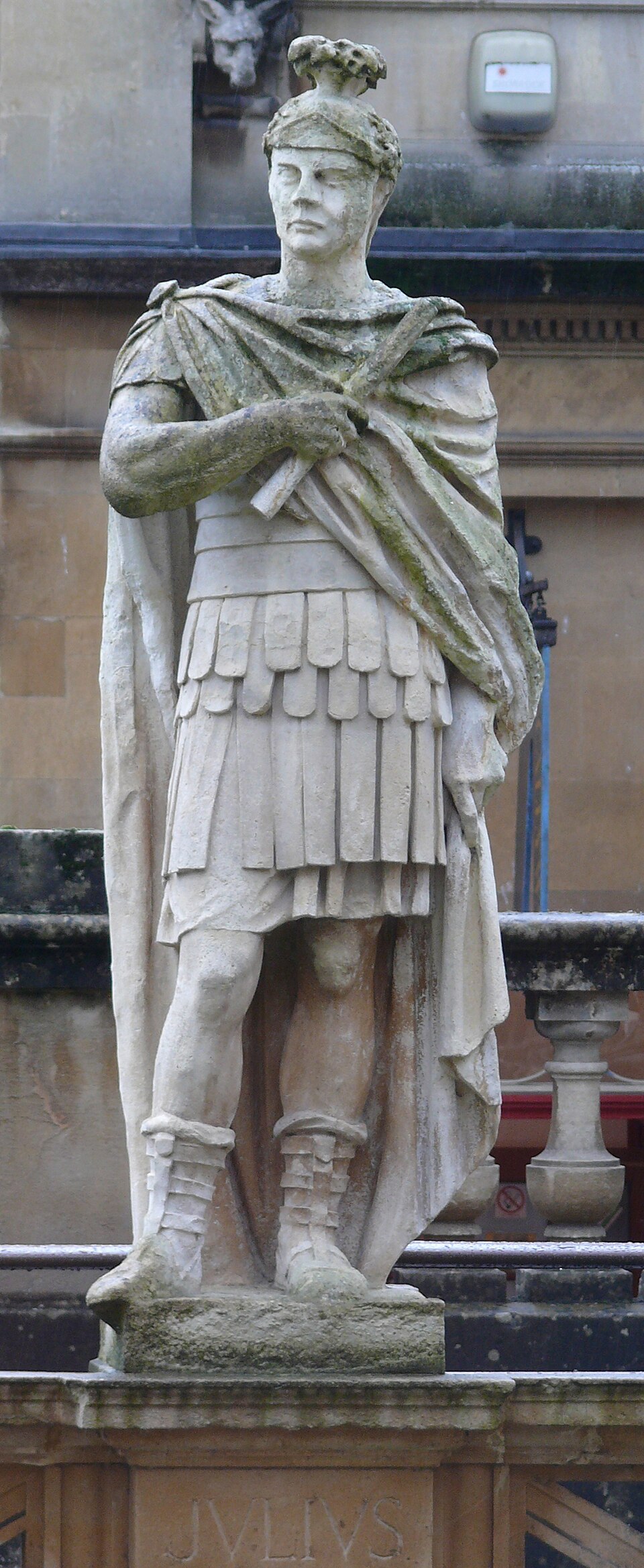
Portrait: Ad Meskens / Wikimedia Commons / CC BY-SA 3.0 Gnaeus Julius Agricola
His Scottish campaigns formed the likely context for the fort’s establishment and role.
-
%20at%20the%20Roman%20vs%20Picts%205k%20race%2C%20Callendar%20House.jpg?width=320)
Portrait: amaldon / Wikimedia Commons / CC BY-SA 4.0 William Hanson
Directed the 1986–87 excavation that fully investigated the fort and much of its annexe.
-
David Woolliscroft
Questioned whether the coin hoard securely dates the fort’s construction.
Cultural influences
-
The Roman route’s ford over the North Esk probably determined the fort’s strategic location.
-
The AD 79–87 occupation reflects Roman efforts to consolidate control in Scotland after Agricola’s campaigns.
-
Elginhaugh confirms general planning conventions while showing important local variation in barrack arrangement.
Connections
-

Photo: M J Richardson / Wikimedia Commons / CC BY-SA 2.0 North Esk
The fort guarded a nearby ford across this tributary of the River Esk.
-

Photo: Kim Traynor / Wikimedia Commons / CC BY-SA 3.0 Dalkeith
The excavated site lies about one kilometre west of the modern town.
-
Roman Scotland
Its short, well-dated occupation offers a closely defined horizon for Flavian activity north of the frontier.
Discovery & excavation
Aerial reconnaissance identified the fort in 1979, followed by William Hanson’s 1986–87 excavation of the timber fort and much of its annexe.
What to look for
-
Timber-fort plan
The fully excavated layout is a rare guide to a Roman auxiliary fort built primarily in timber.
-
Stable-barracks
Their layout indicates that horses and soldiers were accommodated together, probably for a cavalry detachment.
-
Coin hoard
Forty-five denarii inform the debate over when the fort was founded.
Plan your visit
- Location
- 55.8944°N · 3.0868°W
- Nearest settlement
- Dalkeith
- Access
- Open access
- Terrain
- Moderate walking
- Time needed
- About 30 minutes
- Best time
- Daylight, when the relationship between the fort site, the North Esk crossing and nearby Dalkeith can be appreciated.
- What survives
- The timber fort was fully excavated; visitors should expect an archaeological landscape rather than standing Roman walls.
Nearby places

Sacred place · Medieval
Newbattle Abbey
Midlothian
Newbattle Abbey links Cistercian settlement, early Scottish coal extraction, repeated Anglo-Scottish conflict, Reformation (the break with Rome tha…
- Near Dalkeith

Fortified place · Medieval
Craigmillar Castle
City of Edinburgh
Craigmillar Castle is one of Scotland's best-preserved medieval castles, combining a Preston tower house and defensive courtyards with the pivotal…
- Near Edinburgh
- Some walking
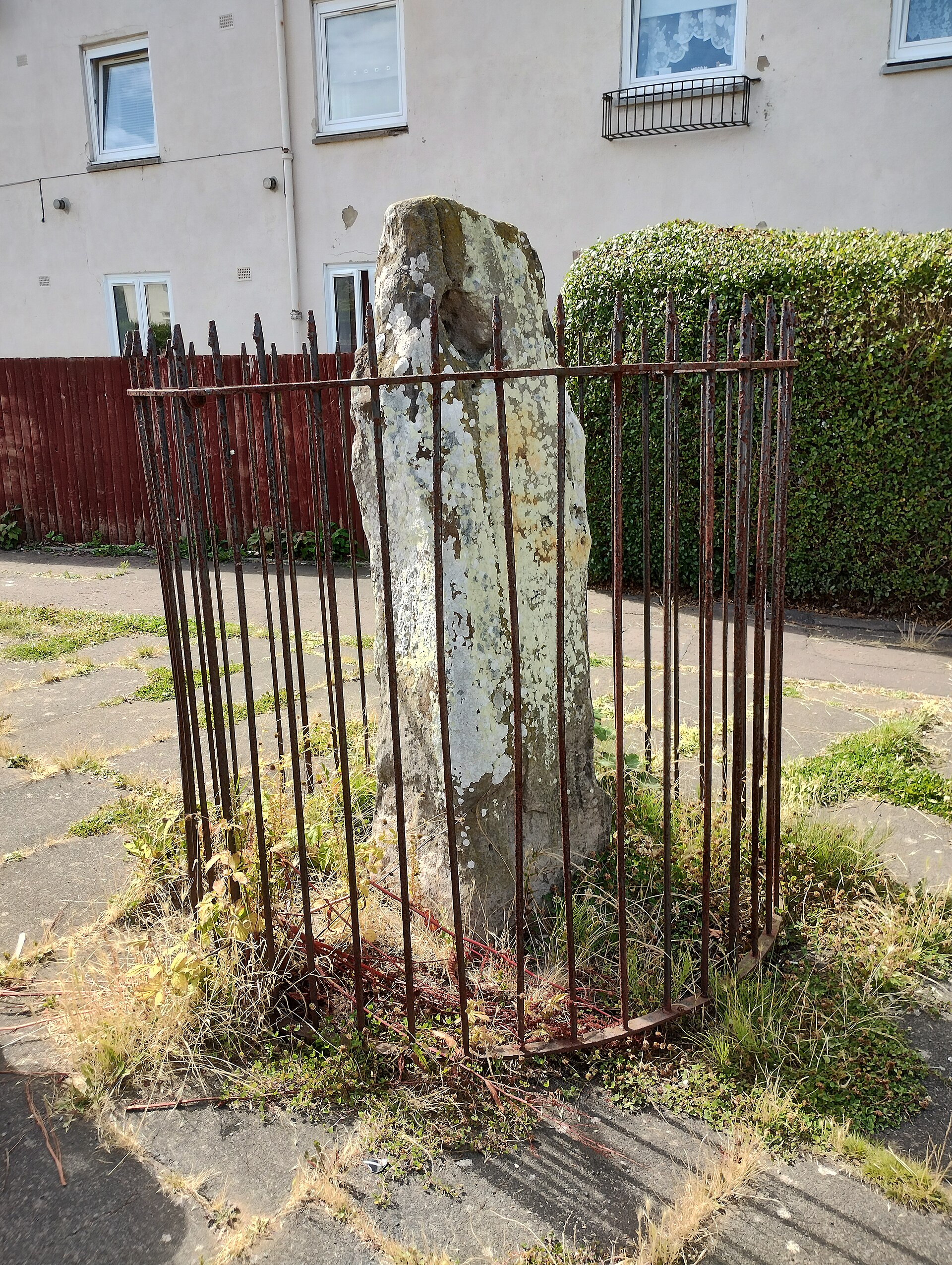
Sacred place · Prehistoric
Ravenswood standing stone
City of Edinburgh
The Ravenswood standing stone is a Bronze Age (roughly 2500–800 BC) monument whose repeated moves and survival within an Edinburgh housing estate m…
- Near Edinburgh
- Easy path
Fortified place · Roman
Inveresk Roman Fort
East Lothian
Inveresk is a large Antonine-period fort with a civilian settlement, cavalry evidence and Britain’s earliest dated Mithraeum, making it one of Scot…
- Near Dunbar
- Some walking
Questions people ask
- When was Elginhaugh Roman Fort occupied?
- Associated coin evidence dates its garrison occupation closely to about AD 79–87.
- Why was Elginhaugh built?
- It probably guarded the Dere Street ford over the North Esk during Roman consolidation in Scotland.
- What was unusual about its barracks?
- Excavation showed horses and men housed together in stable-barracks, suggesting a cavalry vexillation rather than a standard single unit.
Sources
- Elginhaugh — Wikipedia
- Elginhaugh — Wikidata
- Canmore 53492 — ELGINHAUGH (fort annexe (flavian)) (accessed 2026-08-03)
- Canmore — Elginhaugh (accessed 2026-08-30)
Explore more: Fortified places · Roman · Midlothian
The Ancient Codex, in your pocket
Get the Pocket Codex app
Carry the directory with you — Elginhaugh and thousands of ancient places across Britain and Ireland, offline, wherever you roam.