
Craigmillar Castle is one of Scotland's best-preserved medieval castles, combining a Preston tower house and defensive courtyards with the pivotal 1566 meeting linked to the plot against Lord Darnley.
Craigmillar’s curtain walls wrap around a late-medieval tower house south-east of Edinburgh, with the four-storey tower rising from the rock at its centre. Built from the late fourteenth century, the ruined castle remains an exceptionally complete medieval complex.
The Preston family enlarged it through the fifteenth and sixteenth centuries before later owners adapted it for more modern accommodation.
Mary, Queen of Scots stayed here in 1566, when nobles discussed how her husband Lord Darnley might be removed, giving the castle a defining place in Scotland’s royal political history.
What follows is drawn from published sources, with each claim labelled by how firmly it is established.
History
The Preston family received lands at Craigmillar in the fourteenth century, and either Simon Preston or Sir George Preston began the tower house that forms the castle's core. It was in place by 1425. A fifteenth-century courtyard wall, probably built by Sir William Preston, enclosed the tower, and an outer courtyard followed in the early sixteenth century. These successive defences produced the layered form visible today.
English troops burned Craigmillar in 1544 during the Rough Wooing, after which Sir Simon Preston repaired it and remodelled domestic ranges. Mary, Queen of Scots stayed from 20 November to 7 December 1566 while recovering from illness. During that stay, leading nobles made the Craigmillar Bond, a plan to remove Lord Darnley; Mary appears to have been unhappy with Darnley but probably unaware of a plot to kill him.
Sir John Gilmour bought the castle in 1660 and rebuilt the west range as modern accommodation, but the family later moved to Inch House and Craigmillar fell into ruin. It entered state care in 1946 and is maintained by Historic Environment Scotland. The castle is a scheduled monument, and its grounds are included in the Inventory of Gardens and Designed Landscapes.
The scheduling, made on 21 October 1994, treats the castle and its designed landscape as one monument and calls Craigmillar arguably the best surviving example of a medieval castle in Scotland — instructively complete, built to fifteenth and sixteenth-century principles of fortification, and set within substantial designed grounds. The scheduled area measures a maximum of 1,020 metres south-west to north-east by 830 metres north-west to south-east.
The core is the late fourteenth-century L-shaped tower house raised for the Prestons, who held the land from 1374 to 1660. Its original entrance lay in the re-entrant angle of the jamb, facing west and protected by a shelving pitfall in the rocky crags. Storage occupied the lower floor and its entresol, the great hall the first floor of the main block, fitted with a late fifteenth-century fireplace; the kitchen sat in the jamb beside the hall and was later turned into a bedroom.
The massive enceinte of 1427 sits flush with the tower on the south and encloses the present inner courtyard, with rounded towers at each corner and a parapet walk along the north, east and part of the south. Its north-east tower is one of the earliest artillery batteries in Scotland. Domestic ranges were built against the east wall after Hertford's army burned the castle in 1544, and against the west wall in 1661, when the new owner Sir John Gilmour added his renaissance house to complete the courtyard buildings.
The outer curtain or precinct wall went up soon after 1544, furnished with gunloops but no battlements. Inside the precinct stands a chapel of the late fifteenth century, along with the usual farmyard offices, one of which is said to have served later as a Presbyterian meeting place. South of the castle a field holds a pond cut in the shape of a letter P, for Preston — the most visible survival of the medieval garden, around which more formal gardens and later an elaborate designed landscape of parkland and coppiced woodland were laid out.
People
-

Photo: Unidentified painter / Wikimedia Commons / Public domain Mary, Queen of Scots
She stayed at Craigmillar in 1566 during the discussions associated with the Craigmillar Bond.
-
Sir William Preston
He probably built the fifteenth-century courtyard wall around the tower house.
Cultural influences
-
A Scottish tower house made for gunpowder warfare
Craigmillar combines a late medieval tower house with a courtyard wall whose north-east tower was adapted as one of Scotland’s earliest artillery batteries, then later domestic ranges and garden landscape.
Connections
-
Craigmillar Castle Park
The designed landscape scheduled with the castle and separately registered as a garden and designed landscape, covering the parkland, coppiced woodland and the quarries the castle stone came from.
-
The 'P' pond
A pond in the field south of the castle, shaped as the letter P for Preston, and the most visible surviving element of the medieval garden.
-
Edinburgh
Craigmillar's strength and its closeness to the capital made it a favoured resort of the Stewart monarchs, which is the substance of its national importance.
-
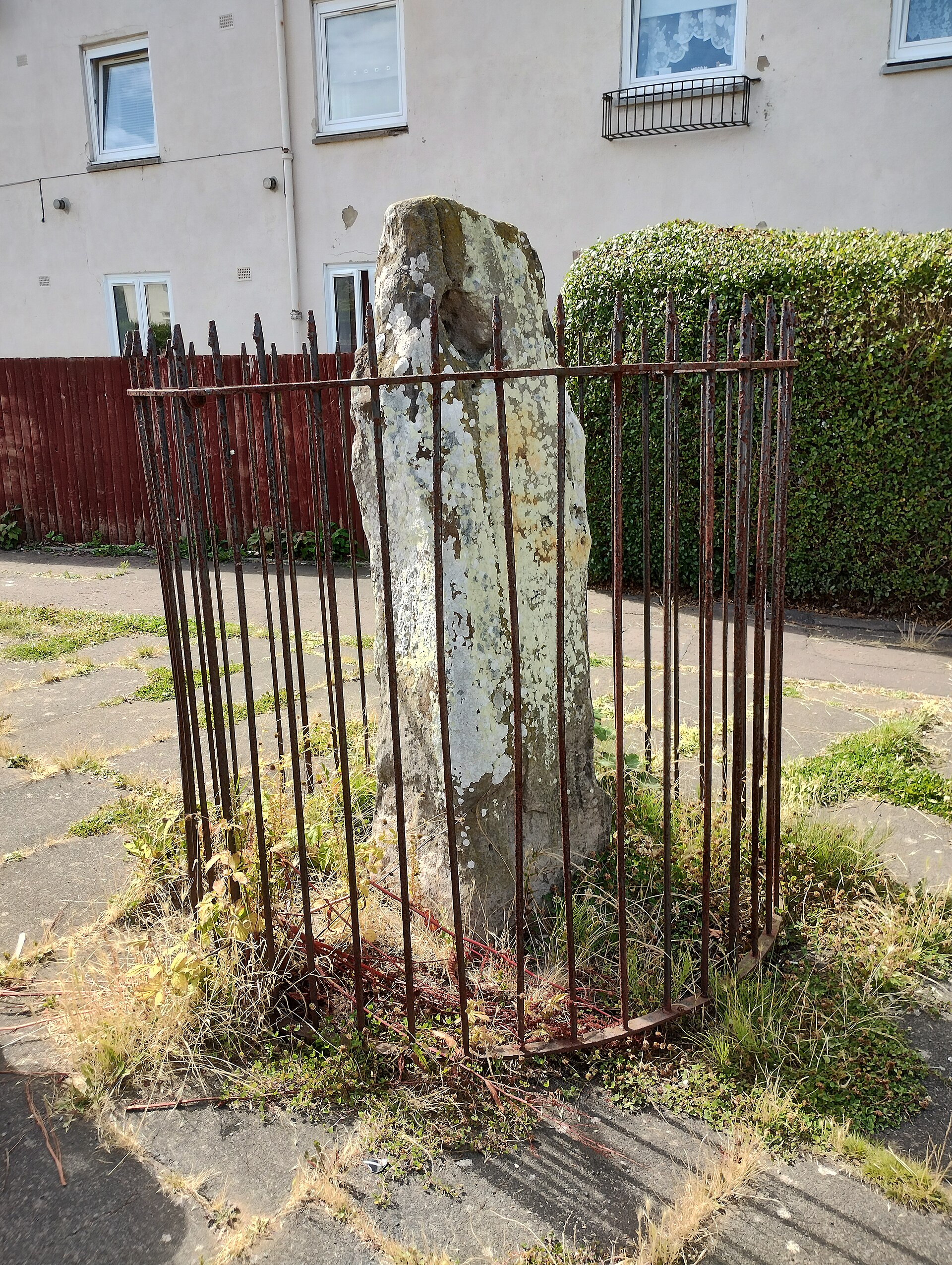
Photo: McPhail / Wikimedia Commons / CC0 The nearest recorded monument in this directory, some 600 metres from the castle.
What to look for
-
Tower house
The four-storey L-plan tower forms the late fourteenth-century core, with storage below and the great hall above. Its re-entrant entrance was protected by a shelving pitfall cut into the rocky crags.
-
Courtyard defences
A massive enceinte of 1427 surrounds the tower with rounded corner towers and a parapet walk. Its north-east tower became one of Scotland’s earliest artillery batteries, showing the defences adapting to gunpowder warfare.
-
Doocot
The outer court’s north-east tower contains a pigeon house, an everyday domestic feature within the fortified complex. It helps show how Craigmillar combined military protection with the household and estate functions of a tower-house residence.
Plan your visit
- Location
- 55.9257°N · 3.1409°W
- Nearest settlement
- Edinburgh
- Access
- Paid entry — managed visitor site
- Terrain
- Moderate walking
- Time needed
- About 90 minutes
- Best time
- Visit during published Historic Environment Scotland opening hours and allow time for the castle, gardens and surrounding grounds.
- What survives
- A substantial roofless castle with towers, stairs, uneven courtyards and surviving curtain walls set in designed grounds.
- Facilities
- Visitor facilities depend on the current Historic Environment Scotland operation; check the official site before travelling.
Opening & admission
An admission charge applies; check Historic Environment Scotland's site for current prices and opening times.
- Ruined medieval castle with towers, stairs and uneven courtyard ground
- On a low hill on the south-east edge of Edinburgh
Nearby places
Sacred place · Prehistoric
Ravenswood standing stone
City of Edinburgh
The Ravenswood standing stone is a Bronze Age (roughly 2500–800 BC) monument whose repeated moves and survival within an Edinburgh housing estate m…
- Near Edinburgh
- Easy path

Sacred place · Medieval
St Anthony's Chapel and Hermitage
City of Edinburgh
The chapel above St Margaret's Loch is one of Edinburgh's least explained medieval buildings: no foundation record survives, and the earliest firm…
- Near Edinburgh
- Some walking

Sacred place · Medieval
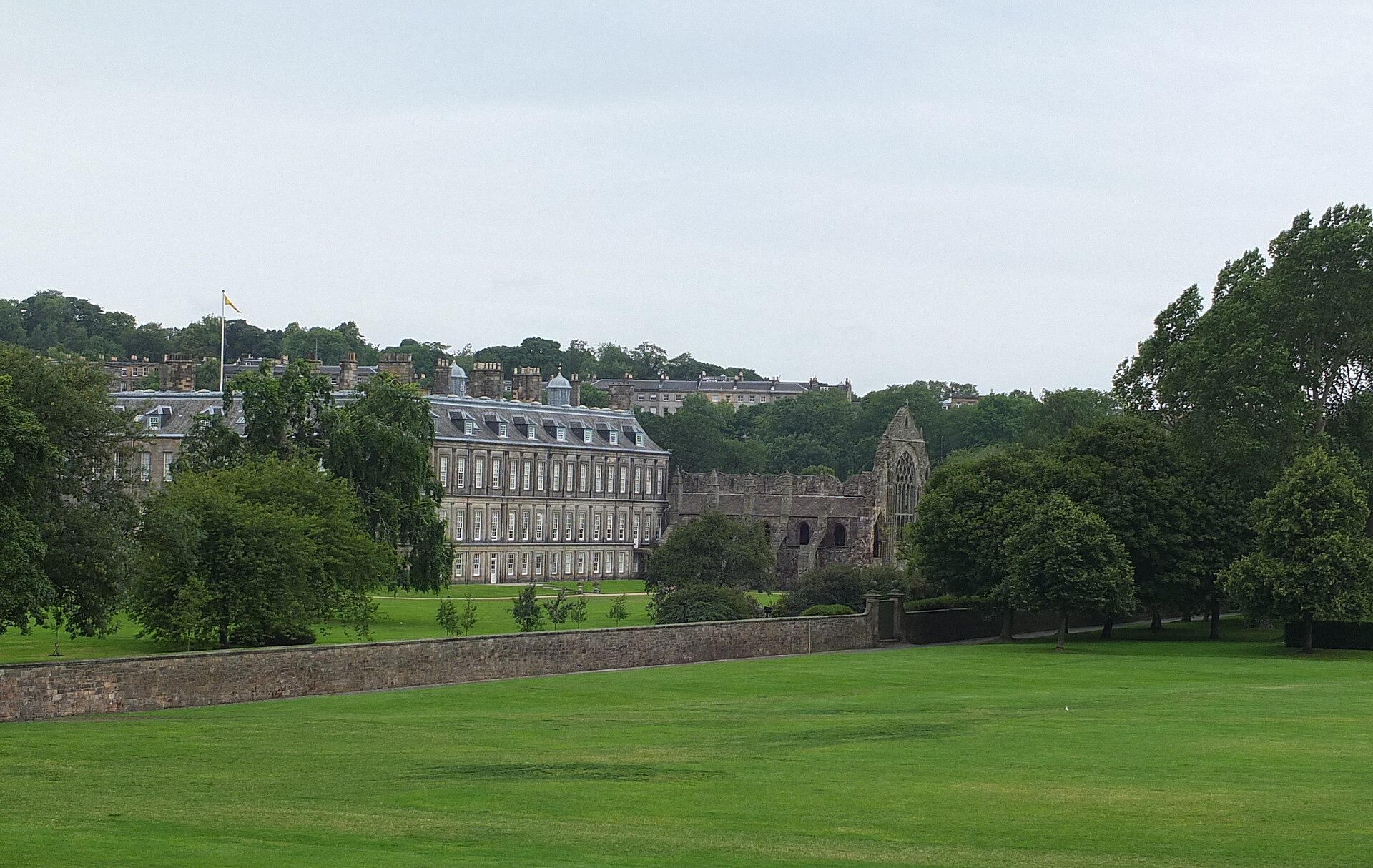
Holyrood Abbey
City of Edinburgh
Holyrood Abbey is Edinburgh's ruined royal abbey, founded by David I and central to Scottish parliaments, coronations and palace life before a cata…
- Near Edinburgh
- Easy path
Questions people ask
- When was Craigmillar Castle built?
- Its core tower house dates from the late fourteenth or early fifteenth century, with later additions.
- Why is Mary, Queen of Scots associated with Craigmillar?
- She convalesced there in 1566 while nobles discussed removing Lord Darnley.
- Who cares for Craigmillar Castle today?
- Historic Environment Scotland maintains it as a scheduled monument.
Sources
The Ancient Codex, in your pocket
Get the Pocket Codex app
Carry the directory with you — Craigmillar Castle and thousands of ancient places across Britain and Ireland, offline, wherever you roam.