Holyrood Abbey is Edinburgh's ruined royal abbey, founded by David I and central to Scottish parliaments, coronations and palace life before a catastrophic eighteenth-century roof collapse left its iconic roofless church.
Roofless medieval arches stand beside the Palace of Holyroodhouse at the eastern end of Edinburgh’s Royal Mile. Holyrood Abbey was founded for Augustinian Canons Regular by David I in 1128.
Its church, reconstructed in the late twelfth and early thirteenth centuries, became a setting for parliaments, royal ceremonies and the expanding palace beside it.
Reformation damage and a disastrous eighteenth-century stone-vault repair brought the church to ruin, yet the scheduled monument remains one of Scotland’s most resonant royal and religious sites.
What follows is drawn from published sources, with each claim labelled by how firmly it is established.
The name
Holyrood means Holy Cross: rood is a word for the cross on which Jesus Christ was crucified.
History
David I founded Holyrood Abbey in 1128, according to tradition after being saved from a charging hart while hunting. The original community came from Merton Priory, and the church was largely reconstructed between 1195 and 1230. Holyrood became an important royal and political setting: Scottish parliaments met there repeatedly, and Robert I signed the Treaty of Edinburgh–Northampton there in 1328.
The abbey's guesthouse developed into a royal residence during the fifteenth century. James II was born there in 1430 and crowned there in 1437, while later royal weddings and coronations followed. James IV built a palace beside the cloister between 1498 and 1501, converting the abbey refectory into a Great Hall and tying the religious house ever more closely to the royal court.
English attacks damaged Holyrood in 1544 and 1547, and Reformation violence in 1559 further harmed the church. The eastern end was demolished in 1570, leaving the nave for parish use. In 1758–60, replacement stone vaults proved too heavy for the decayed walls; the church was closed in 1766 and its roof collapsed on 2 December 1768. The abbey has remained a roofless ruin since.
People
-
.jpg?width=320)
Photo: Unknown author / Wikimedia Commons / Public domain David I of Scotland
Founded Holyrood in 1128 as a house for Augustinian Canons Regular brought from Merton Priory, establishing a monastery beside the Scottish royal court.
-
James IV
Built a royal palace beside the cloister between 1498 and 1501, converting the abbey refectory into its Great Hall and providing a new refectory for the canons.
Cultural influences
-
Augustinian canons and royal patronage
Founded by David I for Augustinian canons, Holyrood developed beside the Scottish royal court; the growth of palace accommodation made the abbey a key setting for the union of monastic and royal life in medieval Edinburgh.
Connections
-
Palace of Holyroodhouse
The palace grew beside the abbey cloister when James IV built new royal accommodation around 1498–1501. The relationship changed the site from a monastery with royal associations into a joined religious and courtly setting, with the abbey refectory converted into the palace Great Hall.
-

Photo: Photograph by Mike Peel (www.mikepeel.net). / Wikimedia Commons / CC BY-SA 4.0 The first Augustinian community came from Merton Priory when David I founded Holyrood in 1128. That connection explains the abbey’s institutional origin and places its early religious life within the wider network of Augustinian houses that served medieval Scotland.
Discovery & excavation
Excavation in the grounds of the Palace of Holyroodhouse in 2006 uncovered part of the abbey cloister and a square tower associated with James IV’s 15th-century building works.
What to look for
-
Roofless nave
The church has stood roofless since 1768, when an over-heavy stone-vault replacement defeated the decayed flying buttresses and collapsed in two stages.
-
Royal setting
The abbey's medieval guesthouse developed into the adjoining Palace of Holyroodhouse; James IV converted the refectory to the palace Great Hall in 1498–1501.
-
Sanctuary markers
Brass stones on the Royal Mile mark the boundary of the abbey's former five-mile sanctuary, where debtors and people accused of crimes could seek protection.
-
How far the protection reaches
The scheduled monument covers far more than the roofless church. It takes in the abbey precinct, Queen Mary's Bath, and the buried archaeology beneath the Palace of Holyroodhouse itself, the palace gardens, the forecourt, Mews Court and the grounds of Croft-an-Righ House. Excavation in the forecourt has found surfaces going back to the fifteenth century, with boundary walls and buildings south of the palace's south-west wing, and work in the Mews area has shown deposits and structures surviving beneath the standing buildings.
-
What is actually standing
Above ground, the church survives as the walls of the nave — built largely between 1195 and 1230 and later adapted as the Chapel Royal — together with the footings of the choir and transepts. Queen Mary's Bath, the small building at the palace gate, is a late medieval garden lodge or pavilion of the later sixteenth century. Croft-an-Righ is a sixteenth-century house traditionally associated with Regent Moray, and the buried remains around it are expected to include ancillary buildings demolished in the nineteenth century.
-
What the scheduling leaves out
The monument was last scheduled in 1994, but that documentation did not meet modern standards and the site was rescheduled on 7 February 2013. The designation deliberately excludes the above-ground fabric of every building on the site except the abbey ruins and Queen Mary's Bath, along with the top half-metre of the North Carriage Drive and Abbey Strand, all boundary walls, gates, railings, statues, sundials and fountains, and everything built after 1950. It does include the ha-ha along the south and east boundary of the palace gardens.
What is said
Folklore and tradition, recorded as what is said — not as established fact.
-
The Holy Rood
Holyrood’s name means “Holy Cross” and its foundation tradition links David I with a vision of a white hart bearing a cross between its antlers; the story explains the site’s dedication rather than serving as documentary evidence.
Plan your visit
- Location
- 55.9532°N · 3.1716°W
- Nearest settlement
- Edinburgh
- Access
- Paid entry — managed visitor site
- Terrain
- Easy going
- Time needed
- About 60 minutes
- Best time
- Visit during the published opening hours and in daylight, allowing time for the abbey ruins and palace precinct.
- What survives
- Holyrood Abbey survives as a roofless medieval ruin beside the Palace of Holyroodhouse; the interior floor is surfaced with gravel chippings and access is through the palace precinct.
- Facilities
- Visitor facilities depend on the current palace operation; check the official site before travelling.
Opening & admission
Managed as a visitor attraction; check the official site for current admission arrangements before visiting.
- Ruined roofless abbey adjacent to the Palace of Holyroodhouse
- Protected as a scheduled monument
Nearby places
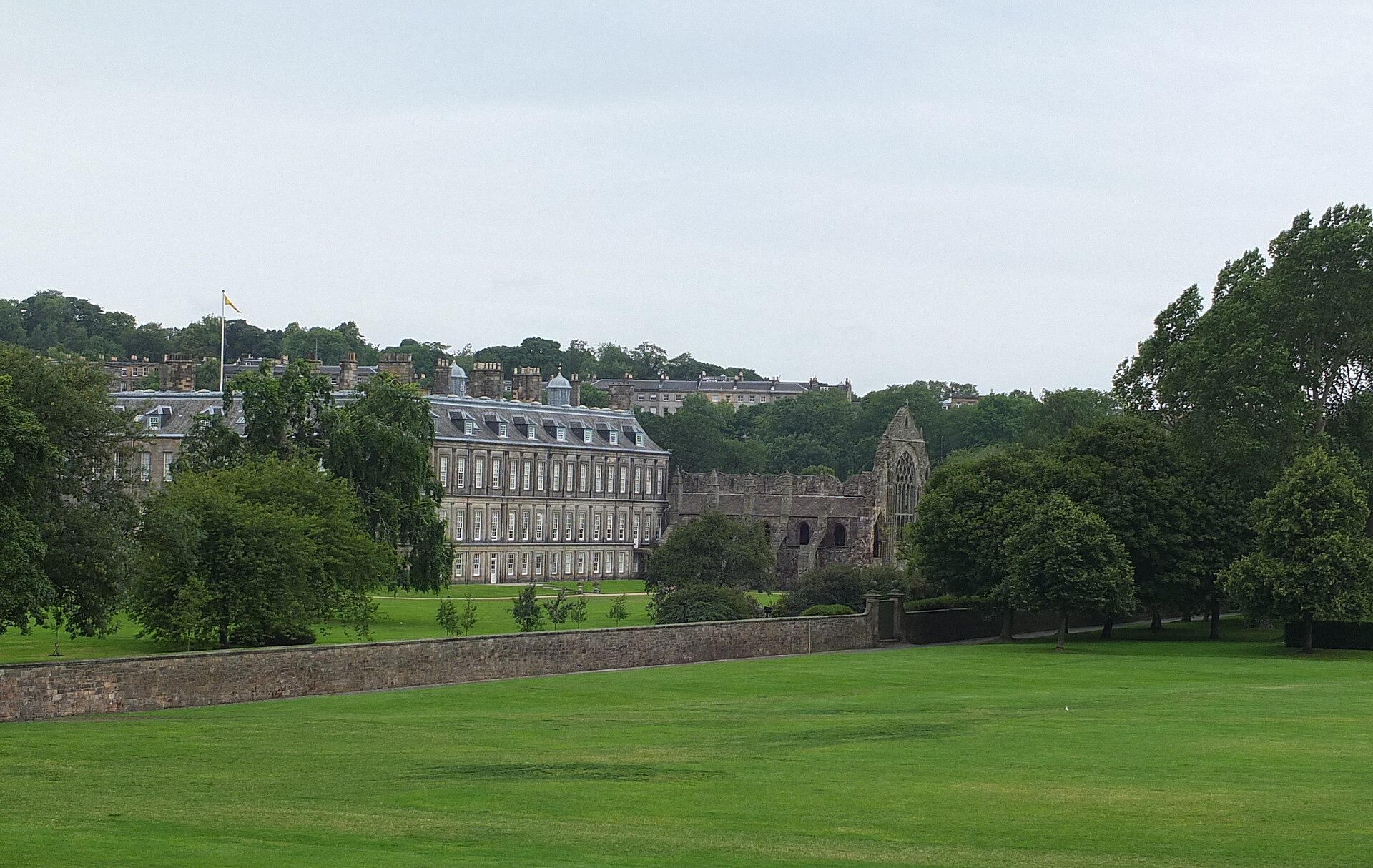

Sacred place · Medieval
St Anthony's Chapel and Hermitage
City of Edinburgh
The chapel above St Margaret's Loch is one of Edinburgh's least explained medieval buildings: no foundation record survives, and the earliest firm…
- Near Edinburgh
- Some walking
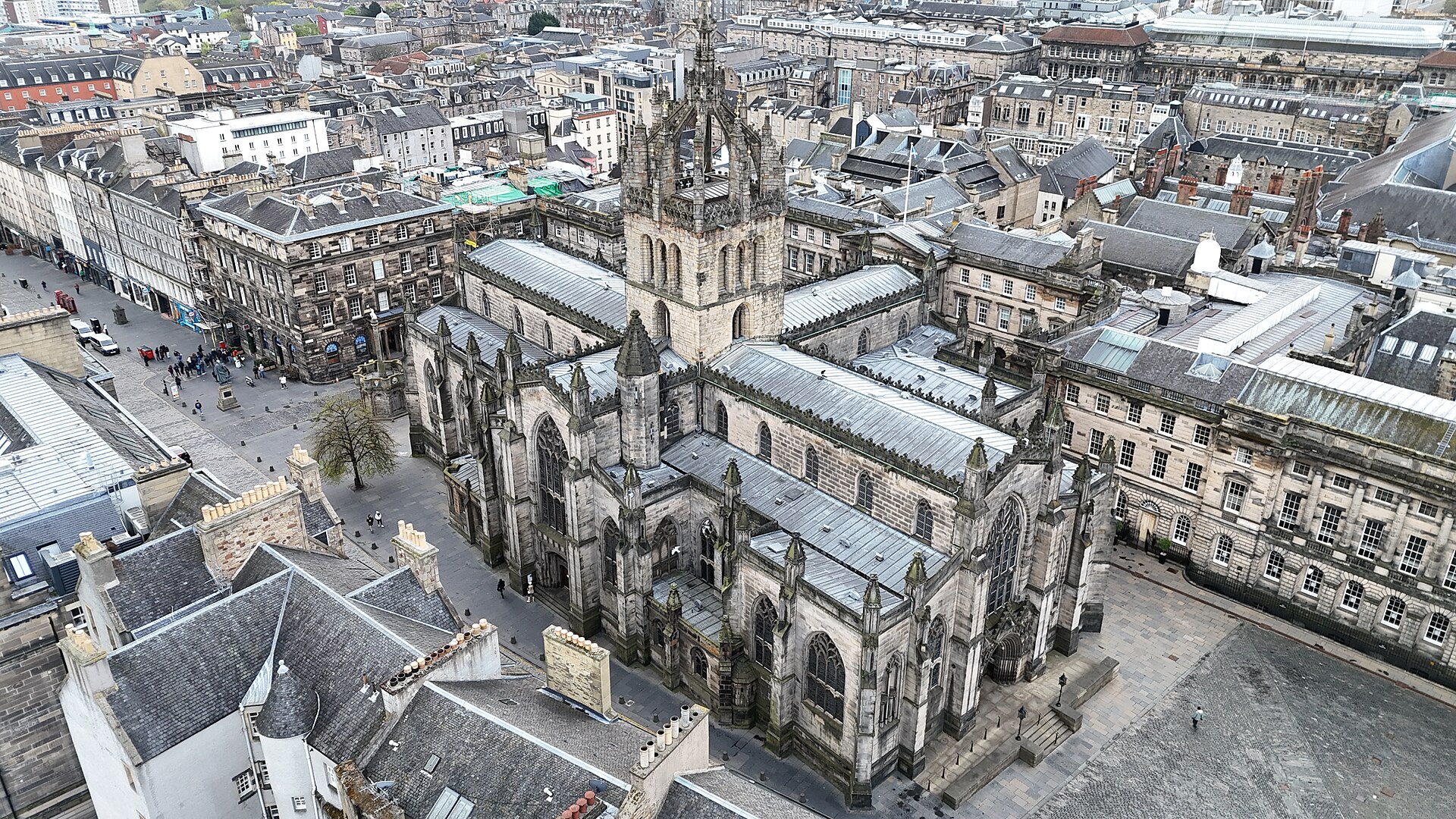
Building or ruin · Medieval
St Giles' Cathedral
City of Edinburgh
Its 1637 prayer-book riot lit the fuse for the National Covenant and the Wars of the Three Kingdoms, earning St Giles' the title 'the Mother Church…
- Near Edinburgh
- Easy path

Carved stone · Pictish & early medieval
Bullion Stone
City of Edinburgh
The only Pictish carving to show a man drinking: a bald, bearded rider on a tired horse, lifting a horn that ends in a startled bird's head, cut ju…
- Near Edinburgh
- Easy path
Questions people ask
- When was Holyrood Abbey founded?
- David I founded it in 1128 for Augustinian Canons Regular.
- Why is it called Holyrood?
- The name means Holy Cross.
- Why is the abbey roofless?
- An over-heavy stone-vault repair failed, and the roof collapsed in 1768.
Sources
The Ancient Codex, in your pocket
Get the Pocket Codex app
Carry the directory with you — Holyrood Abbey and thousands of ancient places across Britain and Ireland, offline, wherever you roam.