Borthwick Castle is an exceptionally complete 1430 Scottish tower house, associated with Mary, Queen of Scots and visibly marked by Cromwell’s 1650 attack.
Borthwick Castle’s huge double tower rises from a small hill above a stream southeast of Edinburgh. Its fine sandstone ashlar (smooth-dressed stone laid in even courses) walls remain almost complete, up to fourteen feet thick in the original tower house, with narrow medieval windows still unaltered. A large cannon scar cuts across one face, while the reconstructed bridge leads to the vaulted great hall above the partly subterranean kitchen and storage vaults.
Sir William Borthwick built the castle after receiving a royal licence in 1430, an unusual requirement for a Scottish noble. It later sheltered Mary, Queen of Scots during the crisis following her marriage to the Earl of Bothwell, before she escaped the 1567 siege disguised as a male page. Cromwell’s forces damaged it in 1650. Restored by 1914 and used to protect national treasures during the Second World War, it now serves as an events venue.
What follows is drawn from published sources, with each claim labelled by how firmly it is established.
History
On 2 June 1430 Sir William Borthwick received a licence from James I to build a castle or fortalice at the Mote of Locherwart. Such permission was unusual for a Scottish noble. The resulting fortress centred on a remarkably tall U-shaped tower house, protected by an enclosure and round corner towers. Its scale, stonework and strategic hilltop setting established Borthwick as an enduring assertion of family power.
The castle became entangled in sixteenth-century Scottish politics. Mary, Queen of Scots visited in 1563 and 1566, then returned with her new husband James Hepburn, Earl of Bothwell, in June 1567. Besieged by Lord Home and the laird of Cessford, Mary escaped disguised as a male page and rejoined Bothwell. The episode preceded her arrest at Carberry Hill and imprisonment at Lochleven.
Oliver Cromwell’s forces attacked Borthwick in 1650. It surrendered after only a few cannon shots, and damage from that assault remains visible on the walls. After abandonment, the castle was restored by 1914 and during the Second World War used to hide national treasures. It was converted to an exclusive hire venue in 1973 and reopened for events after extensive refurbishment in 2015.
People
-
Sir William Borthwick
Founder who received James I’s licence to build the castle in 1430.
-

Photo: Unidentified painter / Wikimedia Commons / Public domain Mary, Queen of Scots
Took refuge here in 1567 and escaped the besiegers disguised as a page.
-
Oliver Cromwell
His forces attacked Borthwick in 1650, leaving cannon damage that remains visible today.
Cultural influences
-
Its unusually tall double tower, defensive enclosure and cliff-edge setting express the fortified domestic architecture of late-medieval Scotland.
Connections
-
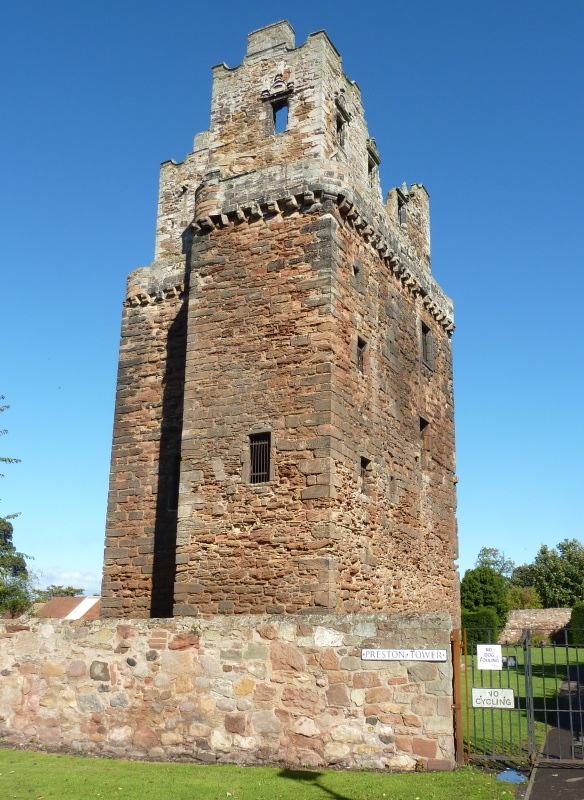
Photo: Otter / Wikimedia Commons / CC BY-SA 3.0 Borthwick and Preston are surviving late-medieval Scottish tower houses, but Borthwick’s 1430 royal licence and exceptional double-tower scale mark a much grander assertion of lordly power.
-

Photo: Kim Traynor / Wikimedia Commons / CC BY-SA 3.0 Both castles are tied to Mary, Queen of Scots and the Earl of Bothwell: Mary sheltered at Borthwick in 1567, while Crichton belonged to Bothwell’s family and hosted her in 1562.
-

Photo: Kim Traynor / Wikimedia Commons / CC BY-SA 3.0 Borthwick’s fifteenth-century tower house and Newbattle’s medieval Cistercian abbey survive as contrasting aristocratic and monastic landmarks in the same Midlothian historical landscape.
What to look for
-
The double tower
The 90-foot double tower rises above its defensive enclosure and the castle’s round corner towers.
-
The cannon scar
A large scar on the wall records the brief 1650 bombardment by Cromwell’s attacking forces.
-
The unaltered windows
Original narrow windows remain unexpanded, preserving the tower house’s distinctive defensive character and vertical medieval scale.
-
The bridge to the hall
A reconstructed bridge reaches the first-floor great hall above the castle’s lower vaulted service rooms.
-
The barrel-vaulted hall
The barrel-vaulted great hall sits above surviving kitchen and storage vaults in the castle’s lower level.
What is said
Folklore and tradition, recorded as what is said — not as established fact.
-
Mary’s escape
Tradition holds that Mary, Queen of Scots left the besieged castle in 1567 disguised as a male page.
Plan your visit
- Location
- 55.8267°N · 3.0074°W
- Nearest settlement
- Borthwick
- Time needed
- About 30 minutes
- Best time
- Only with a confirmed booking or event access; the stone tower is most legible in daylight.
- What survives
- A very well-preserved sandstone tower house, with the 1650 cannon scar still visible and historic vaulted rooms retained within.
- Facilities
- Accommodation, dining and reception spaces are offered for exclusive private hire.
Opening & admission
Borthwick Castle operates as an exclusive-use venue for private stays and weddings; public admission is not advertised.
- Check the castle’s official website before travelling.
Nearby places

Fortified place · Medieval
Crichton Castle
Midlothian
Crichton Castle preserves the rise and fall of two powerful Scottish families, a Reformation (the sixteenth-century closure of the monasteries)-era…

Sacred place · Medieval
Newbattle Abbey
Midlothian
Newbattle Abbey links Cistercian settlement, early Scottish coal extraction, repeated Anglo-Scottish conflict, Reformation (the break with Rome tha…
- Near Dalkeith
Ancient tree · Medieval
Great Yew of Ormiston
East Lothian
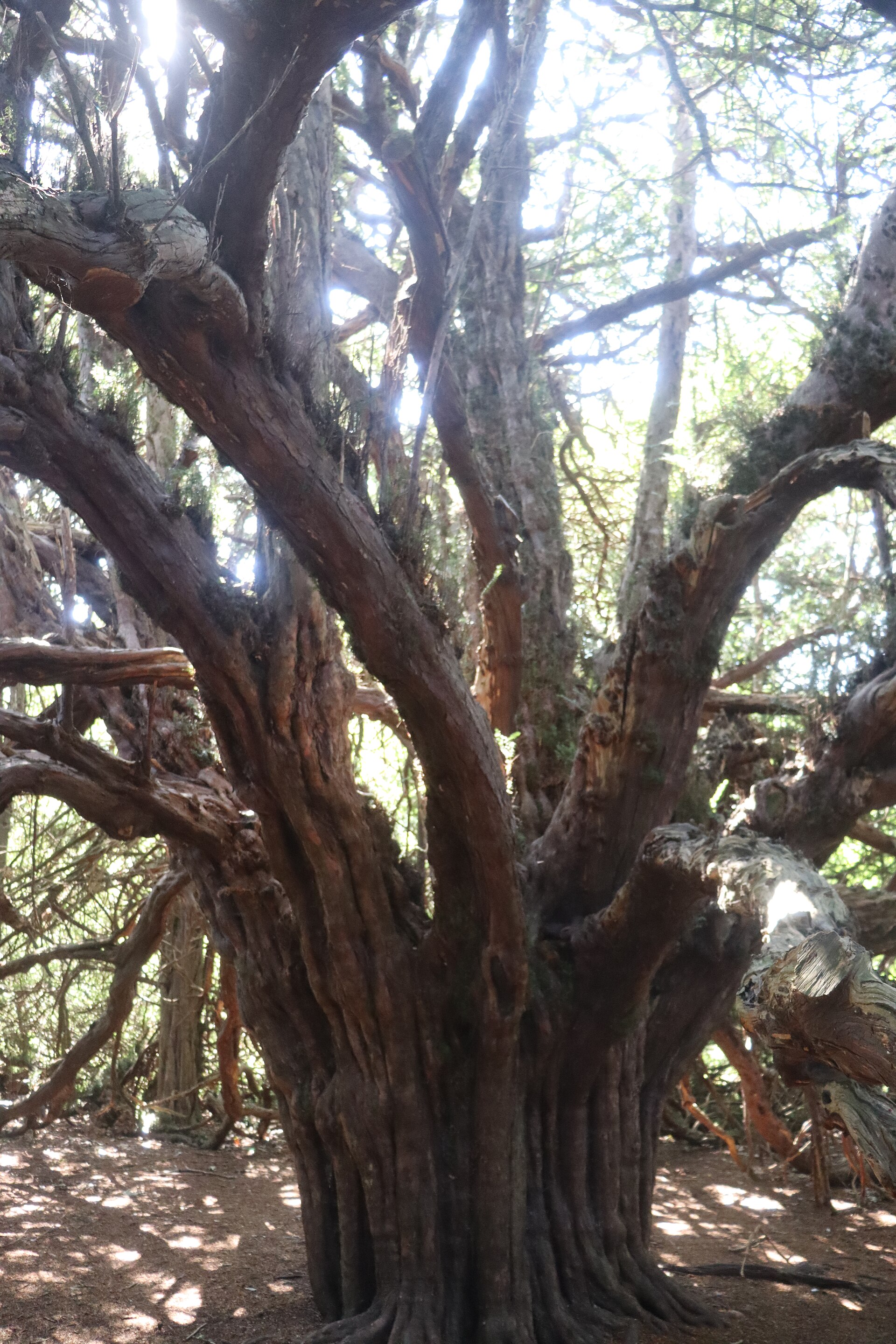
The Great Yew of Ormiston is a layering yew first recorded in 1474 and regarded as a significant surviving tree in Scotland.
- Near East Lothian
Fortified place · Roman
Elginhaugh
Midlothian
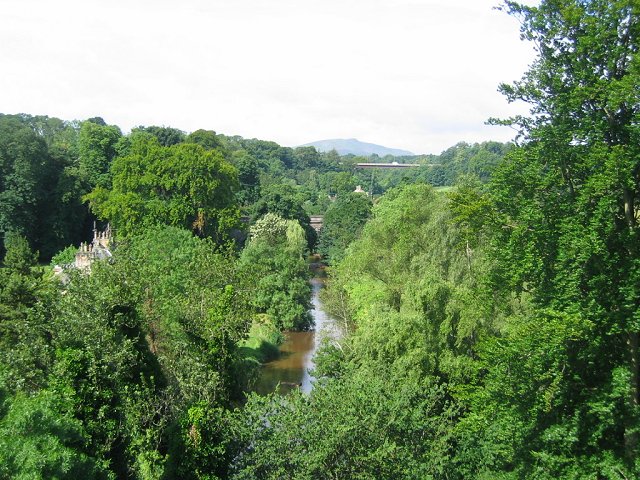
Elginhaugh is the Roman Empire’s most completely excavated timber-built auxiliary fort, offering rare evidence for a short Flavian occupation, mixe…
- Near Dalkeith
- Some walking
Questions people ask
- When was Borthwick Castle built?
- Sir William Borthwick received a licence from James I in 1430 to erect the castle. It remains the ancestral seat of the Borthwick family.
- What happened to Mary, Queen of Scots at Borthwick?
- Mary and the Earl of Bothwell were besieged there in June 1567. She escaped in disguise as a male page before being arrested later at Carberry Hill.
- Why does the castle have a damaged wall?
- Cromwell’s forces attacked in 1650. The castle surrendered after cannon fire, and a large cannon scar from the attack remains visible.
Sources
- Canmore site 53239
- Wikipedia — Borthwick Castle
- Wikipedia — Borthwick Castle (History)
- Borthwick Castle — history (accessed 2026-08-30)
Explore more: Fortified places · Medieval · Midlothian
The Ancient Codex, in your pocket
Get the Pocket Codex app
Carry the directory with you — Borthwick Castle and thousands of ancient places across Britain and Ireland, offline, wherever you roam.