A large medieval castle on a high, steep bank above a bend in the Clyde, between Bothwell and Uddingston.
High above a bend of the Clyde between Bothwell and Uddingston, about ten miles south-east of Glasgow, stands one of the largest medieval castles in Scotland. The bank falls away steeply on the river side, which is the whole point of the position: the castle was raised to watch a crossing of the Clyde that mattered strategically, and the ground does half the defensive work.
The barony of Bothwell was granted by King David I to David Olifard, Justiciar of Lothian, in the middle of the twelfth century. It descended through his family — his daughter had married William de Moravia, son of William son of Freskin — and by 1252 had come to their son Walter de Moravia. Walter began the castle. His ancestors are the forerunners of Clan Murray.
What Walter finished was less than he intended. By the outbreak of the Wars of Scottish Independence in 1296 only the great cylindrical donjon (the principal tower of a castle, its strongest and most defensible building), the prison tower and the short curtain wall joining them stood complete. Foundations for the rest were probably laid, and the gaps would have been closed with a wooden palisade — a common expedient on a half-built site, and a reminder that the castle went to war unfinished.
It then changed hands repeatedly. Edward I of England invaded at the opening of the war and seized Bothwell from Walter’s son, William Moray of Bothwell. The Scots besieged the English garrison for fourteen months across 1298 and 1299 before it capitulated. Edward returned in 1301 with six thousand eight hundred men and purpose-built siege engines and took it again. It became the headquarters of Aymer de Valence, second Earl of Pembroke, Edward’s Warden of Scotland, and stayed in English hands for several years afterwards.
The sieges did the damage that the builders never repaired. The donjon was severely broken about before the rest of the castle could be completed, and the fabric visible today reflects a rebuilding in the early fifteenth century that enlarged the castle rather than restoring the thirteenth-century design.
The ruin is rectangular. The remains of the donjon stand at the west end and the later Great Hall at the east, with long curtain walls enclosing the courtyard between them and round towers at the south-east and south-west corners. The castle was abandoned by the eighteenth century, which is why so little was altered after the medieval work stopped.
The Scottish archaeologist William Douglas Simpson placed Bothwell among the foremost secular structures of the Middle Ages in Scotland — a judgement about the ambition of the design rather than about what was actually completed.
What follows is drawn from published sources, with each claim labelled by how firmly it is established.
History
King David I granted the barony of Bothwell to David Olifard, Justiciar of Lothian, in the middle of the twelfth century. It descended through his family — his daughter had married William de Moravia, son of William son of Freskin — and by 1252 had come to their son Walter de Moravia, whose line are the forerunners of Clan Murray.
Walter de Moravia began the castle on a high, steep bank above a bend of the Clyde, chosen to command a strategic crossing of the river. By the outbreak of the Wars of Scottish Independence in 1296 only the great cylindrical donjon, the prison tower and the short curtain wall joining them stood complete; foundations for the rest were probably laid, and the gaps closed with a wooden palisade.
The forces of Edward I of England invaded Scotland at the opening of the war and seized Bothwell from Walter's son, William Moray of Bothwell. The Scots besieged the English garrison for fourteen months across 1298 and 1299 before it capitulated, one of the longer sieges of the war and a measure of how much the crossing mattered to both sides.
Edward I returned in 1301 with six thousand eight hundred men and specially constructed siege engines, and took the castle a second time. It became the headquarters of Aymer de Valence, second Earl of Pembroke, Edward's appointed Warden of Scotland, and remained in English hands for several years afterwards. The sieges severely damaged the donjon before the rest of the castle could be finished, and the damage was never made good on the original plan. Rebuilding in the early fifteenth century enlarged the castle instead, and the fabric standing today is largely that later work rather than Walter de Moravia's design.
The castle was abandoned by the eighteenth century, which is why so little was altered after the medieval building stopped. The ruin is rectangular, the donjon at the west end and the later Great Hall at the east, with long curtain walls enclosing the courtyard and round towers at the south-east and south-west corners. The Scottish archaeologist William Douglas Simpson placed it among the foremost secular structures of the Middle Ages in Scotland.
People
-
Walter de Moravia
Lord of Bothwell who began the castle above a strategic Clyde crossing in the thirteenth century, completing its massive cylindrical donjon before the independence wars.
-
Edward I
English king whose armies captured Bothwell twice during the Wars of Scottish Independence, first after a fourteen-month Scottish siege and again in 1301 with siege engines.
-
Aymer de Valence
Edward I’s Warden of Scotland who used Bothwell as headquarters after the English recapture, making the castle a centre of occupation in the Clyde valley.
Cultural influences
-
Control of the Clyde crossing
The castle’s high riverbank position commanded a strategic crossing of the Clyde, making it a recurrent objective in the Wars of Scottish Independence.
Connections
-

Photo: Richard Sutcliffe / Wikimedia Commons / CC BY-SA 2.0 Crookston Castle is another medieval Scottish castle, providing a comparison for Bothwell’s exceptionally large cylindrical donjon and later fifteenth-century rebuilding.
-

Photo: Johnny Durnan / Wikimedia Commons / CC BY-SA 2.0 Bothwellhaugh Roman Fort represents earlier military control of the Clyde corridor, a strategic route later commanded by Bothwell Castle’s high riverbank position.
-
.jpg?width=320)
Photo: Bewahrerderwerte / Wikimedia Commons / CC BY-SA 4.0 Glasgow Cathedral is a major medieval building in the Clyde valley, placing Bothwell’s secular lordship and independence-war role within the region’s wider medieval power landscape.
What to look for
-
Cylindrical donjon
The huge round tower at the west end is the main surviving work of Walter de Moravia’s original castle.
-
Later Great Hall
The east end of the courtyard is dominated by fifteenth-century rebuilding undertaken after the independence-war sieges.
Plan your visit
- Location
- 55.8095°N · 4.0950°W
- Time needed
- About 90 minutes
- What survives
- The donjon, curtain walls, round towers and Great Hall survive as an extensive roofless ruin above the River Clyde.
Nearby places

Fortified place · Roman
Bothwellhaugh Roman Fort
North Lanarkshire
Bothwellhaugh Roman Fort reveals how a crossing of the South Calder linked soldiers, cavalry, bathing and the wider Antonine frontier landscape.
- Some walking
.jpg?width=800)
Building or ruin · Medieval
Glasgow Cathedral
Glasgow City
One of only two medieval Scottish cathedrals: alongside St Magnus in Orkney: to survive the Reformation (the sixteenth-century suppression of monas…
- Near Gloucester
Crossing or structure · Roman
Glasgow Bridge, Kirkintilloch
East Dunbartonshire
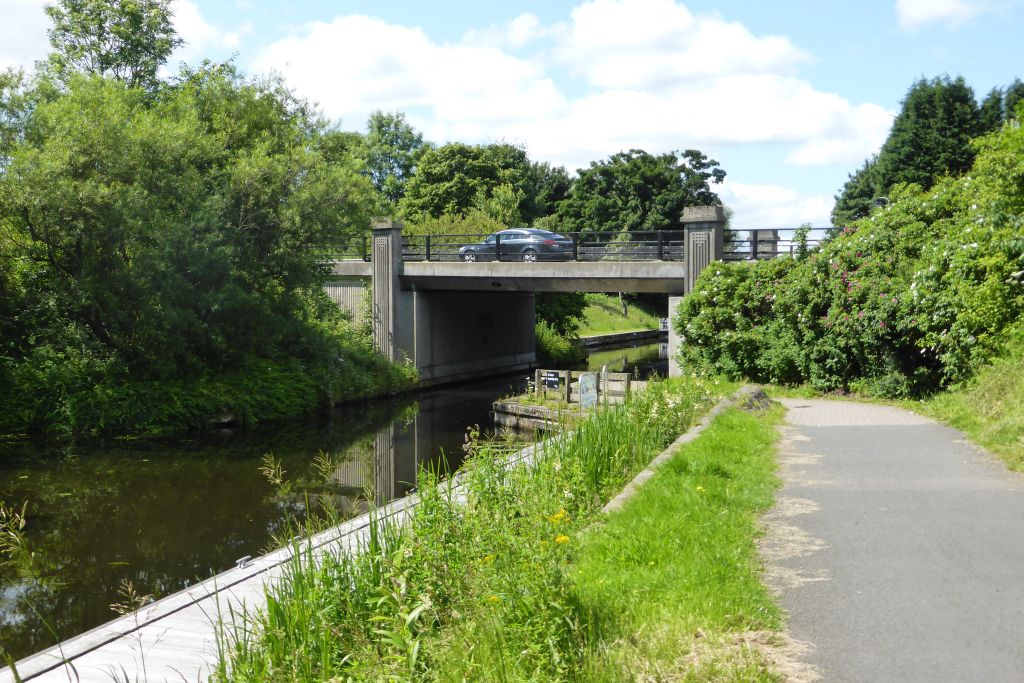
Glasgow Bridge marks a largely invisible Antonine Wall fortlet known through aerial evidence, beside a canal crossing that now connects Kirkintillo…
- Near Kirkintilloch
- Easy path

Fortified place · Roman
Cadder
East Dunbartonshire
Cadder’s quarried-away fort survives through excavated headquarters, granaries and baths, preserving the evidence of a substantial Antonine Wall ga…
- Near Bishopbriggs
- Easy path
The setting
Interpretation panel illustrating the medieval castle.
Photo: Billy McCrorie / Wikimedia Commons / CC BY-SA 2.0
Questions people ask
- Who began Bothwell Castle?
- Walter de Moravia, whose line are the forerunners of Clan Murray. The barony had been granted to David Olifard, Justiciar of Lothian, by King David I in the middle of the twelfth century, and descended through the family to Walter by 1252.
- How much of it was finished before the wars?
- Very little. By the outbreak of the Wars of Scottish Independence in 1296 only the great cylindrical donjon, the prison tower and the short curtain wall joining them stood complete. Foundations for the rest had probably been laid, and the gaps were closed with a wooden palisade.
- What happened to it during the wars?
- English forces seized it in 1296, and the Scots besieged the garrison for fourteen months across 1298 and 1299 before it surrendered. Edward I returned in 1301 with 6,800 men and purpose-built siege engines and took it a second time, after which it became the headquarters of Aymer de Valence, Warden of Scotland.
- Is what stands today the original castle?
- Largely not. The sieges badly damaged the donjon before the rest could be finished, and the damage was never repaired on the original plan. Rebuilding in the early fifteenth century enlarged the castle instead, and most of the standing fabric is that later work.
Sources
The Ancient Codex, in your pocket
Get the Pocket Codex app
Carry the directory with you — Bothwell Castle and thousands of ancient places across Britain and Ireland, offline, wherever you roam.