The crowning place of forty-two Kings of Scots and the site of Scotland's first parliament — now a Gothic Revival house with nothing left standing of its abbey, the monastery that stood here under an abbot.
Forty-two Kings of Scots were made kings on a mound at Scone, and the mound may have been built out of Scotland itself.
The tradition holds that nobles swore fealty to their king while carrying the earth of their own lands in their boots, or standing on soil brought from home — which is why the Moot Hill is also called Boot Hill, and why it is supposed to have grown from the contributions of the whole kingdom. Whether or not any of that is true in fact, the symbolism is exact: a king taking his oath there was standing on all of his country at once.
The list of men inaugurated here runs from Kenneth MacAlpin, traditionally the first King of Scots, through Macbeth and Robert the Bruce to Charles II, who accepted the Scottish crown at Scone in 1651. Nobody, it was held, had a right to reign as king of Scots unless he had first been crowned here upon the Stone of Scone. In 1296 Edward I removed that stone to Westminster Abbey and had the Coronation Chair built specially to fit over it — an act of appropriation whose meaning nobody at the time can have missed. Robert the Bruce was crowned at Scone anyway, ten years later. The Stone is now in Perth Museum.
Scone was not only where kings were made. In 906 King Constantine II called an assembly here, recorded in the Chronicle of the Kings of Alba: Constantine and Bishop Cellach met at the Hill of Belief near the royal city and pledged that the laws and disciplines of the faith, and the laws of churches and gospels, should be kept. That gathering is counted as the first Parliament of Scotland. For centuries afterwards Scone was where the kingdom crowned its rulers and where it made its law, and it served besides as a royal residence and hunting ground. Robert II spent most of his life calling it home and was buried in the abbey, though his grave has never been found.
Even the name is contested in an interesting way. Written across ten centuries as Scon, Scoon, Schone, Skune, Sgàin and a dozen other forms, it has resisted etymology. The likeliest derivation is from the P-Celtic word sken, meaning cut or cutting, later gaelicised as Sgàin — which would make the name Pictish in origin and its Gaelic form a later overlay, a small linguistic record of two cultures meeting. Modern analysis of place-names in eastern Scotland supports a Brittonic rather than a Gaelic root, and that matters for the site’s history: it suggests why Kenneth MacAlpin chose an existing Pictish centre for his capital rather than founding a new one.
The abbey came later. From 1114 to 1559 Scone was one of Scotland’s major religious houses, formalised by a charter of Alexander I, and between 1284 and 1402 it frequently housed the Parliament of Scotland — sometimes under the name the Palace of the Abbots. Its seal and a few surviving architectural fragments show a Romanesque church with a central tower and spire.
It ended abruptly. In 1559, in the early days of the Reformation, a mob came out from Dundee at the urging of John Knox and largely destroyed the abbey. The stone cross that had marked the Moot Hill through the Middle Ages disappeared around the same time. Nothing of the abbey now stands above ground level except detached fragments.
The estates went in 1580 to Lord Ruthven, later Earl of Gowrie, who rebuilt the Abbot’s Palace as a grand residence. Twenty years later James VI charged the Ruthvens with treason and handed Scone to Sir David Murray of Gospetrie, one of his most loyal followers, and the Murrays have held it ever since — a branch of the Murrays of Tullibardine whose original seat was Balvaird Castle, and which produced William Murray, 1st Earl of Mansfield, Lord Chief Justice of the King’s Bench.
What stands now is the work of the 3rd Earl, who commissioned William Atkinson in 1802 to recast the late sixteenth-century palace while keeping the character of the medieval Gothic abbey buildings underneath it. The result, in red sandstone with a castellated roof, was largely complete by 1807, and its Long Gallery is the best known room in it. The earl kept accounts and kept perspective: in 1808 he noted that much as the place had cost him, some £60,000, and much as it would still cost, it more than answered their expectation, and had given the family a handsome and agreeable residence.
John Claudius Loudon landscaped the grounds, and further work was done in 1842 to prepare Scone for a visit from Queen Victoria and Prince Albert. The palace is Category A listed, and it and its grounds — with a collection of fir trees and a star-shaped maze — are open to the public. The Moot Hill is still there, a low green mound beside a great house, which is a modest thing for a place where a nation decided who its kings would be.
What follows is drawn from published sources, with each claim labelled by how firmly it is established.
History
Scone was the crowning place of the Kings of Scots from at least the ninth century, and the home of the Stone of Scone — the Stone of Destiny. Forty-two kings were inaugurated here, Kenneth MacAlpin, Macbeth, Robert the Bruce and Charles II among them, and it was held that no man had a right to reign as king of Scots unless he had first been crowned at Scone upon the Stone.
King Constantine II called an assembly to meet at Scone in 906, recorded in the Chronicle of the Kings of Alba. Constantine and Bishop Cellach met at the Hill of Belief near the royal city and pledged that the laws and disciplines of the faith and the laws of churches and gospels should be kept. It is the first Parliament of Scotland, and it makes Scone the site of both coronations and government.
The Moot Hill, also called Boot Hill, is the inauguration mound. One tradition holds that nobles swore fealty to their king while wearing the earth of their own lands in their boots, or standing on soil brought from home — so that the hill itself was built from all parts of the kingdom and a king swearing on it stood symbolically upon the whole of Scotland.
Scone was one of Scotland's major monasteries from 1114 to 1559, its status formalised by a charter of Alexander I. The abbey seal and surviving architectural fragments show a Romanesque church with a central tower crowned by a spire, and between 1284 and 1402 the abbey often housed the Parliament of Scotland. Edward I carried the Stone of Scone off to Westminster Abbey in 1296, and the Coronation Chair still standing there was made specially to fit over it. Robert the Bruce was crowned at Scone ten years later, in 1306, and the last coronation held here was that of Charles II in 1651. The Stone is now in Perth Museum.
In 1559 a mob from Dundee, whipped up by the reformer John Knox, sacked and largely destroyed the abbey. The stone cross that had marked the Moot Hill through the Middle Ages disappeared at about the same time. Nothing of the abbey now stands above ground except detached architectural fragments. The abbey estates were granted in 1580 to Lord Ruthven, later Earl of Gowrie, who rebuilt the Abbot's Palace as a grand residence. James VI charged the family with treason in 1600 and passed their Scone estates to Sir David Murray of Gospetrie, later Lord Scone, one of his most loyal followers. The Murrays have held it since.
The 3rd Earl of Mansfield commissioned William Atkinson in 1802 to recast the late sixteenth-century palace, keeping the character of the medieval Gothic abbey buildings it stood on. The work was largely finished by 1807. In 1808 the earl noted that much as the place had cost him — some £60,000 — it more than answered expectation.
People
-
Constantine II
Called the 906 assembly at Scone, associated with the first Parliament of Scotland.
-
Robert the Bruce
Crowned at Scone in 1306.
-
John Knox
His reforming movement was associated with the 1559 destruction of Scone Abbey.
-
William Atkinson
Recast Scone Palace for the 3rd Earl of Mansfield from 1802.
Cultural influences
-
A royal inauguration and parliamentary centre
Scone was central to Scottish kingship, coronations, parliament and monastic life, all focused on the Moot Hill and Stone of Scone tradition.
Connections
-
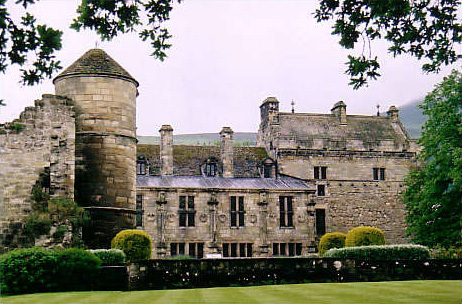
Photo: Sam Styles / Wikimedia Commons / CC BY-SA 2.0 Both were important royal centres in medieval and early-modern Scotland, linking Scone’s coronation landscape with Falkland’s royal residence.
-
The palace and Roman fort represent successive centres of power in the Tay valley landscape around Perth and Scone.
-
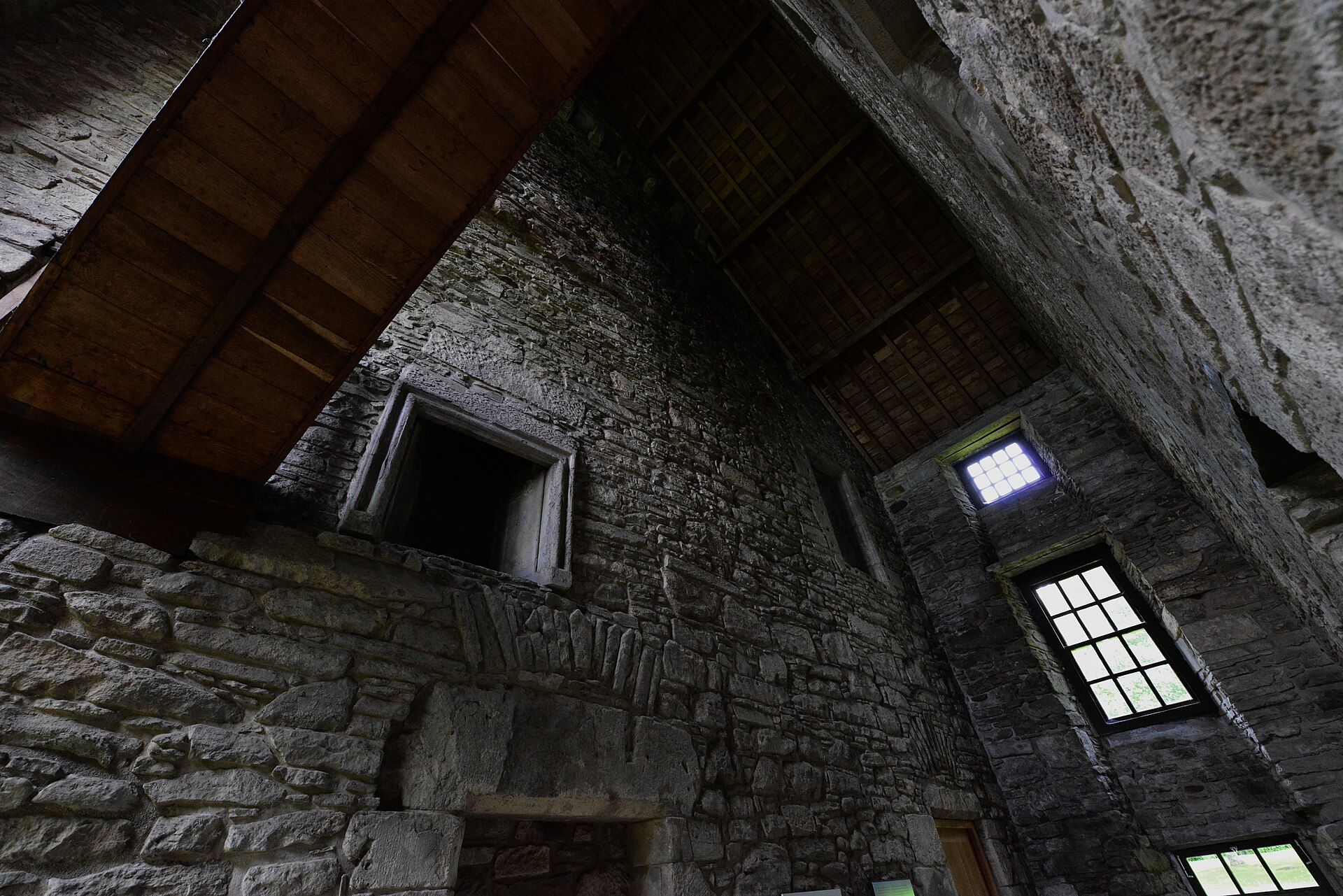
Photo: HARTLEPOOLMARINA2014 / Wikimedia Commons / CC BY-SA 4.0 Scone Palace and Huntingtower Castle belong to the wider Perthshire landscape of royal travel and aristocratic residence.
Discovery & excavation
Trial trenching in 2008 and 2009, guided by geophysical survey, investigated the buried abbey and Moot Hill. It exposed fragments of the abbey church foundations, inhumations, medieval coins and masonry, and confirmed a substantial ditch around the mound with medieval pottery, animal bone and charcoal in its fills.
What to look for
-
The Moot Hill
The inauguration mound of the Kings of Scots, once marked by a stone cross that vanished around the Reformation. Tradition holds it was raised from soil the nobles carried here in their boots from their own lands.
-
The Long Gallery
One of the best known features of Atkinson's palace, completed in 1807 for the 3rd Earl of Mansfield.
-
Architectural fragments of the abbey
Nothing of Scone Abbey stands above ground. Detached fragments survive, and together with the church shown on the abbey seal they establish that it was Romanesque with a central tower and spire.
-
The grounds
The gardens hold a collection of fir trees and a star-shaped maze. Landscaping around the palace was carried out by John Claudius Loudon, with further work in 1842 for a visit by Queen Victoria and Prince Albert.
Plan your visit
- Location
- 56.4226°N · 3.4381°W
- Nearest settlement
- Perth
- Time needed
- About 120 minutes
- What survives
- The Gothic-recast palace, Moot Hill and detached abbey fragments survive; no complete above-ground fabric of Scone Abbey remains.
Nearby places
Fortified place · Roman
Bertha (Perth)
Perth and Kinross
A Roman fort north of Perth at the meeting of the Almond and the Tay.
- Near Perth
- Some walking
Fortified place · Medieval
Huntingtower Castle
Perth and Kinross
The Ruthven name was suppressed by Act of Parliament in 1600, and the castle had to be renamed. It had been Ruthven Castle for centuries.
- Near Perth
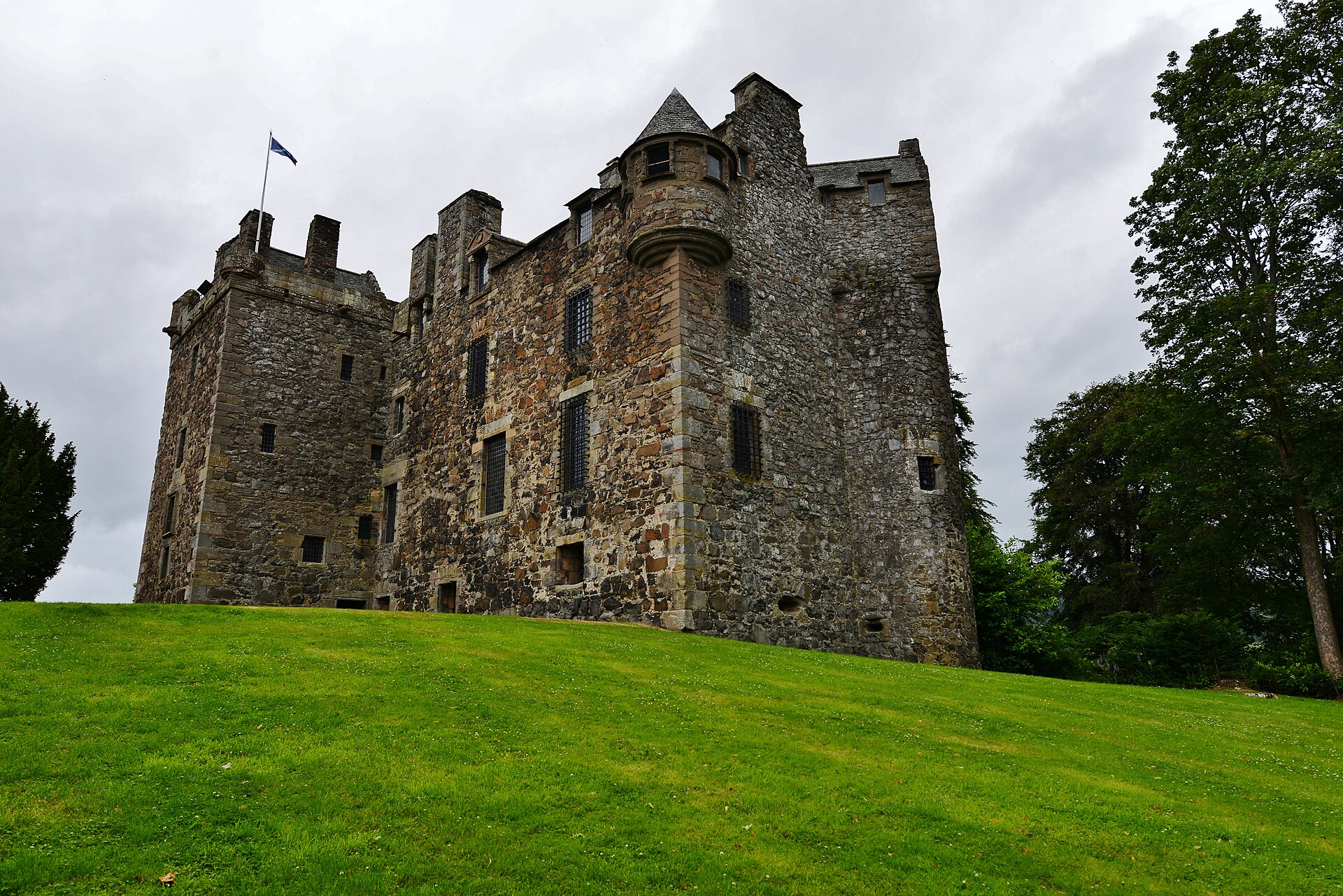
Fortified place · Medieval
Elcho Castle
Perth and Kinross
Nearly burned in 1773 by a crowd who found it full of grain being held back for export during a famine.
- Near Rhynd
Fortified place · Prehistoric
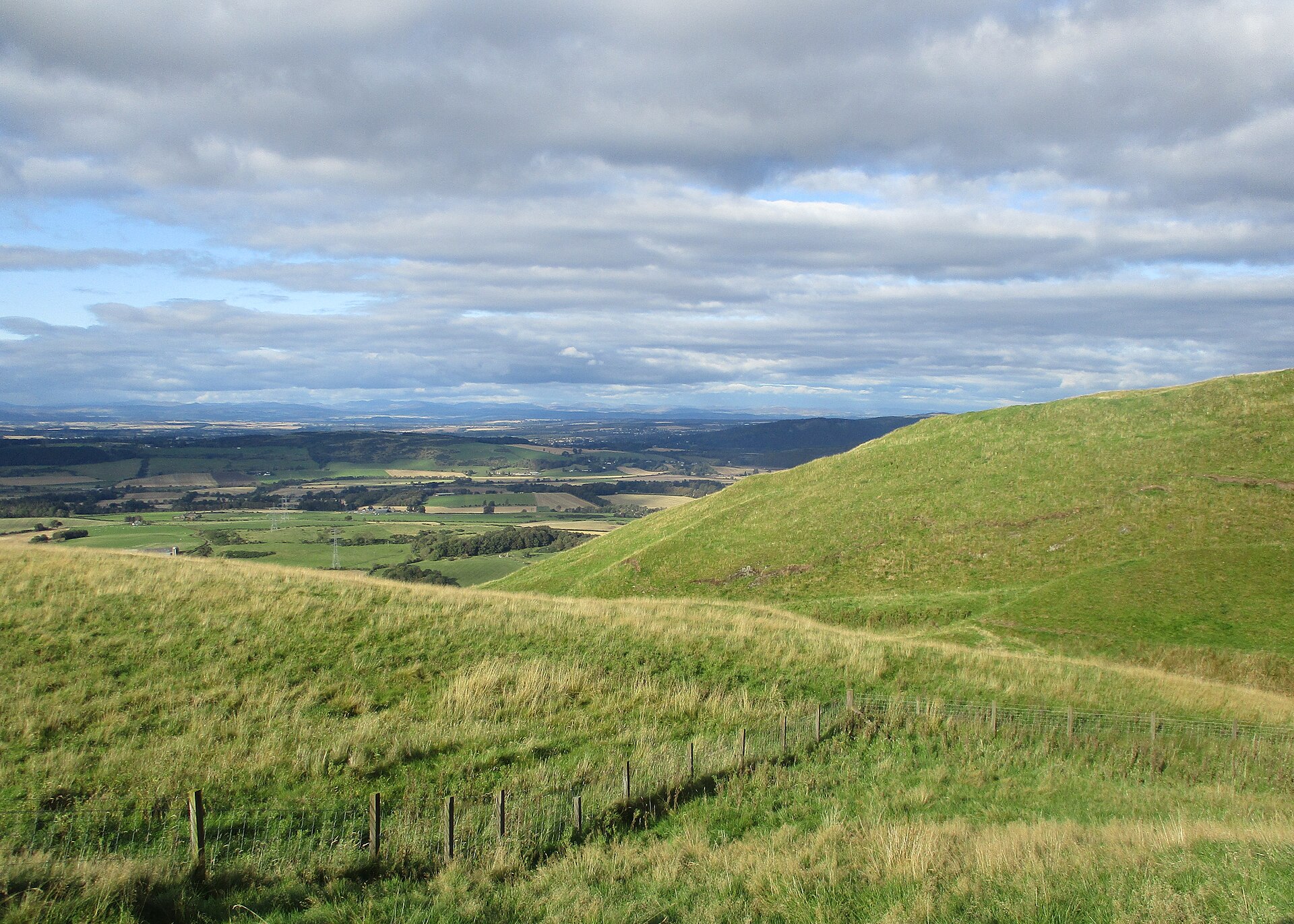
Castle Law, Forgandenny
Perth and Kinross
A multiple-enclosure hillfort above Forgandenny whose banks and ditches are effectively its entire history: the written record has almost nothing t…
Questions people ask
- Why was Scone so important?
- It was the crowning place of the Kings of Scots from at least the ninth century and the home of the Stone of Destiny. Forty-two kings were inaugurated here, and it was held that no king could rightly reign unless he had been crowned at Scone upon the Stone. It was also the site of the first Parliament of Scotland, in 906.
- Where is the Stone of Scone now?
- In Perth Museum. Edward I took it to Westminster Abbey in 1296, and the Coronation Chair there was built specially to fit over it.
- What happened to Scone Abbey?
- A mob from Dundee, roused by John Knox, sacked it in 1559 during the early Reformation and largely destroyed it. Nothing survives above ground except detached architectural fragments.
- Who owns the palace?
- The Earls of Mansfield. The Murrays received the estate from James VI in 1600 after the Ruthvens were charged with treason, and have held it since. The palace and grounds are open to the public.
Sources
The Ancient Codex, in your pocket
Get the Pocket Codex app
Carry the directory with you — Scone Palace / Scone Abbey and thousands of ancient places across Britain and Ireland, offline, wherever you roam.