
Falkland Palace is a major Scottish royal residence where a medieval hunting castle became a French Renaissance court, retaining the world’s oldest tennis court still in use.
Falkland Palace rises on a sandstone ridge beneath the Lomond Hills, its French Renaissance façades enclosing a royal courtyard, chapel, gardens and an extraordinary surviving real-tennis court. The building is a powerful record of Scottish kings remaking a defended hunting lodge into a courtly residence geared to sport, ceremony and display.
For the Stewarts, Falkland was a retreat for hunting and a stage for politics. James V expanded it in the 1530s and 1540s, Mary, Queen of Scots favoured it, and James VI held court there. A later fire and neglect left it ruinous until the Marquis of Bute’s restoration began in 1887, preserving an unusually rich royal landscape.
A royal hunting lodge stood here in the late twelfth century. It was expanded in the thirteenth into a castle owned by the Earls of Fife of Clan MacDuff, built on this slight hill because the ground could be defended, and the land around it eventually became the palace gardens. To the north, between the royal stable and the River Eden, lay a great oak wood whose groves merged into the surrounding parkland, and timber was occasionally cut there for royal ships of war.
The castle stood among meadows, fields, orchards and glades, with Falkland Park — a managed forest enclosed by a pale, a ditch with a fence on top — kept for hunting by the royal family and its courtiers. A park keeper maintained the pale; in 1469 the keeper Bannatyne was docked wages for failing to keep it repaired.
In 1371 Isabella MacDuff, Countess of Fife, acknowledged Robert Stewart, Earl of Menteith, son of Robert II, as her heir, and made him keeper of the castle and forest. In 1402 Stewart, by then Duke of Albany, imprisoned his nephew and rival David Stewart, Duke of Rothesay — the eldest son of Robert III — at Falkland, where he died of neglect and starvation; one chronicle claims the starving duke had eaten his own hands. Parliament exonerated Albany, but suspicion of foul play persisted, was carried against Rothesay’s younger brother the future James I, and led eventually to the downfall of the Albany Stewarts. After ordering the execution of Albany’s son Murdoch in 1424, James I took Falkland for the crown.
It became a favourite retreat of the Stewart monarchs and their queens consort, who practised falconry and hawked in the surrounding forests, with red and fallow deer kept in the park, some brought from the Torwood near Stirling.
James II granted Falkland to his queen, Mary of Guelders, and it became a favourite residence. The stables and other buildings in the close were repaired and a new kitchen built for the royal visits of 1453, and linseed, cabbage seed, onion, leek and other seeds were bought for the garden. As a widow Mary employed her stewards Henry Kinghorn and William Blair to supervise improvements in 1461 and 1462: a stairway from the queen’s chamber to the pleasance, new stables, a coal shed, repairs and an extension to the counting house, and smith-made firedogs for her bedchamber and the grate of the great hall. Andrew Lesouris was the royal carpenter. Among the new structures was a galry with two chambers — apparently the earliest use in Britain of the French-derived term gallery.
Work in the grounds included two ponds in the hay yard, a new lawn near the queen’s chamber, and a doorway giving her access to the garden. Such access was fashionable: Margaret of Anjou had it at Greenwich, Isabella of Portugal at Bruges, and Eleanor of Naples built new lodgings and a terrace garden at the Castello Estense in Ferrara. Mary of Guelders is said to have had a garden walk made between two oak trees known as Queen’s Quarrels, a name suggestive of archery, a quarrel being a crossbow bolt; another walk was called the Gilderland. The hay meadow appears regularly in the royal accounts, as do onions, because the gardener’s pay was reckoned in four barrels of them.
James III and Margaret of Denmark came in September 1473. The Court of Exchequer met at Falkland annually to complete the accounts of the jointure lands of Mary of Guelders, who may have intended to make the palace her residence and spiritual retreat in widowhood.
Between 1497 and 1541 James IV and James V transformed the old castle and royal lodgings into a Renaissance palace. James IV enjoyed imported oranges here in April 1497 and tipped the gardener and the workmen building the dyke around the park; the accounts mention Perkin Warbeck, his servants and his horses at Falkland in 1496. In May 1501 the king hired two stonemasons from Dundee and bought an hourglass for timekeeping. On 13 December that year he was entertained by the female minstrel Quhissilgibboun, and in September 1504 by fiddlers, lutenists and an African drummer known as the More taubronar. A man from Pittenweem brought a live seal to the castle on 25 September 1502 and was given fourteen shillings for it.
Margaret Tudor came in August 1509. A new chapel, perhaps on the site of the present south quarter, was roofed in 1512 by Alexander and John Slater while masons worked on the garden wall, and William Thome completed the walls of the great hall. In 1513 the king was entertained by the Wild Lady, who received £10 for her appearances.
The park was equipped for sport. James IV brought deer-nets from Kinneil House in November 1503, Andrew Matheson built a fold for deer in November 1505, and a trap was made to slay foxes. For a time in 1507 the horse of the French herald Montjoie was kept in the palace stables. In May 1508 the king and John Methven stalked deer with a firearm called a culverin, and wild boar imported from France were later kept in the park behind a fence made by the Laird of Fernie, with dairy and beef cattle kept to feed the household.
The teenage James V was detained here by the Earl of Angus and, according to Robert Lindsay of Pitscottie, escaped to Stirling Castle, held by his mother Margaret Tudor: he had announced an early morning deer hunt and slipped away by horse in the middle of the night dressed as a stable hand. Pitscottie names the local landowner Andrew Fernie among his sources, and Fernie probably supplied the story.
To address the poor state of the garden and park James V appointed a new captain and keeper, William Barclay, Master of Rhynd, in March 1527. The Queen’s Chamber was hung with tapestry for Margaret Tudor in September 1534, and from 1537 James extended his father’s buildings in French Renaissance style. In 1541 he arranged to build a royal tennis court and bowling alley in the garden; the court was called a caichpule in Scots and the game jeu de paume in French, and Mary was later said to have scandalised Scotland by wearing men’s breeches to play it.
The court came regularly through the building works. In December 1538 and 1540 new velvet and satin gowns were packed in canvas and sent as gifts for the queen’s ladies in waiting, with a green satin gown and shirts for Senat, the queen’s fool. In February 1539 one of Mary of Guise’s French courtiers, Marie Pieris, married Lord Seton by handfasting, the French apothecary being present that day, and James held a tournament on or around May Day. Mary of Guise embroidered her husband’s shirts here with gold thread in October 1539, her ladies’ luggage including their broder warklumys. The couple played cards in April 1540, when servants washed the clothes of the king’s infant daughter by Elizabeth Beaton, and in August Mary rode out in a new cloak of scarlet cloth edged with crimson velvet; her tailor Nicholas du Moncel and her embroiderer Henri Le Moyne witnessed the wedding of another French servant, Jean Landais.
The goldsmith John Mosman made a gilt chalice for the couple’s short-lived son Prince James, born in 1540, and it was sent to Falkland in July 1541 for use in the palace chapel. Wild boar arrived from Elbeuf near Rouen that same month, and the Laird of Fernie built a new park dyke and a timber-fenced run for them. An inventory of James V’s goods includes five sangler staves for boar hunting, and Thomas Melville’s wife was employed to look after the king’s pets. Another inventory records a green velvet bed in the wardrobe with velvet-covered posts, packed in coffers and travel bags called sowmes. Robert Murray, the plumber who maintained the fountain at Linlithgow, provided lead work for a fountain here that has long vanished.
James V died at Falkland in December 1542, of an illness brought on by the shock and grief of his army’s defeat at Solway Moss. His body lay in the Chapel Royal for almost a month, the chapel draped in black, and on 4 January 1543 messengers ordered the gentlemen of Fife to convey it to North Queensferry on its way to Holyrood Abbey.
Falkland and Stirling were official residences of Mary of Guise in widowhood, and she continued to keep wild boar in the park. She stayed often, particularly in autumn — she is recorded here in October 1546 and September 1549 — and a letter perhaps of 1548 mentions refurbishment of the stables, the wardrobes and the lodgings of one of her officials. She asked the Earl of Bothwell to escort her from Falkland to Stirling for a council in December 1549. In October 1552 Regent Arran wondered whether she would come from Falkland for a Privy Council meeting, since palace and town were too small for the numbers expected: there would be a great company of folks, he wrote, and they could not easily be lodged.
Nearby Myres Castle was the home of the royal macers and sergeants at arms who served Falkland from at least the sixteenth century. John Scrimgeour of Myres supervised building at the palace from 1532 to 1563, writing to Mary of Guise about repairs and the lead roofs, delayed by frost, and about the carts he needed to bring stone to the palace and timber from the harbour at Levenmouth. In May 1559 he repaired the stables, hired Adam Symmers to fix the windows, and designed new ditches and fences for the garden.
Mary, Queen of Scots, returned from France in September 1561 and hosted a group of diplomats here. She held her Maundy Thursday ceremony at Falkland in March 1562, washing the feet of nineteen young women — the number matching her age — for whom John Balfour bought new linen for aprons and towels, and she came for Easter in 1563 and 1564. During her visit at Easter 1562 James Hamilton, third Earl of Arran, arrived with news of a conspiracy, claiming that the Earl of Bothwell planned to abduct the queen and the Earl of Moray from the deer park. Both earls were imprisoned, and Arran was considered to be mentally ill.
The palace is today under the stewardship of Ninian Stuart, who delegates most of his duties to the National Trust for Scotland. The Chapel Royal is dedicated to Thomas the Apostle, is open to the public and is reserved for Catholic worship.
What follows is drawn from published sources, with each claim labelled by how firmly it is established.
History
A royal hunting lodge stood at Falkland in the late 12th century and grew into a castle held by the Earls of Fife. After James I took it for the Crown in 1424, it became a popular Stewart retreat for falconry and hunting in a managed forest and deer park. The prison death of David, Duke of Rothesay, at Falkland in 1402 also gave the earlier castle a dark political history.
James IV and James V transformed the old castle into a Renaissance royal palace between 1497 and 1541. James V extended the buildings in French Renaissance style from 1537, and a chapel, gardens, bowling alley and royal tennis court formed part of the complex. James V died at Falkland in December 1542; Mary, Queen of Scots later used it as a favoured refuge, and James VI continued to hold court and receive ambassadors there.
The original real tennis court in the gardens is the world’s oldest court still in use. After a fire during occupation by Oliver Cromwell’s troops, the palace fell quickly into ruin. John, 3rd Marquis of Bute bought the estate in 1887 and restored it over two decades; in 1952 the National Trust for Scotland became deputy keeper and now manages the palace and its extensive gardens.
People
-
James V
Scottish king who extended Falkland in French Renaissance style from 1537, developed its courtly buildings and died at the palace in December 1542.
-

Photo: Unidentified painter / Wikimedia Commons / Public domain Mary, Queen of Scots
Monarch who later used Falkland as a favoured refuge, continuing the palace’s role as a private royal retreat after James V’s death.
-
John, 3rd Marquis of Bute
Owner who bought the ruinous estate in 1887 and began the two-decade restoration that made Falkland’s survival as a palace possible.
Cultural influences
-
The royal hunting forest, deer park and Renaissance court culture shaped Falkland’s palace, gardens and tennis court.
Connections
-
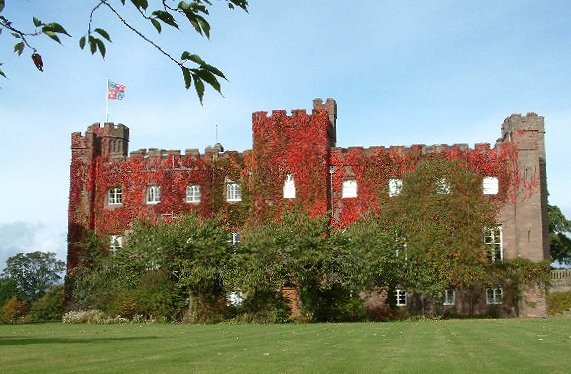
Photo: Peter Hodge / Wikimedia Commons / CC BY-SA 2.0 Another major Scottish royal and ecclesiastical centre, allowing comparison with Falkland’s role as a Renaissance royal palace.
-
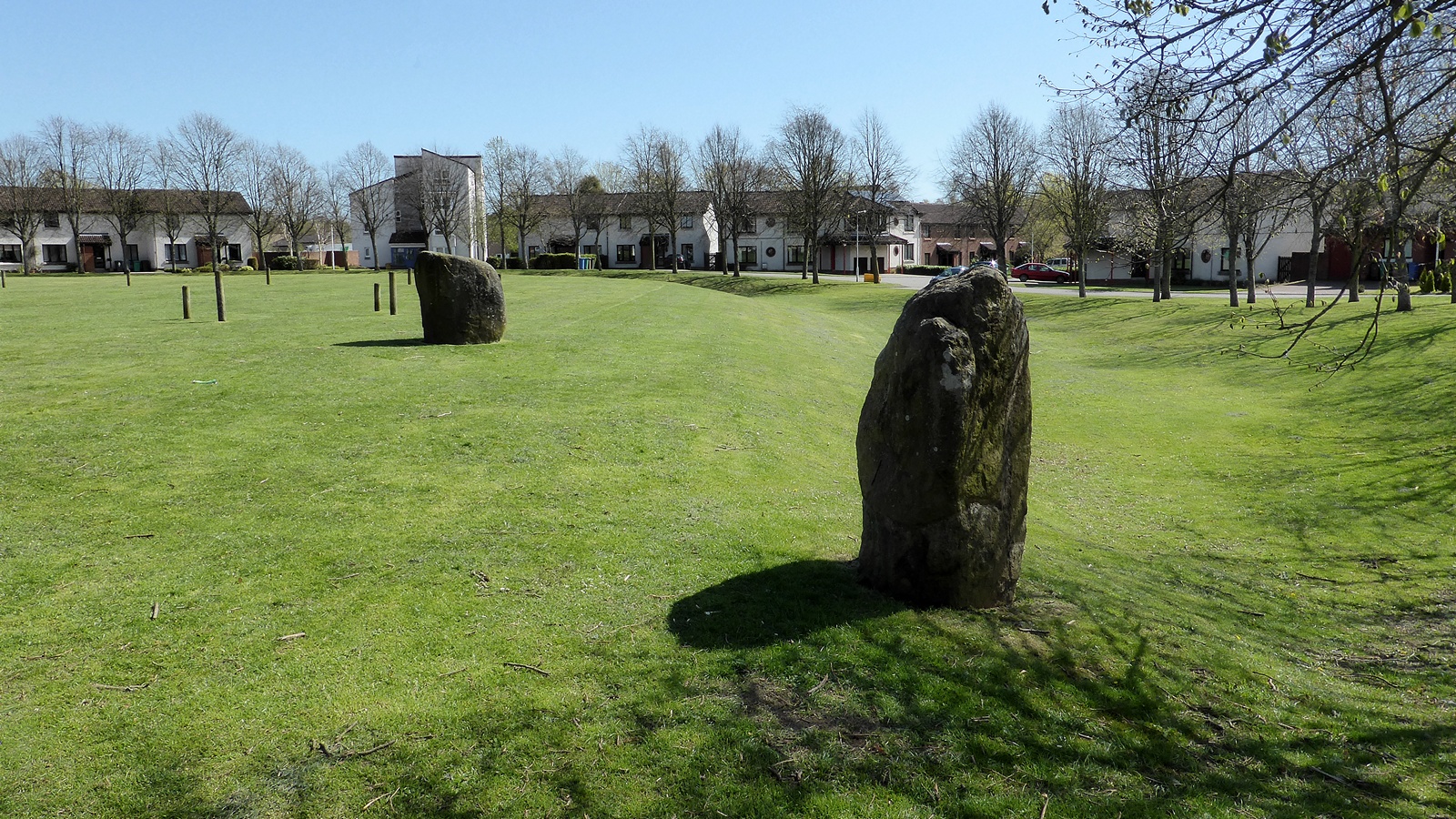
Photo: Sandy Gerrard / Wikimedia Commons / CC BY-SA 2.0 A prehistoric ceremonial landscape in central Fife, placing Falkland’s later palace within a much longer history of elite and ritual sites.
-

Photo: Kilnburn (talk) 18:49, 18 June 2009 (UTC) / Wikimedia Commons / Attribution A prehistoric stone circle that contrasts the palace’s Renaissance architecture with the earlier ceremonial use of Fife’s landscape.
Discovery & excavation
The South and East Renaissance quarters, Chapel Royal, gatehouse tower, gardens and real tennis court preserve the royal palace complex.
What to look for
-
The Renaissance façades
Compare the French Renaissance South and East Quarters, where James V recast the earlier castle into a royal palace between 1497 and 1541.
-
The Chapel Royal ceiling
The Chapel Royal forms part of James V’s courtly complex, alongside the gardens, bowling alley and tennis court created for royal recreation.
-
The gatehouse tower
The courtyard gatehouse tower still marks the approach to a palace that began as a royal hunting lodge before the Stewart rebuilding.
-
The real tennis court
The original court in the gardens remains the world’s oldest real-tennis court still in use, preserving a rare working part of the royal complex.
-
The Lomond Hills view
From the gardens, look towards the Lomond Hills and imagine the managed forest and deer park that made Falkland a favoured Stewart hunting retreat.
Plan your visit
- Location
- 56.2548°N · 3.2061°W
- Access
- Paid entry — managed visitor site
- Time needed
- About 60 minutes
- Best time
- Visit during published palace and garden opening periods and check current arrangements before travelling.
- What survives
- The restored Renaissance palace retains its principal façades, Chapel Royal, gardens and the world’s oldest real-tennis court still in use.
- Facilities
- Visitor facilities depend on the current palace operation; check the official information before travelling.
Opening & admission
Paid entry; National Trust for Scotland members visit free.
- The palace is currently listed as open 11am to 5pm, last entry 4.15pm; the shop and garden open from 9.30am to 5pm.
- Check the official page before travelling, as seasonal hours and closures can change.
Nearby places
Sacred place · Prehistoric
Balfarg
Fife
Balfarg preserves a multi-phase Neolithic (the late Stone Age, about 4000–2500 BC in Britain) ceremonial landscape within modern Glenrothes, includ…
- Easy path

Sacred place · Prehistoric
Balbirnie Stone Circle
Fife
A circle of which only five stones stood when excavation began in 1970, four more stumps and a tenth socket being found beneath.
- Easy path
Fortified place · Medieval
Balgonie Castle
Fife
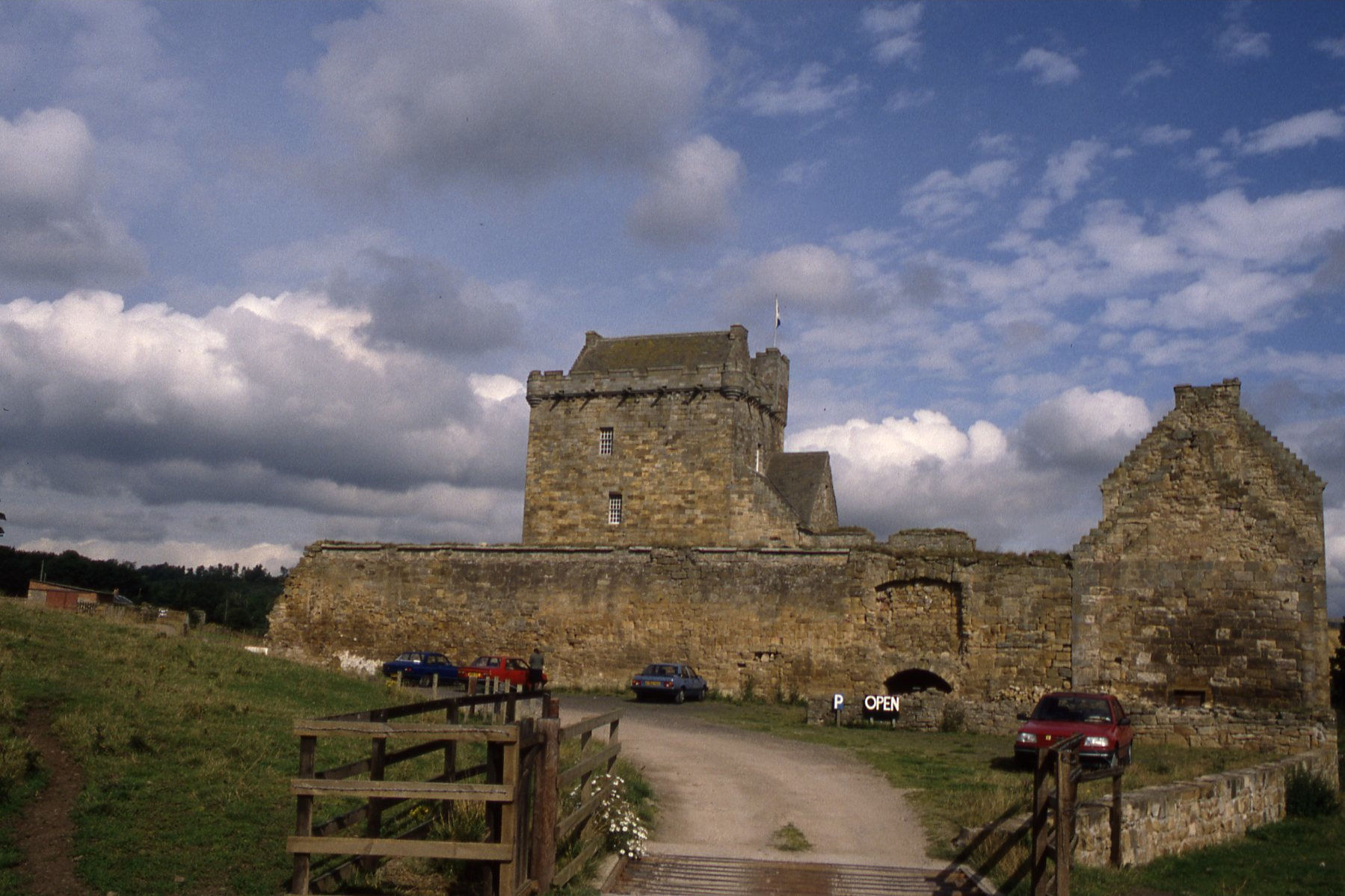
Balgonie Castle shows five centuries of incremental change, from a 14th-century tower house to a restored residence within the remains of a 17th-ce…

Carved stone · Pictish & early medieval
Abdie stone
Fife
The Abdie Stone is a rare Class I Pictish (of the Picts, the people of northern and eastern Scotland from about AD 300 to 900) monument in Fife who…
- Easy path
Questions people ask
- When did Falkland become a royal palace?
- James IV and James V transformed the earlier castle and royal lodgings into a Renaissance palace between 1497 and 1541.
- Why is Falkland Palace associated with Mary, Queen of Scots?
- It was one of her favourite places and a refuge from the political and religious turmoil of her reign.
- What is special about its tennis court?
- It is the world’s oldest real tennis court still in use.
Sources
The Ancient Codex, in your pocket
Get the Pocket Codex app
Carry the directory with you — Falkland Palace and thousands of ancient places across Britain and Ireland, offline, wherever you roam.