For roughly five hundred years this was the working seat of the Bishops of Moray, and its tower still stands as the largest medieval tower house in Scotland by volume.
A six-storey tower still rises over the flat farmland north of Elgin, its walls thick enough that a spiral staircase and a row of chambers fit inside them on every floor. Below the courtyard, a circular stone-vaulted dungeon just over five metres across was lit by a single narrow slit facing west — the darkest room in a building that, for around five centuries, doubled as the working home of the Bishops of Moray.
The bishopric itself had no permanent base until the early 13th century, its bishops moving between houses at Birnie, Kinneddar and Spynie until Pope Innocent III allowed a permanent settlement in 1206. Even after the cathedral itself moved on to Elgin in 1224 — judged safer and closer to trade — the bishops kept Spynie as their fortified residence, rebuilding it in timber, then stone, over three centuries.
The palace weathered a burning by the Wolf of Badenoch, sieges during the Covenanting wars, and use as a prison for enemies of the Crown, before its last bishop was expelled in 1689 and the buildings were gradually stripped and left to decay. Stabilisation work in the late 20th century, including a concrete plinth hidden inside a rebuilt curtain wall, finally secured the tower before Historic Scotland opened the ruins to the public in 1994.
What follows is drawn from published sources, with each claim labelled by how firmly it is established.
History
In the 1120s the first recorded bishop of Moray, Gregoir, appears on royal charters, though the early bishopric had no fixed home and its bishops moved between houses at Birnie, Kinneddar and Spynie. King William the Lion granted lands to the Holy Trinity church of Moray in 1172, and in April 1206 Pope Innocent III gave Bishop Bricius de Douglas formal permission to settle permanently at Spynie, a move probably completed by 1208.
Bishop Bricius judged the cathedral at Spynie too vulnerable to attack and too distant from trade, and before his death in 1222 he had written to the Pope requesting a further move to Elgin. His successor, Bishop Andrew of Moray, carried the change through, and on 19 July 1224 the See of Moray transferred to the Church of the Holy Trinity in Elgin. The bishop's fortified residence, however, remained at Spynie, beginning as a wooden hall, chapel and domestic buildings enclosed by a ditched rampart, work later uncovered in excavations between 1986 and 1994.
Stone building began in the 13th century with a chapel lit by coloured glass, and through the 14th century the timber ranges were gradually replaced until a near-square castle building rose within a curtain wall some 7 metres high, its main gate facing south and a corner tower fitted with narrow openings for archers. The earliest surviving reference to the castle itself dates from between 1292 and 1296, compiled for English administrators during Edward I's occupation of Scotland, and the first writ issued at Spynie was recorded in 1343.
In June 1390 Alexander Stewart, Earl of Buchan — known as the Wolf of Badenoch — burned Elgin Cathedral and is thought to have seized Spynie Castle itself, prompting his brother King Robert III to forbid him from interfering with it that August. After Bishop Alexander Bur died in 1397 the king took the castle into royal hands and, despite this history, appointed the reformed Wolf of Badenoch as its warden, before ordering him on 3 May 1398 to hand the castle and its contents over to the newly elected Bishop William.
Bishop John de Winchester, who held office from 1435 to 1460 and also served as the king's Master of Works on Inverness, Urquhart and Linlithgow, is thought to have moved the main gate to the east wall and fitted it with a portcullis, its fine stonework possibly the work of masons then restoring Elgin Cathedral. The palace's most imposing addition, David's Tower, followed in the later 15th century: begun by Bishop David Stewart between 1462 and 1476 and completed by Bishop William Tulloch by 1482, it rises six storeys over a vaulted basement holding a circular dungeon 5.3 metres across.
During the mid-16th century a walled garden and orchard were laid out south of the castle, a deed signed there in 1556, while a rabbit warren and a doocot (dovecote) followed in 1569. Bishop Patrick Hepburn, the last Roman Catholic bishop at Spynie, installed wide-mouth gun loops and enlarged windows, sheltered his relative Bothwell there in 1567 after Carberry Hill, and held the English agent Christopher Rokeby prisoner for eighteen months from 1566. In 1587 King James VI granted the castle to Alexander Lindsay, 1st Lord Spynie, who held it until 1605.
The castle withstood two 17th-century sieges: Bishop John Guthrie surrendered it to Covenanter forces under Colonel Robert Monro on 16 July 1640 and was later imprisoned in Aberdeen, and in 1645 the Marquis of Huntly besieged the Covenanter-held castle until it was relieved by John Middleton. Ownership passed back to the church in 1662, then decayed after 1689 when its last occupant, Bishop William Hay, was expelled for refusing an oath of allegiance; the ruins were later stabilised in the 1970s and opened to the public by Historic Scotland in 1994.
People
-
Bishop Bricius de Douglas
Secured papal permission from Innocent III in 1206 for the bishopric's permanent move to Spynie.
-
Bishop Andrew of Moray
Carried out the transfer of the See of Moray to Elgin in 1224 while the bishops' residence remained at Spynie.
-
Alexander Stewart, Earl of Buchan (the Wolf of Badenoch)
Burned Elgin Cathedral in 1390 and is thought to have seized Spynie Castle.
-
Bishop John de Winchester
King's Master of Works who is thought to have rebuilt the castle's east gate in the mid-15th century.
-
Bishop David Stewart and Bishop William Tulloch
Began and completed David's Tower between 1462 and 1482.
-
Bishop Patrick Hepburn
Last Roman Catholic bishop at Spynie, who added gun loops and sheltered his relative Bothwell in 1567.
-
Bishop John Guthrie
Surrendered the castle to Covenanter forces under Colonel Robert Monro in 1640.
Cultural influences
-
Elgin Cathedral's masons
The fine stonework of the rebuilt east gate may have been carried out by the master masons then working on the restoration of Elgin Cathedral after its destruction in 1390.
Connections
-

Photo: Daniel Kraft / Wikimedia Commons / CC BY-SA 3.0 The See of Moray transferred there in 1224, though the bishops continued to reside at Spynie Palace itself.
-
Holy Trinity Church, Spynie Churchyard
The original cathedral church of the Diocese of Moray, standing about 500 metres from the palace.
-

Photo: james denham / Wikimedia Commons / CC BY-SA 2.0 Hume Castle
Edward Sutton, 4th Baron Dudley, was captured there before being held prisoner at Spynie during the Rough Wooing.
-
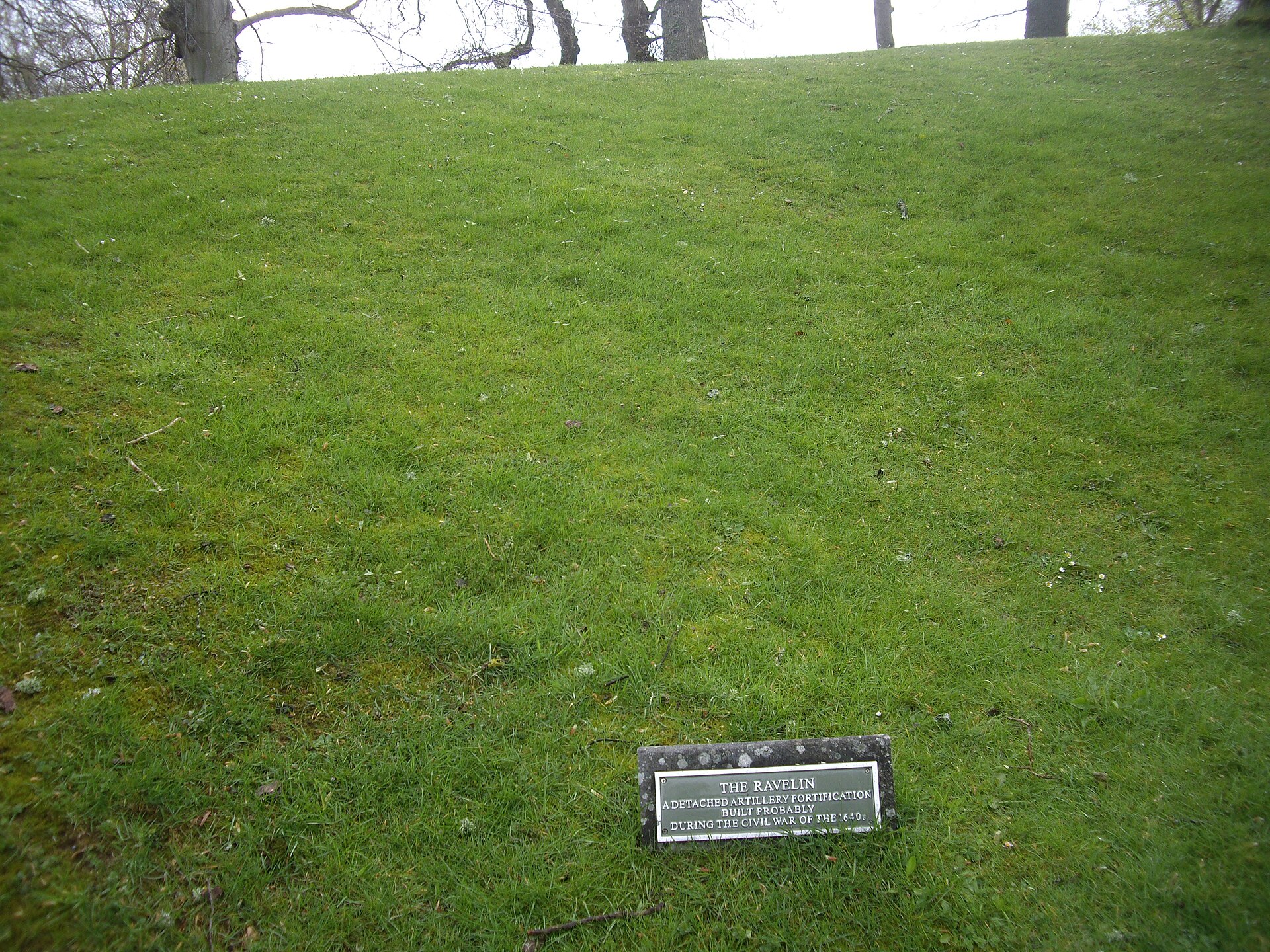
Photo: Stanley Howe / Wikimedia Commons / CC BY-SA 2.0 Bothwell fled there before taking shelter with Bishop Hepburn at Spynie after the battle of Carberry Hill in 1567.
-

Photo: Diliff / Wikimedia Commons / CC BY-SA 3.0 Inverness Castle, Urquhart Castle and Linlithgow Palace
Other royal building works overseen by Bishop John de Winchester in his role as the king's Master of Works.
Discovery & excavation
Excavations carried out between 1986 and 1994 revealed the remains of the original late-12th-century wooden castle, showing that its buildings had been enclosed by a rectangular ring work and ditch roughly the same size as the later 14th-century stone curtain wall.
What to look for
-
David's Tower
The largest medieval tower house in Scotland by volume, measuring 19 by 13.5 metres and 22 metres high, with six storeys above ground and a vaulted basement.
-
The circular dungeon
A vaulted basement cell 5.3 metres in diameter, set below courtyard level and lit only by a single narrow loop facing west.
-
The east gate
Rebuilt with a portcullis in the mid-15th century, its upper storey still showing the gatekeeper's room complete with a small fireplace.
-
The 14th-century curtain wall
Part of the near-square castle building erected within a curtain wall some 7 metres high, with a corner tower fitted with narrow archers' openings.
What is said
Folklore and tradition, recorded as what is said — not as established fact.
-
A tower built out of fear of Huntly
It was said that Bishop David Stewart's decision to build the massive David's Tower was a reaction to intimidation from the Earl of Huntly, whom Stewart had excommunicated for failing to pay his taxes.
Plan your visit
- Location
- 57.6761°N · 3.2914°W
- Nearest settlement
- Elgin
- Terrain
- Moderate walking
- Time needed
- About 45 minutes
- Best time
- Visit during published opening hours and in dry daylight, when the palace ruins and surrounding landscape can be explored comfortably.
- What survives
- Spynie preserves David’s Tower, the largest surviving medieval tower house in Scotland, together with the ruined ranges of the bishops of Moray’s former palace.
- Facilities
- Visitor facilities depend on the current heritage-site operation; check the official information before travelling.
Opening & admission
- Historic Scotland opened the stabilised ruin to the public in 1994.
- Ruined palace surfaces and tower areas may involve steps and uneven ground.
Nearby places

Carved stone · Pictish & early medieval
Elgin Pillar
Moray
A tall granite Pictish (of the Picts, the people of northern and eastern Scotland from about AD 300 to 900) stone found buried beneath Elgin's old…
- Near Elgin
- Easy path

Sacred place · Prehistoric
Elgin Cathedral
Moray
Known as the Lantern of the North, it was Scotland's second-largest medieval cathedral and uniquely combined an English-style octagonal chapter hou…
- Near Elgin
- Easy path

Fortified place · Medieval
Duffus Castle
Moray
Its stone tower still leans bodily off the earthen motte it was built on, frozen mid-collapse: a rare, visible lesson in why timber-age mounds made…
- Near Elgin
Minor monument · Medieval
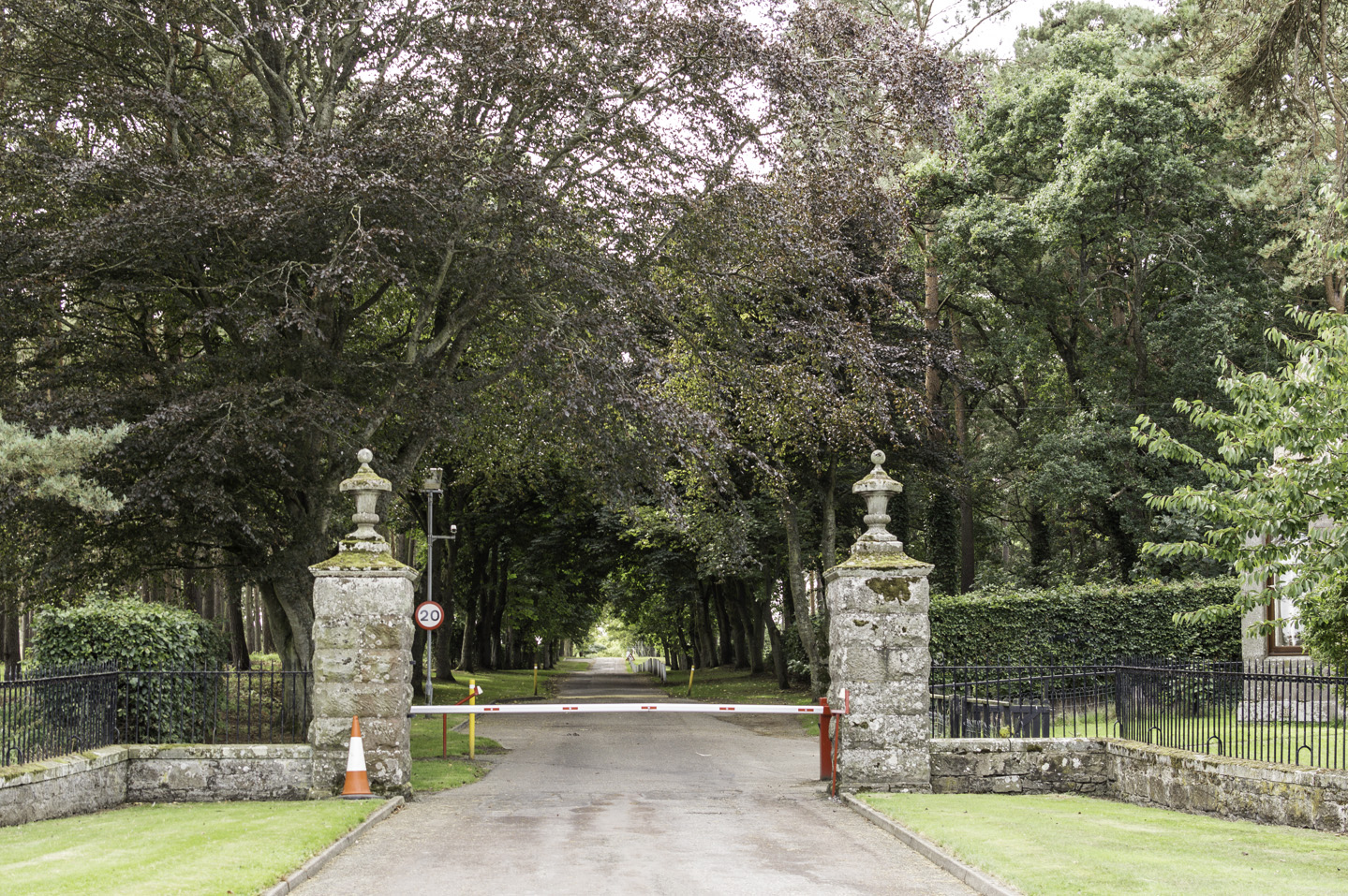
Ogston Market Cross, Michael Kirk, Gordonstoun
Moray
An incised hammer mark and a hole probably cut for the jougs: the iron collar in which offenders were chained: survive on a cross now standing in a…
- Near Elgin
- Easy path
Questions people ask
- What was Spynie Palace?
- It was the fortified residence of the Bishops of Moray for around 500 years, near Elgin in Moray, Scotland, though it was only called a "palace" from 1524 onward.
- When was Spynie Palace built?
- A wooden hall and chapel were built in the late 12th century, with stone construction beginning in the 13th century and continuing through the 14th and 15th centuries.
- What is David's Tower?
- It is the largest medieval tower house in Scotland by volume, begun under Bishop David Stewart around 1462 and completed by Bishop William Tulloch by 1482.
- Did the Wolf of Badenoch attack Spynie?
- He is thought to have seized the castle after burning Elgin Cathedral in 1390, prompting King Robert III to formally forbid him from interfering with it.
- When did Spynie Palace stop being a bishop's residence?
- Its last occupant, Bishop William Hay, was expelled in 1689 for refusing an oath of allegiance to William and Mary, and the ruins later passed to the Crown.
Sources
- Wikipedia: Spynie Palace
- Historic Environment Scotland — Canmore
- Lewis, Pringle: Spynie Palace and the Bishops of Moray, Edinburgh, 2002
- MacGibbon; Ross: Castellated and Domestic Architecture of Scotland, Edinburgh, 1887
Explore more: Fortified places · Medieval · Moray
The Ancient Codex, in your pocket
Get the Pocket Codex app
Carry the directory with you — Spynie Palace and thousands of ancient places across Britain and Ireland, offline, wherever you roam.