
Known as the Lantern of the North, it was Scotland's second-largest medieval cathedral and uniquely combined an English-style octagonal chapter house with French-style double nave (the western body of the building, where the congregation gathered) aisles.
Two roofless towers rise above Elgin’s rooftops, their windows open to the sky and their base still bearing the fine ashlar (smooth-dressed stone laid in even courses) stonework laid down eight centuries ago. Below them, a graveyard now covers ground where bishops, canons and choir vicars once processed daily to mass, and where a chapter of over twenty clergy governed a diocese stretching from the Moray coast deep into the Highlands.
The cathedral was founded in 1224, when Pope Honorius III authorised moving the seat of the bishopric from Spynie, a few kilometres to the north, onto land granted by King Alexander II. It grew quickly into one of the grandest churches in the kingdom, admired in its own time as the “glory of the kingdom”, before fire, feud and the slow violence of neglect reduced it to the ruin that survives today.
What remains is not simply decay. The 13th-century west front and the 15th-century octagonal chapter house still stand largely intact, carrying carved coats of arms, worn tomb slabs and traces of a building history shaped by at least two catastrophic fires, a stripped lead roof, and the collapse of its central tower in 1711.
What follows is drawn from published sources, with each claim labelled by how firmly it is established.
The name
Elgin Cathedral is known as the Lantern of the North (Scots: Lantern o the North), a name that has attached to the building since its medieval heyday, when it ranked as the second-largest cathedral in Scotland after St Andrews.
History
In 1224 Pope Honorius III authorised an inquiry into moving the bishopric's seat from Spynie to Elgin, acting on a petition first raised years earlier by Bishop Brice de Douglas. King Alexander II had already granted land for the purpose, and on 19 July 1224 the Bishop of Caithness and the Dean of Ross conducted the formal translation ceremony, establishing Bishop Andrew de Moravia's new cathedral on a previously unoccupied site.
The first church, cruciform and smaller than the building that stands today, was largely complete by 1242, but in 1270 fire destroyed the cathedral and the canons' houses. Rebuilding on a larger and grander scale followed, adding outer aisles to the nave and doubling the length of the choir and presbytery, work believed finished before the Wars of Scottish Independence broke out in 1296.
In June 1390 Alexander Stewart, Earl of Buchan and known as the Wolf of Badenoch, burned Elgin and its cathedral after disputes with Bishop Alexander Bur, who had turned to a rival protector and provoked Buchan's excommunication. Bur wrote to Robert III describing his ruined church as "the glory of the kingdom", and reconstruction dragged on for over a century, with the west front rebuilt by 1435 and the octagonal chapter house not finished until 1501.
By 1560 the chapter had grown to twenty-five canons, but that same year the Scottish Reformation abolished the Catholic mass and ended the cathedral's role, as Elgin's congregation moved to the parish church of St Giles. In 1567 the Privy Council ordered the lead roofing stripped and sold to fund the army, exposing the abandoned building's timber and stonework to the weather for the first time.
Decay accelerated through the 17th century: the choir roof collapsed in a storm in December 1637, the General Assembly ordered the rood screen dismantled for firewood in 1640, and Cromwell's soldiers are thought to have destroyed the great west window between 1650 and 1660. On Easter Sunday 1711 the unsupported central tower finally came down, demolishing most of the nave and leaving stone to be quarried for local building projects.
From 1824 the Elgin shoemaker John Shanks cleared centuries of dumped rubble and rubbish from the site as its officially appointed Keeper and Watchman, work that brought the ruin back into public view even as his unscientific methods destroyed evidence of its history. Structural conservation continued through the rest of the 19th and 20th centuries, including re-roofing the chapter house and, between 1988 and 2000, full restoration of both west towers.
People
-
Andrew de Moravia
Bishop of Moray who secured papal authority to move the cathedral seat to Elgin and initiated construction on the new site from 1224.
-
Alexander Stewart, Earl of Buchan (the Wolf of Badenoch)
Son of King Robert II who burned Elgin and its cathedral in June 1390 after disputes with Bishop Alexander Bur.
-

Portrait: William Brockedon / Wikimedia Commons / Public domain Alexander Bur
Bishop of Moray whose disputes with the Wolf of Badenoch led to the 1390 burning, and who appealed to Robert III for help rebuilding the cathedral.
-
.jpg?width=320)
Portrait: Andrew Stewart Jr., editor and compiler. Henry Carey Baird (Philadelphia, PA), publisher. / Wikimedia Commons / Public domain Andrew Stewart
Bishop of Moray from 1482 to 1501 whose coat of arms marks the central pillar of the rebuilt octagonal chapter house.
-
.jpg?width=320)
Portrait: slgckgc / Wikimedia Commons / CC BY 2.0 John Shanks
Elgin shoemaker appointed Keeper and Watchman of the cathedral in 1826, who cleared centuries of rubble from the site until his death in 1841.
Cultural influences
-
The Wolf of Badenoch
In 1390 Alexander Stewart, Earl of Buchan and son of Robert II, burned the cathedral and much of the burgh after the Bishop of Moray excommunicated him over his abandoned marriage. A king's son destroying the finest church in the north over a private quarrel says a good deal about how far royal authority ran in 14th-century Moray.
-
Ruined by neglect, not by the Reformation
The cathedral survived the Reformation of 1560 as a building; what finished it was the removal of the lead from its roof in 1567 and two centuries of unchecked weather and stone-robbing after that. The central tower finally fell in 1711. Most of Scotland's great medieval churches were lost the same slow way.
Connections
-
Spynie Palace and the earlier cathedral at Spynie
Elgin Cathedral replaced Spynie as the seat of the bishops of Moray in 1224, with the bishop's palace at Spynie remaining the bishops' residence.
-
Pluscarden Priory
Believed to have been burned by the Wolf of Badenoch around the same time as his 1390 attack on Elgin, since the priory lay under the bishop's protection.
-
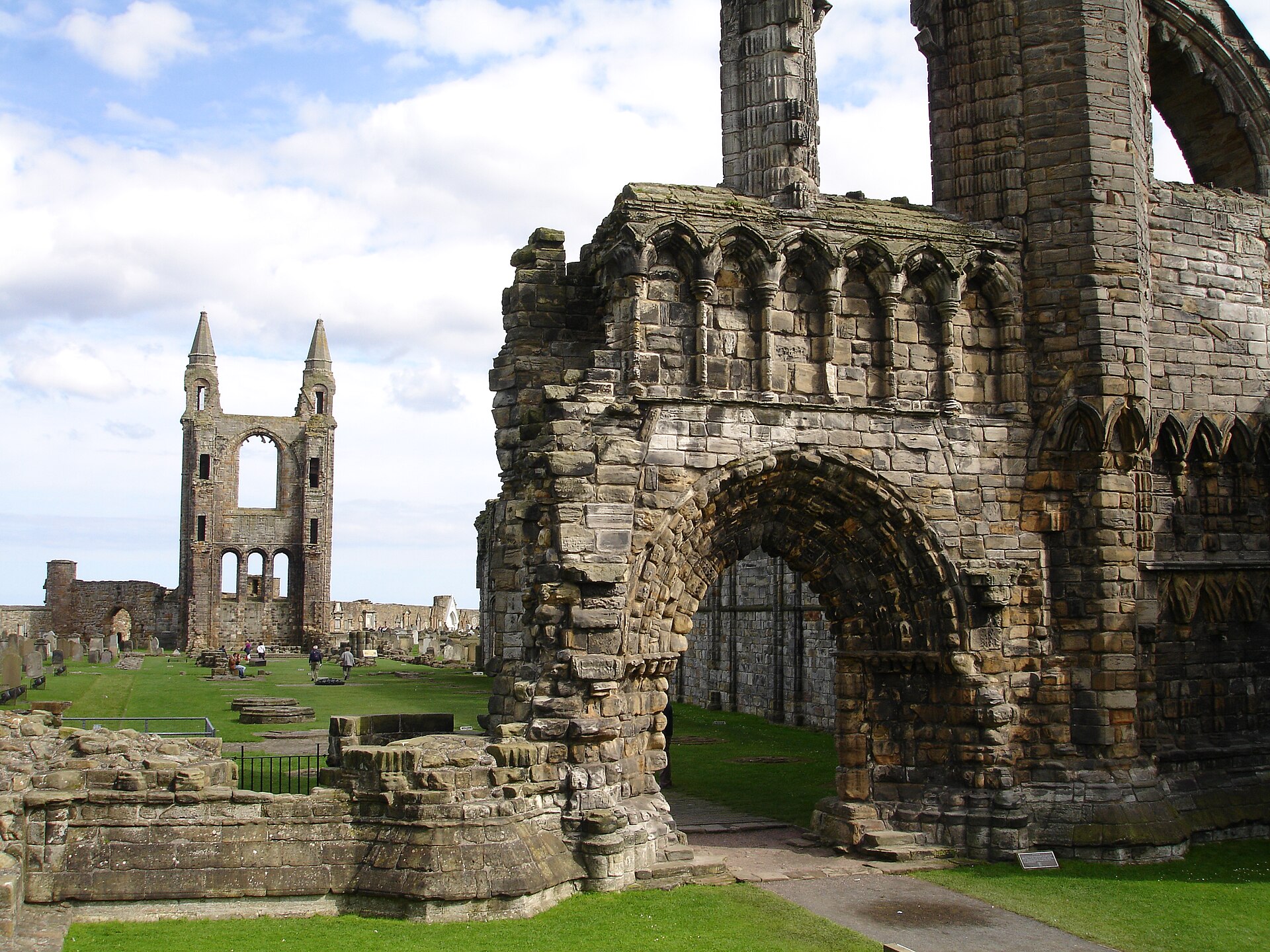
Photo: KPapageorgiou / Wikimedia Commons / CC BY-SA 4.0 Elgin Cathedral was the second-largest cathedral in medieval Scotland, ranking behind St Andrews.
-

Photo: DrMoschi / Wikimedia Commons / CC BY-SA 4.0 Lincoln Cathedral
The chapter at Elgin was constituted on the model of Lincoln Cathedral's chapter, as were those of several other Scottish dioceses including Aberdeen and Ross.
-
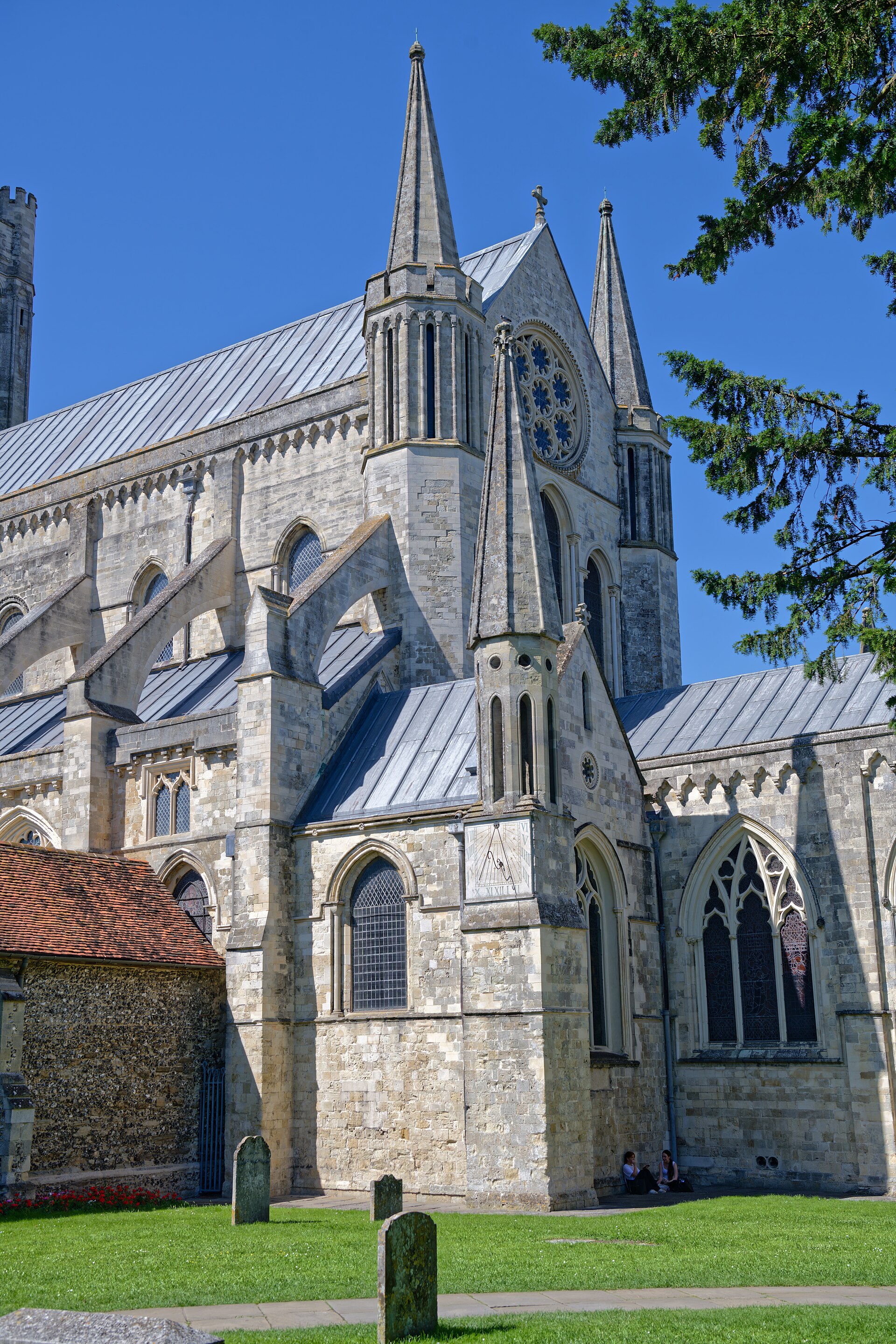
Photo: Tilman2007 / Wikimedia Commons / CC BY-SA 4.0 The only other cathedral with double aisles running the length of the nave comparable to Elgin's French-influenced design.
Discovery & excavation
No excavation uncovered the cathedral, since it was never lost, but its physical evidence was shaped by 19th-century clearance work: John Shanks's removal of centuries of dumped rubble from 1824 brought long-buried masonry back into view, even as his methods are thought to have destroyed evidence that could otherwise have survived. A 9th-century Pictish cross-slab was also found near the site and is now part of the cathedral's collection of medieval carved stones.
In culture
-
John Slezer's 1693 engraving
The Dutch-born engineer and artist John Slezer sketched the ruined cathedral in 1693, providing one of the earliest visual records of its condition after the central tower's collapse.
-
Samuel Johnson's 1773 visit
Travelling through Scotland in 1773, Samuel Johnson recorded being given a pamphlet describing the cathedral's history, evidence that the ruin was already drawing visitors by the late 18th century.
-
John Taylor's 1615 account
The English poet John Taylor, known as the "Water Poet", described Elgin Cathedral in 1615 as a "fair and beautiful church with three steeples", though he noted its roofs and monuments were already broken and defaced.
What to look for
-
The twin west towers
Two buttressed 13th-century towers, 27.4 metres (90 ft) high, dominate the west front and originally carried wooden, lead-covered spires.
-
The octagonal chapter house
Rebuilt between 1482 and 1501, the chapter house rises 10.3 metres (34 ft) to its apex and is supported by a single central pillar carved with Bishop Andrew Stewart's coat of arms.
-
The carved west doorway
The late 14th- or early 15th-century entrance is intricately carved with branches, vines, acorns and oak leaves, rebuilt after the 1390 burning.
-
The rose window and coats of arms
Above the main west door, a large pointed arch holds a rose window dated between 1422 and 1435, flanked by the arms of the bishopric of Moray, the Royal Arms of Scotland, and Bishop Columba Dunbar.
-
The south transept
The most complete surviving section of the first building phase, showing early Gothic pointed-arch windows alongside older round-headed Norman-style openings.
-
Medieval stone carvings and the Pictish cross-slab
The site holds an extensive collection of medieval carved stones together with a 9th-century Pictish cross-slab found nearby, predating the cathedral itself by centuries.
What is said
Folklore and tradition, recorded as what is said — not as established fact.
-
Bishop Simon's burial at Birnie Kirk
It has been asserted that Bishop Simon de Toeni, who died in 1184, was buried at Birnie Kirk near Elgin, though this claim is not recorded before the 18th century and is treated as uncertain.
Plan your visit
- Location
- 57.6506°N · 3.3056°W
- Nearest settlement
- Elgin
- Access
- Paid entry — managed visitor site
- Terrain
- Easy going
- Time needed
- About 90 minutes
- Best time
- Visit during published cathedral opening or heritage-access periods and outside major services, allowing time for the ruins, interior and grounds.
- What survives
- A roofless ruin, but a substantial one. The twin west towers stand to their full height, the chapter house is intact and vaulted, and much of the choir and transepts survive to a good level. The nave is largely reduced to footings.
- Facilities
- Visitor facilities depend on the current cathedral and heritage operation; check before travelling.
Opening & admission
An admission charge applies at this Historic Environment Scotland site. Check the managing body for current prices and opening times before travelling.
- The cathedral is a roofless ruin and much of the visit is in the open air
- The chapter house is intact and the west towers can be climbed when open
Nearby places

Carved stone · Pictish & early medieval
Elgin Pillar
Moray
A tall granite Pictish (of the Picts, the people of northern and eastern Scotland from about AD 300 to 900) stone found buried beneath Elgin's old…
- Near Elgin
- Easy path
Fortified place · Medieval
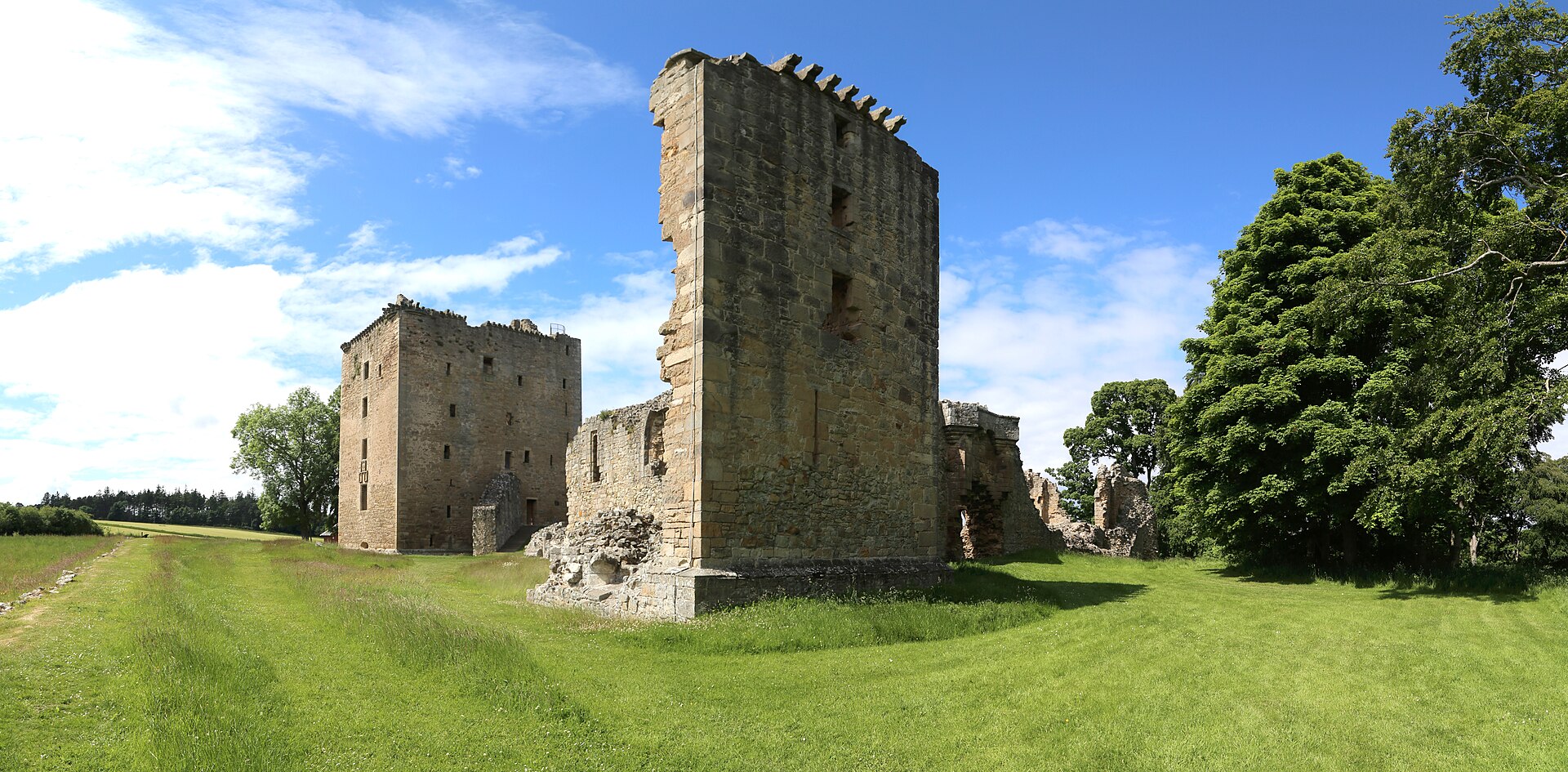
Spynie Palace
Moray
For roughly five hundred years this was the working seat of the Bishops of Moray, and its tower still stands as the largest medieval tower house in…
- Near Elgin
- Some walking

Carved stone · Pictish & early medieval
Birnie Symbol Stone
Moray
The Birnie Symbol Stone preserves a compact seventh-century Pictish (of the Picts, the people of northern and eastern Scotland from about AD 300 to…
- Near Elgin
- Easy path

Fortified place · Medieval
Duffus Castle
Moray
Its stone tower still leans bodily off the earthen motte it was built on, frozen mid-collapse: a rare, visible lesson in why timber-age mounds made…
- Near Elgin
The setting
Elgin Cathedral viewed from Newmill Road, retained as approach context rather than as the lead image.
Photo: Lucas Kendall / Wikimedia Commons / CC BY-SA 4.0
Near Elgin Cathedral, about 3 metres away.
Photo: Iain Lees / Wikimedia Commons / CC BY-SA 2.0
Near Elgin Cathedral, about 4 metres away.
Photo: Alan Murray-Rust / Wikimedia Commons / CC BY-SA 2.0
Near Elgin Cathedral, about 6 metres away.
Photo: Lucas Kendall / Wikimedia Commons / CC BY-SA 4.0
Near Elgin Cathedral, about 6 metres away.
Photo: Lucas Kendall / Wikimedia Commons / CC BY-SA 4.0
Questions people ask
- When was Elgin Cathedral founded?
- In 1224, after Pope Honorius III authorised moving the bishopric's seat from Spynie to Elgin on land granted by King Alexander II.
- Why is it called the Lantern of the North?
- The nickname reflects the cathedral's former grandeur; it was regarded in its own time as Scotland's second-largest cathedral, after St Andrews.
- Who burned the cathedral in 1390?
- The Earl of Buchan, Alexander Stewart — the Wolf of Badenoch — who put Elgin and its cathedral to the torch after falling out with Bishop Alexander Bur.
- Why did the cathedral fall into ruin?
- After the 1560 Reformation the congregation moved elsewhere; its lead roof was stripped in 1567, and storms and structural collapses followed through the 17th century.
- What survives on site today?
- Much of the 13th-century west front and 15th-century chapter house remain, alongside medieval stone carvings and a 9th-century Pictish cross-slab found nearby.
Sources
- Wikipedia: Elgin Cathedral
- Historic Environment Scotland — Canmore (SM90142)
- The Early Church in Northern Scotland (ECNS)
- John Slezer engraving, National Library of Scotland
Explore more: Sacred places · Prehistoric · Moray
The Ancient Codex, in your pocket
Get the Pocket Codex app
Carry the directory with you — Elgin Cathedral and thousands of ancient places across Britain and Ireland, offline, wherever you roam.