
The Birnie Symbol Stone preserves a compact seventh-century Pictish (of the Picts, the people of northern and eastern Scotland from about AD 300 to 900) carving whose bird, notched rectangle and Z-rod remain legible in a Moray churchyard.
A one-metre granite slab stands on the north side of Birnie Kirk graveyard, carrying an incised bird above a notched rectangle and Z-rod. The Birnie Symbol Stone is small enough to encounter closely, yet its deliberate markings turn an otherwise plain block into a surviving statement from Pictish Scotland.
Thought to date from the seventh century, the stone was found around 1850 built into the graveyard wall and moved to its present location. Its later reuse in a wall and subsequent recovery are part of its history, preserving a rare class I Pictish stone within a Christian churchyard setting. The symbols’ meaning goes unexplained, so their importance lies in their clear survival and formal arrangement rather than a speculative decoding.
What follows is drawn from published sources, with each claim labelled by how firmly it is established.
History
The Birnie Symbol Stone is thought to date from the seventh century and is classed as a Class I Pictish stone. Its granite slab carries an incised bird above a notched rectangle and Z-rod, a combination that makes it an important surviving example of Pictish visual marking. No specific meaning is securely assigned to these symbols, so the stone is valued for the evidence of carving, material and date rather than a definite interpretation of its imagery.
Around 1850 the stone was discovered within the wall of Birnie Kirk graveyard. This discovery records a later phase in which the carved slab had been reused as building material, obscuring its original identity and setting. Its recovery demonstrates how Pictish stones can survive through incorporation into later structures, while also showing that their present display location may be quite different from the place where they first stood or were made.
After discovery, the stone was moved to its current position on the north side of the Birnie Kirk graveyard. The relocation created a modern setting in which a seventh-century Pictish carving is viewed among a Christian burial ground and church landscape. This juxtaposition is historically meaningful: the monument’s story encompasses its early Pictish creation, its later reuse in a graveyard wall and its present preservation as a visible archaeological object.
Cultural influences
-
The incised bird, notched rectangle and Z-rod place the granite slab within the Pictish practice of marking stones with figurative and abstract symbols.
Connections
-

Photo: Lucas Kendall / Wikimedia Commons / CC BY-SA 4.0 Another Pictish symbol stone in Moray, offering a comparison for the region’s carved early medieval monuments.
-

Photo: Daniel Kraft / Wikimedia Commons / CC BY-SA 3.0 A later ecclesiastical landmark in Moray, contrasting with the symbol stone’s earlier Christian and Pictish context.
-
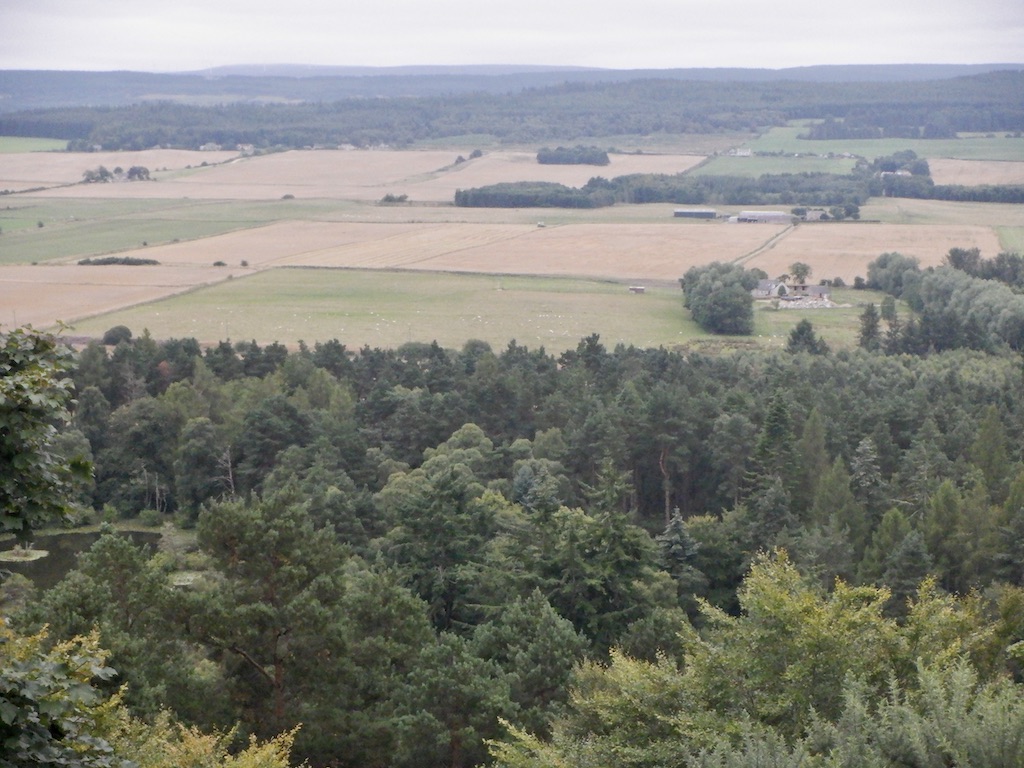
Photo: Richard Webb / Wikimedia Commons / CC BY-SA 2.0 A prehistoric stone circle in the wider Moray landscape, providing a chronological contrast with Birnie’s early medieval monument.
Discovery & excavation
The slab was found around 1850 reused in the wall of Birnie Kirk graveyard, then moved to the north side of the churchyard.
What to look for
-
The incised bird
Look first for the incised bird at the upper part of the granite slab. It is the clearest figurative element and sits above the geometric symbols.
-
The notched rectangle and Z-rod
Notice the notched rectangle and Z-rod beneath the bird. These are the other named symbols recorded on the stone and form the key pattern to observe alongside the bird.
-
The one-metre slab
Take in the stone’s compact dimensions: one metre high, 0.64 metres wide and 0.51 metres deep. The scale encourages close inspection of markings rather than viewing it as a monumental standing cross.
-
The incised technique
Observe the granite material and incised technique. The design is cut into the surface, not raised in relief, which is a defining part of how the symbols are encountered.
-
Found in the kirkyard wall
Place the stone on the north side of Birnie Kirk graveyard and remember its discovery in the wall. Its current churchyard position records later reuse and preservation, not necessarily original Pictish placement.
Plan your visit
- Location
- 57.6116°N · 3.3300°W
- Nearest settlement
- Elgin
- Access
- Visible from a public way
- Terrain
- Easy going
- Time needed
- About 15 minutes
- Best time
- Daylight, when the incised symbols can be examined closely.
- What survives
- An intact granite slab displayed on the north side of Birnie Kirk graveyard.
Opening & admission
- Stone stands on the north side of Birnie Kirk graveyard.
- Treat graveyard access and churchyard etiquette as locally managed.
Nearby places

Sacred place · Prehistoric
Elgin Cathedral
Moray
Known as the Lantern of the North, it was Scotland's second-largest medieval cathedral and uniquely combined an English-style octagonal chapter hou…
- Near Elgin
- Easy path

Carved stone · Pictish & early medieval
Elgin Pillar
Moray
A tall granite Pictish (of the Picts, the people of northern and eastern Scotland from about AD 300 to 900) stone found buried beneath Elgin's old…
- Near Elgin
- Easy path
Sacred place · Prehistoric
Knock of Alves
Moray
Six weathered boulders share a wooded hill with a much larger, older stronghold, one refortified deep into the Pictish (of the Picts, the people of…
- Near Elgin
- Some walking
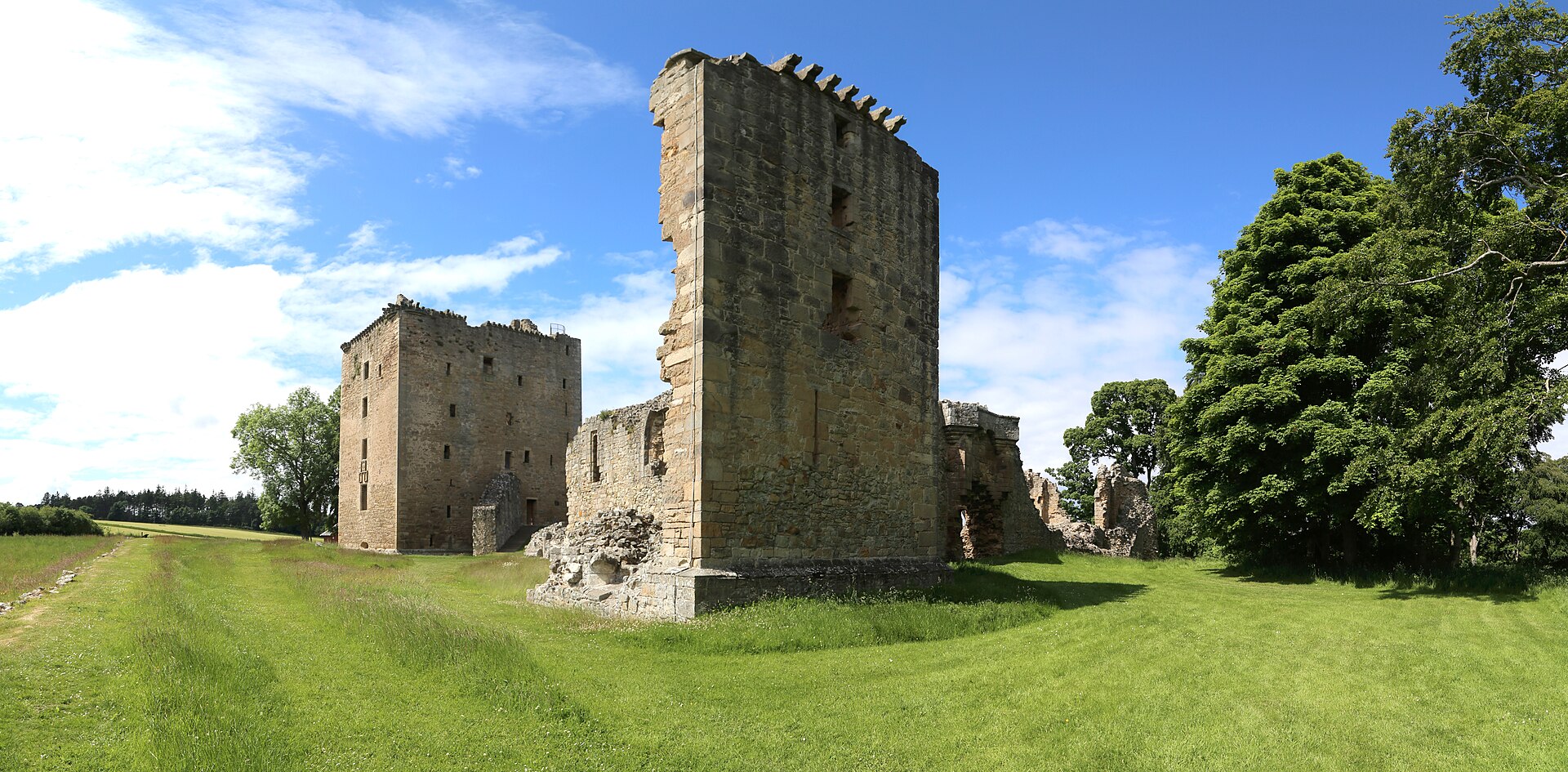
Fortified place · Medieval
Spynie Palace
Moray
For roughly five hundred years this was the working seat of the Bishops of Moray, and its tower still stands as the largest medieval tower house in…
- Near Elgin
- Some walking
The setting
Near Birnie Symbol Stone, about 17 metres away.
Photo: thejackrustles / Wikimedia Commons / CC BY-SA 2.0
Near Birnie Symbol Stone, about 30 metres away.
Photo: Chh bck / Wikimedia Commons / CC BY-SA 4.0
Questions people ask
- What is the Birnie Symbol Stone?
- It is a Class I Pictish stone in the graveyard of Birnie Kirk in Moray, Scotland.
- How old is the Birnie Symbol Stone?
- It is thought to date from the seventh century.
- What symbols are carved on the stone?
- It has an incised bird above a notched rectangle and Z-rod.
Sources
The Ancient Codex, in your pocket
Get the Pocket Codex app
Carry the directory with you — Birnie Symbol Stone and thousands of ancient places across Britain and Ireland, offline, wherever you roam.