
A tall granite Pictish (of the Picts, the people of northern and eastern Scotland from about AD 300 to 900) stone found buried beneath Elgin's old marketplace churchyard, hinting at an early Christian centre hidden under the town centre itself.
A slab of granite over two metres tall now leans against the north west side of Elgin Cathedral, its surface worn but its bulk still commanding. For nearly two thousand years it lay hidden, buried beneath the ground of what had once been the churchyard of St Giles’ Church on Elgin High Street, until workmen uncovered it in 1823 some 0.6 metres down.
The stone is classed as a Pictish stone of Class II — a type of carved monument raised by the Picts, the people who inhabited much of north and east Scotland in the early medieval period. Its find spot, tucked beneath the town’s old marketplace rather than in open countryside, is what makes it quietly significant: it points to the possibility that Elgin’s commercial heart was already the site of early Christian activity centuries before the town as it is known today took shape.
Nothing about its carving survives description beyond its bare stone dimensions, but the pillar’s scale alone — tapering from nearly a metre wide at the head to narrower at the base, and reaching almost seven feet in height — shows it was made to be seen and to stand as a marker, not a modest roadside stone.
What follows is drawn from published sources, with each claim labelled by how firmly it is established.
History
During the 9th century, on current understanding of its style and form, a granite pillar was raised somewhere in or near what would become the marketplace of Elgin. Standing over two metres high and carved as a Class II Pictish stone, it was set up at a time when Pictish carving traditions were flourishing across north east Scotland, and its presence in this particular spot suggests the area already held some importance to the early Christian community forming around it.
At some point after its erection the pillar came down and was buried, ending up roughly 0.6 metres beneath the surface of what later became the churchyard of St Giles' Church on Elgin High Street. No record survives of when or why it was laid low or covered over, so the centuries between its raising and its disappearance from view remain unaccounted for in any surviving account.
In 1823 the stone was discovered during work in the old churchyard, emerging from beneath the ground where it had lain unseen for centuries. Its rediscovery in the heart of Elgin, rather than in an isolated field or hillside setting typical of many Pictish stones, drew attention to the possibility that the town's marketplace area had once been a focus of early Christian life long before Elgin's later medieval development. Following its recovery the pillar was eventually placed beside Elgin Cathedral, on the north west side of the building, where it remains on display today as one of the town's visible links to its Pictish past.
Cultural influences
-
Its Class II form links Pictish symbol carving with the Christian visual tradition represented by the later cathedral setting.
Connections
-

Photo: Daniel Kraft / Wikimedia Commons / CC BY-SA 3.0 The pillar now stands displayed on the north west side of the cathedral, having been moved there after its 1823 discovery in the town.
-
St Giles' Church, Elgin
The stone was found buried beneath the former churchyard of this church on Elgin High Street, the site that first suggested an early Christian presence in the area.
Discovery & excavation
The Elgin Pillar was discovered in 1823, found lying about 0.6 metres beneath the surface of the former churchyard of St Giles' Church on Elgin High Street. Its burial in what had been consecrated ground in the town centre, rather than in open countryside, is what gives the find its particular interest, as it hints at a much older layer of Christian activity beneath the later marketplace.
What to look for
-
Granite construction
The pillar is carved from a single block of granite, a hard stone that has helped it survive despite centuries buried underground.
-
Tapering shape
The stone's width narrows from 0.91 metres at the head to 0.80 metres at the base, giving it a subtly tapered profile rather than perfectly parallel sides.
-
Height and scale
Standing 2.08 metres tall, the pillar is substantial enough to have functioned as a prominent marker rather than a small memorial stone.
Plan your visit
- Location
- 57.6506°N · 3.3053°W
- Nearest settlement
- Elgin
- Access
- Visible from a public way
- Terrain
- Easy going
- Time needed
- About 15 minutes
- Best time
- Daylight, alongside a visit to Elgin Cathedral.
- What survives
- A substantially intact 2.08-metre granite pillar, relocated beside Elgin Cathedral after its recovery from the former St Giles churchyard.
Opening & admission
- Stone stands on the north-west side of Elgin Cathedral.
- Current cathedral grounds access should be checked locally.
Nearby places

Sacred place · Prehistoric
Elgin Cathedral
Moray
Known as the Lantern of the North, it was Scotland's second-largest medieval cathedral and uniquely combined an English-style octagonal chapter hou…
- Near Elgin
- Easy path
Fortified place · Medieval
Spynie Palace
Moray
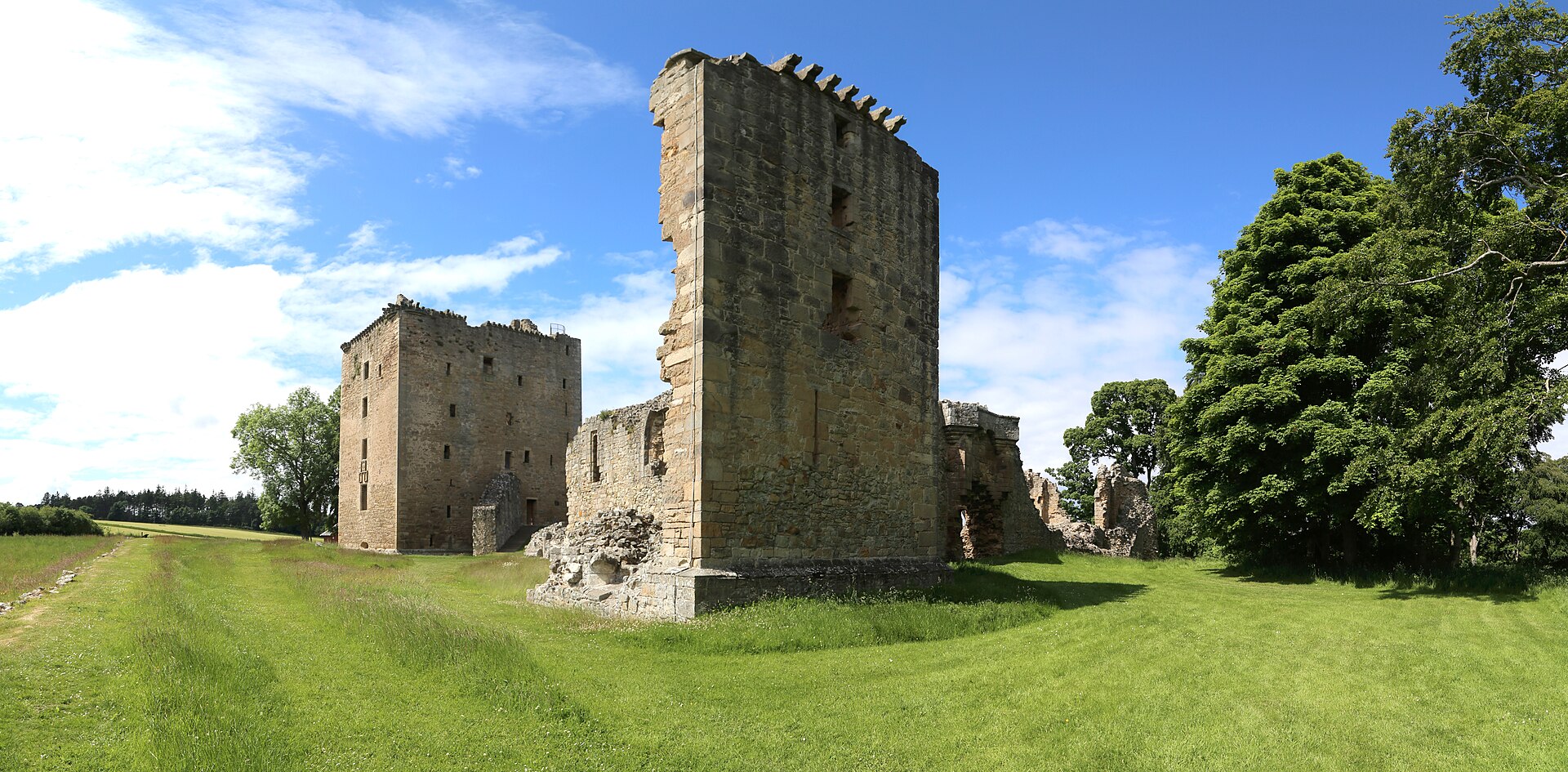
For roughly five hundred years this was the working seat of the Bishops of Moray, and its tower still stands as the largest medieval tower house in…
- Near Elgin
- Some walking

Carved stone · Pictish & early medieval
Birnie Symbol Stone
Moray
The Birnie Symbol Stone preserves a compact seventh-century Pictish (of the Picts, the people of northern and eastern Scotland from about AD 300 to…
- Near Elgin
- Easy path

Fortified place · Medieval
Duffus Castle
Moray
Its stone tower still leans bodily off the earthen motte it was built on, frozen mid-collapse: a rare, visible lesson in why timber-age mounds made…
- Near Elgin
The setting
Near Elgin Pillar, about 3 metres away.
Photo: Nilfanion / Wikimedia Commons / CC BY-SA 3.0
Near Elgin Pillar, about 5 metres away.
Photo: Lucas Kendall / Wikimedia Commons / CC BY-SA 2.0
Near Elgin Pillar, about 5 metres away.
Photo: Lucas Kendall / Wikimedia Commons / CC BY-SA 2.0
Questions people ask
- What is the Elgin Pillar?
- A Class II Pictish stone, a granite pillar over two metres tall, now displayed beside Elgin Cathedral in Moray.
- When was the Elgin Pillar discovered?
- It was discovered in 1823, found buried about 0.6 metres beneath the former churchyard of St Giles' Church on Elgin High Street.
- How old is the Elgin Pillar thought to be?
- It is thought to date from the 9th century, based on its style as a Pictish carved stone.
- Why is the find spot significant?
- Its burial beneath the old marketplace churchyard suggests an early Christian centre may once have stood in central Elgin.
- Where can the Elgin Pillar be seen today?
- It stands on the north west side of Elgin Cathedral in Elgin, Moray.
Sources
The Ancient Codex, in your pocket
Get the Pocket Codex app
Carry the directory with you — Elgin Pillar and thousands of ancient places across Britain and Ireland, offline, wherever you roam.