Four successive castles rose on this one riverside site, each rebuilt by the Gordons after fire, siege or royal demolition — a single ruin holding five centuries of one family's rise and fall.
A watchman on the tower once had only a moment’s warning: he spotted armed men a mile off, gave the alarm, and the Earl of Huntly fled without his boots or sword, vaulting a low wall at the back of the castle to find a horse before the queen’s men could take him. That scramble in October 1562 is one of dozens of vivid, human moments recorded at this site north of Huntly, where the rivers Deveron and Bogie meet.
What stands today is the fourth building to occupy the ground, the ruined successor to a timber castle raised on a motte (the earthen mound of an early Norman-style stronghold) in the late twelfth century. Over the centuries it grew into an L-plan tower house with a decorated facade, was burned, rebuilt, besieged, partially blown up on royal orders, restored for a marquess, and finally quarried by local builders before antiquarians stepped in to save it.
The surviving five-storey tower and great hall range still carry traces of that long, turbulent tenancy — carved heraldry, a chapel, and the outline of chambers where kings played cards, a countess entertained an invading army with a meal, and an earl reportedly died in circumstances thought supernatural by his own household.
What follows is drawn from published sources, with each claim labelled by how firmly it is established.
The name
The site was known first as the Peel of Strathbogie (a peel being a fortified enclosure) and later, more formally, as Strathbogie Castle. It was only officially renamed Huntly Castle in 1506, after the Gordon family had held the estate and its earldom for close to two centuries.
History
Around 1180 to 1190 Duncan II, Earl of Fife, raised the first stronghold here, a timber castle on a motte, known then as the Peel of Strathbogie. His son David inherited the estate and became Earl of Atholl around 1204. The family sheltered Robert the Bruce when he fell ill near Inverurie, yet around 1314 David of Strathbogie defected to the English on the eve of Bannockburn; Bruce granted the castle instead to the loyal Sir Adam Gordon, and in 1506 it was formally renamed Huntly Castle.
After a fire, a grander castle rose in its place, and James IV became a regular visitor. In 1496 the pretender Perkin Warbeck married Lady Catherine Gordon at Edinburgh in the king's presence, and between 1501 and 1505 James IV called several times, tipping the stonemasons and once arriving with Italian minstrels and an African drummer, part of his pilgrimage to Tain. The result was an L-plan castle: a five-storey tower joined to a great hall, its facade carved with ornate stonework.
The castle's fortunes turned violent under Mary, Queen of Scots. William Mackintosh was executed there in 1550 as a conspirator against the Earl, and in 1562 the diplomat Thomas Randolph called it the best-furnished house he had seen. That October the queen sent men to arrest the 4th Earl; a watchman gave him time to escape over a back wall, and the Countess welcomed the soldiers with a meal instead. The Earl died days later after Corrichie, and the furnishings were shipped to Edinburgh.
In 1576 George Gordon, 5th Earl of Huntly, collapsed after a football match on the green outside the castle, having returned from hunting and suffered what witnesses took for a stroke or food poisoning. He was carried to his bedchamber in the round tower, and after his death a servant recorded a string of unexplained collapses among the household, in rooms near where his body was laid out. Historians have since studied the account as an early record of how the castle's rooms were actually used.
The castle's Catholic sympathies brought royal retaliation under James VI. The king arrived in April 1589 to find the 6th Earl of Huntly fled to the hills, and brought a hundred workmen to demolish the building until Huntly surrendered. After the Battle of Glenlivet, James VI returned in October 1594 intending to blow up the old tower with gunpowder bought by Aberdeen's town council; only the pleas of the Countesses of Huntly and Erroll saved it from full destruction.
The Marquess of Huntly rebuilt and enlarged the castle from 1597, carving the facade with his own name and his wife's, Henrietta Stewart. A royal visit planned for 1603 was cancelled by the Union of the Crowns. Occupied by a Covenanter army in 1640, the house survived largely intact; it changed hands in the Civil War, held by Montrose in 1644 and besieged in 1647, when the garrison was starved into surrender. The Marquess was later captured and executed, ending the family's long occupation.
The castle briefly served as headquarters for Viscount Dundee's Jacobite army in 1689, and government troops occupied it during the 1746 rising, by which time it was decaying and being quarried for stone nearby. Nineteenth-century antiquarian interest halted the decline, and the Gordon family kept ownership until 1923, after which the ruins passed to what is now Historic Environment Scotland. In 1987 the grounds hosted Pure Strength I, a strongman contest won by Iceland's Jón Páll Sigmarsson.
People
-
Duncan II, Earl of Fife
Built the original timber castle on the site around 1180 to 1190.
-
David of Strathbogie
Inherited the estate, became Earl of Atholl, then defected from Robert the Bruce shortly before Bannockburn, losing the castle as a result.
-
Sir Adam Gordon of Huntly
Granted the castle and estate by Robert the Bruce for his loyalty, founding the Gordon family's tenure.
-
James IV of Scotland
Visited the castle repeatedly between 1501 and 1505, tipping the masons building it en route to his pilgrimages at Tain.
-
George Gordon, 4th Earl of Huntly
Fled the castle in 1562 ahead of Mary, Queen of Scots' arresting party and died shortly after the Battle of Corrichie.
-
Elizabeth Keith, Countess of Huntly
Received Mary, Queen of Scots' soldiers at the castle in 1562 and reportedly ordered William Mackintosh's execution there in 1550.
-
George Gordon, 5th Earl of Huntly
Died at the castle in 1576 after collapsing during a football match, an event later examined for its supernatural aftermath.
-
James VI of Scotland
Twice brought workmen to demolish the castle, in 1589 and again in 1594 after the Battle of Glenlivet.
-
George Gordon, Marquess of Huntly
Restored and enlarged the castle from 1597, was captured during the Civil War, and was later executed.
Cultural influences
-
A castle that changed hands over one act of treachery
Robert the Bruce convalesced here as a guest of the Strathbogie family. When David of Strathbogie switched to the English side shortly before Bannockburn, Bruce took the estate off him and gave it to Sir Adam Gordon of Huntly for staying loyal. The whole subsequent history of the place — Gordon, Earl and Marquess of Huntly — follows from that one decision.
-
Carved to be read
The facade of the 17th-century wing carries an inscribed frieze naming George Gordon, 1st Marquess of Huntly, and his wife in letters a foot high, above one of the most elaborate heraldic doorways in Scotland. This is architecture as a claim of standing, addressed to anyone approaching, at a moment when the family's Catholicism made its standing precarious.
Connections
-
Battle of Bannockburn
David of Strathbogie's defection from Robert the Bruce on the eve of this battle cost the Strathbogie family the castle.
-
Battle of Corrichie
George Gordon, 4th Earl of Huntly, died shortly after this defeat, following his flight from the castle earlier the same month.
-
Spynie Castle
The Earl of Bothwell moved on to Spynie Castle after meeting the 5th Earl of Huntly at Huntly Castle following the surrender of Mary, Queen of Scots.
-
Pluscarden
The Countess of Northumberland took refuge at Pluscarden in 1570, the same year the exiled Earl of Westmorland sheltered at Huntly Castle.
-
Old Slains Castle
James VI's demolition workmen, equipped by Aberdeen town council, were sent to both Huntly and Old Slains Castle in 1594.
Discovery & excavation
No excavation history is recorded; the castle's present state reflects centuries of continuous occupation, partial demolition and later restoration rather than archaeological rediscovery. It has been in the care of Historic Environment Scotland as a scheduled monument since the Gordon family's ownership ended in 1923.
In culture
-
The Queen's Cause (1938)
Huntly appears, fictionalised as the Castle of Strathbogie, in this novel by Mrs Hubert Barclay set during the reign of Mary, Queen of Scots.
What to look for
-
The five-storey tower
A well-preserved L-plan tower survives from the James IV era, joined to the remains of a great hall and later domestic wings.
-
The carved facade
The restored main block bears carved heraldry and inscriptions naming the Marquess of Huntly, George Gordon, and his wife, Henrietta Stewart.
-
The motte
The earthen mound at the northern end of the site marks where the original timber castle, the Peel of Strathbogie, once stood.
What is said
Folklore and tradition, recorded as what is said — not as established fact.
-
The death of the 5th Earl of Huntly
An early account, hostile to the Gordon family and transcribed by Richard Bannatyne, held that a string of collapses among the household after the Earl's sudden death in 1576 was supernatural in origin, with servants reportedly reviving to complain of feeling cold in rooms near where his body lay.
Plan your visit
- Location
- 57.4549°N · 2.7812°W
- Access
- Paid entry — managed visitor site
- Terrain
- Easy going
- Time needed
- About 90 minutes
- Best time
- For the longest daily visiting hours, go between April and September. The round tower is currently closed, but most of the site remains accessible; check the official page before travelling.
- What survives
- Huntly is a noble ruin with palace interiors, heraldic sculpture and the South Front still legible; the round tower is currently closed, while most of the site remains accessible.
- Facilities
- Facilities include car parking, a shop, bicycle rack, picnic area and visitor centre. There are currently no visitor toilets; the nearest accessible toilet is at Asda on Steven Road.
Opening & admission
Huntly Castle is ticketed; book online in advance for the best price.
- From 1 April to 30 September it is open daily 10.00–16.30; from 1 October to 31 March it opens Monday to Wednesday and Saturday to Sunday, 10.00–15.30.
- Last entry is one hour before closing in summer and 45 minutes before closing in winter. It is closed 25 December to 2 January, and closes at 14.00 on 24 December.
Nearby places
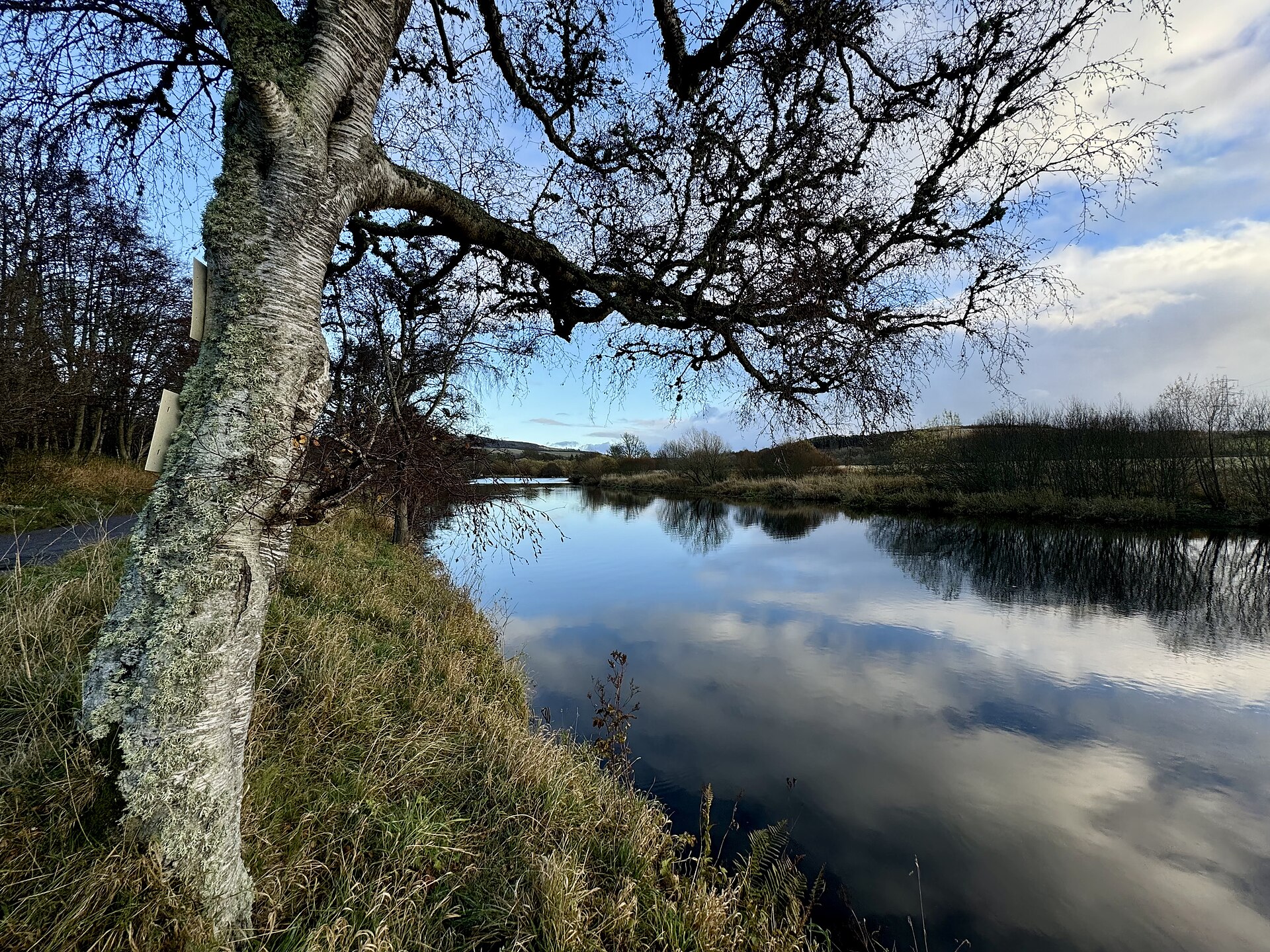
Fortified place · Roman
Burnfield
Aberdeenshire
A Roman camp so faint on the ground that only a photograph taken from the air, in 1982, proved it had ever existed at all.
- Near Milltown of Rothiemay
- Easy path
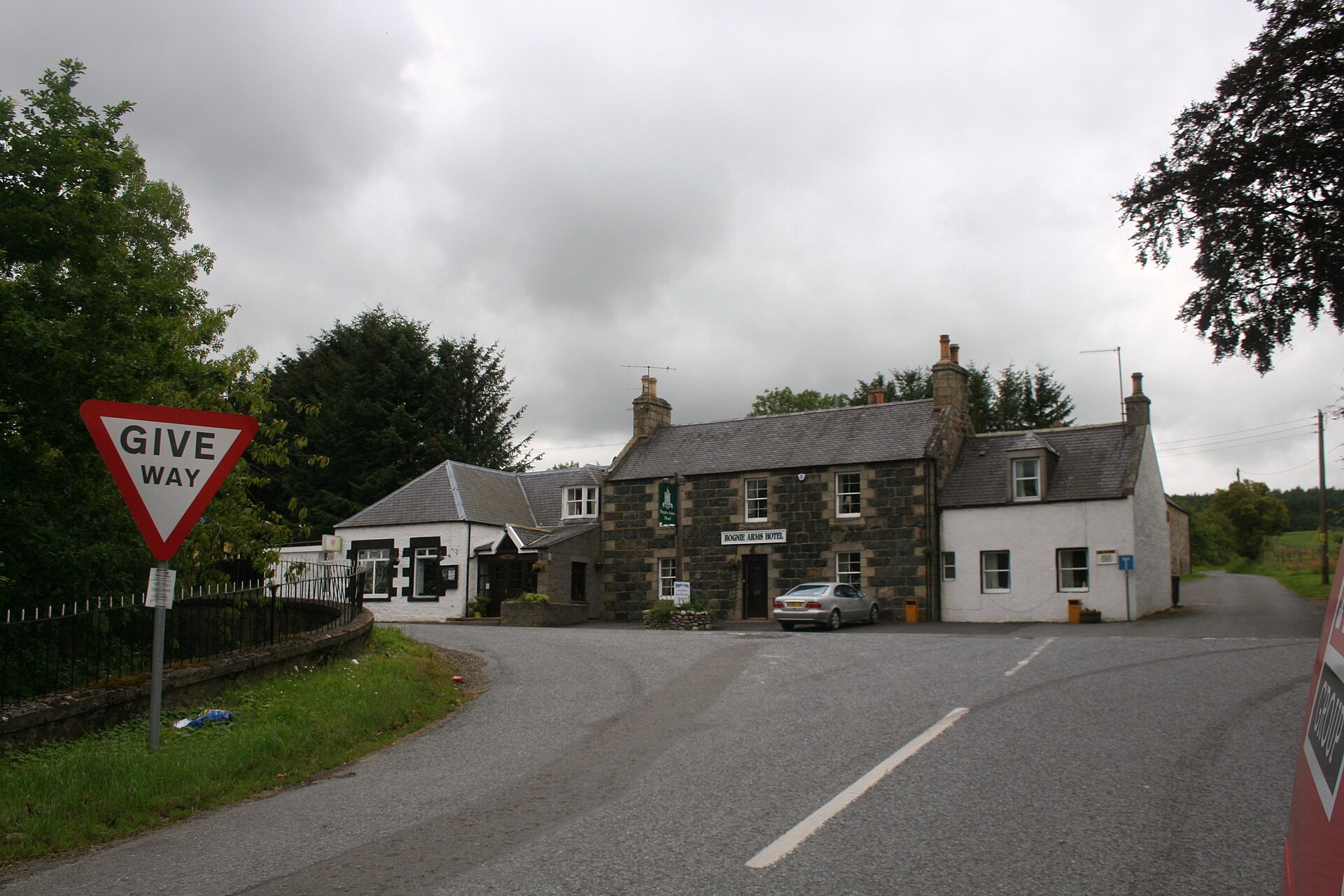
Sacred place · Prehistoric
Yonder Bognie
Aberdeenshire
One of more than seventy recumbent stone circles unique to lowland Aberdeenshire, its closest architectural parallels lie not in Scotland but in so…
- Near Huntly
- Easy path
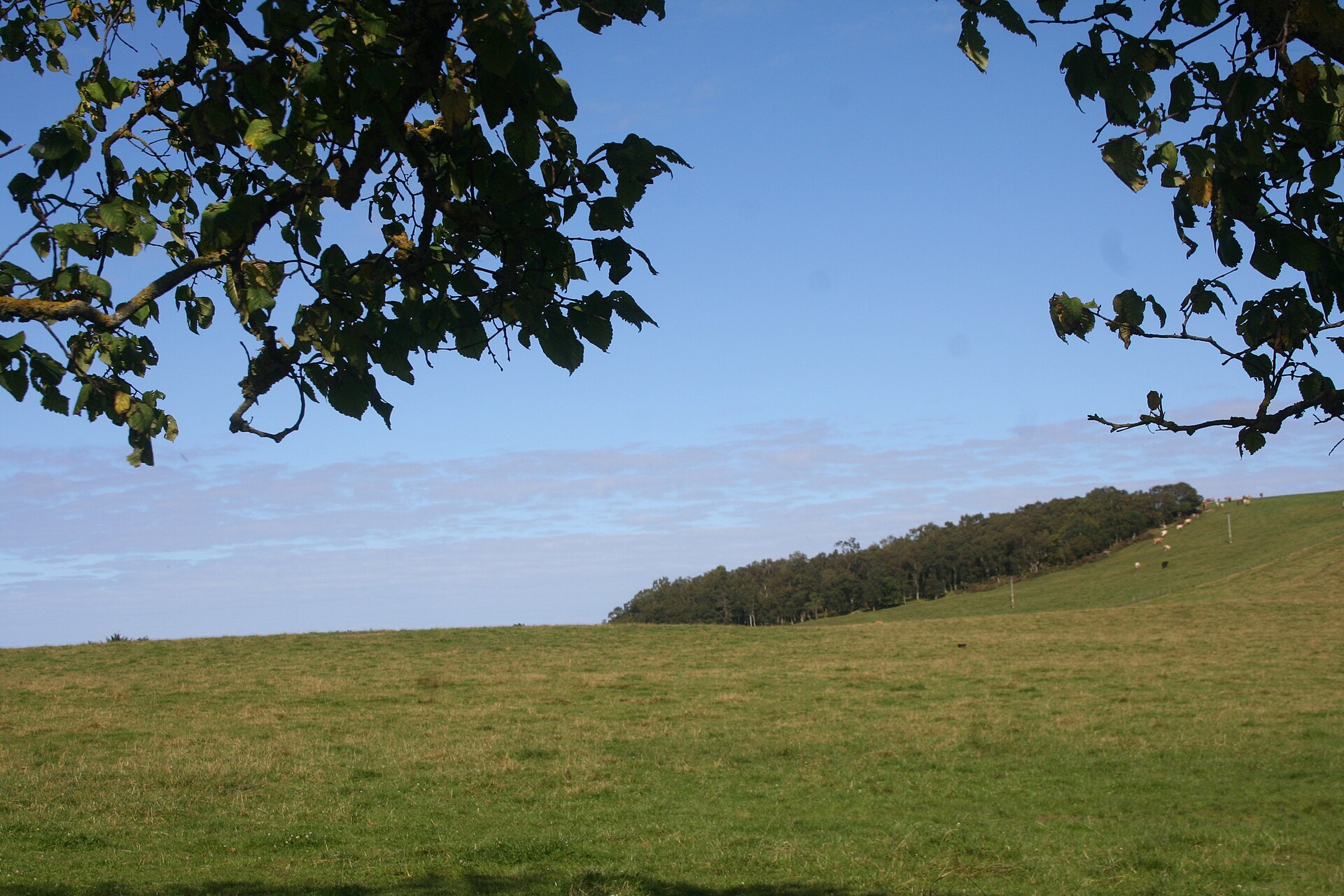
Fortified place · Roman
Muiryfold
Moray
A Roman marching camp of over 41 hectares, hidden until aerial photography found its ditches from the air in 1959: physical proof that Severus's le…
- Near Keith
- Some walking
Fortified place · Iron Age
Tap o' Noth
Aberdeenshire
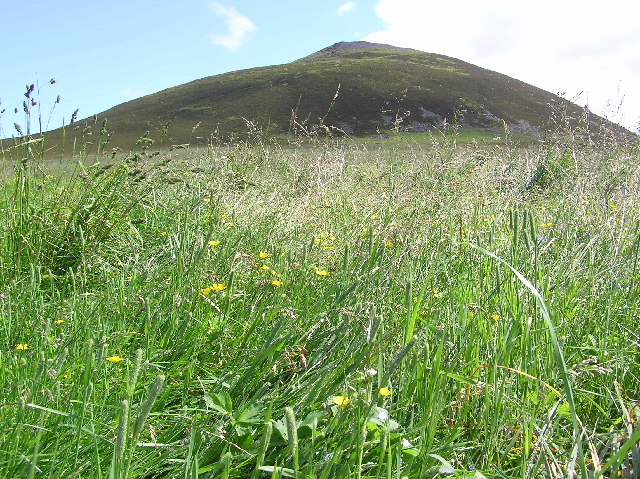
Drone and lidar surveys count as many as 800 huts inside its outer rampart: evidence, researchers say, for the largest known settlement in early-me…
- Near Rhynie
- 50 min walk from car park
- Rough ground
Questions people ask
- How many castles have stood at Huntly Castle?
- Four successive castles have occupied the site, referred to at various times as Huntly Castle, Strathbogie Castle or the Peel of Strathbogie.
- Who built the first castle at Huntly?
- Duncan II, Earl of Fife, built the original timber castle on a motte around 1180 to 1190, on the Strathbogie estate.
- Why did Huntly Castle pass to the Gordon family?
- Robert the Bruce granted it to the loyal Sir Adam Gordon after David of Strathbogie defected to the English shortly before Bannockburn.
- Did Mary, Queen of Scots ever visit Huntly Castle?
- She sent men to arrest the 4th Earl of Huntly there in 1562, though the Earl escaped; a planned personal visit the following year did not take place.
- Who cares for Huntly Castle today?
- Historic Environment Scotland manages the ruins as a scheduled monument, following the end of Gordon family ownership in 1923.
Sources
- Wikipedia: Huntly Castle
- Historic Environment Scotland — Huntly Castle
Explore more: Fortified places · Medieval · Aberdeenshire
The Ancient Codex, in your pocket
Get the Pocket Codex app
Carry the directory with you — Huntly Castle and thousands of ancient places across Britain and Ireland, offline, wherever you roam.