One of more than seventy recumbent stone circles unique to lowland Aberdeenshire, its closest architectural parallels lie not in Scotland but in south-west Ireland.
A single slab of stone lies flat across the southern arc of a ring in a field near Forgue, so large that it takes a moment to recognise it as part of a stone circle at all. This is the recumbent, the stone that gives Yonder Bognie’s monument type its name, flanked by two upright stones each nearly as tall as a person.
Recumbent stone circles are an early Bronze Age monument type built almost exclusively in lowland Aberdeenshire, where more than seventy examples survive; the closest comparable monuments, the axial stone circles, lie hundreds of miles away in south-west Ireland. Each circle’s standing stones were traditionally graded by size, tallest beside the recumbent and smallest set opposite it to the north-east, around a low cairn that at most sites has long since vanished.
At Yonder Bognie the ring survives only in a fragmentary state, its outline blurred by centuries of ploughing in the field that surrounds it. Nine stones remain upright and three lie fallen; the twentieth-century surveyor Alexander Thom went further and suggested the site may once have held two separate circles rather than a single oval enclosure. Despite standing on working farmland, the monument is legally protected as a scheduled site.
What follows is drawn from published sources, with each claim labelled by how firmly it is established.
History
During the early Bronze Age, communities in what is now lowland Aberdeenshire began raising recumbent stone circles, and Yonder Bognie was one of them. Builders chose a level shelf of ground with a clear view toward the Foudland Hills, then set out a ring of graded stones around a low cairn, placing the smallest stone to the north-east and the tallest pair, the flankers, either side of a single massive stone laid flat to the south-south-west.
That recumbent stone, quarried and manoeuvred into position without machinery, came to measure 3.35 metres long and 1.70 metres high, dwarfing the rest of the ring. Raising and levelling a block of that size was itself a considerable feat of labour and coordination, and it marked the recumbent as the focal feature of the monument rather than simply its largest stone.
At recumbent circles across the region, later generations sometimes returned to deposit cremated human remains within or near the low cairn at the centre of the ring, a practice recorded at a number of these Aberdeenshire sites. Whether that custom was ever carried out at Yonder Bognie itself is not recorded, and the precise purpose the circles served remains uncertain.
In the twentieth century the engineer and astronomer Alexander Thom, who surveyed stone circles across Britain in search of shared geometric principles, examined Yonder Bognie and proposed that the monument may originally have consisted of two separate circles rather than the single oval ring usually assumed, a reading of the site that remains debated among archaeologists.
By the time of recent record only nine of the original standing stones survived, three of them fallen, set within a working agricultural field under private ownership; the ring nonetheless holds legal protection as a scheduled monument, recognising its archaeological importance despite its ruined and diminished state.
People
-
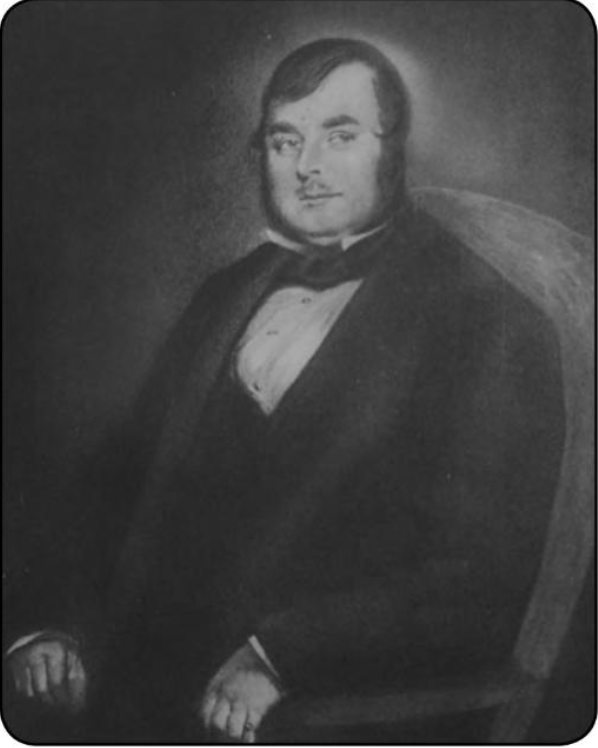
Portrait: Charles Grey (1808-1892) / Wikimedia Commons / Public domain Alexander Thom
Engineer and archaeoastronomer who surveyed Yonder Bognie and suggested the site may originally have comprised two separate circles rather than one.
Cultural influences
-
Recumbent-circle tradition
Yonder Bognie follows the Aberdeenshire recumbent-circle tradition, with a recumbent, flankers and graded stones around a low cairn; its closest architectural parallels lie in south-west Ireland.
Connections
-
Axial stone circles, south-west Ireland
Regarded as the closest architectural parallel to Aberdeenshire's recumbent stone circles, sharing a comparable layout of graded stones set along a single axis.
-
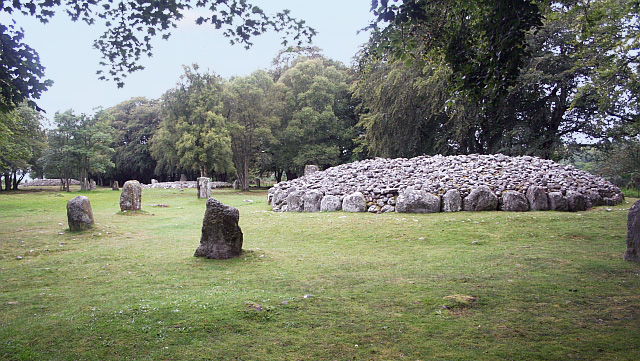
Photo: Bob Embleton / Wikimedia Commons / CC BY-SA 2.0 Recumbent stone circles such as Yonder Bognie may represent a later development from this earlier regional cairn-building tradition.
-
Recumbent stone circles of lowland Aberdeenshire
Yonder Bognie is one of more than seventy surviving examples of this regional monument type, found almost nowhere else.
What to look for
-
The recumbent stone
The great flat stone lying across the circle's south-south-west arc measures 3.35 metres long and 1.70 metres high, the largest stone in the monument and the feature that gives this type of circle its name.
-
The western flanker
One of the pair of tall upright stones that would once have stood either side of the recumbent, the surviving western flanker stands 1.75 metres high.
-
Nine standing, three fallen
Of the stones known to have formed the ring, nine remain upright today and three lie fallen, giving a clear sense of the circle's original scale despite its ruined condition.
-
A sightline to the Foudland Hills
The circle appears to be oriented toward the Foudland Hills to the south, a wide outward view typical of the level, elevated spurs on which recumbent circles were generally built.
Plan your visit
- Location
- 57.4990°N · 2.6690°W
- Nearest settlement
- Huntly
- Access
- Private — no general public access
- Terrain
- Easy going
- Time needed
- About 20 minutes
- Best time
- Only with landowner permission, in dry daylight when the surviving stones can be seen safely.
- What survives
- Nine stones remain standing and three lie fallen in a privately owned agricultural field.
- Facilities
- No visitor facilities are recorded.
Opening & admission
No admission or access details are recorded — check with the landowner or local access guidance before visiting.
- Located in a private agricultural field
- In ruined condition, with only some stones still standing
Nearby places
Fortified place · Roman
Burnfield
Aberdeenshire
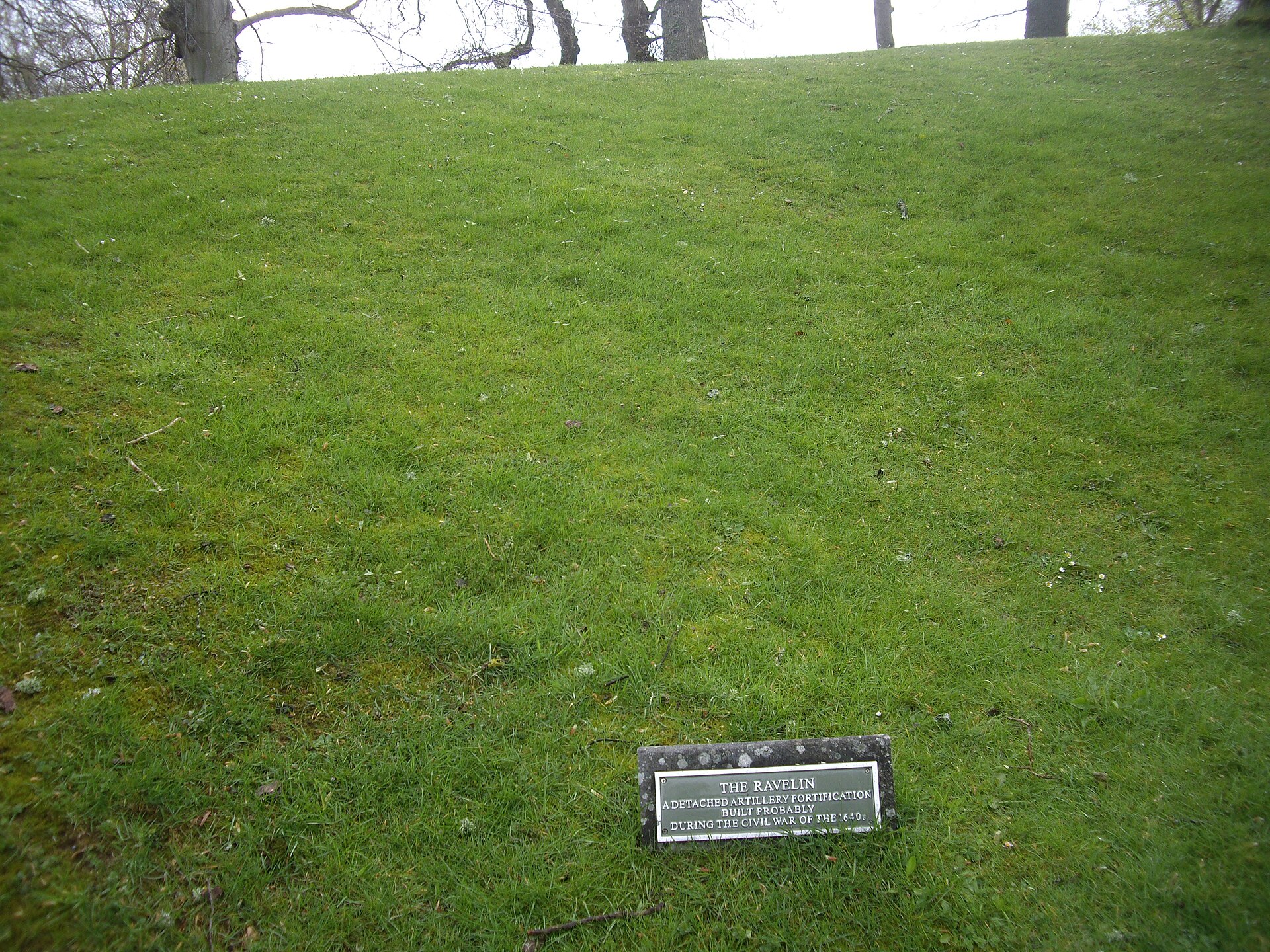
A Roman camp so faint on the ground that only a photograph taken from the air, in 1982, proved it had ever existed at all.
- Near Milltown of Rothiemay
- Easy path
Fortified place · Medieval
Huntly Castle
Aberdeenshire
Four successive castles rose on this one riverside site, each rebuilt by the Gordons after fire, siege or royal demolition: a single ruin holding f…
- Easy path
Sacred place · Prehistoric
Whitehill Wood, Aberdeenshire
Aberdeenshire
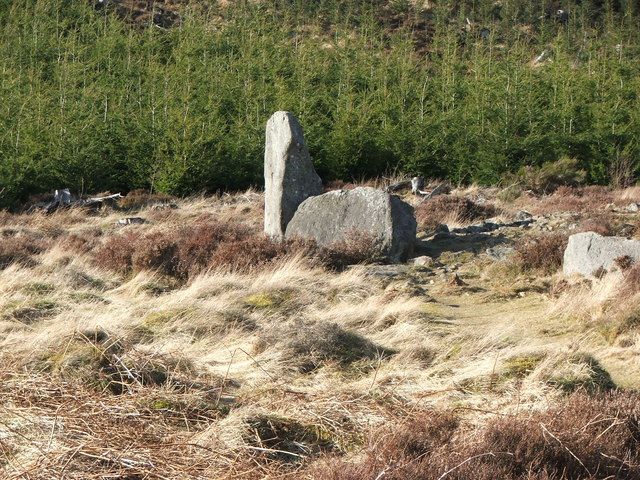
Two dating estimates over a thousand years apart - Sir Norman Lockyer's 1200 BC and Historic Environment Scotland's roughly 4500 years old - sit on…
- Near Aberchirder
- Rough ground
Fortified place · Roman
Ythan Wells
Aberdeenshire
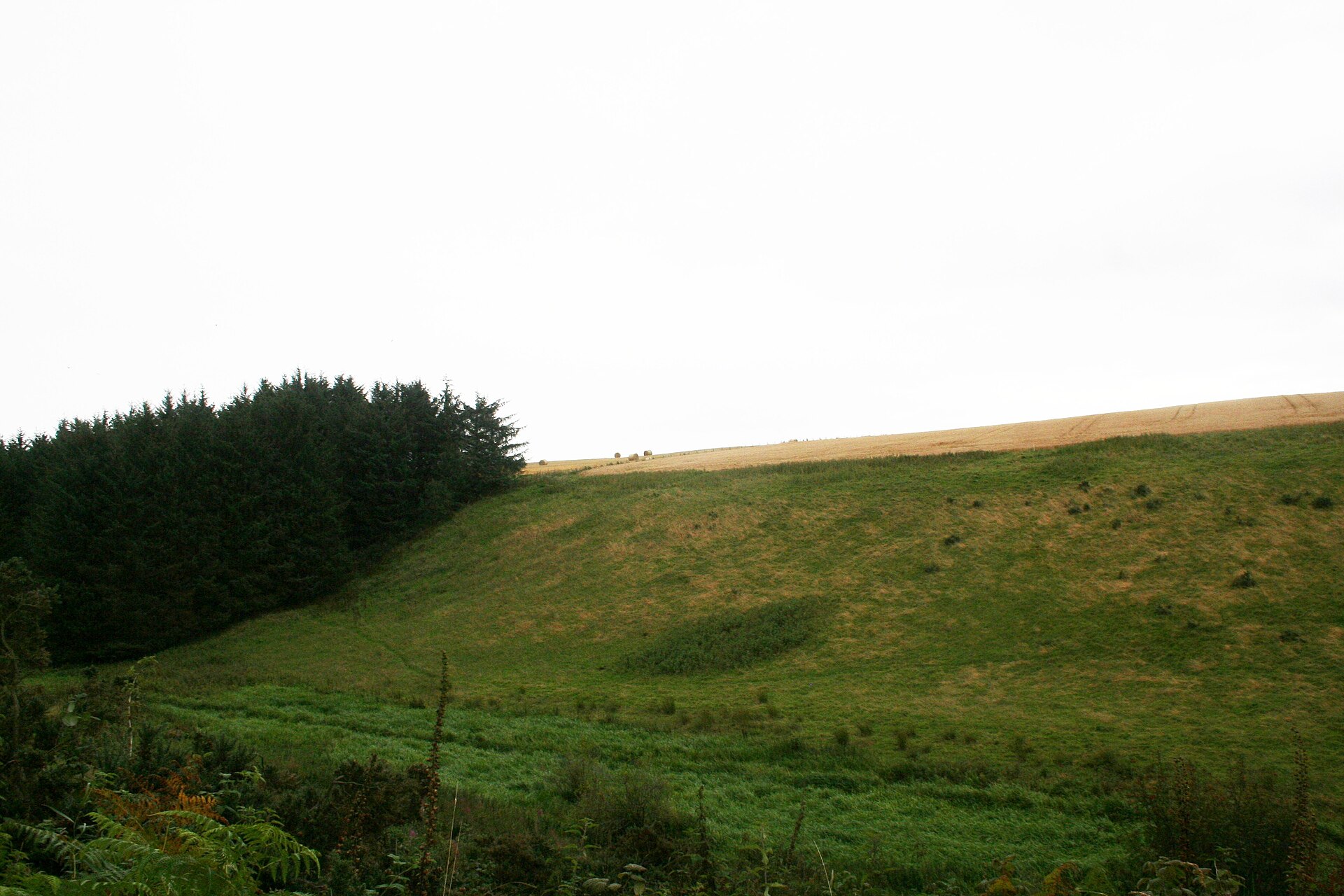
Two marching camps of different size and date lie stacked on the same patch of ground: among the northernmost Roman camps ever built in Scotland.
- Near Huntly
- Easy path
The setting
Minor road and open farmland in the landscape around Yonder Bognie; the stone circle is not visible.
Photo: Andrew Wood / Wikimedia Commons / CC BY-SA 2.0
Roadside landscape towards Fourmanhill near Yonder Bognie; the stone circle is not visible.
Photo: Steven Brown / Wikimedia Commons / CC BY-SA 2.0
Questions people ask
- What is a recumbent stone circle?
- An early Bronze Age monument in which the largest stone is laid flat, or recumbent, between two tall flanking stones, usually on the ring's south or south-west side, around a low central cairn.
- How many stones survive at Yonder Bognie?
- Nine of the original stones remain standing, and three more lie fallen within the ring.
- How big is the recumbent stone?
- The recumbent stone measures 3.35 metres long and 1.70 metres high, making it the largest single stone in the circle.
- Did Alexander Thom think Yonder Bognie was originally two circles?
- Yes — the surveyor Alexander Thom suggested it may have been two separate circles rather than a single oval ring, though the idea remains debated.
- Can visitors reach Yonder Bognie?
- The circle stands within a working agricultural field under private ownership, though it is legally protected as a scheduled monument.
Sources
The Ancient Codex, in your pocket
Get the Pocket Codex app
Carry the directory with you — Yonder Bognie and thousands of ancient places across Britain and Ireland, offline, wherever you roam.