The castle photographed on countless shortbread tins is barely a century old — a 1930s recreation of a stronghold the Royal Navy blew apart in 1719.
A single-arch stone footbridge carries visitors across a narrow tidal channel to a small island where three sea lochs meet, the castle’s grey turrets rising directly from the rock as if grown there rather than built. Photographs of it appear on shortbread tins and whisky labels across the world, yet the building most people picture dates only to the 1930s: the medieval stronghold it replaces was blown to pieces by Royal Navy gunfire two centuries earlier.
The island takes its name from Donnán of Eigg, an Irish monk killed with his community in 617, who tradition says founded a church here that has since vanished without trace. Fragments of stone fused by extreme heat, found among the ruins, suggest a fortified site existed on the island even earlier, in the Iron Age. The stone castle proper began in the thirteenth century as a curtain-walled stronghold guarding the frontier between the Norse-held Hebrides and the Earldom of Ross, before passing to the Mackenzies of Kintail and their loyal allies the Macraes, who held it through centuries of clan feuding.
That long occupation ended in 1719, when Spanish troops backing a Jacobite invasion garrisoned the castle and three Royal Navy frigates bombarded it into rubble. Eilean Donan lay in ruins for two hundred years until Lieutenant-Colonel John Macrae-Gilstrap rebuilt it between 1919 and 1932, working from scant archaeological evidence and a clerk of works who claimed to have dreamed the finished design.
What follows is drawn from published sources, with each claim labelled by how firmly it is established.
The name
Eilean Donan means simply "island of Donnán", after Donnán of Eigg, a Celtic saint martyred in 617 who is said to have founded a church on the island, though no trace of it survives.
History
Long before the stone castle rose, the island may have held a small Christian monastic cell in the 6th or 7th century, dedicated to Donnán of Eigg, an Irish saint martyred in April 617 alongside his community. No trace of any church survives, but fragments of vitrified stone — rock fused by intense heat — have been found on the island, pointing to an earlier Iron Age or early medieval fort that predates any monastic use.
During the reign of Alexander II, in the earlier thirteenth century, a large curtain wall enclosing most of the island was raised, positioned at the tense boundary between the Norse-Celtic Lordship of the Isles and the Earldom of Ross. A local legend credits the castle's founding to a young Matheson chief who had gained the power to understand birdsong and, through overseas adventures, won enough wealth and royal favour that Alexander II asked him to build a stronghold to guard the approach.
The Mackenzies of Kintail, vassals of the Earl of Ross, took hold of the castle, and clan tradition holds that Robert the Bruce sheltered there during the winter of 1306 to 1307, though no contemporary record confirms it. In 1331 Thomas Randolph, Earl of Moray, had fifty local men rounded up and executed at the castle, their heads displayed on its walls. Around this time the Clan Macrae migrated into Kintail from the Beauly Firth and became the Mackenzie lairds' trusted bodyguards, earning the name "Mackenzie's shirt of mail".
Succession disputes convulsed the castle through the fifteenth and sixteenth centuries: Hector Roy Mackenzie tried to seize Kintail from his under-age nephew John of Killin around 1497, installing his own constable, until a siege and negotiation forced the matter and Christopher Macrae was made constable around 1511. In 1539 Donald Gorm Macdonald of Sleat launched a surprise attack on the lightly garrisoned castle; Duncan MacGillechriosd of Clan Macrae fatally wounded him with his last arrow, driving the raiders off.
The Rev. Farquhar Macrae, born at the castle in 1580, became its constable and the minister of Kintail in 1618, later tutoring the future Earl of Seaforth's son at Eilean Donan. During the civil wars the Earl of Seaforth backed Charles I, drawing a Parliamentary garrison to the castle in 1650 that the local people forced out within weeks. In June 1654 troops under Oliver Cromwell's governor General Monck marched through Kintail suppressing a royalist uprising, destroying property and driving off 360 of Farquhar Macrae's cattle.
William Mackenzie, 5th Earl of Seaforth, led Macraes and Mackenzies into the Jacobite rising of 1715, and the Macraes are said to have danced on the castle roof before marching to the Battle of Sheriffmuir, where 58 of them died. In April 1719 Spanish troops supporting a fresh Jacobite invasion occupied the castle, prompting three Royal Navy frigates to bombard it for two days; a landing party then took it and detonated its powder stores, reducing Eilean Donan to ruin for the next two centuries.
Between 1919 and 1932 Lieutenant-Colonel John Macrae-Gilstrap rebuilt the castle from its ruined footprint, commissioning architect George Mackie Watson and adding an arched footbridge and a war memorial to Macrae clansmen killed in the First World War. Opened to the public in 1955 and passed to the Conchra Charitable Trust in 1983, the reconstructed castle became one of Scotland's most photographed landmarks, later appearing in Highlander and The World Is Not Enough.
People
-
Donnán of Eigg
Celtic saint martyred in 617, after whom the island is named and who is said to have founded a now-vanished church there.
-
Lieutenant-Colonel John Macrae-Gilstrap
Rebuilt the castle from its ruined footprint between 1919 and 1932, creating the building seen today.
-
Rev. Farquhar Macrae
Constable of the castle and minister of Kintail from 1618, born there in 1580 and its last resident constable before reconstruction.
-
Lewis Petit
Military engineer whose 1714 survey drawing is the only depiction of the castle to survive from before its 1719 destruction.
-
George Mackie Watson
Edinburgh architect commissioned by Macrae-Gilstrap to draw up the plans for the twentieth-century reconstruction.
Cultural influences
-
Eilean Donan’s island setting and later reconstruction embody the defensive culture of the western Highlands and the memory of the Jacobite era.
Connections
-
Clan Mackenzie
Held Eilean Donan as their principal stronghold in Kintail for several centuries.
-
Clan Macrae
Served as the Mackenzies' hereditary constables and bodyguards at the castle, earning the name "Mackenzie's shirt of mail".
-
Beaufort Castle
Named in the Gaelic inscription over the castle's modern entrance, which references a bond of kinship between the Macraes and the Frasers of Beaufort.
-
Battle of Sheriffmuir
The battle to which Macraes mustered from Eilean Donan marched in 1715, where 58 of them were among the Jacobite dead.
-
Battle of Glen Shiel
Where the Spanish troops who had occupied Eilean Donan in 1719 were defeated shortly after the castle's destruction.
Discovery & excavation
Archaeological surveys carried out in 2008 and 2009 confirmed the line of the thirteenth-century curtain wall around the island and found evidence of metalworking in its northern section. Earlier, in 1893, dredging of the castle's stone-lined reservoir recovered two small brass cannon known as "double hagbuts" and an iron gate, or yett, now displayed inside the castle.
In culture
-
Highlander (1986)
The castle appears prominently as the ancestral home of Clan MacLeod.
-
The World Is Not Enough (1999)
Eilean Donan served as the Scottish headquarters of MI6 in the James Bond film.
-
Shortbread and whisky packaging
The castle is regularly used as a recognised Scottish icon on packaging and advertising for shortbread, whisky and other products.
What to look for
-
The Billeting Hall
The tunnel-vaulted ground floor of the medieval tower house, now a single room following the reconstruction of the formerly subdivided space.
-
The Banqueting Hall
First-floor hall with an oak ceiling whose main beams, of Douglas Fir, were shipped from British Columbia as a gift from the Macraes of Canada.
-
The Gaelic inscription
Carved above the modern entrance portal, reading "As long as there is a Macrae inside, there will never be a Fraser outside".
-
The war memorial
Dedicated to Macrae clansmen killed in the First World War, adorned with lines from "In Flanders Fields" and flanked by grey field guns.
-
The recovered yett
An iron gate dredged from the castle's reservoir in 1893, now on display inside the castle.
What is said
Folklore and tradition, recorded as what is said — not as established fact.
-
The bird-speaking founder
Tradition holds that the castle was founded after a Matheson chief's son gained the power to understand birdsong and used the wealth and prestige this brought him to win Alexander II's favour and permission to build the stronghold.
-
Robert the Bruce's shelter
Clan histories claim that Robert the Bruce sheltered at Eilean Donan during the winter of 1306 to 1307, though no contemporary evidence supports the story.
-
The dream-built reconstruction
The clerk of works for the twentieth-century rebuild, Farquhar Macrae, is said to have based his reconstruction on a dream in which he saw the restored castle.
Plan your visit
- Location
- 57.2739°N · 5.5161°W
- Nearest settlement
- Inverness
- Time needed
- About 45 minutes
- Best time
- Visit during published opening hours and in settled daylight, checking weather and current arrangements before travelling.
- What survives
- The castle operates as a visitor attraction with castle exhibitions; the Conchra Charitable Trust manages the site.
- Facilities
- Visitor facilities depend on the current castle operation; check the official information before travelling.
Opening & admission
Paid admission tickets for the castle are purchased on site on the day of the visit.
- In 2026 the castle is open from 1 February to 22 December, with seasonal hours: 10am–4pm in February–March and late October–December; extended hours from late March through October. Last admission is one hour before closing.
Nearby places

Fortified place · Iron Age
Caisteal Grugaig
Highland
A drystone tower still rising over its own five-step internal stair and a triangular lintel massive enough to have never needed a keystone.
- Near Shiel Bridge
- Some walking
Fortified place · Iron Age
Dun Troddan
Highland
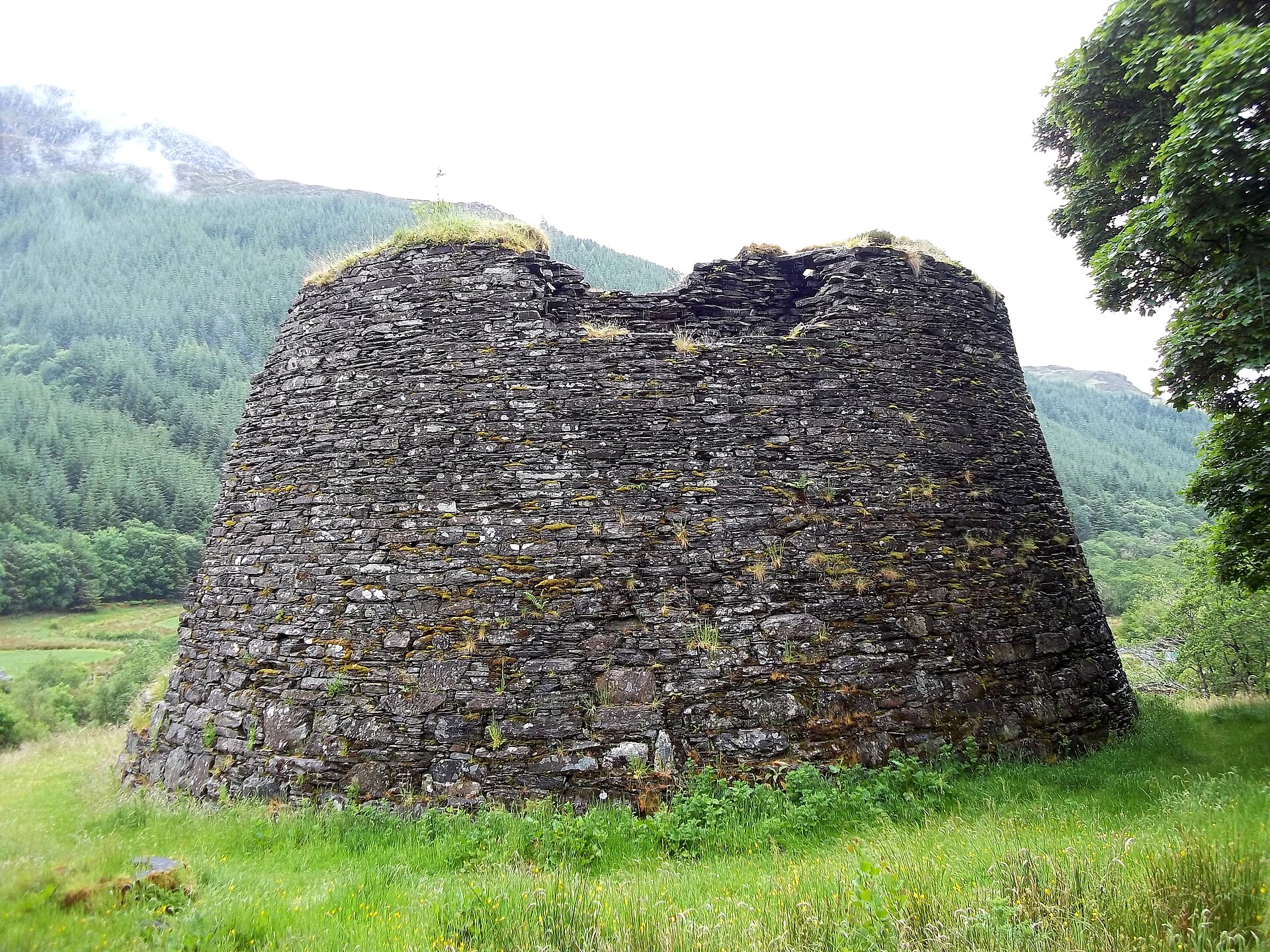
Its stairway still climbs to a first-floor landing inside a wall four and a half metres thick: one of Scotland's most intact broch (a tall circular…
- Near Inverness
- Some walking
Fortified place · Iron Age
Dun Telve
Highland
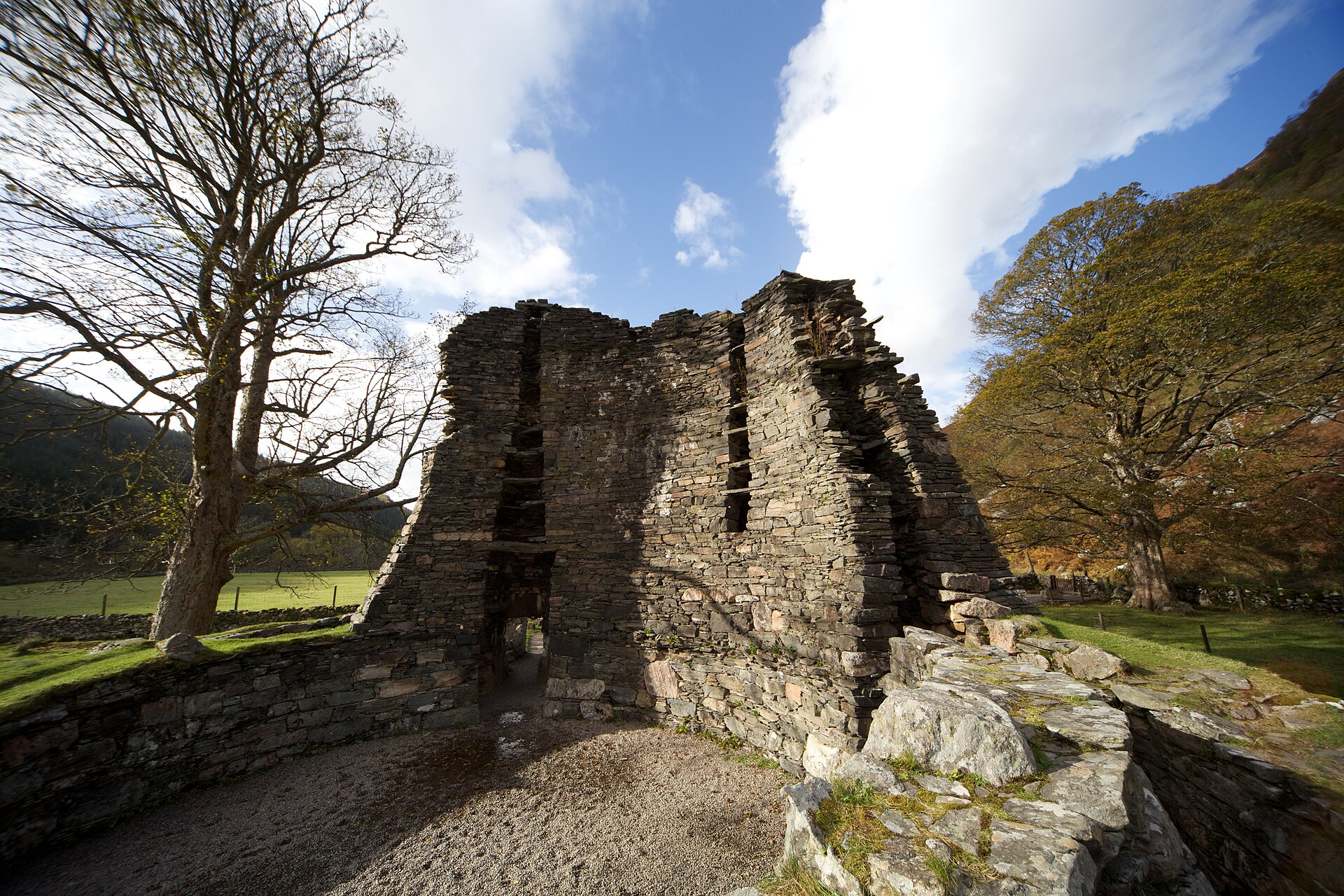
Its drystone wall still rises over ten metres without a scrap of mortar, making Dun Telve one of the tallest surviving brochs anywhere in Scotland.
- Near Inverness
- Easy path

Fortified place · Iron Age
Dun Grugaig
Highland
A rare surviving 'semi-broch': the transitional D-shaped form that shows how the great circular broch towers of the Highlands may have evolved.
- Near Glenelg
- Rough ground
Questions people ask
- Is the castle at Eilean Donan medieval?
- No. The medieval stronghold was destroyed by Royal Navy bombardment in 1719 and lay in ruins for two centuries; the building seen today is a 1919–1932 reconstruction by Lieutenant-Colonel John Macrae-Gilstrap.
- Why was the castle destroyed?
- In 1719 Spanish troops supporting a Jacobite invasion occupied the castle; Royal Navy frigates bombarded it and a landing party detonated its gunpowder stores, demolishing it.
- Where does the name Eilean Donan come from?
- It means "island of Donnán", after Donnán of Eigg, a Celtic saint martyred in 617 who tradition holds founded a now-vanished church there.
- Which clans held the castle?
- The Mackenzies of Kintail held it as their stronghold, with their allies the Macraes serving as hereditary constables and bodyguards for centuries.
- Has Eilean Donan appeared in film?
- Yes — it has featured in Highlander (1986), The World Is Not Enough (1999), and numerous other films and TV productions since the 1940s.
Sources
- Wikipedia: Eilean Donan
- Field Archaeology Specialists Ltd. — Archaeological Survey and Evaluation, Eilean Donan Castle (2008–09)
- Gifford, John — Highlands and Islands (The Buildings of Scotland)
- MacGibbon, David & Ross, Thomas — The Castellated and Domestic Architecture of Scotland
Explore more: Building or ruins · Medieval · Highland
The Ancient Codex, in your pocket
Get the Pocket Codex app
Carry the directory with you — Eilean Donan Castle and thousands of ancient places across Britain and Ireland, offline, wherever you roam.