Its name comes not from a clan or a king but from Scáthach, the legendary warrior-woman said to have trained the Irish hero Cú Chulainn in the arts of combat on this rock.
A jagged stub of curtain wall clings to the edge of a sea-girt rock off the Sleat coast of Skye, all that now stands between the cliff and the water below. Reaching the gate once meant crossing a six-metre gap over the sea by a stone bridge whose arches were spaced six feet apart, then a timber drawbridge whose pivot holes can still be seen cut into the rock, then a flight of stone stairs walled in on both sides. It was an approach built for defence rather than convenience, and it still shapes how the ruin is read today.
The castle’s builders chose that awkward, sea-cut site deliberately. Its known history is one of repeated seizure: raised in the 1300s for a Viking-descended family, the MacAskills, it was fought over and traded between three of the great West Highland clans before a king finally intervened. Within the broken curtain wall a courtyard still holds a well and the base of a stair that once climbed a tower, quiet survivals of a household that lived, for a few centuries, on a rock reachable only by bridge and drawbridge.
The castle carries a second life in story. Long before any of the clans held it, tradition placed it as the school of Scáthach, a warrior-woman of Irish legend, and the Gaelic name of the fort, Dún Scáthaigh, is said to derive directly from hers.
What follows is drawn from published sources, with each claim labelled by how firmly it is established.
The name
The Gaelic name Dún Scáthaigh, from which Dunscaith and the variant Dun Sgathaich derive, is said to come from Scáthach, the legendary warrior-woman associated with the site; the castle has also been called "Fortress of Shadows" and, in another local form, Tokavaig.
History
Dunscaith Castle is said to have originated in the 1300s as a stronghold built on the Isle of Skye for a Viking-descended group led by Gilbert MacAskill, grandson of the Norse explorer Ascall Mar Ragsnaill. The offshore rock, separated from the mainland by open water and reachable only by a bridge and drawbridge, gave the MacAskills a naturally defensible base commanding the approach to the Sleat coastline.
The MacAskills held the castle until sometime before 1395, when it passed to the Clan MacDonald of Sleat, a branch of the wider Clan Donald or MacDonald kindred. The change of ownership placed one of Skye's most defensible strongholds in the hands of the family that would go on to dominate Sleat for centuries, though their hold on Dunscaith itself proved far from settled.
During the 14th century the castle was taken from the MacDonalds by the Clan MacLeod, and for a time it was held once again by the MacAskills as allies of the MacLeods. The MacDonalds eventually recaptured it in the 15th century, restoring the castle to the family that had first taken it from the MacAskills a generation or more earlier.
In the 15th century Dunscaith was captured once more, this time by King James IV of Scotland, at the point when the Chief of Clan Donald and Lord of the Isles was broken as a semi-independent power in the west. Despite the Crown's intervention, the MacDonalds of Sleat were allowed to retain possession of the castle afterwards.
The MacDonalds abandoned Dunscaith Castle in the early 17th century, after which the buildings were left to decay. What survives today is a fragment of curtain wall along the cliff edge, a well and the remains of a stairway in the courtyard, and the pivot holes and stone-arched bridge foundations that once carried the only approach across the water.
People
-
Gilbert MacAskill
Viking-descended chief said to have built the original stronghold on the rock in the 1300s.
-
Ascall Mar Ragsnaill
Norse explorer and grandfather of Gilbert MacAskill, named as an ancestor of the castle's founding family.
-
King James IV of Scotland
Captured Dunscaith Castle in the 15th century when the Lordship of the Isles was broken as an independent power.
-
Scáthach
Legendary warrior-woman and martial arts teacher after whom the castle's Gaelic name, Dún Scáthaigh, is said to be derived.
-
Cú Chulainn
Hero of the Ulster Cycle said to have been trained in combat at Dunscaith by Scáthach.
Cultural influences
-
Dunscaith’s position on the Sleat coast reflects the defensive landscapes of medieval Skye and its clan rivalries.
Connections
-
Clan MacAskill
Held the castle from its founding in the 1300s until it passed to the MacDonalds of Sleat before 1395, and briefly regained it in the 14th century as allies of Clan MacLeod.
-
Clan MacDonald of Sleat
Took Dunscaith before 1395, lost and recaptured it during the 14th and 15th centuries, and retained it under royal sanction until abandoning it in the early 17th century.
-
Clan MacLeod
Seized the castle from the MacDonalds in the 14th century, holding it with MacAskill allies before its recapture by the MacDonalds.
-
Lordship of the Isles
Dunscaith was captured by King James IV in the 15th century at the moment the Lordship, held by the Chief of Clan Donald, was broken as an independent power.
-
Ulster Cycle (Cú Chulainn legend)
Irish mythological tradition that places Dunscaith as the school of Scáthach, where Cú Chulainn was trained, and from which the castle's Gaelic name is said to derive.
In culture
-
Ulster Cycle
Dunscaith features in the Ulster Cycle of Irish mythology as the place where the warrior-woman Scáthach trained the hero Cú Chulainn in the arts of combat.
What to look for
-
Cliff-edge curtain wall
A surviving stretch of the castle's curtain wall, about five feet (1.5 metres) thick, runs along the cliff edge of the rock; most of the inner buildings behind it have gone.
-
Courtyard well and stair
Within the courtyard a well survives alongside the remains of a stairway that once led up to a tower.
-
Drawbridge pivot holes
On the far side of the gap between rock and mainland, the pivot holes for the vanished drawbridge are still visible cut into the rock.
-
Walled approach stair
A flight of stone stairs flanked by walls on both sides climbs from the former drawbridge landing up to the castle itself.
What is said
Folklore and tradition, recorded as what is said — not as established fact.
-
Scáthach's school of arms
Tradition holds that the warrior-woman Scáthach ran a school of martial arts at Dunscaith and trained the hero Cú Chulainn there, and that the castle's Gaelic name, Dún Scáthaigh, derives from hers.
Plan your visit
- Location
- 57.1366°N · 5.9759°W
- Nearest settlement
- Inverness
- Time needed
- About 45 minutes
Nearby places

Fortified place · Iron Age
Dun Ringill
Highland
A stone roundhouse dating from the centuries before Rome arrived that Clan MacKinnon later refitted as its own stronghold, so the ruin carries two…
- Near Inverness
- Some walking

Fortified place · Medieval
Armadale Castle
Highland
A Tudor-Gothic mock-castle built purely for show now stands roofless and abandoned, and in 2025 its entire estate went up for private sale.
- Near Armadale
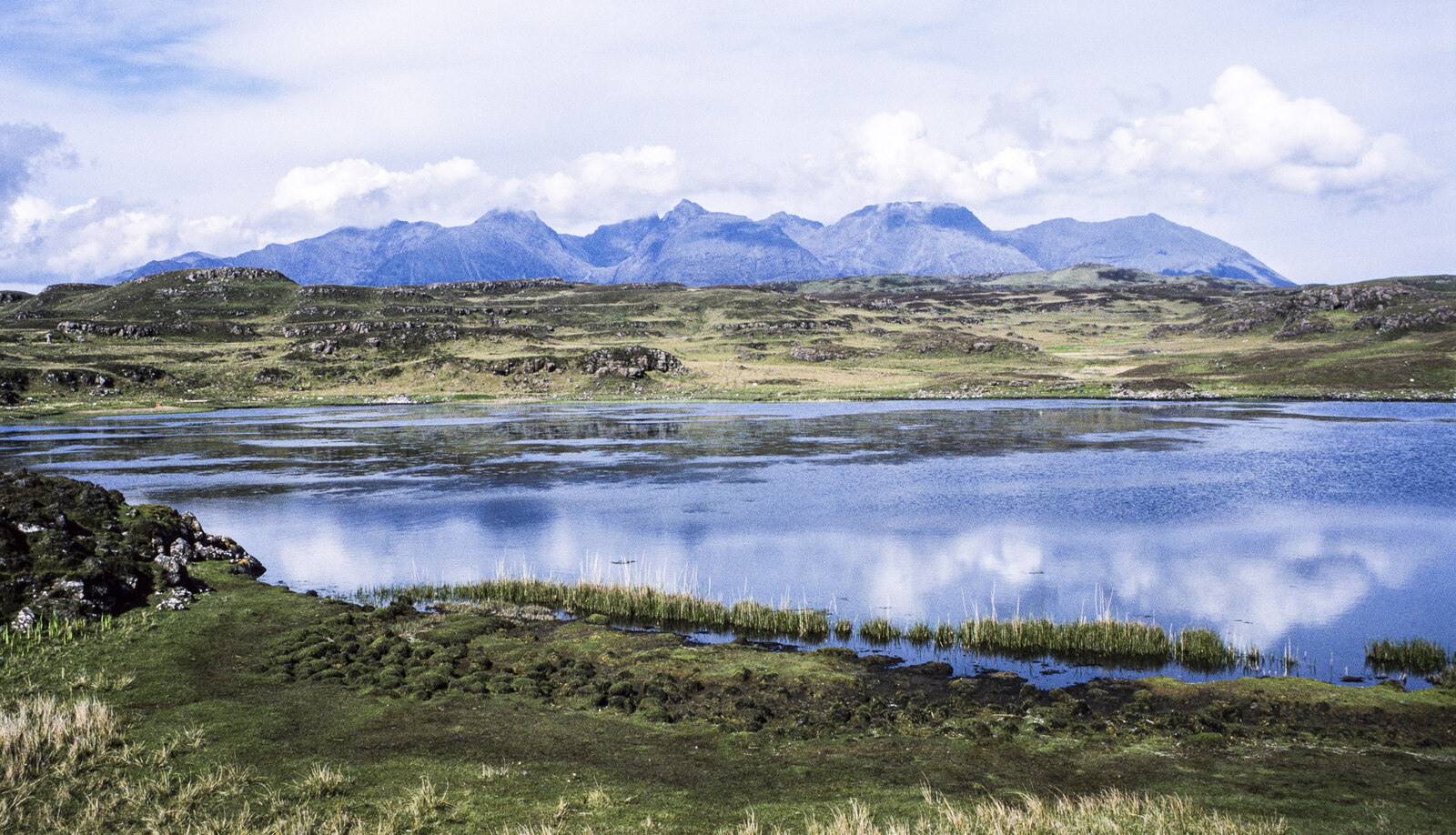
Tomb or burial place · Prehistoric
Rubha an Dùnain
Highland
A Neolithic chambered cairn shares this remote headland with an Iron Age dun and a rare medieval boat harbour: one of Skye's most densely layered a…
- Rough ground
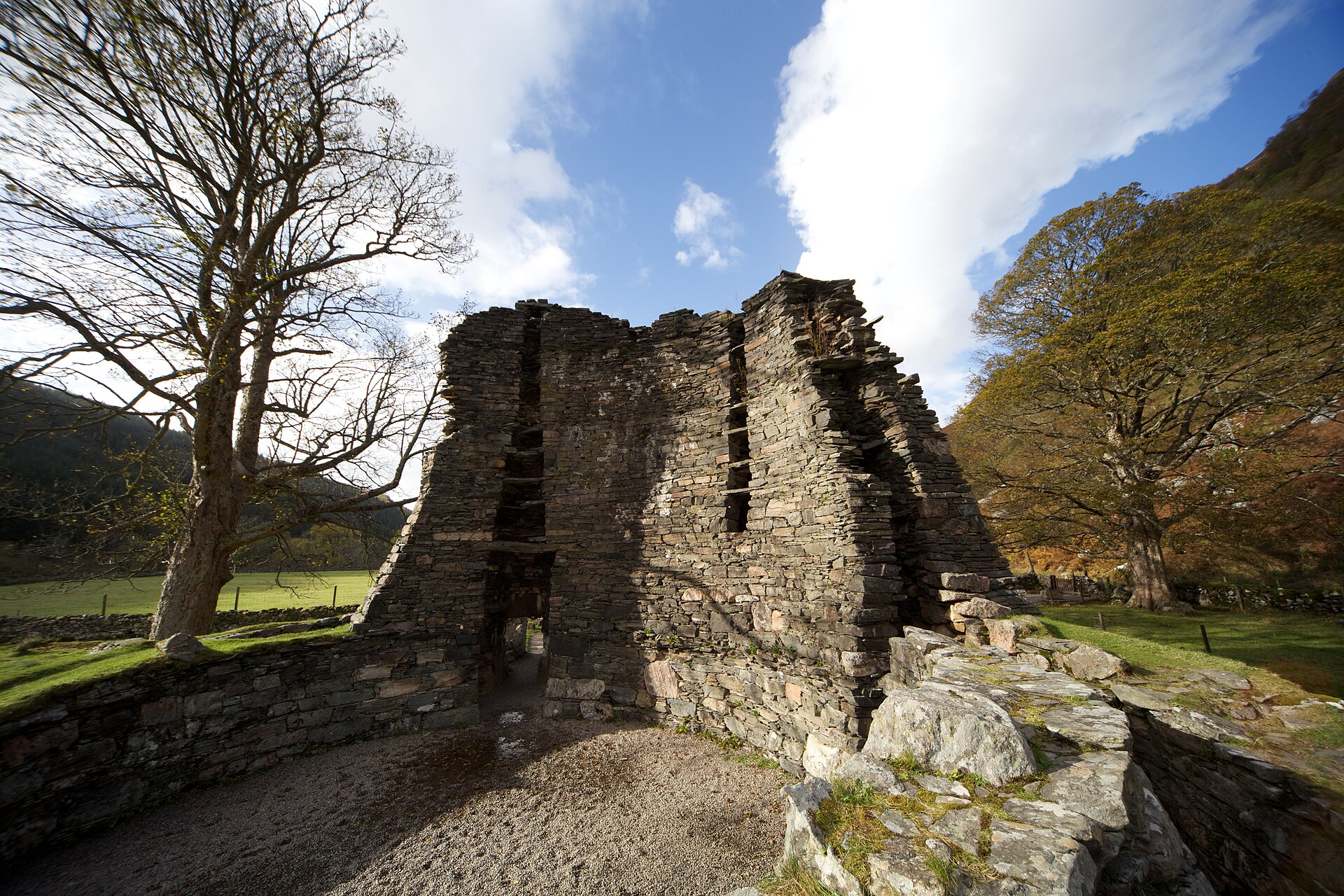
Fortified place · Iron Age
Dun Telve
Highland
Its drystone wall still rises over ten metres without a scrap of mortar, making Dun Telve one of the tallest surviving brochs anywhere in Scotland.
- Near Inverness
- Easy path
Questions people ask
- What does the name Dunscaith mean?
- It derives from the Gaelic Dún Scáthaigh, said to come from Scáthach, the legendary warrior-woman linked to the site; the castle has also been called "Fortress of Shadows".
- Who built Dunscaith Castle?
- It originated in the 1300s as a stronghold for a Viking-descended group led by Gilbert MacAskill, grandson of the Norse explorer Ascall Mar Ragsnaill.
- Which clans held Dunscaith Castle over the centuries?
- The MacAskills, MacDonalds of Sleat and MacLeods each held it at different points, with the MacDonalds finally retaining it under King James IV.
- What is Dunscaith Castle's link to Irish mythology?
- Tradition holds it was the school of the warrior-woman Scáthach, who trained the hero Cú Chulainn there in the Ulster Cycle of Irish legend.
- When did Dunscaith Castle fall into ruin?
- The MacDonalds abandoned it in the early 17th century, after which the buildings were left to decay into the ruin seen today.
Sources
- Wikipedia: Dunscaith Castle
- Historic Environment Scotland — Canmore
Explore more: Building or ruins · Medieval · Highland
The Ancient Codex, in your pocket
Get the Pocket Codex app
Carry the directory with you — Dunscaith Castle and thousands of ancient places across Britain and Ireland, offline, wherever you roam.