These three damaged circles preserve unusually detailed evidence for how field clearance, railway construction and housing altered an interconnected Highland monument group.
A tapering quartzite slab stands alone in a field near Delfour, 9 feet 6 inches high and set some 22 feet south-west of a heap of cleared stone: Caleb George Cash, describing it in 1906, thought it looked like a cloaked human figure. It is one of three Clava cairns in or near Aviemore, all three recorded by Cash in the same account: chambered cairns of the Bronze Age, roughly 2500–800 BC, of the type named from Balnuaran of Clava, each ringed by megaliths. None has come through the centuries intact. Delfour’s middle ring was used by a farmer as a place to dump field stone, the Aviemore circle now stands in the middle of a housing estate, and the Grenish circle sits on moorland with a railway line running within a few yards of its western side.
What follows is drawn from published sources, with each claim labelled by how firmly it is established.
History
Three Clava cairns — Bronze Age chambered cairns of the type named from Balnuaran of Clava, each ringed by megaliths — stand in or close to Aviemore in the Scottish Highlands. All three were written up in 1906 by Caleb George Cash, an honorary fellow of the Royal Scottish Geographical Society, and his account remains the common point of reference for their condition.
Delfour stone circle lies 4 miles, or 6.4 kilometres, south-west of Aviemore railway station and 2 miles north-north-east of Kincraig, and in 1906 stood near a cottage. Cash found it ruinous: as he described it, hardly recognisable as anything other than a heap of stones cleared by the farmer from his fields. The middle circle, about 60 feet or 18 metres across, appears to have been used as a clearance dump, with stones from the outer rings tipped into it. An outer kerb some 58 feet across encloses an inner ring of smaller stones, and a bank of small stones just outside the kerb belongs to the original design, though field stone has since been thrown onto it.
One stone at Delfour still stands, and Cash called it striking. It is a quartzite slab about 22 feet — 6.7 metres — south-west of the middle circle, 9 feet 6 inches high, 5 feet 6 inches wide and 1 foot 6 inches thick, and it may be the sole survivor of an outer ring. Because it tapers towards the top, Cash thought it resembled a cloaked human figure.
The Aviemore circle is made up of three rings, or what is left of them: an outer ring of detached megaliths about 75 feet or 23 metres across, a second of closely set graded kerbstones about 42 feet across, and an inner ring of about 26 feet. The cairn itself has almost entirely gone, leaving three or four slabs. Seven stones were still upright at the centre in 1877; by the time Aubrey Burl recorded the site in 2005 five remained, one of them fallen, the tallest standing 4 feet 11 inches. A housing estate has since grown up around it, and the circle now sits in the middle of it.
The Grenish circle stands a little over 2 miles east-north-east of Aviemore station and some 350 yards east of the road, on uneven moorland that once carried pine woods. A lochan beside it takes its name from the monument — Loch nan Carraigean, the loch of the standing stones. The Highland Railway's line to Carr Bridge, now the preserved Strathspey Railway, passes within a few yards of the outer circle on the west, and an old path from Aviemore to Boat of Garten runs equally close on the east. The three circles are recorded by the Highland Historic Environment Record as MGH 4428 for Delfour, MHG 3129 for Aviemore and MHG 4648 for Grenish.
People
-
Caleb George Cash
Honorary fellow of the Royal Scottish Geographical Society who described all three cairns in 1906.
-
Aubrey Burl
Archaeologist who recorded the surviving Aviemore circle in 2005.
Cultural influences
-
The Clava cairn tradition
The three cairns belong to the regional Clava tradition of ringed Bronze Age tombs, although each now survives in a markedly different setting and condition.
Connections
-

Photo: Elliott Simpson / Wikimedia Commons / CC BY-SA 2.0 All three Aviemore circles belong to the Clava class of Bronze Age chambered cairn, named from the group at Balnuaran of Clava.
-
Loch nan Carraigean
The lochan beside the Grenish circle takes its name from the standing stones.
Discovery & excavation
Caleb George Cash recorded the three cairns in 1906. His description preserves the condition of the ruinous Delfour circle and the then-surviving stone arrangements at Aviemore and Grenish.
What to look for
-
Delfour’s solitary slab
One tapered quartzite stone survives at Delfour, beside the badly disturbed rings and field-cleared stone.
-
The Aviemore ring remnants
The Aviemore site retains parts of three concentric rings, although most of its cairn has gone and housing surrounds it.
-
Loch nan Carraigean
The Grenish circle lies beside the ‘Loch of the Standing Stones’, on uneven moorland close to the Strathspey Railway.
Plan your visit
- Location
- 57.1988°N · 3.8274°W
- Nearest settlement
- Aviemore
- Access
- Open access
- Terrain
- Moderate walking
- Time needed
- About 120 minutes
- Best time
- Daylight, allowing time to visit the scattered Delfour, Aviemore and Grenish examples.
- What survives
- Delfour is heavily disturbed, Aviemore survives as partial rings within housing, and Grenish stands on uneven moorland.
Opening & admission
The three cairns are separate monuments in the Aviemore area; check current local access information, particularly because one example lies within a housing estate.
- The group includes Delfour, Aviemore and Grenish.
- One example is now in the middle of a housing estate.
Nearby places
Carved stone · Pictish & early medieval
Invereen Stone
Highland
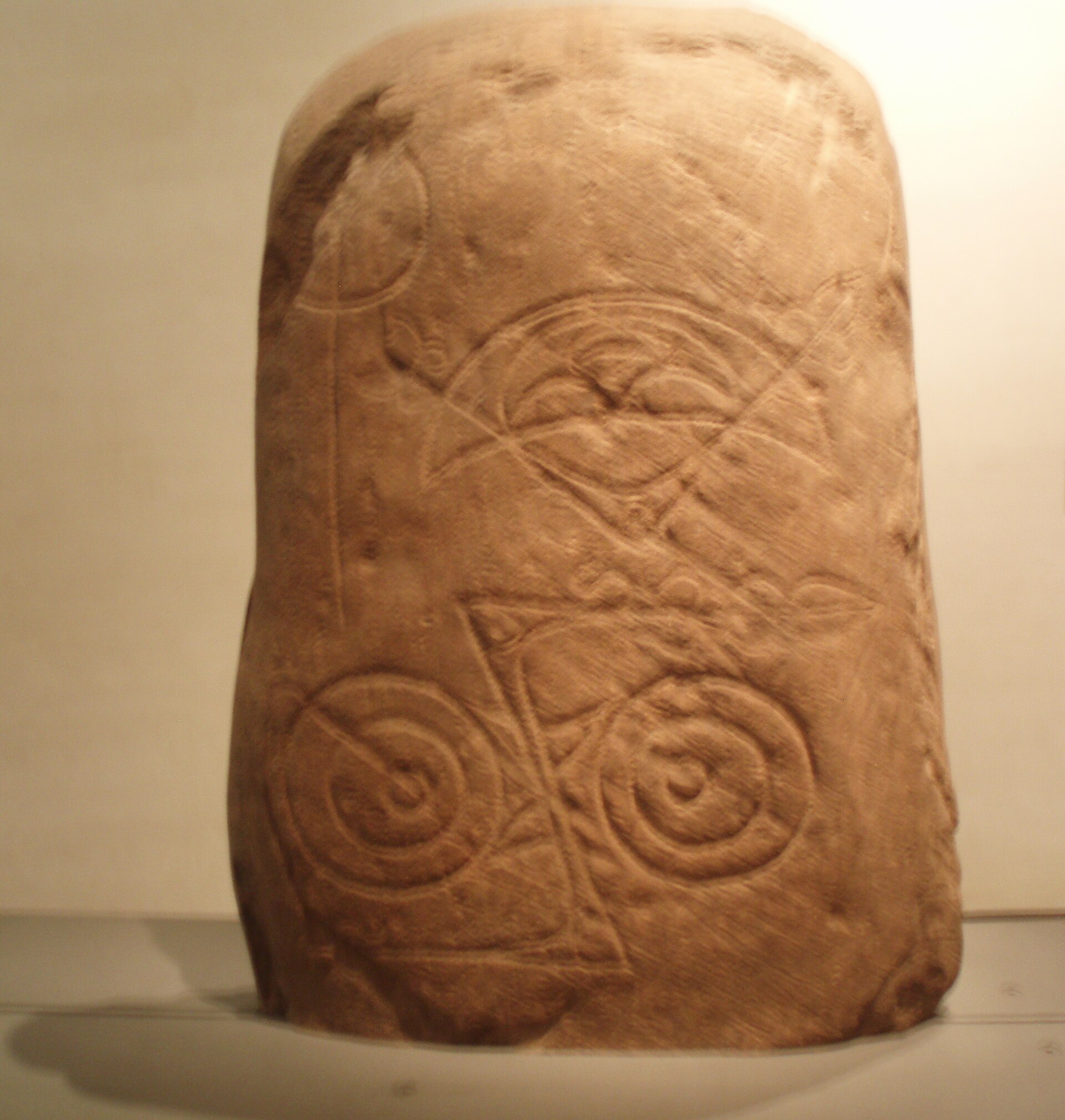
Invereen’s accidental discovery saved a precisely carved Pictish stone: of the Picts, the people of northern and eastern Scotland from about AD 300…
- Near Aviemore
- Easy path

Fortified place · Iron Age
Dunearn
Highland
Two ramparts set barely six metres apart, likely braced by internal timbers, and traces of vitrification suggesting the fort was deliberately burne…
- Near Forres
- Rough ground
Fortified place · Medieval
Braemar Castle
Aberdeenshire
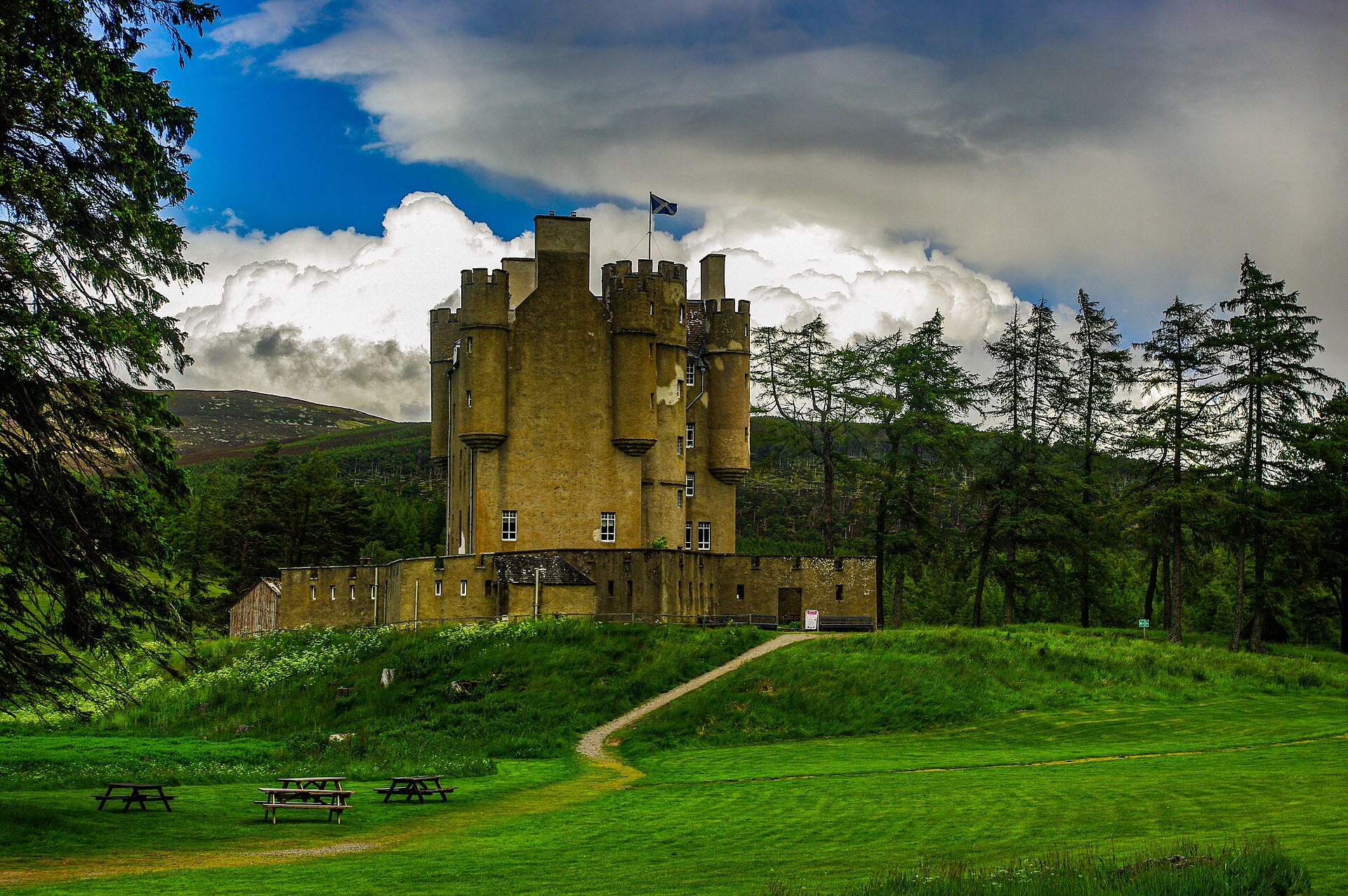
Built in 1628 to check the rising Farquharsons, burned by a Farquharson colonel sixty years later, and now restored and run entirely by local volun…
- Near Braemar

Tomb or burial place · Prehistoric
Clava cairn
Highland
A burial mound of piled stones at Balnuaran of Clava, whose kerb stones were sorted by colour before they were laid.
- Near Inverness
- Some walking
The setting
Near Clava cairns of Aviemore, about 14 metres away.
Photo: Phil Champion / Wikimedia Commons / CC BY-SA 2.0
Near Clava cairns of Aviemore, about 15 metres away.
Photo: Daniel Beadle / Wikimedia Commons / CC BY-SA 2.0
Near Clava cairns of Aviemore, about 18 metres away.
Photo: Mx. Granger / Wikimedia Commons / CC0
Questions people ask
- Why is Clava cairns of Aviemore significant?
- Three Clava cairns survive around Aviemore in very different states, and Caleb George Cash's account of 1906 remains the common reference point for what each of them then looked like.
- What should a reader focus on?
- The tapering quartzite slab at Delfour, the graded kerbstones of the Aviemore circle now enclosed by housing, and the moorland setting of Grenish beside Loch nan Carraigean.
- How certain is the interpretation?
- Cash's descriptions are first-hand but a century old. Aubrey Burl's count of the Aviemore stones in 2005 differs from the 1877 figure, so the record tracks loss rather than an unchanged monument.
Sources
- Wikipedia: Clava cairns of Aviemore
- Wikidata: Q114231909
- Canmore 14927 — AVIEMORE (ring cairn (neolithic) - (bronze age)) (accessed 2026-08-03)
Explore more: Tomb or burial places · Prehistoric · Highland
The Ancient Codex, in your pocket
Get the Pocket Codex app
Carry the directory with you — Clava cairns of Aviemore and thousands of ancient places across Britain and Ireland, offline, wherever you roam.