
One of the few surviving structures from the East Neuk's vanished salt-panning industry, and today the site of a modern revival of the same craft nearby.
A squat stone tower stands above the shoreline at St Monans, its sails long gone, looking out across the Firth of Forth toward North Berwick, the Bass Rock and the Isle of May. Below it, along the shore, lie the remains of the pans where seawater was once evaporated into salt — the last visible trace of an industry that shaped this stretch of the Fife coast for generations before falling silent.
St Monans itself grew up as a fishing village on a hill above the water, and its streets are still lined with the vernacular fisher and merchant houses of the East Neuk, with forestairs, crow-stepped gables and pantiled roofs. The windmill and salt pans sit among this older working landscape, named in the same breath as the village’s fourteenth-century parish church as one of St Monans’s two principal historic buildings — a reminder that salt, like fish, was once part of how the place made its living.
The mill no longer turns, but the craft it once powered has not entirely disappeared. In recent years the East Neuk Salt Company has revived salt production by evaporation in the village, and walkers following the Fife Coastal Path now pass the old windmill and pans as a stop on a coastal route rather than a working industrial site.
What follows is drawn from published sources, with each claim labelled by how firmly it is established.
The name
St Monans takes its name from St Monan, killed in a Danish raid around 875 — the same assault in which St Adrian died on the Isle of May and, tradition holds, some six thousand Fife Christians lost their lives. That name attached itself to every feature later built along this stretch of coast, including the windmill and salt pans that stand above the shore today.
History
The village of St Monans takes its name from St Monan, killed in a Danish raid around 875 — the same assault in which St Adrian died on the Isle of May and, according to tradition, some six thousand Fife Christians lost their lives. The name attached itself to every feature later built along this stretch of coast, including the windmill and salt pans that stand above the shore today.
Salt production by evaporation was a long-established industry along this part of the East Neuk of Fife, and a windmill was raised above the shore at St Monans to help power the process, drawing seawater into pans where heat reduced it to salt. The windmill eventually fell out of use, but its stone tower survives as one of St Monans's most recognisable structures, named alongside the fourteenth-century parish church as one of the village's two principal historic buildings.
By the years before the First World War, fishing was the mainstay of the St Monans economy, and the harbour — rebuilt in stages from 1649, with piers added in 1865 and 1902 by the Stevenson engineering family — grew to take a larger fleet. The railway that once served the village closed in the 1960s during the Beeching cuts, and St Monans turned toward tourism, a shift that placed the windmill and salt pans on the Fife Coastal Path as a stop for walkers rather than a working industrial site.
In more recent years the East Neuk Salt Company has revived salt production by evaporation in St Monans, reviving a craft that once depended on the windmill above the shore. The modern operation echoes the industry the windmill was built to serve, even though the mill itself no longer turns.
People
-
St Monan
Saint traditionally said to have been killed in a Danish raid around 875, whose name is preserved in the village.
Cultural influences
-
The windmill and pans record the East Neuk’s long salt-evaporation industry, now echoed by the revival of local salt production and interpreted along the Fife Coastal Path.
Connections
-

Photo: Kim Traynor / Wikimedia Commons / CC BY-SA 3.0 St Monans Church
Named alongside the windmill as one of St Monans's two principal historic buildings, this fourteenth-century former Dominican church stands a short distance away on the shore.
-

Photo: David Ingham from Lancashire, England / Wikimedia Commons / CC BY-SA 2.0 Newark Castle
A ruined sixteenth-century manor about half a mile west of St Monans, lost to cliff erosion, standing within the same stretch of coastline as the windmill and salt pans.
-
East Neuk Salt Company
A modern producer that has revived salt production by evaporation in St Monans, continuing the industry the windmill once powered.
-

Photo: Sandy Gemmill / Wikimedia Commons / CC BY-SA 2.0 Fife Coastal Path
The long-distance route that now passes the windmill and salt pans, bringing walkers to a site that once served an industrial rather than touristic purpose.
In culture
-
Fife Coastal Path
The windmill and salt pans now form a historic stop on the Fife Coastal Path, where an industrial shore landscape is encountered by walkers.
What to look for
-
The windmill tower
The stone tower of the defunct windmill still stands above the shore, one of St Monans's most recognisable landmarks even though its sails are gone and it no longer functions.
-
The salt pans
The remains of the pans where seawater was evaporated into salt lie along the shoreline below the windmill, the physical trace of a once-significant East Neuk industry.
-
Views over the Firth of Forth
From the site there are views across the Firth of Forth toward North Berwick, the Bass Rock and the Isle of May.
What is said
Folklore and tradition, recorded as what is said — not as established fact.
-
St Monan’s death
Tradition says St Monan was killed in a Danish raid around 875, during which St Adrian and many Fife Christians were also said to have died.
Plan your visit
- Location
- 56.2060°N · 2.7666°W
- Nearest settlement
- St Andrews
- Time needed
- About 45 minutes
Nearby places
Minor monument · Medieval
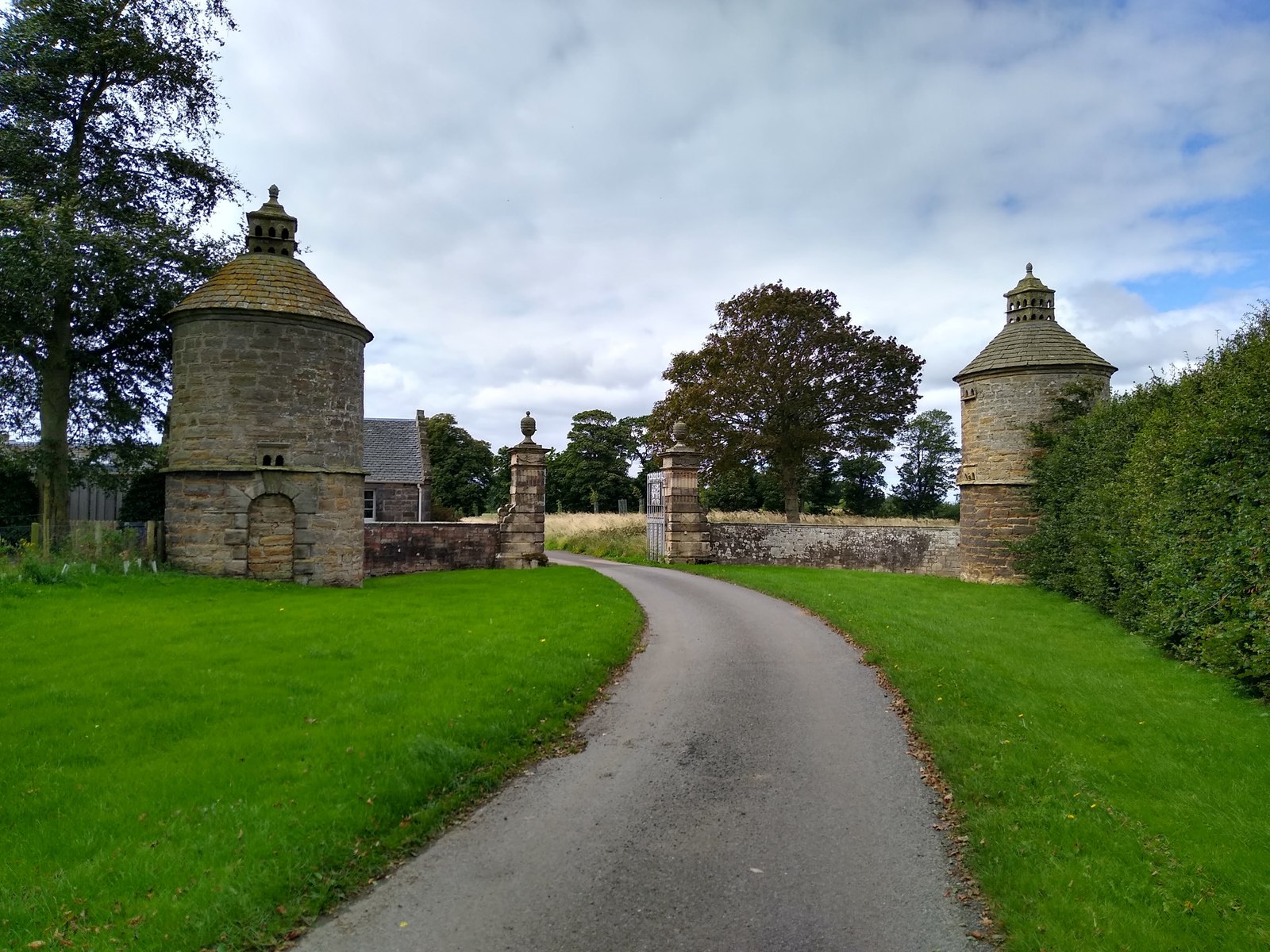
Gate Piers And Twin Dovecots, East Lodge, Balcaskie House
Fife
Balcaskie’s paired dovecots turn an estate entrance into architecture, combining 1714–45 gate piers, bird houses and later Lorimer ironwork in one…

Sacred place · Medieval
St Fillan's Cave and Well, Pittenweem
Fife
St Fillan’s Cave is the sacred core of Pittenweem’s ‘place of the caves’ identity, linking an early Christian site, an Augustinian monastery and th…
- Near St Andrews

Fortified place · Medieval
Kellie Castle
Fife
Kellie Castle brings together a 14th-century Fife tower house and an exceptional Arts and Crafts revival, preserving Lorimer family art, interiors…
Fortified place · Medieval
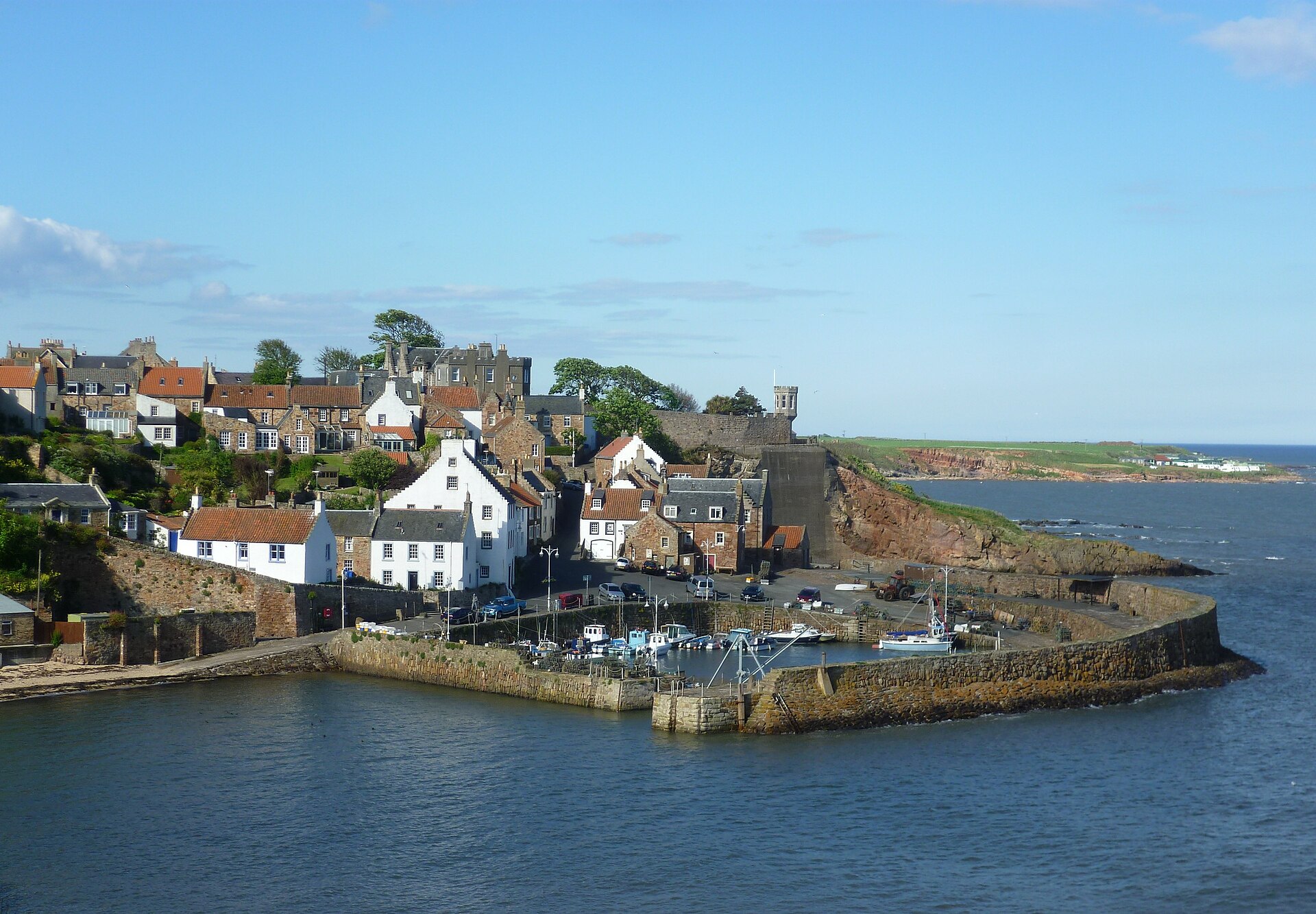
Crail Castle
Fife
Crail Castle survives mostly as a moat and a short wall, but its records connect a vanished royal castle to the early history of one of Fife’s medi…
Questions people ask
- What was the windmill at St Monans used for?
- It once powered the salt panning industry in the village, part of a wider tradition of salt production by evaporation across the East Neuk of Fife, before falling out of use.
- Is salt still produced at St Monans?
- Yes — the East Neuk Salt Company has revived salt production by evaporation in the village, continuing a traditional East Neuk industry.
- What other historic buildings stand near the windmill?
- St Monans's fourteenth-century parish church, built for a small house of Dominican friars, and the ruined sixteenth-century Newark Castle nearby.
- Where is St Monans Windmill and Salt Pans?
- In the village of St Monans in the East Neuk of Fife, on the Firth of Forth coast about three miles west of Anstruther.
- Can visitors reach the site on foot?
- Yes — St Monans lies directly on the Fife Coastal Path, which runs along the shoreline past the village's historic buildings.
Sources
- Wikipedia: St Monans
- Haswell-Smith, Hamish, The Scottish Islands (Canongate, 2004)
Explore more: Building or ruins · Medieval · Fife
The Ancient Codex, in your pocket
Get the Pocket Codex app
Carry the directory with you — St Monans Windmill and Salt Pans and thousands of ancient places across Britain and Ireland, offline, wherever you roam.