
St Fillan’s Cave is the sacred core of Pittenweem’s ‘place of the caves’ identity, linking an early Christian site, an Augustinian monastery and the continuing religious and cultural life of an East Neuk fishing village.
Beneath Pittenweem’s medieval monastery complex lies St Fillan’s Cave, a 7th-century sacred place now fitted out as a chapel. The cave gives the Fife fishing village its name: ‘Pit-enweem’ combines a word from the language of the Picts with the Gaelic for ‘of the caves’.
An Augustinian priory moved here from the Isle of May in the 13th century, building over the ancient cave. Its later buildings, parish church, gatehouse and post-Reformation manse show how the religious landscape was continually adapted rather than simply abandoned.
The cave was rededicated for worship in 1935. It remains a concentrated point of memory within a village shaped by faith, fishing and harbour life, with an associated well and a long record of sacred use.
What follows is drawn from published sources, with each claim labelled by how firmly it is established.
The name
Pittenweem combines the Pictish pit, meaning a place or portion of land, with Gaelic na h-Uaimh, “of the caves”, preserving the cave landscape in the settlement name.
History
St Fillan’s Cave dates from the 7th century and is associated with an early Christian religious settlement at Pittenweem. The cave’s importance is embedded in the place-name itself: ‘Pit-’ is Pictish for a place or portion of land, while ‘-enweem’ derives from Gaelic na h-Uaimh, ‘of the caves’. In the 13th century an Augustinian priory moved to Pittenweem from the Isle of May. It was built over the ancient sacred cave, although a church already existed; this placed the cave at the foundation of a medieval monastic complex that included the priory dormitory and refectory.
After the Reformation, the priory dormitory and refectory were remodelled in 1588 for use as a manse, later known as the Great House. The attached parish church retains a Norman doorway from before 1200, while the gatehouse east of it dates to the 15th century, preserving several periods of the religious precinct. The Bishop of St Andrews rededicated the cave as a place of worship in 1935. In this later phase it was fitted out as a chapel, restoring a formal devotional role to the early sacred space within a village that has continued to be shaped by its fishing harbour and coastal setting.
People
-
St Fillan
Saint traditionally associated with the sacred cave at Pittenweem, whose name and later fitted-out chapel preserve the site’s long devotional identity.
-
Bishop of St Andrews
Bishop who rededicated St Fillan’s Cave for worship in 1935, restoring formal Christian use to the older sacred site beneath Pittenweem.
Cultural influences
-
Monastic community that moved to Pittenweem and built over the cave in the 13th century.
Connections
-

Photo: Scott MacDonald / Wikimedia Commons / CC BY-SA 3.0 Pittenweem Priory
Medieval Augustinian house built over the ancient cave.
-

Photo: Kim Traynor / Wikimedia Commons / CC BY-SA 3.0 Pittenweem Parish Church
Church attached to the former priory precinct, retaining a Norman doorway.
-

Photo: No machine-readable author provided. JeremyA assumed (based on copyright claims). / Wikimedia Commons / CC BY-SA 2.5 Isle of May
Earlier location from which the Augustinian priory moved to Pittenweem.
In culture
-
Major village arts festival that reflects Pittenweem’s continuing cultural life.
What to look for
-
Chapel cave
The fitted-out cave preserves the site’s 7th-century sacred association beneath the medieval priory complex.
-
Priory precinct
The parish church, gatehouse and Great House show successive medieval and post-Reformation adaptations above the cave.
-
Place-name landscape
Pittenweem’s name itself preserves the cave’s defining place in local identity.
Plan your visit
- Location
- 56.2132°N · 2.7275°W
- Nearest settlement
- St Andrews
- Time needed
- About 45 minutes
Nearby places
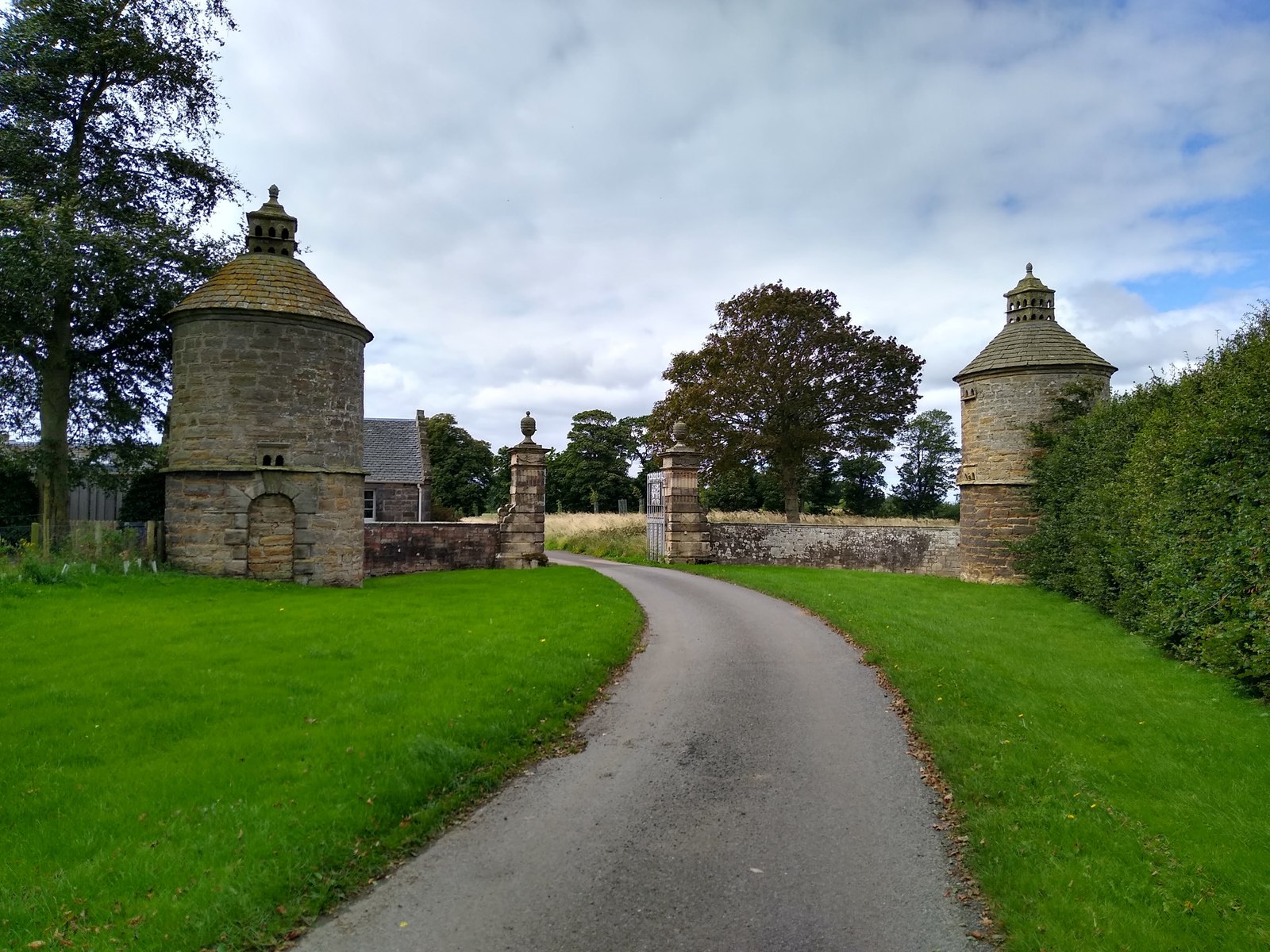
Minor monument · Medieval
Gate Piers And Twin Dovecots, East Lodge, Balcaskie House
Fife
Balcaskie’s paired dovecots turn an estate entrance into architecture, combining 1714–45 gate piers, bird houses and later Lorimer ironwork in one…
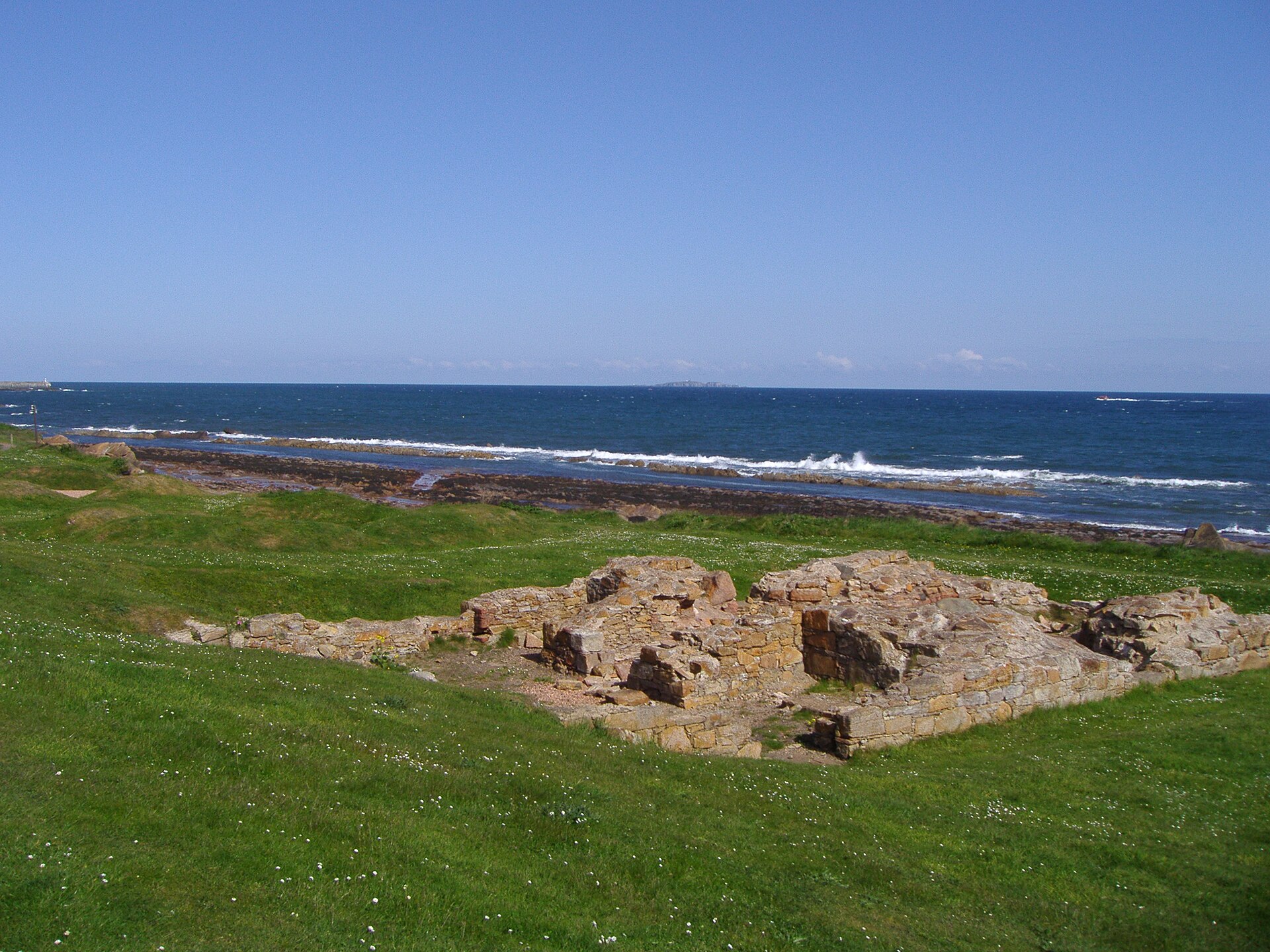
Building or ruin · Medieval
St Monans Windmill and Salt Pans
Fife
One of the few surviving structures from the East Neuk's vanished salt-panning industry, and today the site of a modern revival of the same craft n…
- Near St Andrews

Fortified place · Medieval
Kellie Castle
Fife
Kellie Castle brings together a 14th-century Fife tower house and an exceptional Arts and Crafts revival, preserving Lorimer family art, interiors…
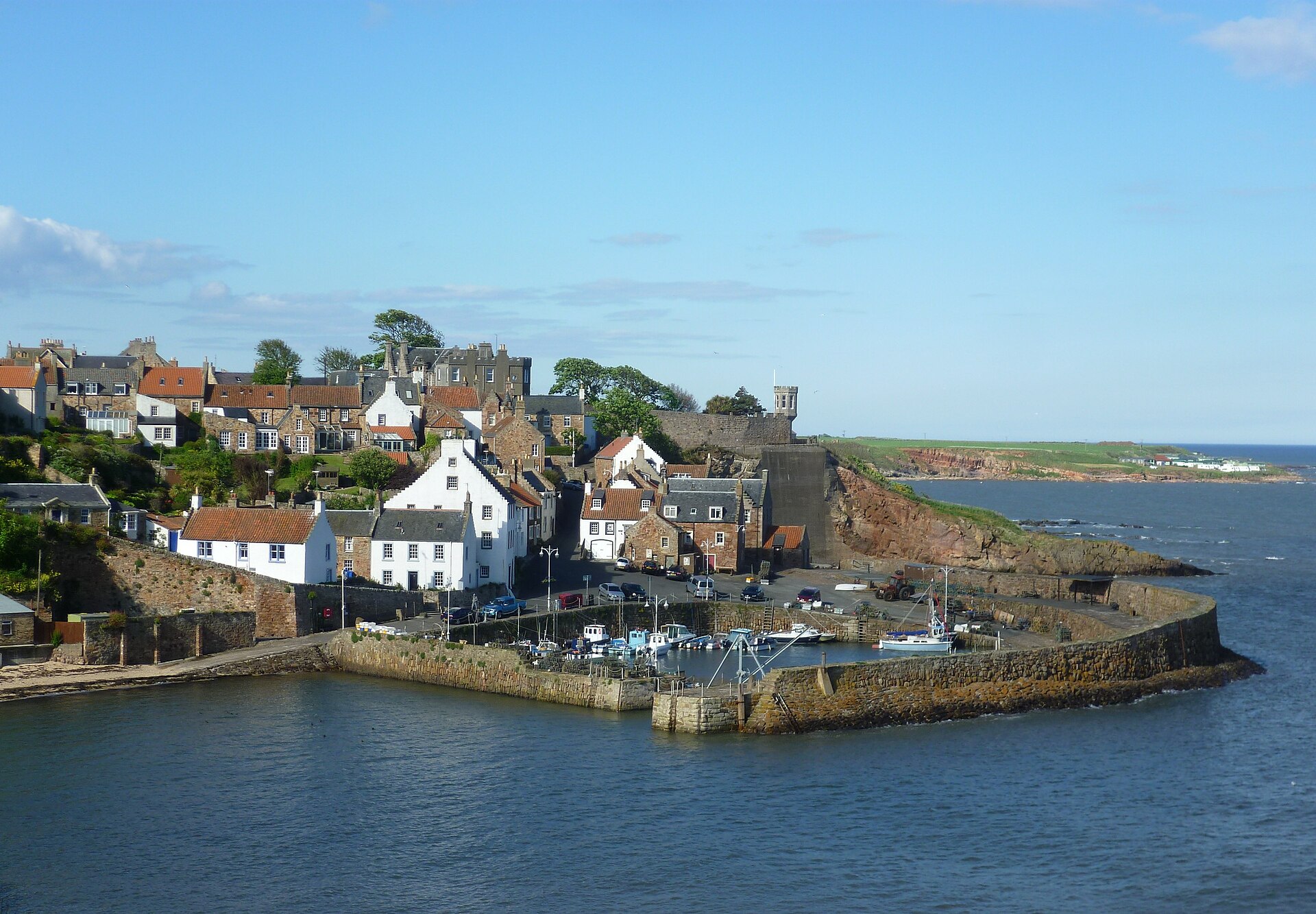
Fortified place · Medieval
Crail Castle
Fife
Crail Castle survives mostly as a moat and a short wall, but its records connect a vanished royal castle to the early history of one of Fife’s medi…
The setting
Near St Fillan's Cave and Well, Pittenweem, about 10 metres away.
Photo: Richard Sutcliffe / Wikimedia Commons / CC BY-SA 2.0
Near St Fillan's Cave and Well, Pittenweem, about 10 metres away.
Photo: Richard Sutcliffe / Wikimedia Commons / CC BY-SA 2.0
Near St Fillan's Cave and Well, Pittenweem, about 22 metres away.
Photo: Gerald England / Wikimedia Commons / CC BY-SA 2.0
Near St Fillan's Cave and Well, Pittenweem, about 40 metres away.
Photo: Mat Fascione / Wikimedia Commons / CC BY-SA 2.0
Questions people ask
- Why is Pittenweem named after caves?
- Its name combines Pictish ‘pit’, meaning place, with Gaelic na h-Uaimh, ‘of the caves’, and refers to St Fillan’s Cave.
- How old is St Fillan’s Cave?
- The cave is described as dating from the 7th century and is associated with an early Christian religious settlement.
- What is the connection between the cave and Pittenweem Priory?
- An Augustinian priory moved from the Isle of May in the 13th century and was built over the ancient sacred cave. The cave was rededicated for worship in 1935.
Sources
The Ancient Codex, in your pocket
Get the Pocket Codex app
Carry the directory with you — St Fillan's Cave and Well, Pittenweem and thousands of ancient places across Britain and Ireland, offline, wherever you roam.