Kellie Castle brings together a 14th-century Fife tower house and an exceptional Arts and Crafts revival, preserving Lorimer family art, interiors and a historic walled garden.
Below Kellie Law near Arncroach, Kellie Castle gathers crow-stepped gables, corbelled towers and chimneys into a distinctive T-plan silhouette. Its oldest tower dates to around 1360, but the rooms now tell a second story: the Lorimer family revived the long-abandoned house with plaster ceilings, painted panelling, furniture and Arts and Crafts decoration.
The castle passed from the Oliphants to the Erskines before 19th-century abandonment. The Lorrimers’ restoration turned it into a family home and creative centre for architect Sir Robert, painter John Henry and sculptor Hew. The National Trust for Scotland now cares for the castle, the walled garden and Hew Lorimer’s former studio.
The exact origins are unknown, though they likely lie with the Clan Kelly, minor earls and barons. The earliest record goes back to 1150, in a charter of David I, and the first known owner was Robert of London, illegitimate son of William the Lion. By 1266 Kellie had passed to the Siward family, who had come from Northumbria and had helped Malcolm Canmore overthrow Macbeth. The Siwards supported England during the wars of independence, and Sir Richard Siward forfeited his Scottish lands after Bannockburn — though his daughter Helena, Lady Kellie, kept Kellie. None of the buildings they occupied appear to survive.
Around 1360 Helena assigned the estate to her kinsman Walter Oliphant of Aberdalgie, who was married to Elizabeth, a daughter of Robert the Bruce. That began 250 years of Oliphant occupation, which ended in 1613 when the castle was bought by Sir Thomas Erskine — the man who had saved James VI during the Gowrie Conspiracy by killing Sir Alexander Ruthven. The king stayed here in 1617 on his only visit to Scotland after the Union of the Crowns, and appointed Erskine Earl of Kellie in 1619.
The ceiling of what is now the library, in the east tower of 1573, was probably plastered in anticipation of that royal visit. It may be the first room in Scotland where plaster decoration was used in the London style rather than the painted beams and boarded ceilings generally fashionable in the early seventeenth century. Worked into it are the date 1617 and the monogram T V F, for Thomas Viscount Fenton, the title the king had given Erskine in 1606.
The castle began as a simple tower house. The lower part of what is now the north-west tower is the oldest fabric, dating from around 1360, and is said to be haunted. In 1573 the fourth Lord Oliphant built a new tower to the east, believed to have been intended as a jointure-house for his wife Margaret — a property set aside for a widow. Between 1573 and 1606 the two towers were joined by a new range ending in a further tower at the south-west, producing the T-plan that survives. The result is a fine example of Scots Baronial domestic architecture, with its mix of gables, corbelled towers and chimneys.
For much of the seventeenth century the castle belonged to the Erskines of Dirleton. Alexander Erskine, third Earl of Kellie, was an investigator in the 1666 case of Margaret Guthrie, an accused witch from Carnbee who was imprisoned in the tolbooth at Anstruther Wester in early May of that year.
Methven Erskine, tenth Earl, died in 1829 and was succeeded by John Francis Miller Erskine, who abandoned the castle and cleared its contents at a muckle roup — a public auction — in 1830. He was confirmed as twenty-sixth Earl of Mar in 1835, uniting the two earldoms. The property then seems to have passed to James Maitland Hog of Newliston, who made little use of it, and the castle lay abandoned for years.
In 1878 it was rented from the Earl of Mar and Kellie by James Lorimer, Regius Professor of Public Law at Edinburgh University and father of the architect Sir Robert Lorimer. The family set about restoring it as a holiday retreat, and it soon became their home. Robert Lorimer led much of that work, restoring plaster ceilings, painted panelling and furniture, and his hand is visible at Kellie in the doocot and garden house and in the restoration of the garden with his sister Caroline-Louise. His survey drawing of 1887, kept here, shows his draftsmanship.
Hannah Lorimer took over the tenancy on her husband’s death in 1890, and Robert began his alterations in 1900 with the doocot and garden house. On Hannah’s death in 1916 the tenancy passed to their son John Henry Lorimer, the painter, and Robert then began restoring the main house — work his mother had resisted. When John died in 1936 the tenancy lapsed and the house was cleared and left vacant, until Sir Robert’s son, the sculptor Hew Lorimer, and his wife Mary renewed it later that year. They bought the castle in 1948 and Hew owned it until 1970, living in part of it and using the stable block as his studio until 1990.
Hew Lorimer sold the castle with 6.5 hectares of gardens and an organic walled garden to the National Trust for Scotland in 1970. The walled garden is seventeenth-century with late Victorian additions and holds a fine collection of old-fashioned roses, fruit trees and herbaceous plants. The main contents were given into the Trust’s care by the Secretary of State for Scotland, and in 1998 the Trust bought the Lorimer family artefacts, among them paintings by Hannah Cassels im Thurn, eldest daughter of Hannah and James. A permanent exhibition of Hew Lorimer’s work occupies the old stables.
Phoebe Anna Traquair, an outstanding proponent of the Arts and Crafts philosophy, painted the panel above the drawing room fireplace in 1897, while John Henry Lorimer lived here. It is based on Botticelli’s Primavera. Hew and Mary Lorimer apparently disliked it and had it covered in the late 1940s, taking care not to damage it by using cartridge paper and flour paste; the National Trust for Scotland restored it in 1996.
The tapestry now in the dining room is made up of at least two and possibly three different pieces. Its centre is a Flemish piece woven in 1580, showing Europa and the Bull — the beauty of Europa having inspired the love of Zeus, who approached her as a white bull and carried her from Phoenicia to Crete. A Country Life photograph of 1964 shows it hanging in the drawing room. The Latin inscription has nothing to do with the scene: it says that a young man has saved his wounded father, carried him back and set him on his horse. The borders were added later.
John Henry Lorimer was vice-president in the 1930s of what was then the Edinburgh Astronomical Association, now the Astronomical Society of Edinburgh, and on his death in 1936 left the society a substantial legacy; it awards a medal in his honour and owns a bust of him and two of his paintings, all three exhibited here.
The largest room, used by the Lorimers as their drawing room, is the Great Hall, completed around 1606. On the west wall hang two mirrors with eagle cresting, designed by Sir Robert Lorimer and made by Whytock and Reid of Edinburgh. Set either side of the west window, they appear to have a curious effect: however far back one stands, the reflection stays the same size.
What follows is drawn from published sources, with each claim labelled by how firmly it is established.
History
Kellie is first recorded in a charter of King David I in 1150, although none of the earliest buildings survives. The lower part of its north-west tower dates from around 1360, after the estate passed to Walter Olifard and began 250 years of Oliphant ownership. A new east tower was added in 1573, and ranges built between 1573 and 1606 linked the towers into the T-plan castle seen today.
Sir Thomas Erskine purchased Kellie in 1613 after saving James VI during the Gowrie Conspiracy. The king stayed there in 1617 and made him Earl of Kellie in 1619. The library ceiling contains the date 1617 and Thomas Viscount Fenton’s monogram, and may be an early Scottish example of plaster decoration in the London style.
The castle was cleared and abandoned in 1830. The Lorimer family began restoring it after renting it in 1878: Sir Robert restored plaster ceilings, painted panelling and furniture, while his sister worked on the gardens. Hew and Mary Lorimer bought it in 1948, then sold the castle and 6.5 hectares of gardens to the National Trust for Scotland in 1970. The Trust retains the Lorimer collections and Hew’s studio exhibition.
People
-
Sir Thomas Erskine
Courtier who bought Kellie in 1613 after saving James VI during the Gowrie Conspiracy; the king visited in 1617 and made him Earl of Kellie in 1619.
-
Sir Robert Lorimer
Architect-restorer who revived Kellie’s plaster ceilings, painted panelling and furniture after the family began renting the abandoned castle in 1878.
-
Hew Lorimer
Sculptor and later owner whose former studio remains in the stable block; his collections are retained with the castle by the National Trust for Scotland.
Cultural influences
-
The Lorimer family’s Arts-and-Crafts restoration transformed the abandoned castle into a house, collection and garden preserving earlier T-plan fabric.
Connections
-
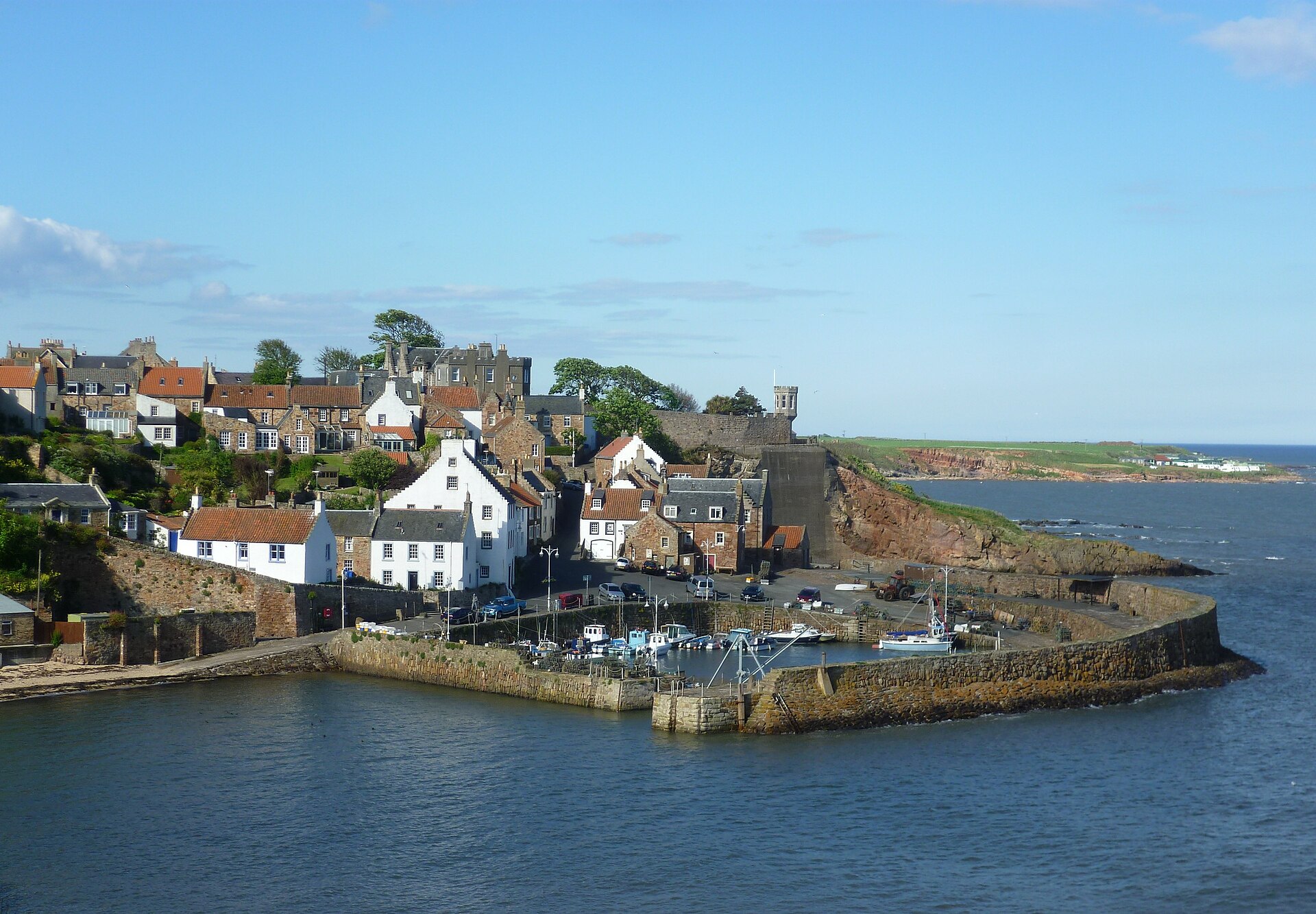
Photo: Kim Traynor / Wikimedia Commons / CC BY-SA 3.0 A related Fife castle, allowing comparison with Kellie’s baronial architecture and the coastal network of East Neuk settlements.
-
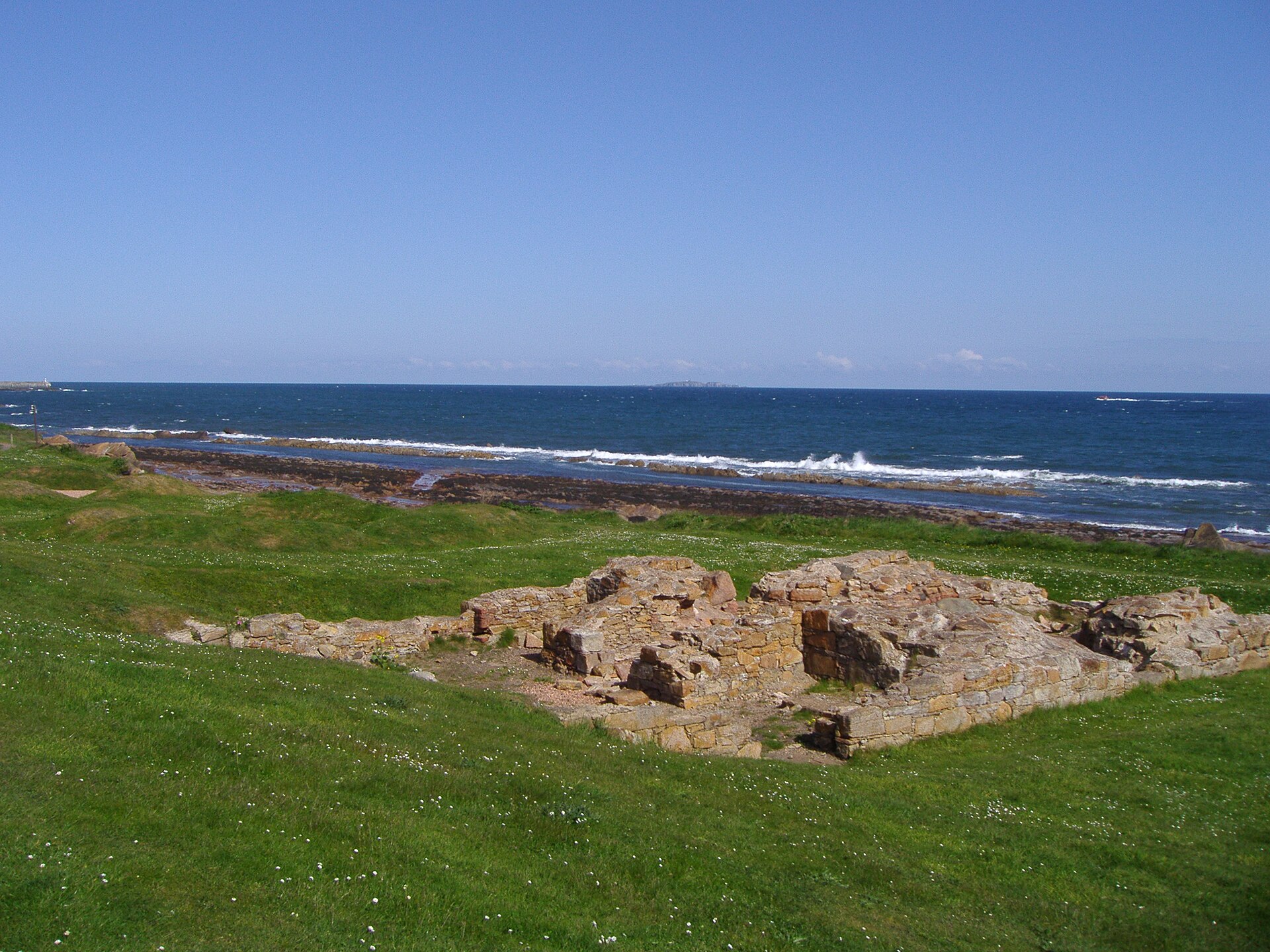
Photo: Euan Nelson / Wikimedia Commons / CC BY-SA 2.0 St Monans Windmill and Salt Pans
An industrial coastal site that contrasts Kellie’s aristocratic residence with the salt-making economy of the East Neuk.
Discovery & excavation
The T-plan towers, 1617 library ceiling, painted interiors, walled garden and former studio preserve Kellie’s medieval, seventeenth-century and Arts-and-Crafts layers.
What to look for
-
The T-plan ranges
The north-west tower of about 1360, east tower of 1573 and linking ranges of 1573–1606 create the T-plan castle visible today.
-
The 1617 library ceiling
The library ceiling carries the date 1617 and Thomas Viscount Fenton’s monogram; its plasterwork may be an early Scottish example of the London style.
-
The Great Hall mirrors
In the Great Hall, Sir Robert Lorimer’s mirrors belong to the Arts-and-Crafts restoration that revived an abandoned castle after 1878.
-
Traquair's fireplace panel
Phoebe Anna Traquair’s painted fireplace panel is part of the Lorimer-era artistic layer, set within a much older baronial residence.
-
The walled garden
The seventeenth-century walled garden keeps the historic domestic setting alive with old-fashioned roses, alongside the restored castle and its collections.
-
Lorimer's studio
Hew Lorimer’s former studio in the stable block explains why the National Trust retains both the castle’s historic fabric and the family’s artistic collections.
Plan your visit
- Location
- 56.2369°N · 2.7761°W
- Access
- Paid entry — managed visitor site
- Time needed
- About 45 minutes
- Best time
- Visit during published opening periods and check current arrangements before travelling.
- What survives
- The restored T-plan castle retains historic ceilings and interiors, the walled garden and Hew Lorimer’s former studio exhibition.
- Facilities
- Visitor facilities depend on the current castle operation; check the official information before travelling.
Opening & admission
Paid entry; National Trust for Scotland members enter free.
- Guided castle tours run hourly from 10.30am to 4.30pm; last entry is 3.30pm during the main season.
- The castle, shop and tearoom operate daily 7 March to 31 October, then weekends 1 November to 24 December; estate access is year-round.
Nearby places
Minor monument · Medieval
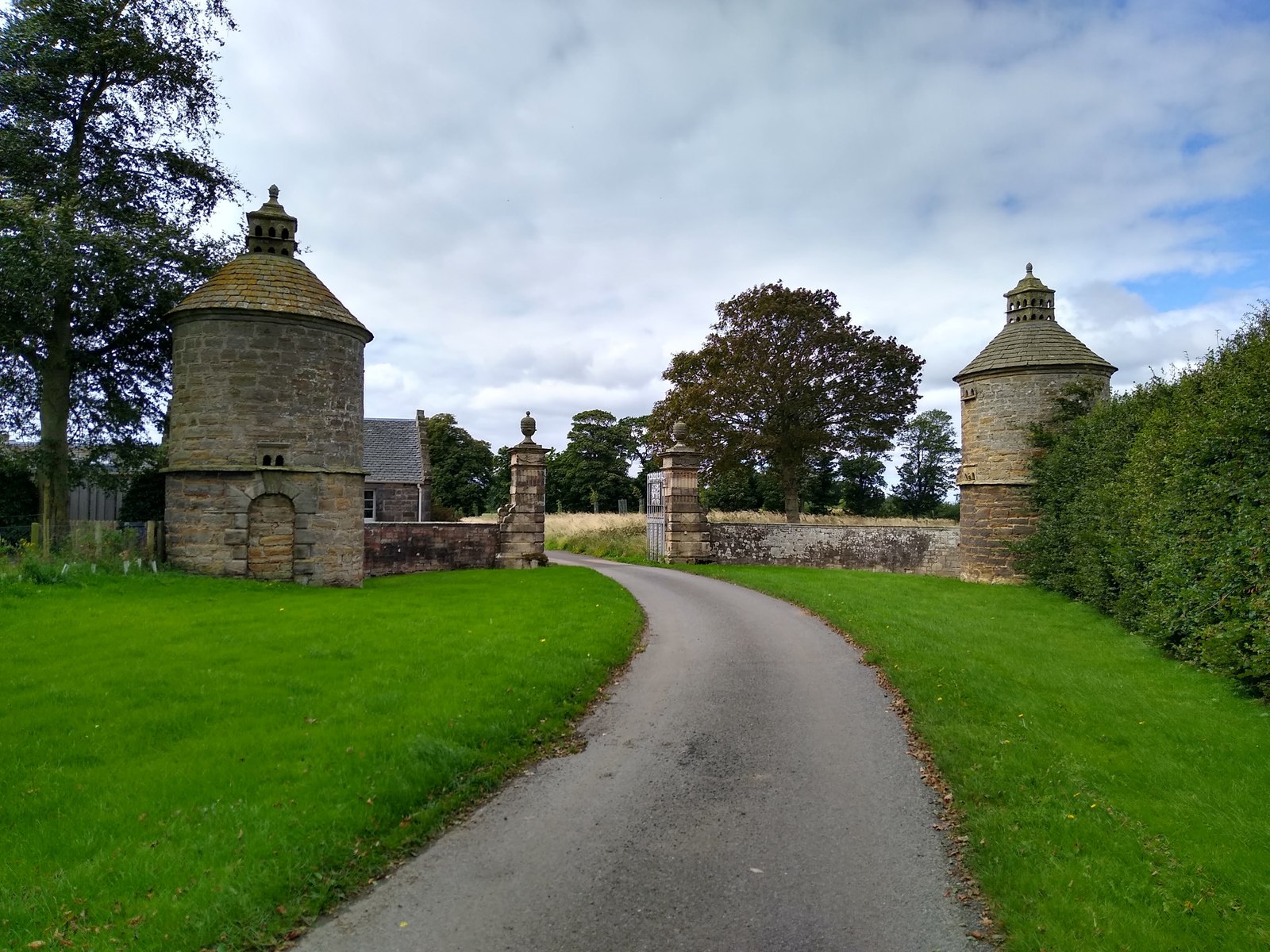
Gate Piers And Twin Dovecots, East Lodge, Balcaskie House
Fife
Balcaskie’s paired dovecots turn an estate entrance into architecture, combining 1714–45 gate piers, bird houses and later Lorimer ironwork in one…
Building or ruin · Medieval
St Monans Windmill and Salt Pans
Fife
One of the few surviving structures from the East Neuk's vanished salt-panning industry, and today the site of a modern revival of the same craft n…
- Near St Andrews

Sacred place · Medieval
St Fillan's Cave and Well, Pittenweem
Fife
St Fillan’s Cave is the sacred core of Pittenweem’s ‘place of the caves’ identity, linking an early Christian site, an Augustinian monastery and th…
- Near St Andrews
Fortified place · Medieval
Crail Castle
Fife
Crail Castle survives mostly as a moat and a short wall, but its records connect a vanished royal castle to the early history of one of Fife’s medi…
The setting
Woodland path in the grounds surrounding Kellie Castle.
Photo: Jim Barton / Wikimedia Commons / CC BY-SA 2.0
Questions people ask
- How old is Kellie Castle?
- Its oldest surviving tower section dates from around 1360, though Kellie is recorded in a 1150 charter.
- Who restored the castle?
- The Lorimer family restored it after 1878, especially architect Sir Robert Lorimer and later Hew Lorimer.
- Who manages it now?
- The National Trust for Scotland has cared for the castle and gardens since 1970.
Sources
The Ancient Codex, in your pocket
Get the Pocket Codex app
Carry the directory with you — Kellie Castle and thousands of ancient places across Britain and Ireland, offline, wherever you roam.