
Crail Castle survives mostly as a moat and a short wall, but its records connect a vanished royal castle to the early history of one of Fife’s medieval burghs.
Within Crail’s Castle Garden, a 5.2-metre strip of mortared masonry is the visible survival of a lost royal stronghold. Scottish kings visited the site from the twelfth century, when Crail’s royal status already gave the place unusual importance.
By 1563 the castle was already described as ruinous, with only its moat remaining. The later mention of stronger ruins suggests a possible attempt at rebuilding, but the uncertainty makes the surviving wall and documentary trail particularly valuable for recognising a castle almost entirely lost from the townscape.
What follows is drawn from published sources, with each claim labelled by how firmly it is established.
History
Crail became a Royal Burgh in the 12th century, and King David I frequented its castle during his reign. A receipt for repair work survives from 1264, showing that the castle was maintained in the 13th century. Ada de Warenne obtained Crail as part of her marriage settlement with Prince Henry of Scotland. King Robert I reconfirmed Crail’s burgh status in 1306 and confirmed the castle’s constabulary to Lawrence de Weirmerstoun in 1310. The castle contained a chapel dedicated to the Irish saint Rufus, indicating that it served both a defensive and a religious function within the medieval burgh.
A 1563 charter of Mary, Queen of Scots described the castle as ruinous, with nothing but its moat remaining, and granted it to David Spens of Wormistoun with permission to rebuild. It is uncertain whether this happened, although an 1803 account mentioned ruins of a strong castle. Today only a 5.2-metre wall remains visible in Castle Garden.
People
-
David I
King whose frequent use of Crail Castle is recorded in the twelfth century.
Cultural influences
-
Crail Castle was shaped by its place in a royal burgh on the Fife coast, combining a defensive role with the authority of the Scottish crown.
Connections
-

Photo: MaggieMayRose / Wikimedia Commons / CC BY-SA 3.0 Another Fife castle, allowing comparison with Crail’s coastal burgh stronghold and the county’s baronial architecture.
-

Photo: Tom Parnell / Wikimedia Commons / CC BY-SA 4.0 A surviving estate structure that reflects the agricultural setting and domestic economy around Crail’s historic landscape.
-

Photo: Gordon Brown / Wikimedia Commons / CC BY-SA 2.0 St Fillan's Cave and Well, Pittenweem
A local sacred site that contrasts Crail Castle’s secular and defensive history with older traditions of devotion and pilgrimage.
What to look for
-
The rough-mortared wall
In Castle Garden, find the short rough-mortared wall, the most tangible surviving piece of fabric from the castle rather than the surrounding burgh.
-
The burgh site
Use the historic burgh streets and Castle Garden to locate the castle’s former position above the harbour, rather than expecting a standing tower.
-
The lost moat
Read the open ground around the remnant as the documented location of the lost moat, whose line once separated the stronghold from the town.
-
Wall against town
Compare the rough castle remnant with the later houses and walls around it, which show how the medieval site has been absorbed into Crail.
Plan your visit
- Location
- 56.2582°N · 2.6259°W
- Time needed
- About 45 minutes
Nearby places

Minor monument · Medieval
Dovecot, Wormistone House
Fife
Wormiston’s early-seventeenth-century pigeon house preserves a more ambitious estate structure than most Fife doocots, with twin chambers, a vaulte…

Sacred place · Medieval
St Fillan's Cave and Well, Pittenweem
Fife
St Fillan’s Cave is the sacred core of Pittenweem’s ‘place of the caves’ identity, linking an early Christian site, an Augustinian monastery and th…
- Near St Andrews
Minor monument · Medieval
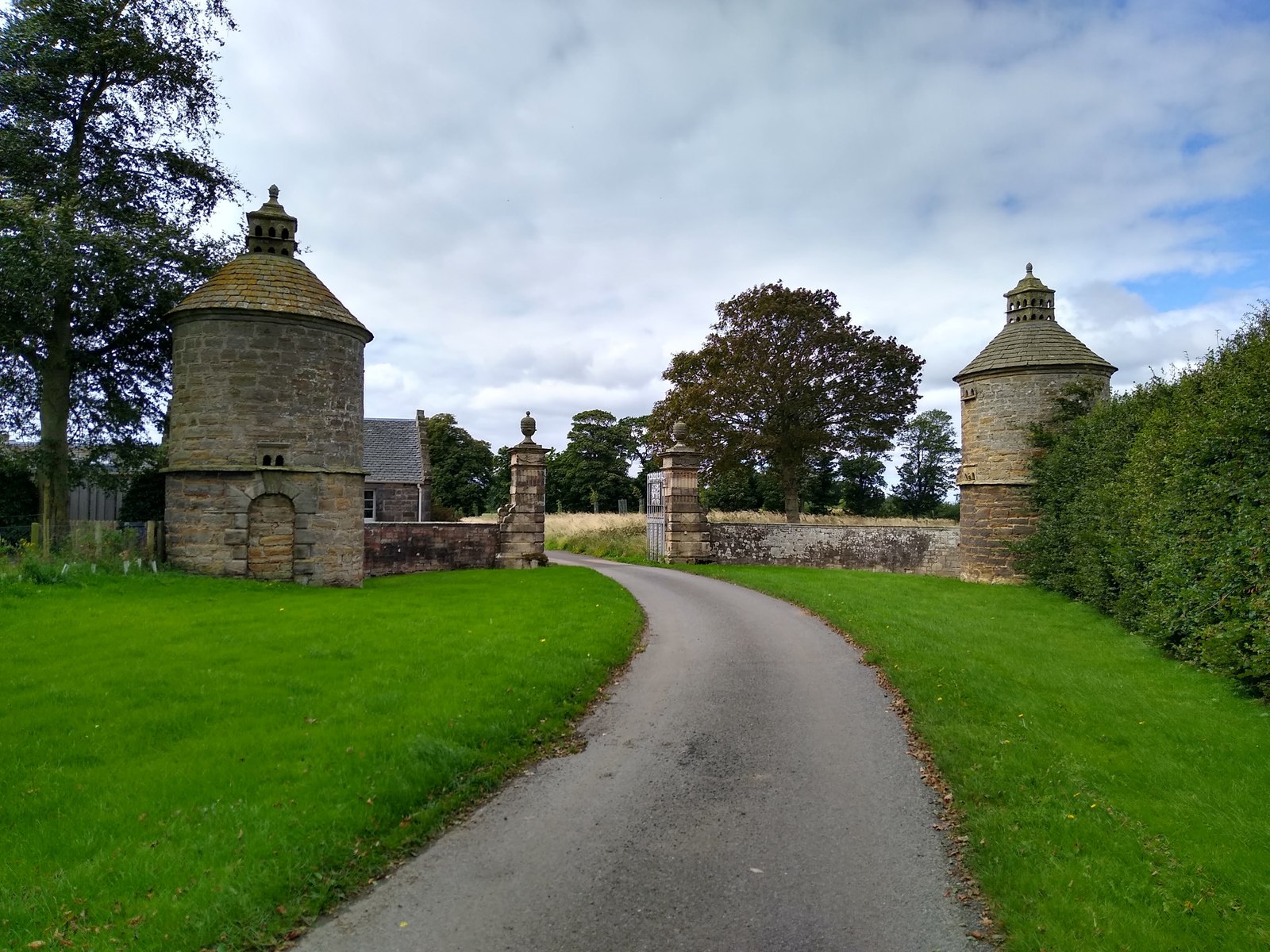
Gate Piers And Twin Dovecots, East Lodge, Balcaskie House
Fife
Balcaskie’s paired dovecots turn an estate entrance into architecture, combining 1714–45 gate piers, bird houses and later Lorimer ironwork in one…

Fortified place · Medieval
Kellie Castle
Fife
Kellie Castle brings together a 14th-century Fife tower house and an exceptional Arts and Crafts revival, preserving Lorimer family art, interiors…
Questions people ask
- What remains of Crail Castle?
- Only a 5.2-metre length of rough mortared masonry is visible, in Castle Garden.
- When was the castle already ruinous?
- A charter of 1563 described it as ruinous, with only its moat remaining.
- Which saint’s chapel was inside the castle?
- The castle contained a chapel dedicated to the Irish Saint Rufus.
Sources
The Ancient Codex, in your pocket
Get the Pocket Codex app
Carry the directory with you — Crail Castle and thousands of ancient places across Britain and Ireland, offline, wherever you roam.