Inchcolm Abbey is Scotland’s most complete surviving monastic complex, preserving an Augustinian island community whose buildings also reveal the Firth of Forth’s strategic history.
At the centre of Inchcolm island, cloisters, chapter house, warming house and refectory (the monks’ dining hall) survive with unusual completeness around the ruins of the medieval church. The setting in the Firth of Forth gives the abbey a double character: it was a religious community but also occupied a strategically important island repeatedly used for defence.
Founded as an Augustinian priory in the 12th century and raised to abbey status in 1235, Inchcolm endured English attacks and Reformation abandonment. Its legacy includes the 14th-century Inchcolm Antiphoner, an important source for Celtic Plainchant, and the work of its most famous abbot, the chronicler Walter Bower.
What follows is drawn from published sources, with each claim labelled by how firmly it is established.
The name
Inchcolm means the island of Columba, preserving the association with Saint Columba in the islands name.
History
Inchcolm Abbey was founded in the 12th century during the episcopate of Gregoir, Bishop of Dunkeld. Later tradition links it to Alexander I, who was said to have sheltered on the island with its hermit after a storm in 1123. Augustinian canons first used the site as a priory; it became a full abbey in 1235.
The island was attacked by English forces from 1296 onward, reflecting its exposed but strategic location in the Firth of Forth. The community was abandoned during the Scottish Reformation in 1560. In 1581, stone from the abbey was taken to Edinburgh to repair the Tolbooth, while the island later continued to be used for defensive purposes.
The complex retains the most complete surviving monastic remains in Scotland: its cloisters, chapter house, warming house and refectory are complete, and many other claustral buildings largely survive. The 14th-century Inchcolm Antiphoner contains rare Celtic Plainchant and many chants to Saint Columba. Walter Bower, a 15th-century chronicler, was among the abbots.
People
-
Walter Bower
Fifteenth-century abbot of Inchcolm and chronicler, whose association links the island abbey to one of medieval Scotland’s important historical writers.
Cultural influences
-
The exposed island position in the Firth of Forth shaped Inchcolm as both a monastic foundation and a strategically vulnerable place.
Connections
-

Photo: LASZLO ILYES from Cleveland, Ohio, USA / Wikimedia Commons / CC BY 2.0 A major Augustinian foundation with close royal associations, providing a mainland comparison with Inchcolm’s island monastery.
-
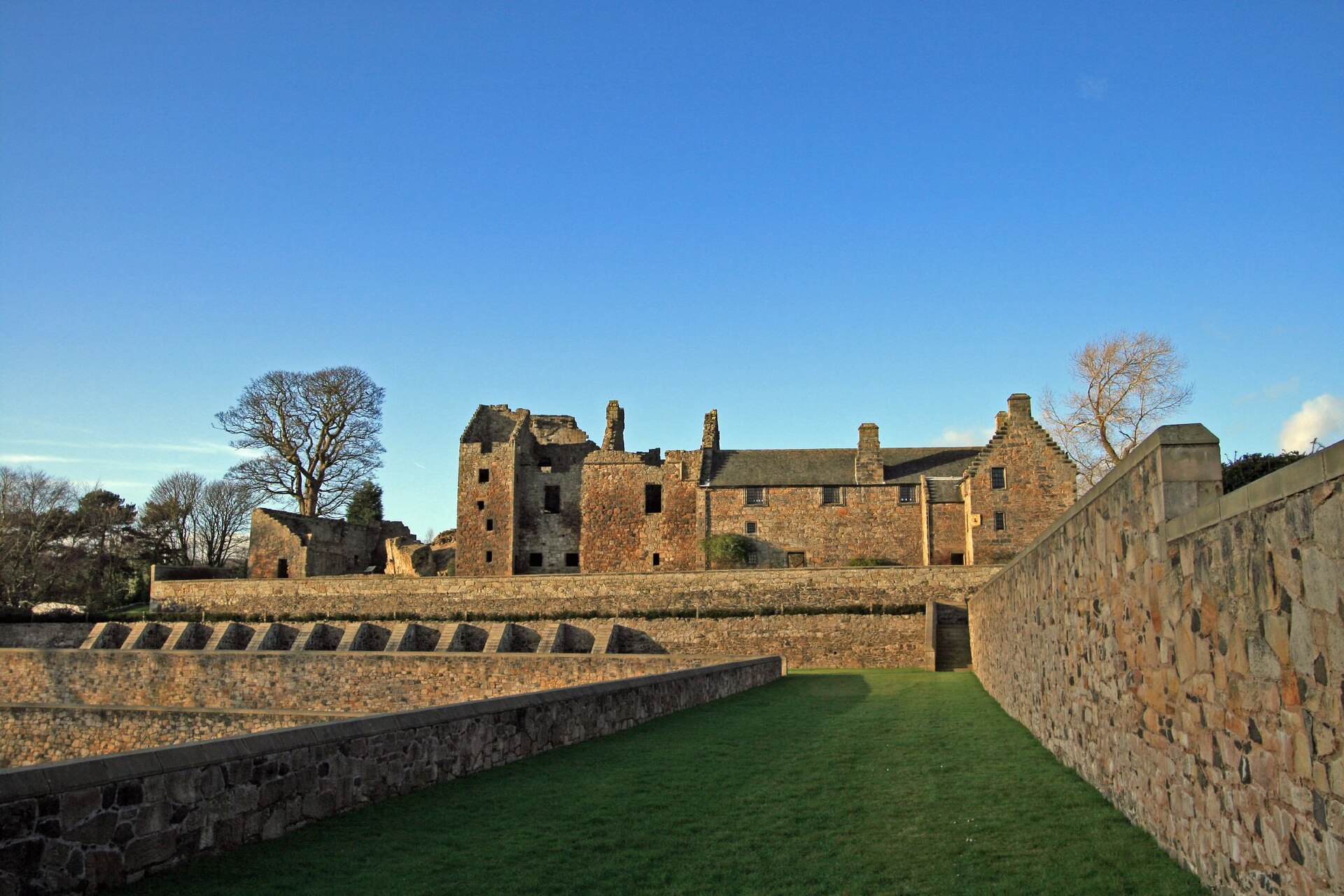
Photo: Andy Hawkins / Wikimedia Commons / CC BY-SA 2.0 A Fife shore-based residence that forms a secular counterpart to Inchcolm’s monastic island settlement across the Firth.
-
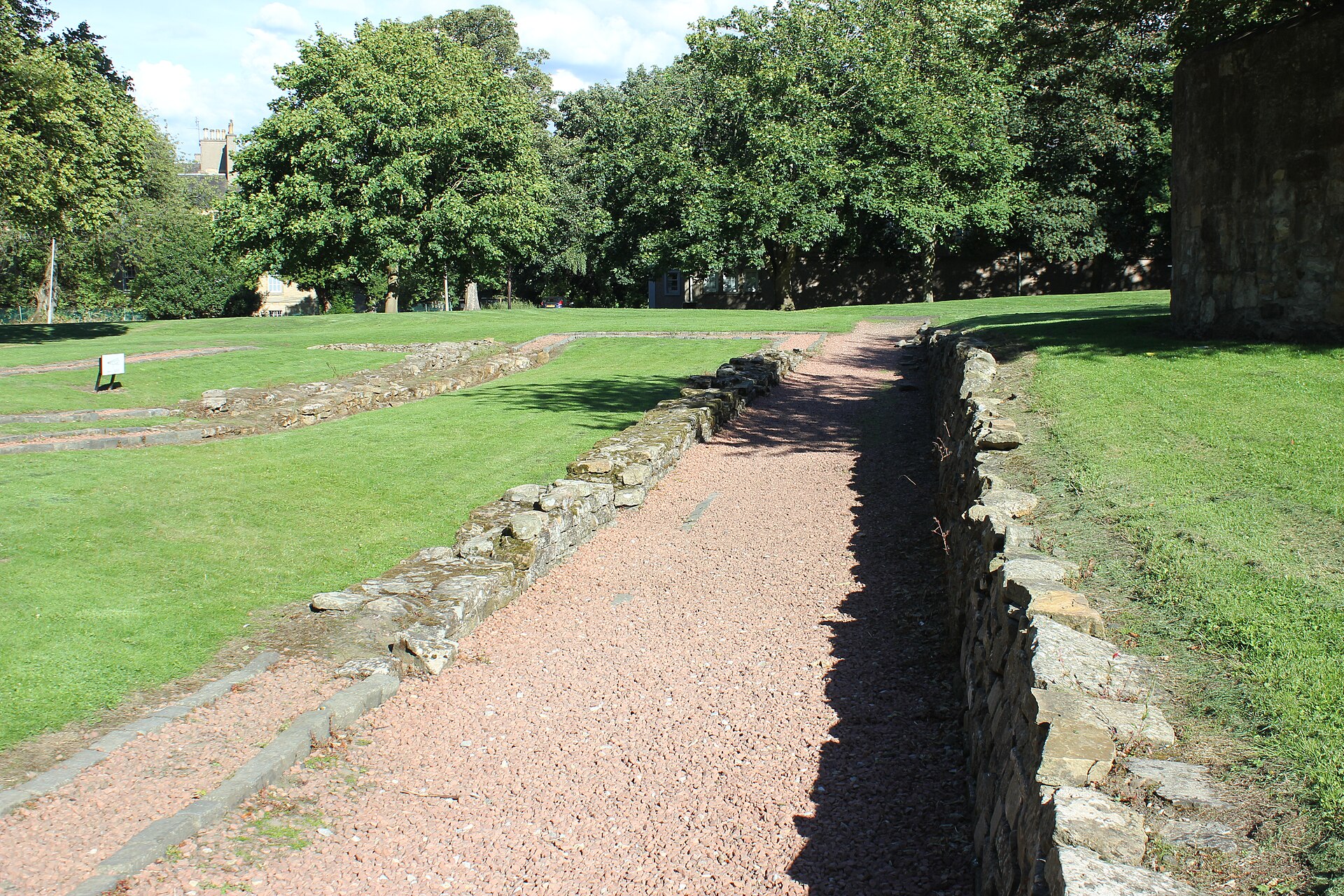
Photo: HeritageDaily.com / Wikimedia Commons / CC BY-SA 4.0 A Roman military site on the Firth of Forth, extending the historical context around Inchcolm beyond the medieval abbey.
In culture
-
Inchcolm Antiphoner
The fourteenth-century manuscript preserves rare Celtic Plainchant and chants to Saint Columba.
What to look for
-
The complete cloisters
Inchcolm preserves Scotland’s most complete monastic remains; its cloisters and chapter house survive as a legible core of Augustinian daily life.
-
The warming house
The warming house and refectory are rare surviving domestic rooms, part of an unusually complete range of claustral buildings beside the church.
-
The ruined church
The fragmentary church belongs to a priory that became an abbey in 1235, preserving the religious centre of the island community.
-
The island centre
The abbey occupies the island’s centre, a position that brought monastic isolation but also exposure to English attack and later military use.
-
The visitor centre
Near the landing pier, the visitor centre introduces the abbey before the walk into the cloisters, chapter house and other surviving monastic buildings.
Plan your visit
- Location
- 56.0300°N · 3.3017°W
- Nearest settlement
- St Andrews
- Access
- Paid entry — managed visitor site
- Time needed
- About 45 minutes
- Best time
- Visit during published boat and abbey access periods, checking weather and current arrangements before travelling.
- What survives
- Scotland’s best-preserved group of monastic buildings dominates Inchcolm Island, with substantial roofed and ruinous abbey ranges surviving.
- Facilities
- Visitor facilities depend on the current island and heritage operation; check the official information before travelling.
Opening & admission
Paid entry, normally purchased with the ferry ticket; Historic Scotland members enter free.
- Open daily 10.30am to 5.30pm from April to September, then 10.30am to 4.30pm in October; closed November to March.
- Book the passenger ferry in advance through Maid of the Forth or Forth Boat Tours; private-boat visitors pay a landing fee.
Nearby places
Fortified place · Medieval
Aberdour Castle and Gardens
Fife
Aberdour Castle and Gardens combine one of Scotland’s oldest datable standing castles with a 400-year architectural sequence and terraced gardens t…
- Near Aberdour
- 46 metres from car park
Fortified place · Roman
Cramond Roman Fort
City of Edinburgh
Cramond Roman Fort preserves evidence of Rome's Antonine and Severan campaigns at the River Almond, including inscriptions, a long-used road and th…
- Near Cramond
- Easy path
Minor monument · Medieval
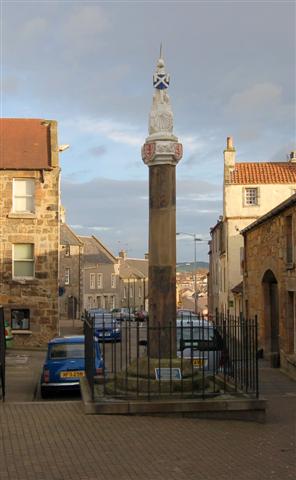
Market Cross, Bank Street, Inverkeithing
Fife
Inverkeithing’s market cross, the stone cross marking a burgh’s right to hold a market, carries centuries of civic self-image: royal heraldry and a…
- Easy path
Questions people ask
- Which order lived at Inchcolm?
- Augustinian canons regular first occupied it as a priory.
- When did it become an abbey?
- It became a full abbey in 1235.
- What makes its ruins exceptional?
- They are described as the most complete surviving remains of any Scottish monastic house, including complete cloisters, chapter house, warming house and refectory.
Sources
The Ancient Codex, in your pocket
Get the Pocket Codex app
Carry the directory with you — Inchcolm Abbey and thousands of ancient places across Britain and Ireland, offline, wherever you roam.