Three bridges stand at the same narrows of the Forth, and between them they span 127 years of engineering. The Queensferry Crossing, opened in 2017, is the newest; the Forth Road Bridge of 1964 stands beside it, and the Forth Rail Bridge of 1890 beyond that.
The crossing itself is far older than any of them. A route over the Forth has existed here since the eleventh century, when Margaret, Queen of Scotland, founded a free ferry to carry pilgrims north to St Andrews — which is where Queensferry gets its name. The site of that ferry became the position of the Forth Road Bridge, so the modern spans sit on a line of travel more than nine hundred years old.
The case for a third bridge was made twice. Proposals for an additional road crossing were drawn up in the early 1990s as part of the Scottish Office’s Setting Forth consultation, and met stiff opposition from environmentalists and from the City of Edinburgh Council on the grounds that they would generate traffic. After the Labour victory of 1997 they were shelved.
What revived them was corrosion. The Forth Road Bridge had a designed life of 120 years and a theoretical capacity of 11 million vehicles a year; by 2006 it was carrying 23 million. An inspection programme between 2003 and 2005 found that the main suspension cables had lost an estimated 8 to 10 per cent of their strength, and the discovery in 2004 settled the argument. Transport Scotland studied the question through 2006 and 2007 and decided in December 2007 to build a replacement. The following year it was announced that the old bridge would be kept as a public transport link rather than closed — so the new bridge is a replacement that replaced nothing.
The Forth Crossing Act 2011 received royal assent on 20 January 2011. The Forth Crossing Bridge Constructors consortium won the contract that April, and construction began in the late summer and autumn. What was built is a three-tower cable-stayed bridge 1.7 miles long, with around 2.5 miles of new connecting road, and new or upgraded junctions at Ferrytoll in Fife, at South Queensferry, and at Junction 1A on the M9.
Completion slipped from December 2016 to August 2017. The bridge was named by public vote on 26 June 2013, opened to traffic on 30 August 2017, and was formally opened on 4 September 2017 by Queen Elizabeth II — fifty-three years to the day after she had opened the bridge next to it.
What follows is drawn from published sources, with each claim labelled by how firmly it is established.
History
A crossing has existed at this point on the Forth since the eleventh century, when Margaret, Queen of Scotland, founded a free ferry to carry pilgrims north to St Andrews. The site of that ferry crossing became the position of the Forth Road Bridge, which opened on 4 September 1964. Proposals for a second road crossing at Queensferry were drawn up in the early 1990s as part of the Setting Forth consultation prepared by the Scottish Office. They met stiff opposition from environmentalists and from the City of Edinburgh Council on the grounds of increased traffic, and were shelved after the Labour victory at the 1997 general election.
The existing bridge was designed for a working life of 120 years and for up to 11 million vehicles a year, but by 2006 it was carrying 23 million. Inspections between 2003 and 2005 found that the main suspension cables had lost an estimated 8 to 10 per cent of their strength to corrosion, and that discovery in 2004 is what restarted the argument.
Transport Scotland carried out a study in 2006 and 2007 and decided in December 2007 to proceed with a replacement bridge. The following year it was announced that the existing bridge would be kept as a public transport link rather than closed. The Forth Crossing Act 2011 received royal assent on 20 January 2011.
The Forth Crossing Bridge Constructors consortium was awarded the contract in April 2011 and construction began in the late summer and autumn of that year. The crossing is a three-tower cable-stayed bridge with an overall length of 1.7 miles, and about 2.5 miles of new connecting roads were built with it, including new and upgraded junctions at Ferrytoll in Fife, at South Queensferry and at Junction 1A on the M9.
Completion was first set for December 2016 and pushed to August 2017 after several delays. The bridge was named by public vote on 26 June 2013, opened to traffic on 30 August 2017, and formally opened by Queen Elizabeth II on 4 September 2017 — fifty-three years to the day after she opened the Forth Road Bridge beside it. It is the third bridge across the Forth at Queensferry, standing with the Forth Road Bridge of 1964 and the Forth Rail Bridge of 1890. It carries the M90 between Edinburgh at South Queensferry and Fife at North Queensferry.
What to look for
-
Three bridges at one narrows
The rail bridge of 1890, the road bridge of 1964 and this one of 2017 stand together, spanning three centuries of engineering at the same crossing point.
-
The line the ferry took
The site of Queen Margaret's eleventh-century free ferry for pilgrims became the position of the Forth Road Bridge, so the modern crossings sit on a route more than nine hundred years old.
-
The corroded cables next door
Inspection between 2003 and 2005 found the Forth Road Bridge's main suspension cables had lost 8 to 10 per cent of their strength. That finding, in 2004, is why this bridge exists.
Plan your visit
- Location
- 56.0047°N · 3.4125°W
Nearby places
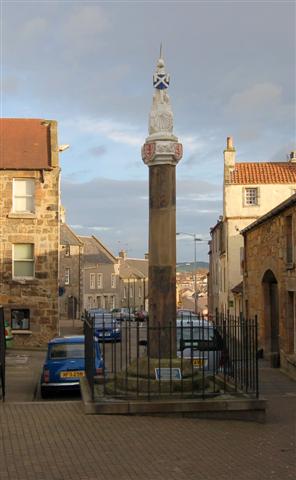
Minor monument · Medieval
Market Cross, Bank Street, Inverkeithing
Fife
Inverkeithing’s market cross, the stone cross marking a burgh’s right to hold a market, carries centuries of civic self-image: royal heraldry and a…
- Easy path
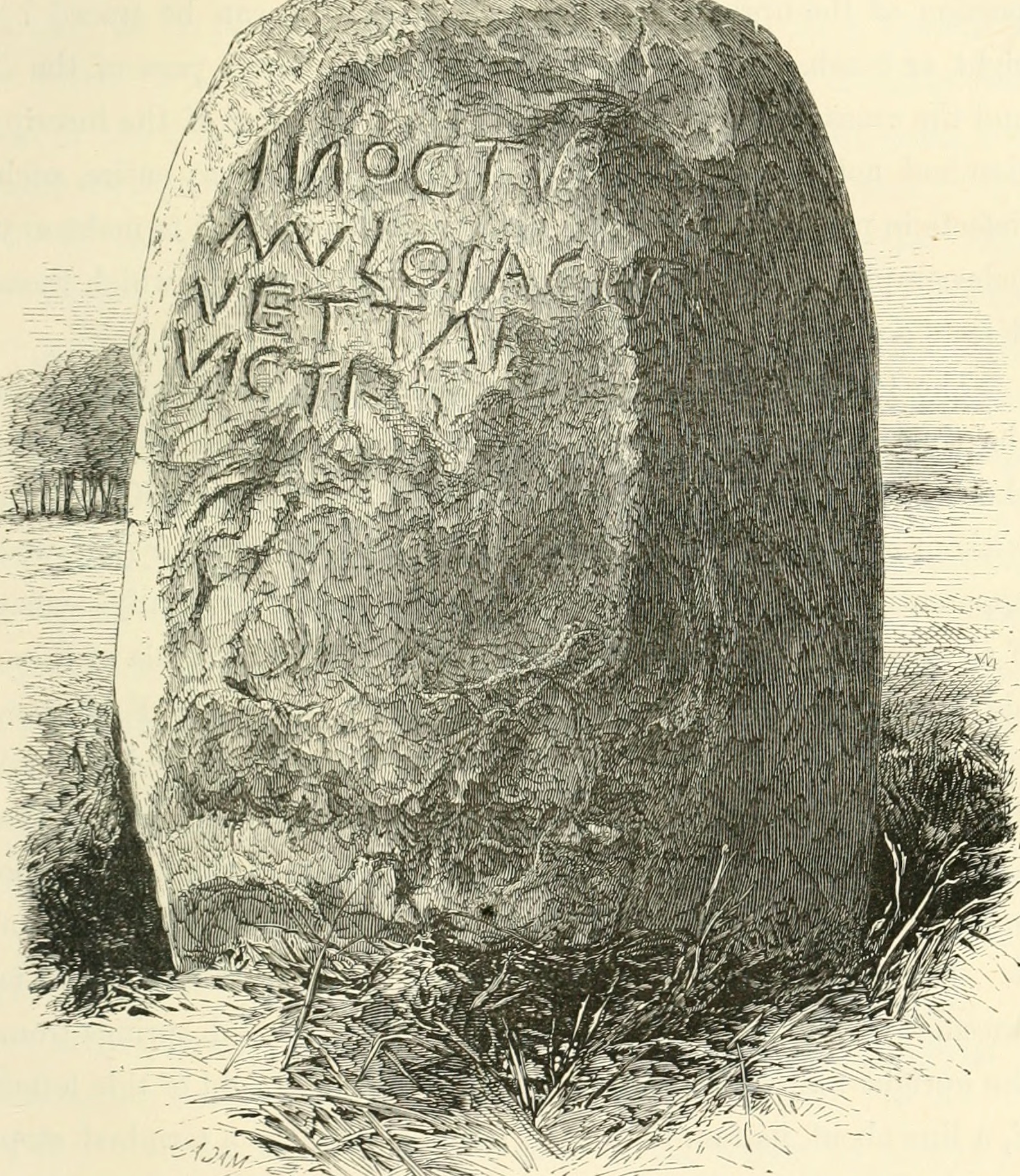
Sacred place · Prehistoric
Cat Stane
City of Edinburgh
The Cat Stane combines a Bronze Age (roughly 2500–800 BC, when metalworking spread) standing stone with a fifth- or sixth-century Latin funerary in…
- Near Edinburgh
- Easy path

Fortified place · Medieval
Blackness Castle
Falkirk
Blackness Castle is a Firth of Forth fortress transformed from Crichton residence and state prison into an advanced artillery work, prison and ammu…

Sacred place · Medieval
Inchcolm Abbey
Fife
Inchcolm Abbey is Scotland’s most complete surviving monastic complex, preserving an Augustinian island community whose buildings also reveal the F…
- Near St Andrews
Questions people ask
- How old is the crossing here?
- The bridge is of 2017, but a crossing has existed at these narrows since the eleventh century, when Queen Margaret founded a free ferry to take pilgrims north to St Andrews. The site of that ferry became the position of the Forth Road Bridge.
- Why was a new bridge needed?
- Because the Forth Road Bridge was failing under traffic it was never designed for. It was built for up to 11 million vehicles a year and was carrying 23 million by 2006, and inspections between 2003 and 2005 found its main suspension cables had lost an estimated 8 to 10 per cent of their strength to corrosion.
- When did it open?
- To traffic on 30 August 2017, and formally on 4 September 2017, opened by Queen Elizabeth II — fifty-three years to the day after she opened the adjacent Forth Road Bridge.
- How many bridges cross the Forth here?
- Three: the Forth Rail Bridge of 1890, the Forth Road Bridge of 1964, and this one. The older road bridge was retained as a public transport link rather than closed.
The Ancient Codex, in your pocket
Get the Pocket Codex app
Carry the directory with you — Queensferry Crossing and thousands of ancient places across Britain and Ireland, offline, wherever you roam.