
Inverkeithing’s market cross, the stone cross marking a burgh’s right to hold a market, carries centuries of civic self-image: royal heraldry and a unicorn added in 1688, then a monument moved twice through its changing burgh.
A stepped octagonal cross on Bank Street in Inverkeithing carries four heraldic shields, a cubical sundial and a unicorn bearing a saltire. Its shaft is generally dated sixteenth-century, though some sources push its origin back to 1398.
John Boyd worked on the capital in 1688, adding the shields, carved roses and the unicorn finial that still marks the cross out today. The shields name the royal arms, the Douglas arms, and the arms of Robert III and Annabella Drummond.
The monument has moved twice since: from the north end of the High Street to Townhall Street in 1799, then to Bank Street in 1974. Twentieth-century restoration repainted the capital, sundial and unicorn, the only recorded work since Boyd’s.
What follows is drawn from published sources, with each claim labelled by how firmly it is established.
History
The octagonal shaft of Inverkeithing's mercat cross is generally dated sixteenth-century, though some sources place its origin as far back as 1398, which would make it one of the oldest mercat crosses recorded anywhere in Fife rather than a product of the burgh's later prosperity. John Boyd worked on the capital in 1688, adding heraldic shields, carved roses and the unicorn finial that now identifies the cross at a glance — the shields carrying the royal arms, the Douglas arms, and the arms of Robert III and his queen Annabella Drummond, a pairing that ties the stonework to the medieval royal house.
The monument has moved twice since Boyd's time: from the north end of the High Street to Townhall Street in 1799, then to its present site on Bank Street in 1974, so the cross today stands neither where its shaft was first carved nor where Boyd fitted his seventeenth-century additions. The capital, sundial and unicorn were repainted during a twentieth-century restoration, the only recorded intervention to the cross's surface since Boyd's original seventeenth-century carving, leaving the seventeenth-century form intact beneath fresh paint rather than replacing any of the original stonework.
People
-
John Boyd
Craftsman who remodelled the capital in 1688, carving its heraldic shields and roses and adding the unicorn finial that identifies the cross today.
Cultural influences
-
As Inverkeithing’s mercat cross, the monument marked the burgh’s public market and civic centre before its later moves.
Connections
-

Photo: Dunpharlain / Wikimedia Commons / CC BY-SA 3.0 Inverkeithing
The cross marked this royal burgh’s market and civic centre; it was moved within the town in 1799 and again to Bank Street in 1974.
Discovery & excavation
The octagonal shaft, 1688 heraldic capital, sundial and unicorn finial preserve the cross’s medieval and seventeenth-century form.
What to look for
-
Heraldic shields
The 1688 capital carries royal and Douglas arms alongside the arms of Robert III and Annabella Drummond, preserving a stone link to the medieval royal house.
-
The octagonal shaft
The octagonal shaft is generally dated to the sixteenth century, although an earlier date of 1398 is also recorded, making its age itself part of the monument’s interest.
-
Sundial and unicorn
John Boyd’s 1688 capital combines a sundial, carved roses and the unicorn finial; twentieth-century repainting refreshed the surface without replacing the original stonework.
Plan your visit
- Location
- 56.0308°N · 3.3975°W
- Access
- Visible from a public way
- Terrain
- Easy going
- Time needed
- About 20 minutes
- Best time
- Visit in daylight and dry conditions, when the market cross and surrounding historic street can be viewed safely.
- What survives
- The cross survives on Bank Street with its octagonal shaft, carved shields, sundial and unicorn finial, repainted after twentieth-century restoration.
- Facilities
- No dedicated visitor facilities are documented at the cross; plan to use facilities in Inverkeithing.
Opening & admission
Free to view
- The mercat cross stands on Bank Street and can be viewed at any time from the public pavement.
Nearby places
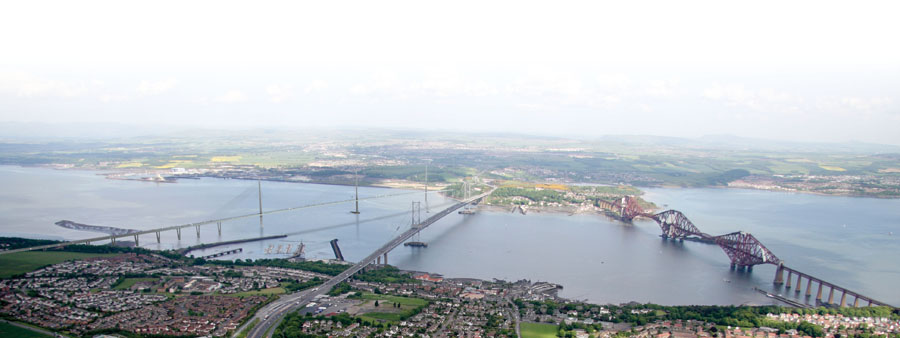

Sacred place · Medieval
Inchcolm Abbey
Fife
Inchcolm Abbey is Scotland’s most complete surviving monastic complex, preserving an Augustinian island community whose buildings also reveal the F…
- Near St Andrews
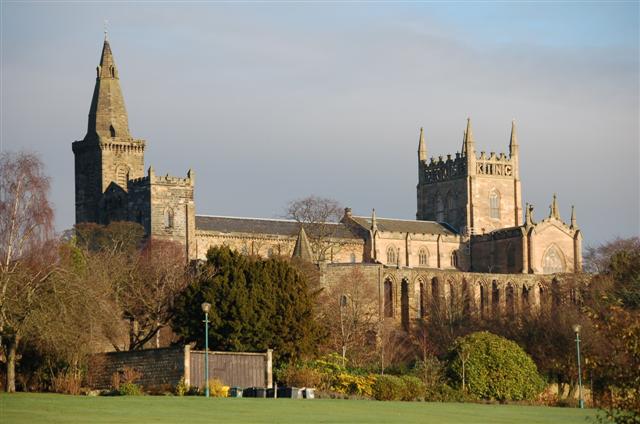
Building or ruin · Medieval
Dunfermline Abbey
Fife
Dunfermline Abbey combines one of Scotland’s great round-arched churches, built before the Gothic style, with the country’s richest concentration o…
- Near St Andrews
- 2 min walk from car park
Questions people ask
- How old is Inverkeithing's market cross?
- The octagonal shaft is generally dated sixteenth-century, though some sources push its origin back to 1398.
- What did John Boyd add to the cross in 1688?
- He carved the heraldic shields, roses and the unicorn finial that now identify the cross, the shields bearing the royal arms, the Douglas arms, and the arms of Robert III and Annabella Drummond.
- Has the cross always stood on Bank Street?
- No. It moved from the north end of the High Street to Townhall Street in 1799, then to its present Bank Street site in 1974.
Sources
- Canmore site 50971
- Historic Environment Scotland — Inverkeithing
- Historic Environment Scotland — listing and place records
Explore more: Minor monuments · Medieval · Fife
The Ancient Codex, in your pocket
Get the Pocket Codex app
Carry the directory with you — Market Cross, Bank Street, Inverkeithing and thousands of ancient places across Britain and Ireland, offline, wherever you roam.