
Tappoch Broch is a scheduled stone tower dating from from about 800 BC until the Romans came, whose surviving chamber, staircase and recent conservation reveal a rare Lowland example within a wooded defended landscape.
Tappoch Broch, also known as Torwood Broch, lies in dense woodland near Falkirk. Its thick dry-stone walls still rise two or three metres around an oval paved chamber, where a central hearth and the entrance passage make the internal space immediately legible despite collapses in recent times.
The broch has been investigated intermittently since 1864, with recent vegetation clearance, laser scanning and excavation placing it within a broader hillfort setting. Sparse artefacts and the absence of Roman material make the structure and its construction the strongest evidence for understanding this scheduled monument.
Tappoch Broch, better known as Torwood Broch, stands in a remote spot in dense woodland near Falkirk.
Colonel Joseph Dundas first excavated it in 1864, and small-scale excavations have taken place near the site sporadically since. In 2014 a conservation project run by Archaeology Scotland, grant-aided by Forestry Commission Scotland, cleared the site of scrub. AOC Archaeology then surveyed the broch by laser scanning, and Dr Murray Cook carried out a key-hole excavation of the earlier hillfort surrounding it; the results were published in the Proceedings of the Society of Antiquaries of Scotland.
The chamber’s walls are about six metres thick and still stand two or three metres high, though whole sections have collapsed in recent times. The drystone work is of large irregular blocks taken from the immediate vicinity. The oval chamber measures 10.8 metres by 9.8, is paved, and has a large fire spot in the middle.
Access is from the south-east, with some of the fallen stones still in place. About halfway along the passage is a stop for a door, with a latch for the door beam. In the south-west of the chamber a short aisle branches off to the right and leads to an unusually well-preserved stair within the wall. Eleven steps survived in 1864, some of which have since been lost. The side walls of the stair slope inwards, which indicates it was originally built as a cantilever vault. A small chamber in the north-east of the wall appears to be of modern origin.
The site is a scheduled monument.
What follows is drawn from published sources, with each claim labelled by how firmly it is established.
History
Tappoch Broch, better known as Torwood Broch, is an Iron Age broch in woodland near Falkirk. Colonel Joseph Dundas first excavated it in 1864, and smaller investigations followed. The site is a scheduled monument, recognising the importance of its surviving stone structure and archaeological potential.
The oval central chamber measures about 10.8 by 9.8 metres, with walls around six metres thick. It has paving, a large central hearth and a south-east entrance passage with a door stop for a beam latch. A short passage in the south-west leads to an unusually well-preserved wall staircase, whose inward-sloping sides indicate an original cantilever vault.
A 2014 conservation project cleared scrub vegetation, followed by laser scanning and a key-hole excavation of the surrounding earlier hillfort. In 2024 and 2025, bracken and self-seeded trees were cleared, and the first modern excavation inside the broch was undertaken in 2025. Finds have been sparse, including querns, coarse pottery and a possible stone lamp, with no Roman material reported.
People
-
Colonel Joseph Dundas
Antiquary who first excavated Tappoch Broch in 1864, beginning the recorded archaeological investigation of its surviving stone structure.
-
Dr Murray Cook
Led the key-hole excavation of the surrounding earlier hillfort and the first modern interior excavation in 2025.
Cultural influences
-
Recent survey and key-hole excavation place the broch within an earlier hillfort, showing that the wooded site belongs to a longer sequence of defended use.
Connections
-
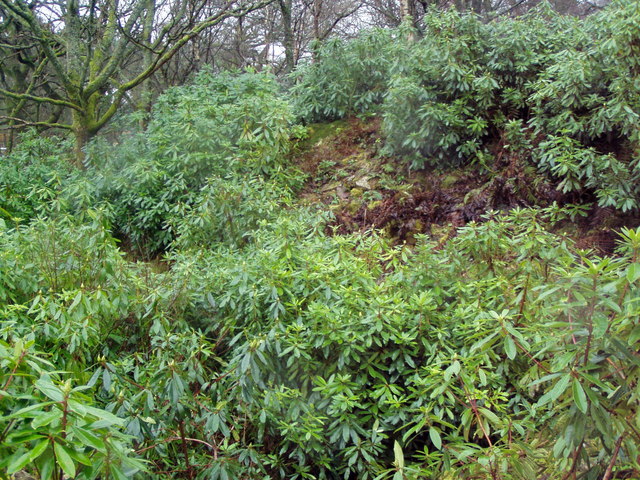
Photo: Ewen Rennie / Wikimedia Commons / CC BY-SA 2.0 Another Iron Age broch in central Scotland, providing a comparison with Tappoch’s form and defensive domestic tradition.
-
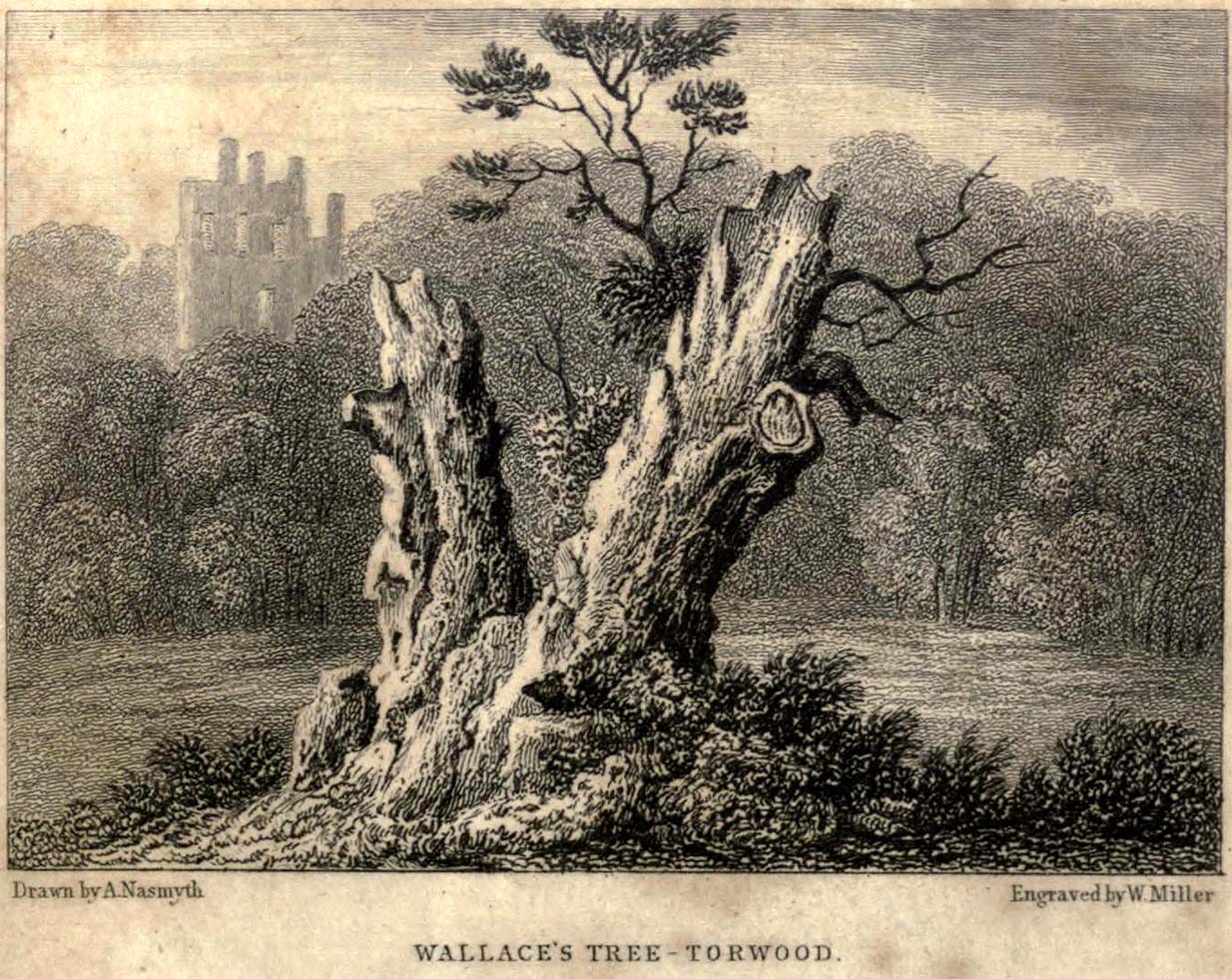
Photo: A Nasmyth / Wikimedia Commons / Public domain A long-lived natural landmark in the surrounding landscape, connecting Tappoch Broch with the later cultural memory of Torwood.
Discovery & excavation
Colonel Joseph Dundas first excavated the broch in 1864, followed by intermittent smaller investigations. A 2014 conservation project cleared scrub before AOC Archaeology laser-scanned the broch and Dr Murray Cook excavated part of the surrounding earlier hillfort; the first modern excavation inside the broch took place in 2025.
What to look for
-
The dry-stone walls
Walls about six metres thick enclose the oval chamber, preserving the core of an Iron Age broch within the wooded Torwood landscape.
-
The hearth and paving
A large central hearth and paving survive in the chamber, giving rare evidence for the building’s domestic interior.
-
The entrance passage
The south-east entrance passage retains a door stop for a beam latch, showing how access to the broch was controlled.
-
The stair in the wall
A short south-west passage reaches an unusually well-preserved wall stair, whose inward-sloping sides imply an original cantilever vault.
Plan your visit
- Location
- 56.0435°N · 3.8744°W
- Nearest settlement
- Torwood
- Access
- Reached on a public path
- Terrain
- Moderate walking
- Time needed
- About 45 minutes
- What survives
- The oval chamber’s dry-stone walls still stand two to three metres high, but whole sections have collapsed. The paved floor, central hearth, entrance passage and wall stair remain legible.
- Start point
- Torwood village (roadside) (parking unconfirmed) — No dedicated visitor car park. Tappoch (Torwood) Broch sits within Tor Wood; visitors generally park considerately on the roadside at Torwood village and walk in on the forestry tracks. The 836m is straight-line; the walked forest route is longer. Stout footwear advised.
Nearby places
Ancient tree · Medieval
Wallace Oak (Torwood)
Falkirk
The lost Wallace Oak shows how a woodland landmark became a national relic, its unproven Wallace tradition driving souvenir cutting and an unusuall…
- Near Falkirk
Fortified place · Roman
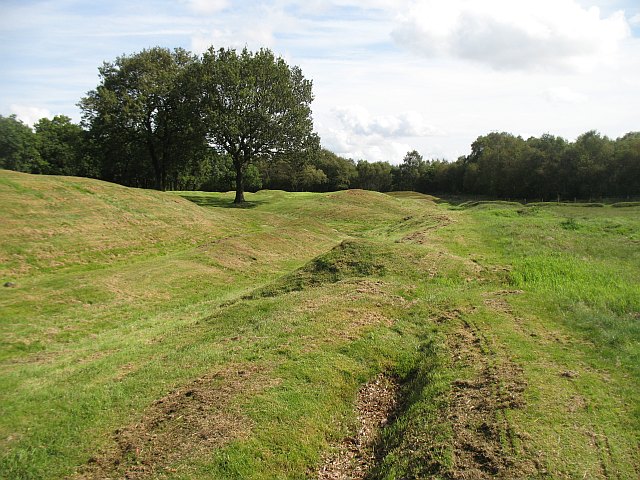
Antonine Wall: Rough Castle
Falkirk
Rough Castle is one of the best-preserved forts on the Antonine Wall, retaining the defensive landscape of Rome’s short-lived northern frontier and…
- Near Bonnybridge
- 15 min walk from car park
- Some walking
Fortified place · Roman
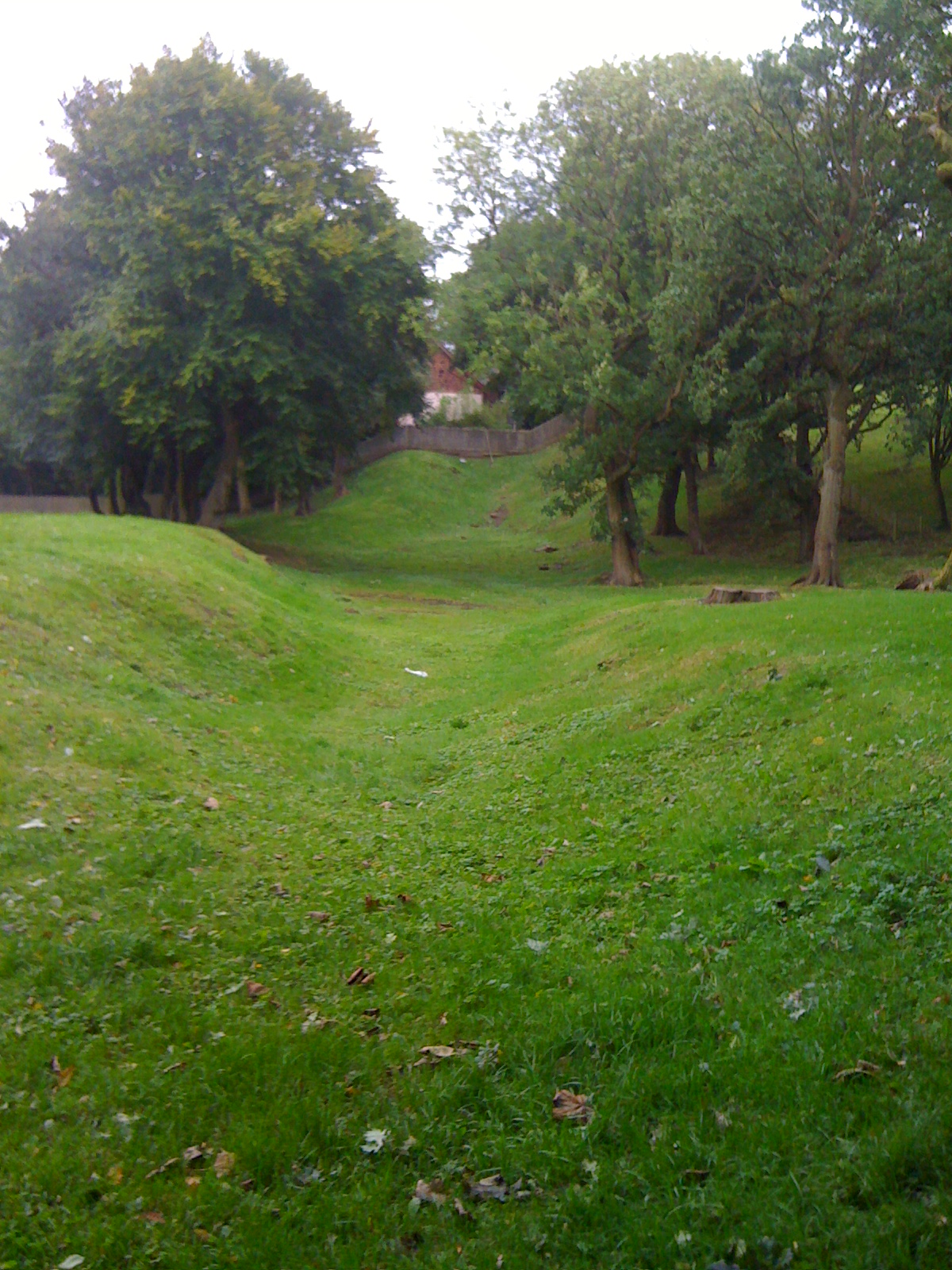
Watling Lodge
Falkirk
Watling Lodge contains a notably well-preserved stretch of Antonine Wall ditch, showing the frontier’s local defensive landscape between the Roman…
- Some walking
Fortified place · Roman
Seabegs Wood
Falkirk
Seabegs Wood preserves a fortlet on the Antonine Wall, with excavated rampart (a defensive bank of earth or stone) foundations and a position betwe…
- Some walking
Questions people ask
- What is another name for Tappoch Broch?
- It is better known as Torwood Broch.
- What survives inside the broch?
- The paved oval chamber, central hearth, entrance passage and part of a wall staircase survive.
- What has been found there?
- Finds include querns, coarse pottery and a possible stone lamp; no Roman material is reported.
Sources
The Ancient Codex, in your pocket
Get the Pocket Codex app
Carry the directory with you — Tappoch Broch and thousands of ancient places across Britain and Ireland, offline, wherever you roam.