
The lost Wallace Oak shows how a woodland landmark became a national relic, its unproven Wallace tradition driving souvenir cutting and an unusually rich documentary afterlife.
The Wallace Oak was a lost tree of Torwood, not a surviving ancient trunk. It stood in wet ground on a raised platform, an unusually marked setting in the woodland landscape. Historic Environment Scotland retains a record for the place under NS88NW 17 and describes the object as a tree; the associated notes say that the hollow oak has since been removed. That fixed record matters because the precise tree no longer provides its own visible evidence.
The oak’s connection with William Wallace belongs to tradition. Local accounts made its hollow trunk a place where Wallace could hide, sleep or gather followers. None of the sources used here supplies contemporary proof that he did so. The claim is still historically important, not as a fact about Wallace’s movements, but as evidence of how a distinctive tree entered the local memory of the Wars of Independence and acquired a name that outlasted it.
The documentary fragments reveal a changing physical object. One account describes a platform roughly 42 feet across beneath the oak. Another recorded a trunk circumference of about 22 feet in 1771. Historic Environment Scotland preserves a note, published by W. MacFarlane in the early twentieth century from an older source, describing a much-decayed tree whose north side still bore leaves and acorns. The same archive note suggests that it may have been the tree drawn on Roy’s military survey in the area then known as Wallace Wood, but presents this as a probability rather than a settled identification.
The oak’s fame also brought its destruction into the story. By the seventeenth century its wood was being made into souvenirs; a silver-rimmed quaich bearing the date 1689 is attributed to the tree. By about 1830 the tree was reduced to stumps, and the roots were dug up as material for further keepsakes. A historical description published in the 1880s adds an important caution: it says the true Wallace Oak had disappeared, though a shoot from it was flourishing as late as 1835, and distinguishes it from a different, younger tree at Carbrook that had also been called the Wallace Oak.
The surviving evidence therefore has two strands. One is material and documentary: a mapped location, reports of the tree’s size and decline, and a heritage record for a now-removed oak. The other is the Wallace tradition, powerful enough to encourage relic collecting but not supported as a contemporary biographical fact. Reading both together gives Torwood’s oak its proper place: a historic landscape marker whose physical loss makes careful source wording more important, not less.
What follows is drawn from published sources, with each claim labelled by how firmly it is established.
History
The Wallace Oak stood in Torwood, historically part of the ancient woodland landscape around Falkirk. Descriptions place it on a raised platform in clayey wet ground, about 42 feet across, a setting that separated the tree from the surrounding carse. Historic Environment Scotland’s current place record classifies the site as a tree of unknown period and notes that the oak has been removed.
The name rests on tradition rather than contemporary proof. Stories made the hollow trunk a hiding place, headquarters and sleeping place for William Wallace, but the surviving heritage record does not establish that he used it. A later note quoted by Historic Environment Scotland calls it a shelter for Wallace, while also reporting that the tree was already hollow and is now gone; the distinction between association and evidence is therefore central to the site.
By the seventeenth century the association had encouraged souvenir taking. A silver-rimmed quaich bearing the date 1689 is attributed to the oak, while a 1771 account gives the trunk a circumference of about 22 feet. These details show how the oak’s reputation made its timber and physical form into relics, rather than providing direct evidence for the medieval story from which the reputation derived.
Accounts of its decline are not wholly uniform. The tree had been reduced to little more than two stumps by 1830 after timber was removed and roots were dug out for souvenirs. An 1880s gazetteer said that the true Wallace Oak had gone but a shoot was still thriving as late as 1835; it also warned that another tree in the Carbrook policies was a later claimant. What remains securely is a documentary trail for a lost landmark.
People
-
William Wallace
The oak was traditionally associated with Wallace as a hiding place, headquarters and sleeping place, although no contemporary evidence confirms that association.
Cultural influences
-
The oak’s association with William Wallace made it a landmark in local memory of Scotland’s Wars of Independence and encouraged the making of souvenirs from its timber from the 17th century.
Connections
-
Torwood
The former oak stood within the historic woodland landscape of Torwood, where its name and local tradition were recorded.
In culture
-
John Thomson of Duddingston painted the tree as a reduced stump in the early 19th century under the title The Blasted Oak, preserving an image of a landmark already being dismantled for souvenirs.
What to look for
-
Raised platform
The tree stood on a raised platform in wet ground, a setting that helped distinguish the landmark.
-
Documentary place record
Historic Environment Scotland records the location as NS88NW 17, but identifies the hollow oak as removed.
What is said
Folklore and tradition, recorded as what is said — not as established fact.
-
Local tradition holds that William Wallace hid, slept and gathered followers in the hollow trunk of the Wallace Oak at Torwood. The surviving accounts record the tradition but provide no contemporary proof that he used the tree.
Plan your visit
- Location
- General area near Falkirk, Falkirk
- Nearest settlement
- Falkirk
- Access
- Reached on a public path
- What survives
- Living-tree condition and access should be checked against current local guidance before any visit copy is expanded.
This is a sensitive or fragile site, so we show only its general area. Please check official heritage sources for access before visiting, and take care not to disturb it.
Nearby places
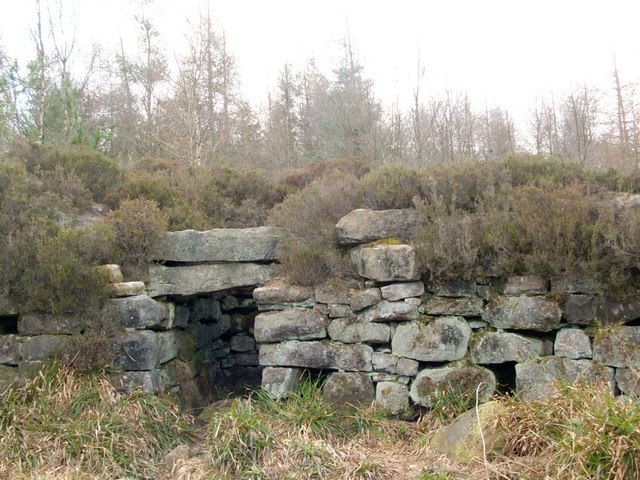
Carved stone · Prehistoric
Tappoch Broch
Falkirk
Tappoch Broch is a scheduled stone tower dating from from about 800 BC until the Romans came, whose surviving chamber, staircase and recent conserv…
- Near Torwood
- 20 min walk from car park
- Some walking
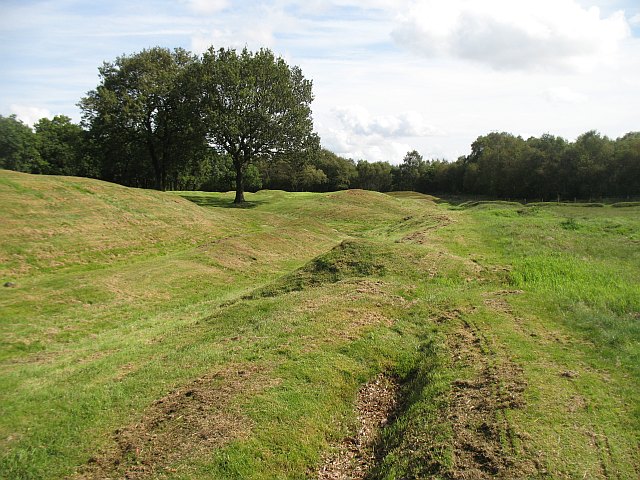
Fortified place · Roman
Antonine Wall: Rough Castle
Falkirk
Rough Castle is one of the best-preserved forts on the Antonine Wall, retaining the defensive landscape of Rome’s short-lived northern frontier and…
- Near Bonnybridge
- 15 min walk from car park
- Some walking
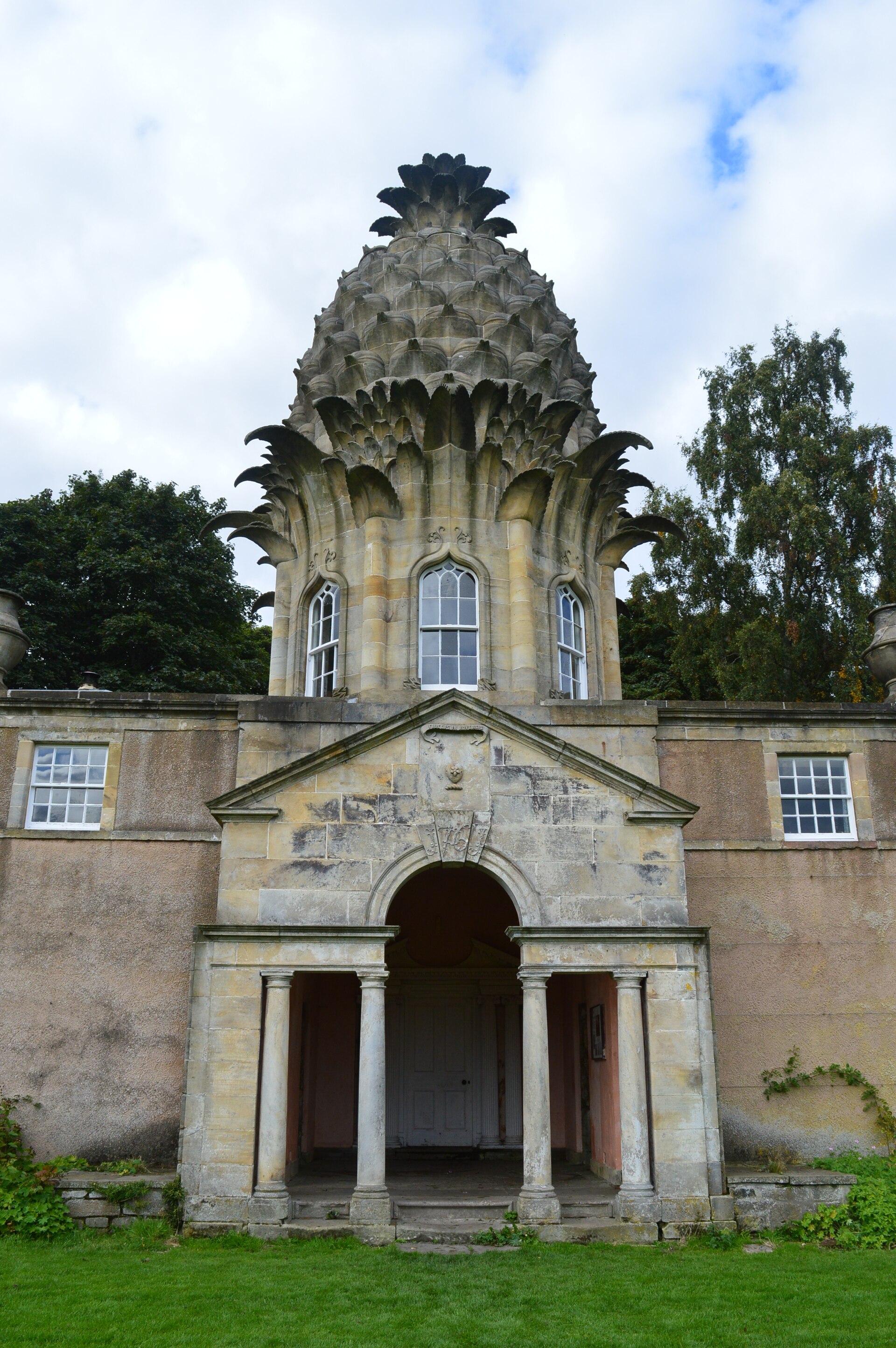
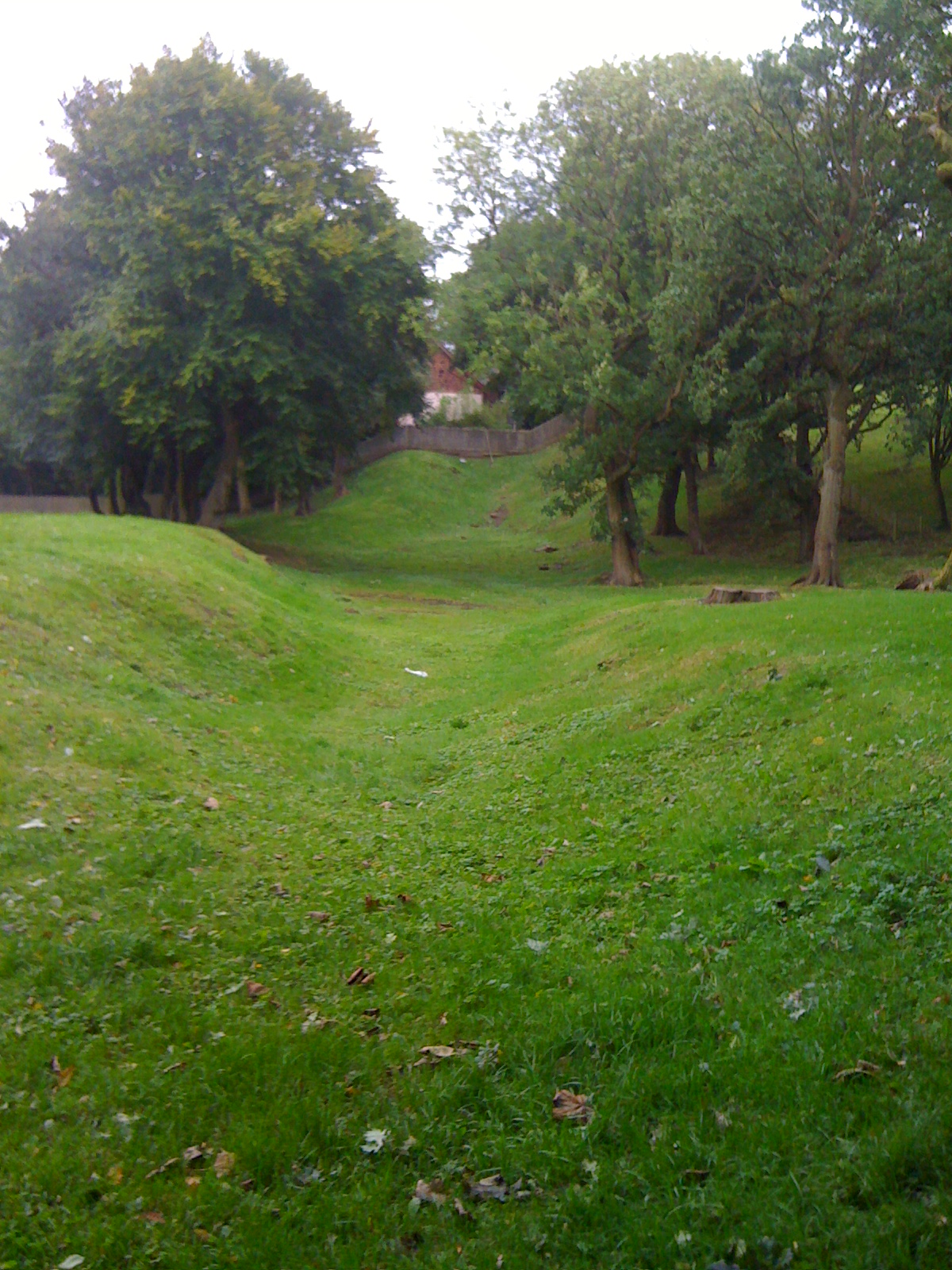
Fortified place · Roman
Watling Lodge
Falkirk
Watling Lodge contains a notably well-preserved stretch of Antonine Wall ditch, showing the frontier’s local defensive landscape between the Roman…
- Some walking
Questions people ask
- What happened to the tree?
- By about 1830 it had been reduced to stumps after timber and roots were removed for souvenirs. A later gazetteer said the true tree had gone, although a shoot was reported alive as late as 1835.
- What is the Wallace connection?
- Tradition holds that William Wallace used the hollow tree, but the claim is folklore.
- What was measured in 1771?
- The trunk was recorded at about 22 feet in circumference.
Sources
The Ancient Codex, in your pocket
Get the Pocket Codex app
Carry the directory with you — Wallace Oak (Torwood) and thousands of ancient places across Britain and Ireland, offline, wherever you roam.