The Romans built a stone-and-turf fortification, the Antonine Wall, between the Firth of Clyde and the Firth of Forth between AD 142 and 144 under Emperor Antoninus Pius, with a parallel road, the…
Builders digging foundations for a housing development in 1973 cut into the remains of a Roman bath house. It had been standing there, under the ground, roughly 150 metres from what is now the centre of Bearsden, since about AD 142 or 143. The site was given to the nation rather than built over, and what was uncovered is unusually well preserved.
The bath house served the garrison of a small Roman fort of about two and a half acres, the first known settlement anywhere on the site of the modern town. That fort sat where the Military Way — the road the army ran parallel to and just south of the Antonine Wall — crossed the north–south route between Glasgow and Loch Lomond. The Wall itself was raised between AD 142 and 144 under Antoninus Pius, a rampart of turf on a stone base drawn right across the country from the Firth of Clyde to the Firth of Forth, and Bearsden stood on it.
The whole arrangement lasted about twenty years. In AD 164 the army pulled back south to Hadrian’s Wall, and the frontier that had been pushed into central Scotland was abandoned. Very little of the fort survives; the bath house, by the accident of never having been dug up until the twentieth century, survives a great deal better. Two further stretches of the Wall’s stone base can still be seen a short distance away in New Kilpatrick Cemetery on Boclair Road.
The town’s own name may carry a memory of all this, though nobody can prove it. One proposed derivation of “Bearsden” reads it as Gaelic for the entrenchments of the fort; another takes it from the barley — bear — once grown in the glen, or dene; a persistent local story has the sons of a laird keeping a pet bear in a den nearby, for which there is no evidence at all. An early reference to “Bear’s Den” comes with a traditional belief that the place was a Roman burial site. The historian James McCardel concluded that the wisest course was frankly to admit that the derivation is unknown.
What follows is drawn from published sources, with each claim labelled by how firmly it is established.
The name
Bearsden’s name has uncertain origins; proposals include Gaelic for the fort’s entrenchments and a glen where barley was grown.
History
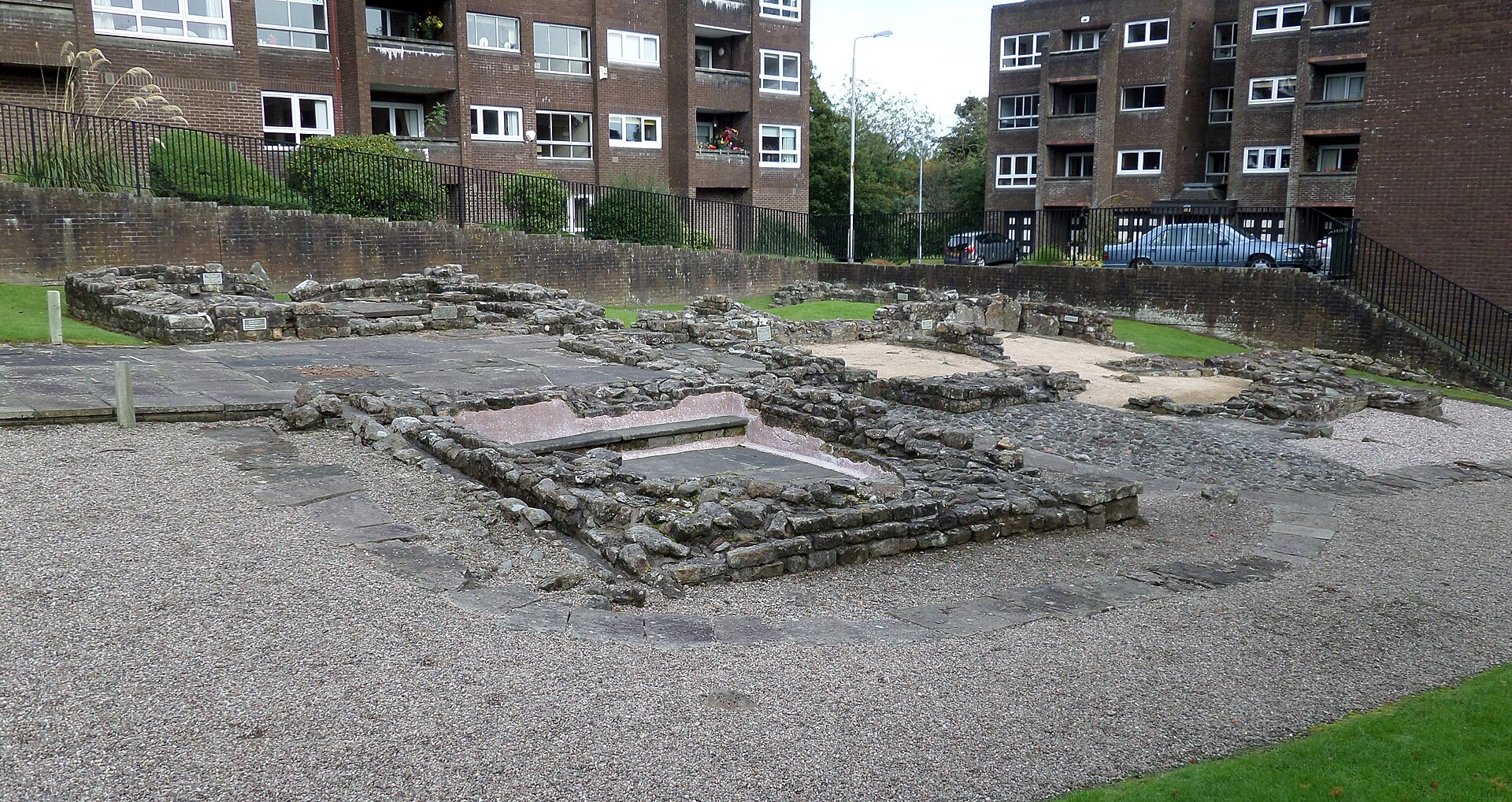
The Romans built a stone-and-turf fortification, the Antonine Wall, between the Firth of Clyde and the Firth of Forth between AD 142 and 144 under Emperor Antoninus Pius, with a parallel road, the Military Way, to its south. A roughly 2.5-acre Roman fort stood on the site of present-day Bearsden, at the intersection of the Military Way and the north–south road between Glasgow and Loch Lomond. Close to the fort, a Roman bath-house was built in approximately AD 142–143. After only about 20 years, in AD 164, the Romans withdrew south to Hadrian's Wall.
People
-
Emperor Antoninus Pius
Roman emperor under whom the Antonine Wall — and the Bearsden fort and bath-house complex — was built
Cultural influences
-
Part of the Antonine Wall frontier system across central Scotland, with its forts, the Military Way and associated installations such as bath-houses.
Connections
-
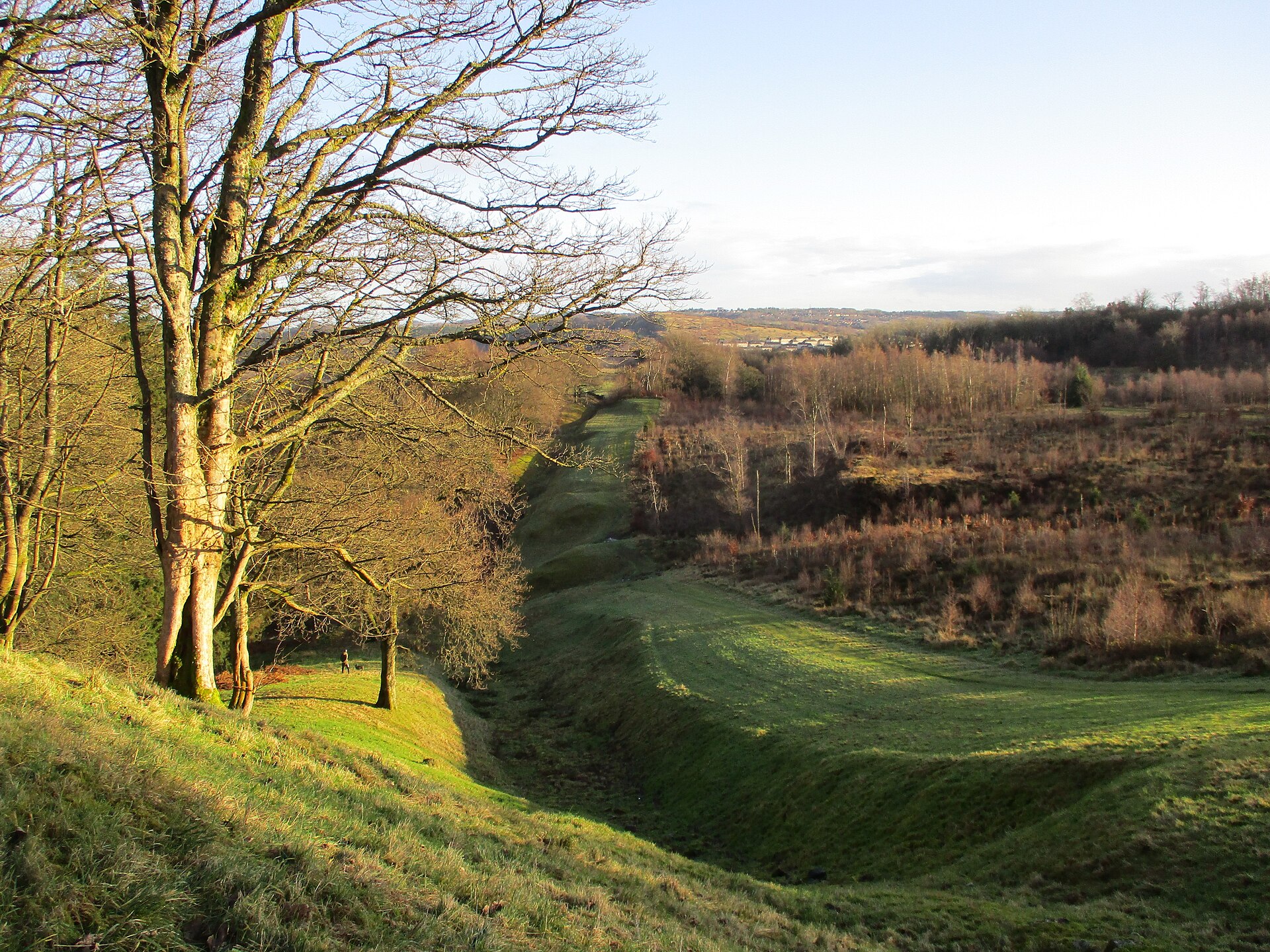
Photo: Alan O'Dowd / Wikimedia Commons / CC BY-SA 2.0 The Roman frontier whose fort the bath-house served
-
New Kilpatrick Cemetery (Boclair Road)
Holds two further visible stretches of the Antonine Wall's stone base
Discovery & excavation
The bath-house's remains were discovered in 1973 by builders digging foundations for a housing development. The site was donated to the nation and the remains, which survive well, lie about 150 metres from Bearsden town centre.
In culture
-
A video reconstruction of the site has been produced.
What to look for
-
The bath-house
The well-preserved remains of the Roman military bath-house, about 150 metres from the town centre.
-
The Wall in the cemetery
Two stretches of the Antonine Wall's stone base in New Kilpatrick Cemetery on Boclair Road.
What is said
Folklore and tradition, recorded as what is said — not as established fact.
-
A persistent local tale says a laird’s sons kept a pet bear in a nearby den, but no evidence supports it.
Plan your visit
- Location
- 55.9199°N · 4.3280°W
- Nearest settlement
- Bearsden
- Access
- Open access
- Start point
- Bearsden Bath House · On Roman Road, Bearsden, Glasgow. Signed from Bearsden Cross on A810. Approximately 600 metres down Roman Road.
- Time needed
- About 45 minutes
- Best time
- Open year-round.
- What survives
- The consolidated stone foundations of the bath house and latrine remain open for public inspection, preserving the layout of the baths including the cold bath, steam rooms and hot rooms within the otherwise built-over Roman fort.
- Facilities
- No dedicated visitor facilities are documented at the remains; plan to use facilities in nearby settlements.
- Start point
- Roman Road Car Park — On Roman Road, the street Historic Environment Scotland directs visitors along. The free Glebe car park is also nearby.
Opening & admission
Free entry
- Open year-round.
Nearby places
Fortified place · Roman
Bearsden Roman fort
East Dunbartonshire
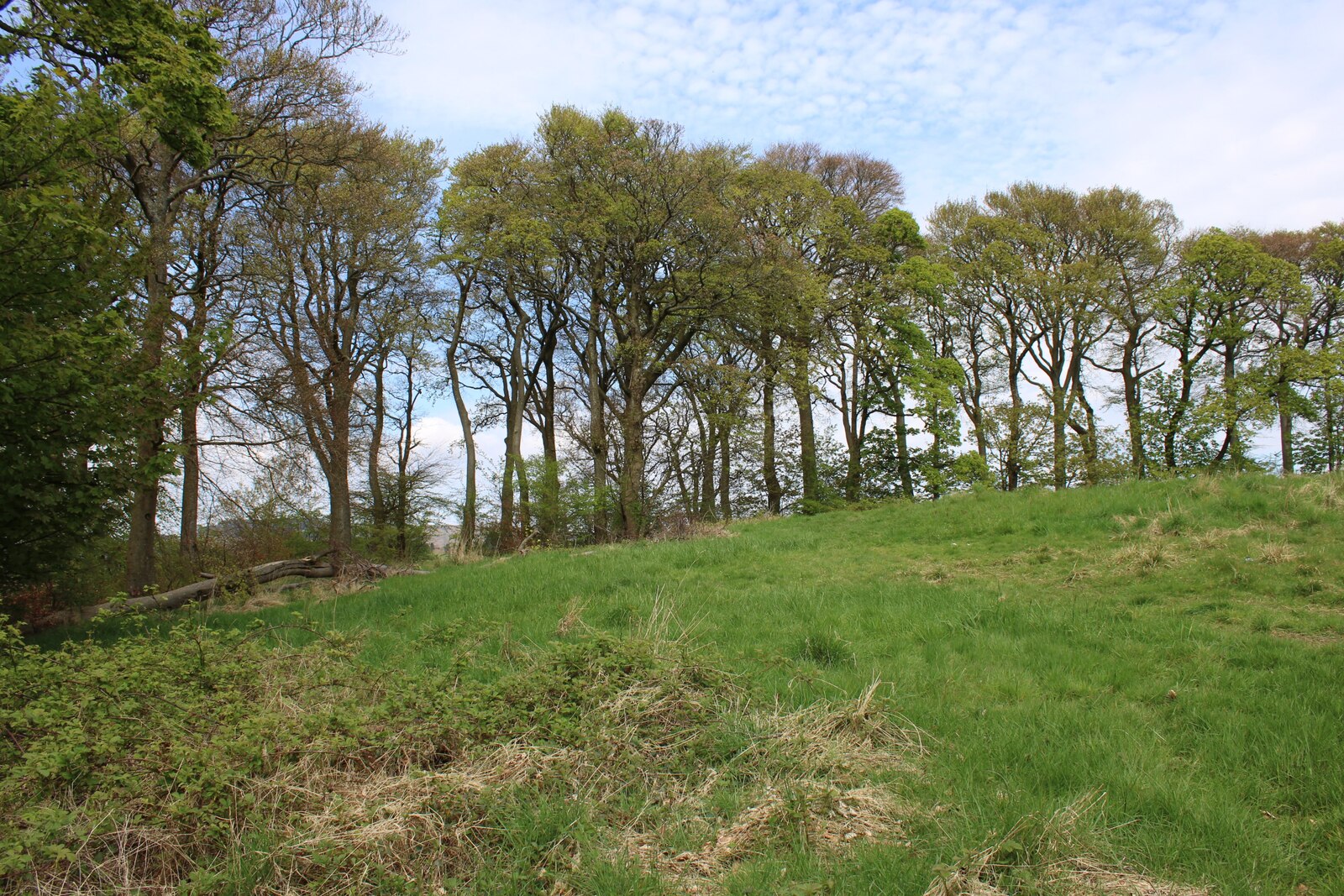
Bearsden preserves one of the Antonine Wall’s best-known military bathhouses, discovered beneath twentieth-century housing and now protected close…
- Near Bearsden
- Easy path
Fortified place · Roman
Castlehill Fort
East Dunbartonshire
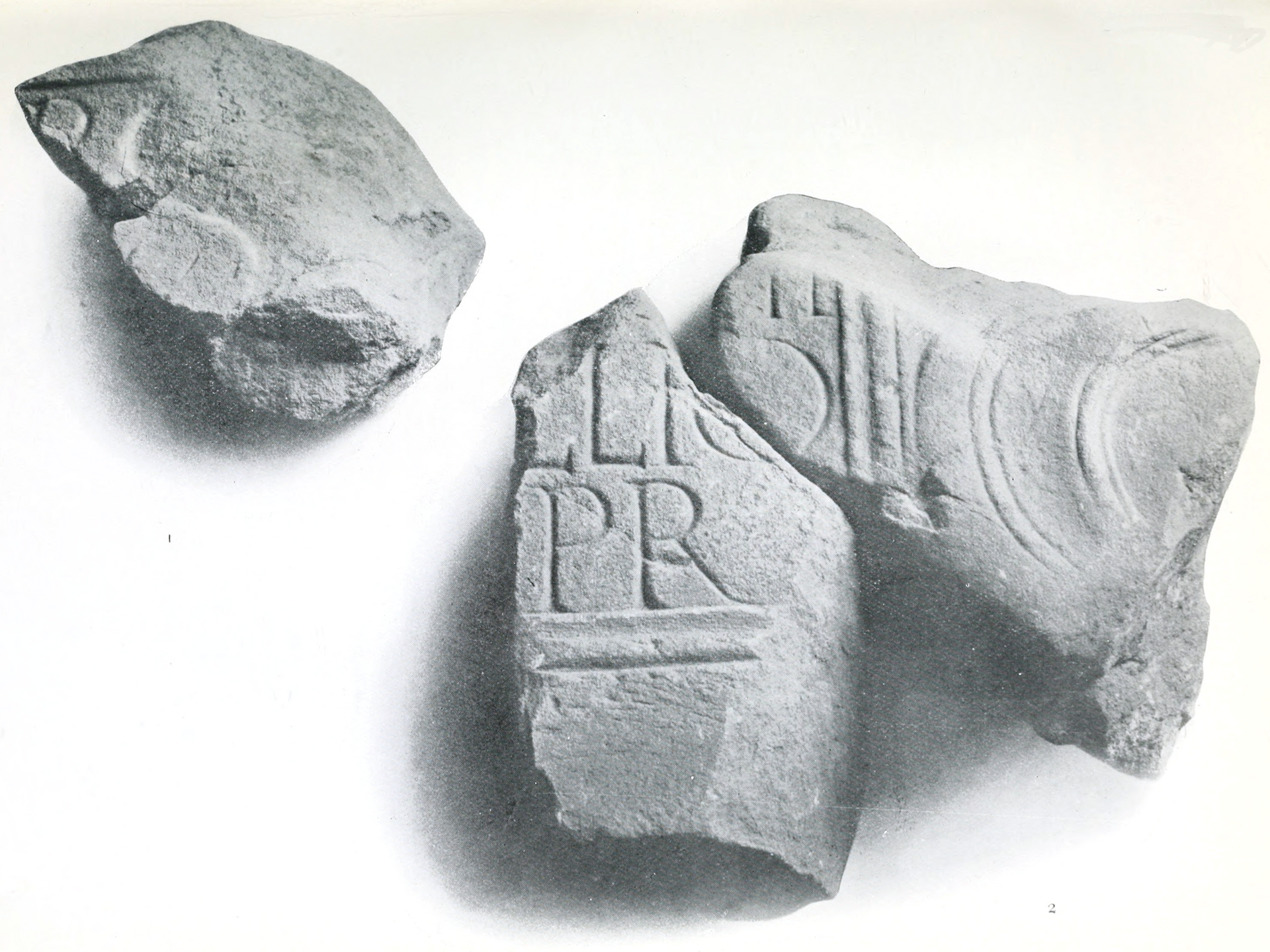
Castlehill marks an Antonine Wall fort whose surviving plantation masks important Sixth Legion distance slabs and evidence for the frontier’s const…
- Near Bearsden
- Some walking
Fortified place · Roman
Balmuildy
East Dunbartonshire
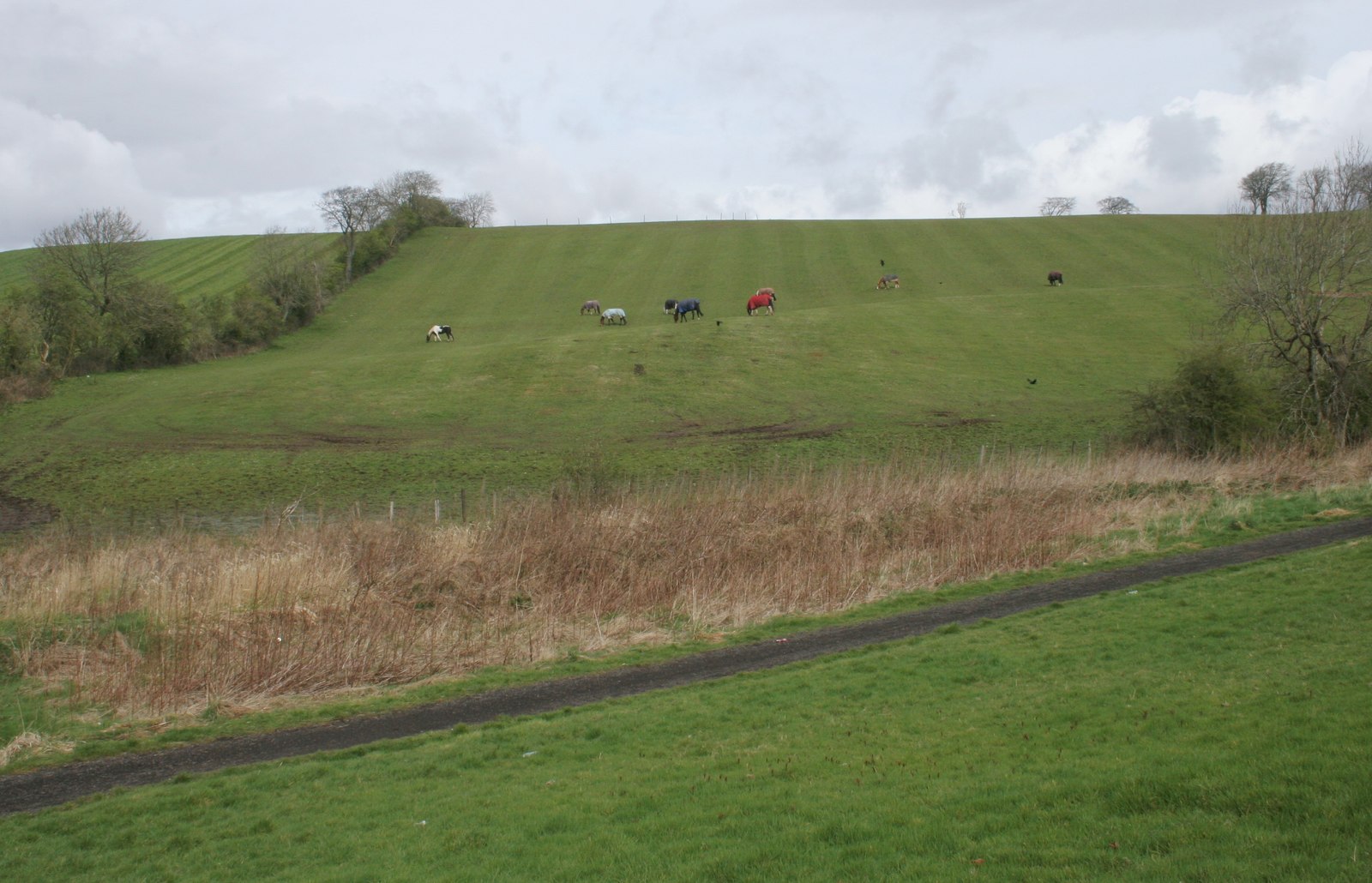
Balmuildy is one of only two Antonine Wall forts known to have stone ramparts, with excavated baths, inscriptions and objects now held in Glasgow’s…
- Near Bearsden
- Some walking
Fortified place · Roman
Cleddans
East Dunbartonshire
Cleddans confirms the Antonine Wall’s system of small interval fortlets, while its richly carved legionary slabs record the construction and imager…
- Near Duntocher
- Some walking
Questions people ask
- How was the bath house found?
- Builders digging foundations for a housing development cut into it in 1973. The site was then donated to the nation rather than built over.
- When was it built?
- Around AD 142 to 143, at the same time as the Antonine Wall and the fort it served.
- How long was it in use?
- About twenty years. The Roman army withdrew south to Hadrian's Wall in AD 164, abandoning the Antonine frontier.
- Can the Antonine Wall be seen nearby?
- Yes. Two stretches of its stone base survive in New Kilpatrick Cemetery on Boclair Road, a short distance from the bath house.
Sources
- Canmore site record 44532 (accessed 2026-06-13)
- Wikipedia: Bearsden (accessed 2026-06-13)
- Wikidata Q56665516 (accessed 2026-06-13)
Explore more: Fortified places · Roman · East Dunbartonshire
The Ancient Codex, in your pocket
Get the Pocket Codex app
Carry the directory with you — Bearsden Roman Bath House and thousands of ancient places across Britain and Ireland, offline, wherever you roam.