
A jet necklace recovered from one of its two Bronze Age (roughly 2500–800 BC) stone cists is a rare surviving trace of the personal ornaments buried with Argyll's dead around 1700 BC.
A jet necklace marks one of Glebe Cairn’s two stone cists — small burial compartments built from upright slabs — in Kilmartin Glen. The ornament was excavated in the nineteenth century from a mound whose burials date to roughly 1700 BC.
That date places the cairn well into the Bronze Age, after burial practice across Scotland had already begun to change. Earlier chambered cairns of the Neolithic period typically held the mingled bones of many people, as though individual status mattered less in death than it might have in life. By the time Glebe Cairn was built, the pattern was shifting toward smaller, more personal burials, and its two cists — built to hold individuals rather than a whole community — reflect that later custom.
Glebe Cairn belongs to the cluster of prehistoric monuments around Kilmartin Glen. Nether Largie North cairn lies close by and was taken apart and rebuilt stone by stone during excavation in 1930; the two sites place Glebe’s cists within a wider funerary landscape that remains only partly understood.
What follows is drawn from published sources, with each claim labelled by how firmly it is established.
History
During the early Neolithic, roughly 4000 to 3300 BC, burial architecture across Britain varied by region: timber and earth monuments predominated in eastern Scotland, while stone-chambered cairns became the characteristic form in the west. Kilmartin Glen, in Argyll, sits within that western tradition, and the glen would go on to accumulate one of the richest concentrations of prehistoric monuments anywhere in Scotland.
Burial practice changed as the Neolithic gave way to the Bronze Age. Where the earliest chambered cairns held the mingled bones of many individuals — suggesting that personal status mattered less in death than it might have in life — later cairns increasingly held single burials. Even where the cairn form persisted, it had become associated with prominent individuals rather than serving as a shared community grave.
Glebe Cairn was built around 1700 BC, placing it firmly within this later, more individualised Bronze Age tradition. Rather than the single large open chamber typical of earlier cairns, it was constructed to hold two stone cists — compact, box-like burial containers formed from upright slabs — set within the mound of stones, each intended for an individual burial.
Excavation during the 19th century opened the cairn and its cists, and inside one of them diggers found a jet necklace, a rare survival of the personal ornaments buried with the dead. The find is among the clearest signs that whoever lay in that cist was buried with some degree of individual distinction, consistent with the Bronze Age's move away from communal burial.
Kilmartin Glen holds numerous other prehistoric sites close to Glebe Cairn. Nearby, Nether Largie North cairn was excavated in 1930, a project thorough enough that the cairn was entirely dismantled and then rebuilt, leaving Glebe Cairn as one component of a densely monumentalised landscape rather than an isolated burial place.
Cultural influences
-
Bronze Age burial practice
The paired cists reflect the Bronze Age move toward smaller, more individualised burials within the longer Kilmartin Glen funerary landscape.
Connections
-
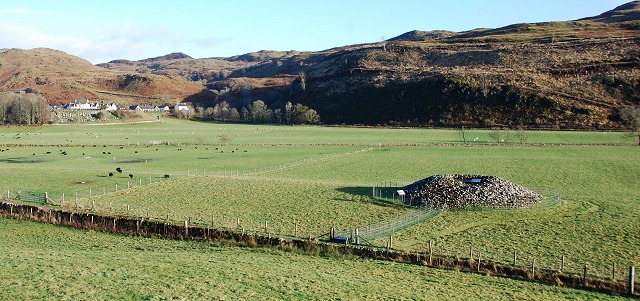
Photo: Patrick Mackie / Wikimedia Commons / CC BY-SA 2.0 Nether Largie North cairn, Kilmartin Glen
Stands nearby in the same prehistoric landscape and was entirely dismantled and rebuilt during excavation in 1930.
-
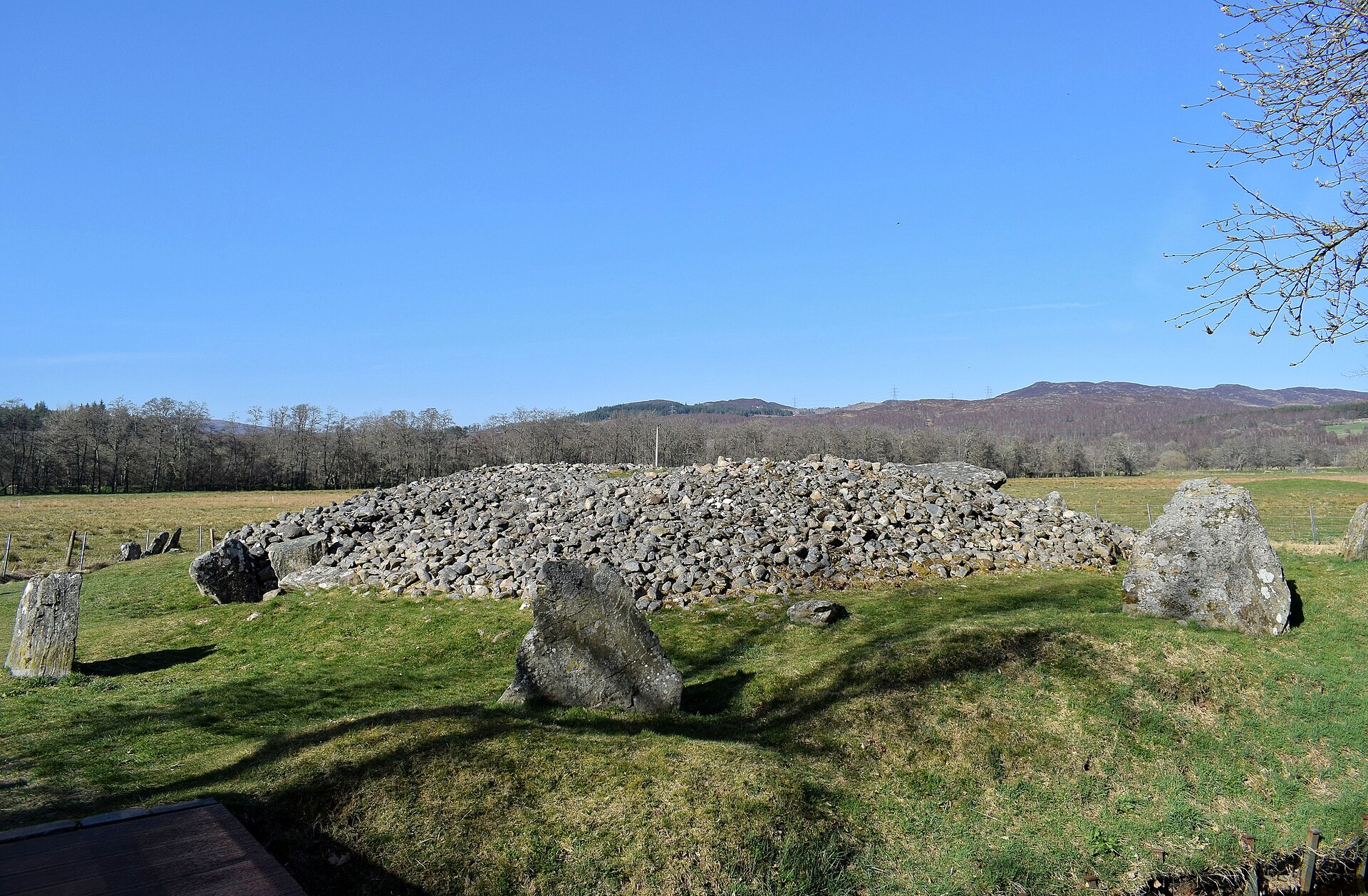
Photo: Bill Harrison / Wikimedia Commons / CC BY-SA 2.0 Corrimony chambered cairn, near Drumnadrochit
A comparable Bronze Age cairn of around 2000 BC or older, illustrating the same period's shift toward burying individuals rather than whole communities.
-
Balnuaran of Clava cairns, near Inverness
Bronze Age cairns of similar date whose surrounding stone circles and single-body burials reflect the same era's move away from communal chambered cairns toward individual graves like those in Glebe Cairn.
Discovery & excavation
Glebe Cairn was opened by excavation during the 19th century, when investigators found two stone cists inside the mound. One of the cists contained a jet necklace, one of the few personal grave goods recorded from the site.
What to look for
-
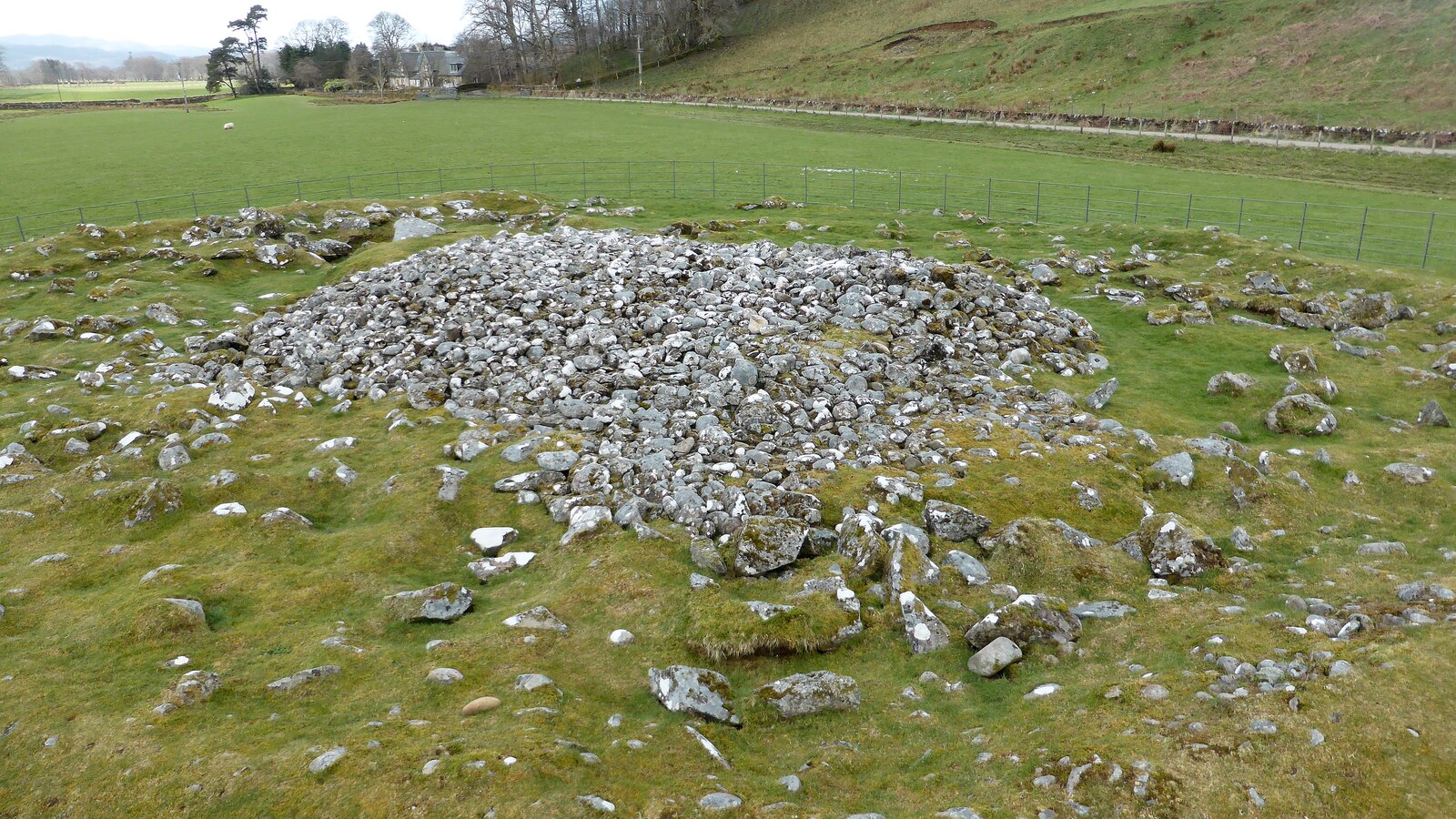
The cairn mound
The monument survives as a mound of stones in Kilmartin Glen, the enduring outward form of what was originally a Bronze Age burial structure.
-
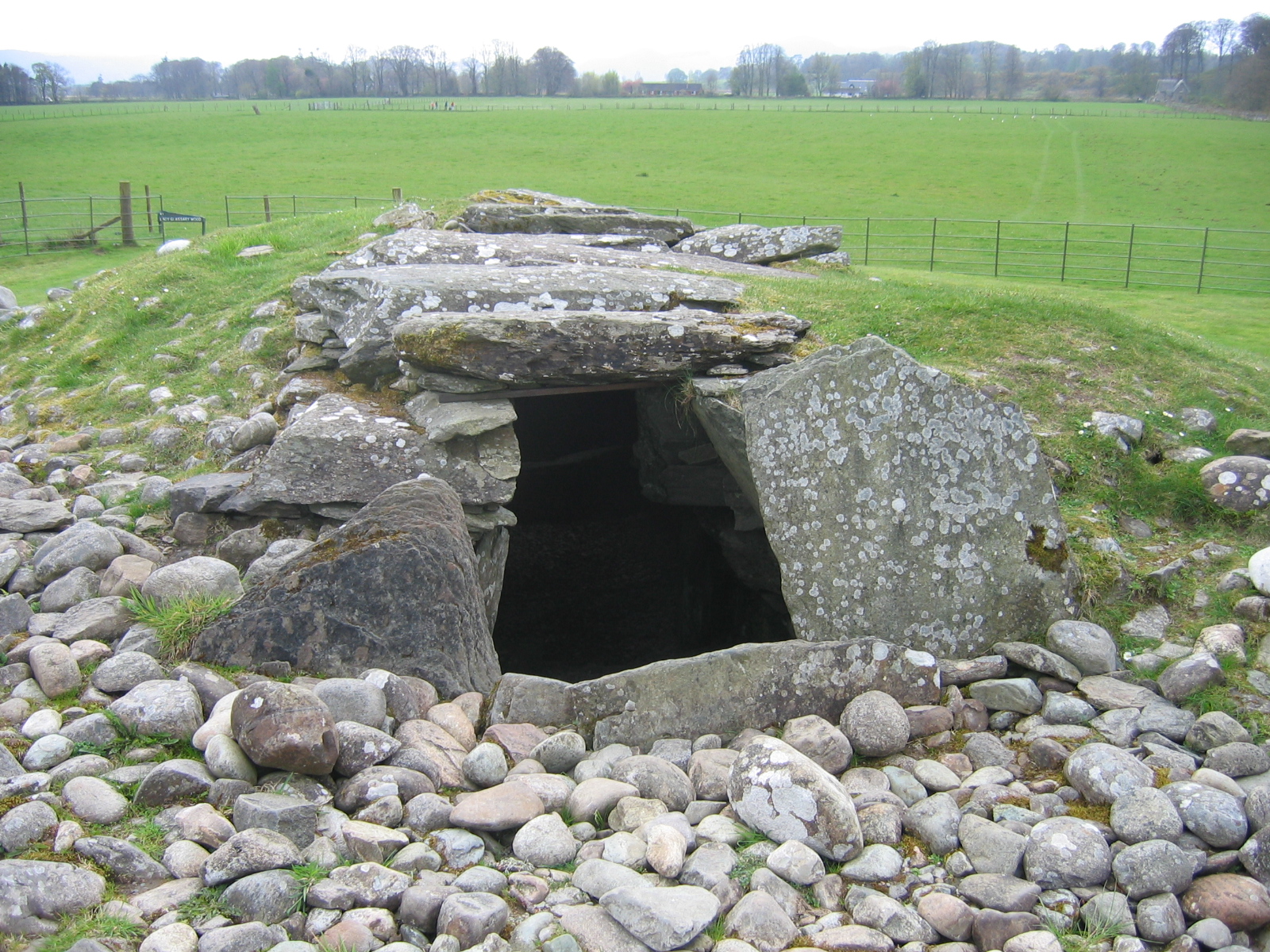
The paired stone cists
Inside the cairn are two stone cists — box-like burial compartments built from upright slabs — one of which produced the jet necklace found during 19th-century excavation.
Plan your visit
- Location
- 56.1338°N · 5.4889°W
- Nearest settlement
- Kilmartin
- Access
- Open access
- Terrain
- Easy going
- Time needed
- About 30 minutes
- Best time
- Daylight, when the cairn and the wider concentration of Kilmartin Glen monuments can be explored together.
- What survives
- A surviving cairn mound containing two stone cists, within the well-preserved prehistoric landscape of Kilmartin Glen.
- Facilities
- Facilities are available in Kilmartin; none are recorded at the cairn itself.
Opening & admission
No admission charge is recorded; check for any current signage or local guidance before visiting.
- Located in Kilmartin Glen among numerous other prehistoric monuments
Nearby places
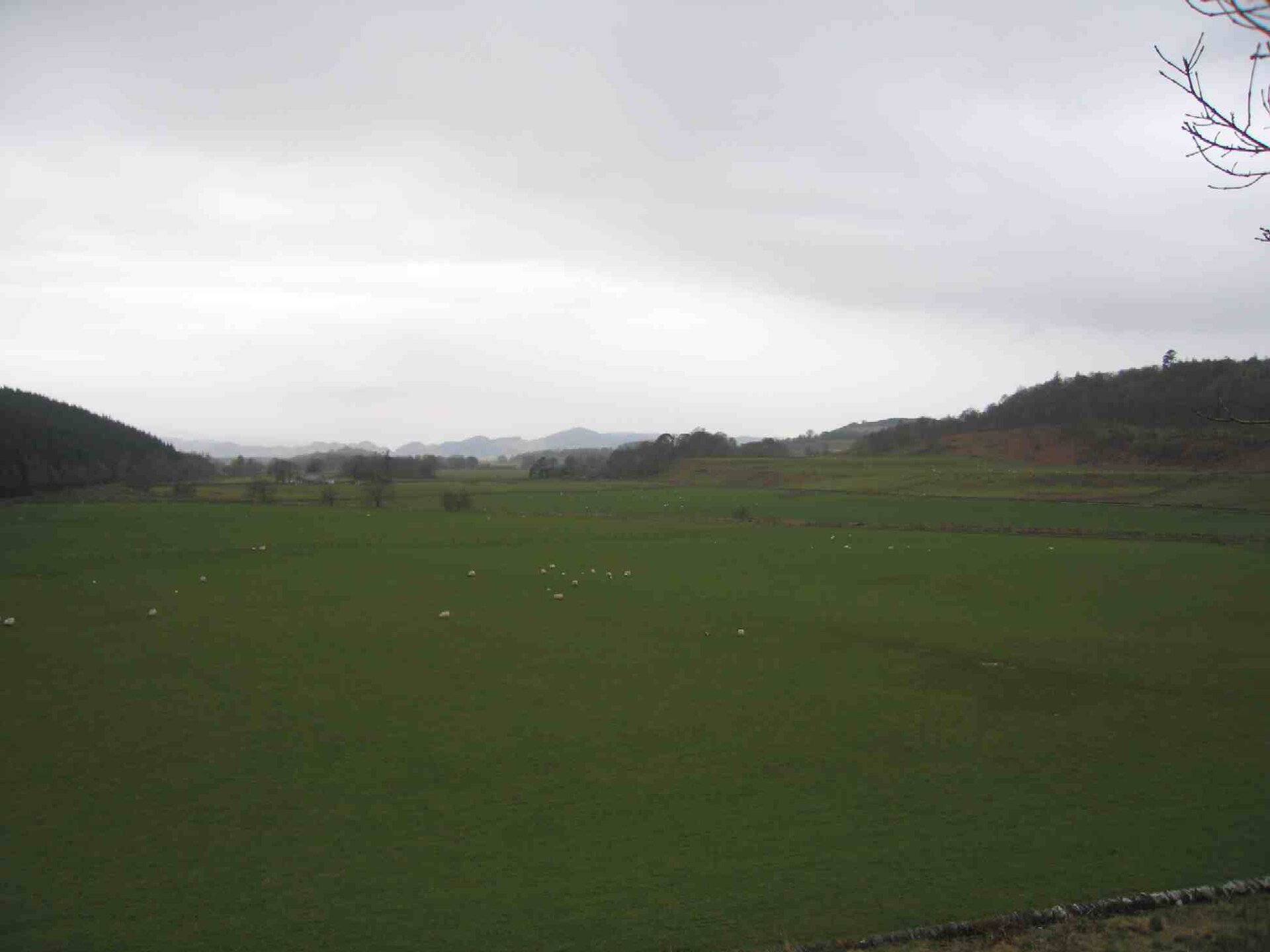
Sacred place · Medieval
Kilmartin Glen
Argyll and Bute
Within a six-mile radius of the village of Kilmartin, in Argyll north of Knapdale, stand more than 800 ancient monuments, of which some 150 date fr…
- Easy path
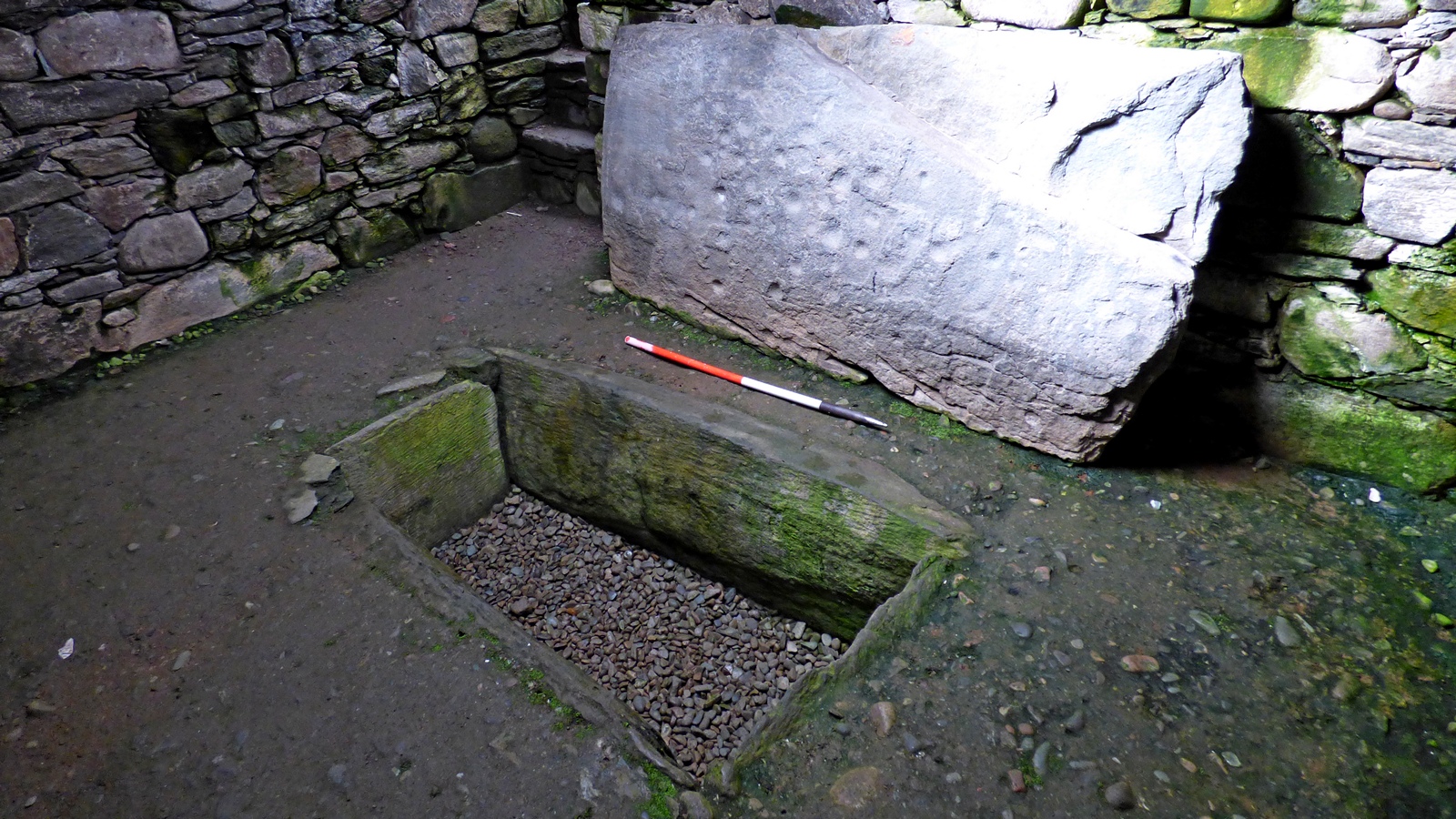
Tomb or burial place · Prehistoric
Nether Largie North Cairn
Argyll and Bute
The mound standing here today is not undisturbed ancient masonry: it is a 1930 reconstruction, a fact that changes what a visitor is actually looki…
- Near Kilmartin
- Easy path
Tomb or burial place · Prehistoric
Nether Largie Mid Cairn
Argyll and Bute
Two burial cists inside still carry carved cup marks and a rare axehead symbol, evidence that survived even after most of the cairn (a mound of pil…
- Near Kilmartin
- Easy path
Tomb or burial place · Prehistoric
Nether Largie South Chambered Cairn
Argyll and Bute
Nether Largie South is a Neolithic Clyde-type chambered cairn, a mound of piled stones often covering a burial, and the earliest monument in the Ki…
- Near Kilmartin
- 7 min walk from car park
- Easy path
Questions people ask
- What is Glebe Cairn?
- A Bronze Age chambered cairn in Kilmartin Glen, Argyll, built around 1700 BC and containing two stone cists, or slab-built burial compartments.
- What was found inside it?
- A jet necklace was discovered in one of its two stone cists during 19th-century excavation.
- How old is Glebe Cairn?
- It dates to around 1700 BC, placing it in the Bronze Age rather than the earlier Neolithic chambered cairn tradition.
- Is Glebe Cairn part of a wider site?
- Yes. It stands within Kilmartin Glen, one of Scotland's densest concentrations of prehistoric monuments, near the excavated Nether Largie North cairn.
- What is a stone cist?
- A cist is a small, box-like burial container built from upright stone slabs, generally holding a single burial rather than a large communal chamber.
Sources
- Wikipedia: Chambered cairn
- Barclay, Gordon — Farmers, Temples and Tombs: Scotland in the Neolithic and Early Bronze Age (2005)
Explore more: Tomb or burial places · Prehistoric · Argyll and Bute
The Ancient Codex, in your pocket
Get the Pocket Codex app
Carry the directory with you — Glebe Cairn and thousands of ancient places across Britain and Ireland, offline, wherever you roam.