
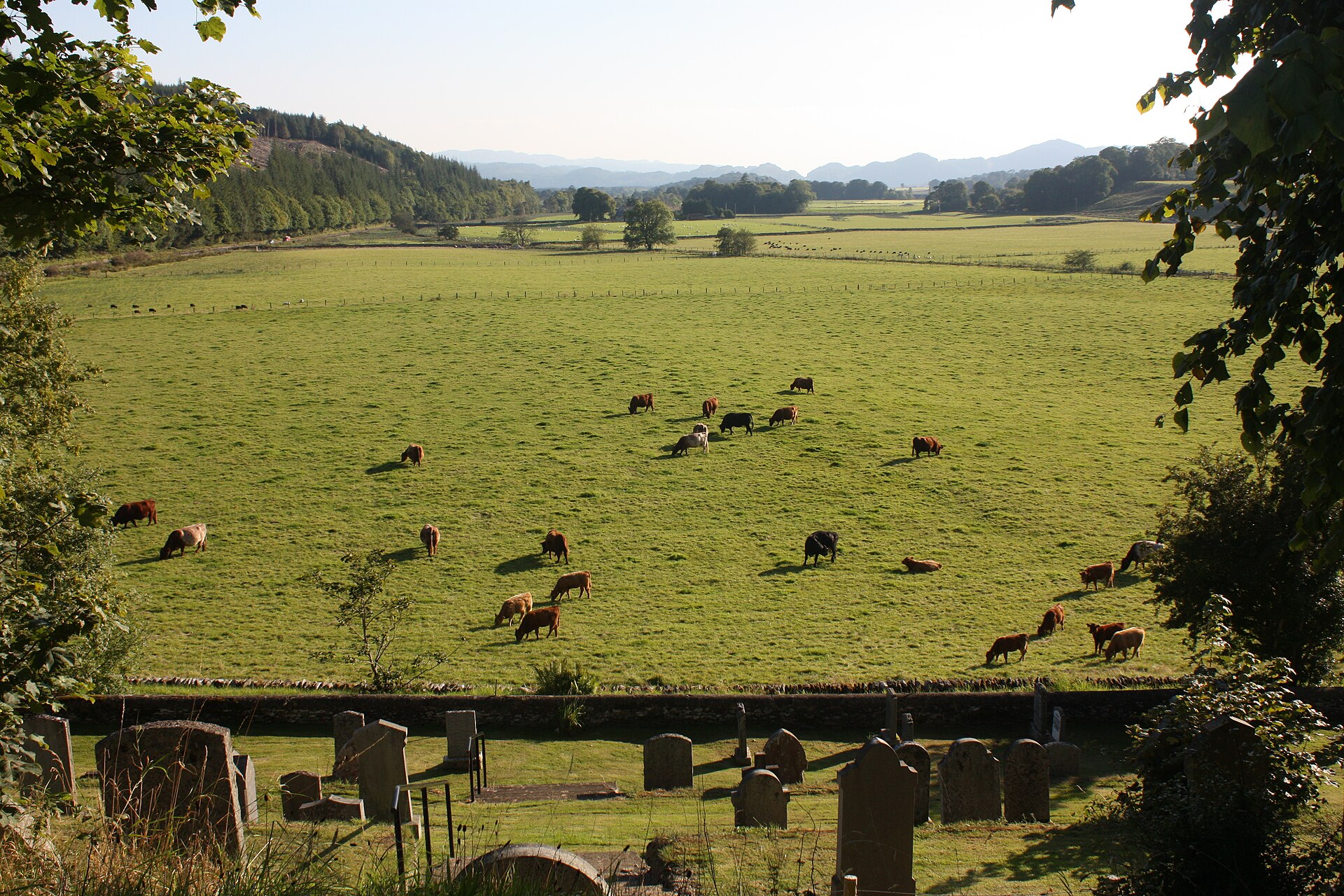
Within a six-mile radius of the village of Kilmartin, in Argyll north of Knapdale, stand more than 800 ancient monuments, of which some 150 date from from the era before writing arrived in these islands. The concentration of late Stone Age remains, about 4000–2500 BC in Britain, and Bronze Age remains — roughly 2500–800 BC, when metal tools first spread — is the most important in mainland Scotland. It includes standing stones, a henge — a bank and ditch enclosing a circular space, with the ditch inside the bank — numerous cists and a "linear cemetery" of five burial cairns, many of them decorated with cup and ring marks.
Five burial cairns form Kilmartin Glen’s linear cemetery, one part of a landscape containing more than 800 recorded monuments within six miles of the village. Standing stones, a henge, cists and cup-and-ring-marked stones extend through the glen, where late Stone Age remains, dated in Britain to about 4000–2500 BC, and Bronze Age remains sit beside later evidence from Dunadd and the medieval church.
The most visible feature is the linear arrangement of cairns running more than three miles south-by-southwest of the village. To the south, on the edge of the Moine Mhòr (“Great Moss”), lie the remains at Dunadd of the fortress of the Scots, a royal centre of Dál Riata. Kilmartin Museum, in the village itself, interprets and conserves the archaeological landscape, its artefacts and natural heritage.
What follows is drawn from published sources, with each claim labelled by how firmly it is established.
History
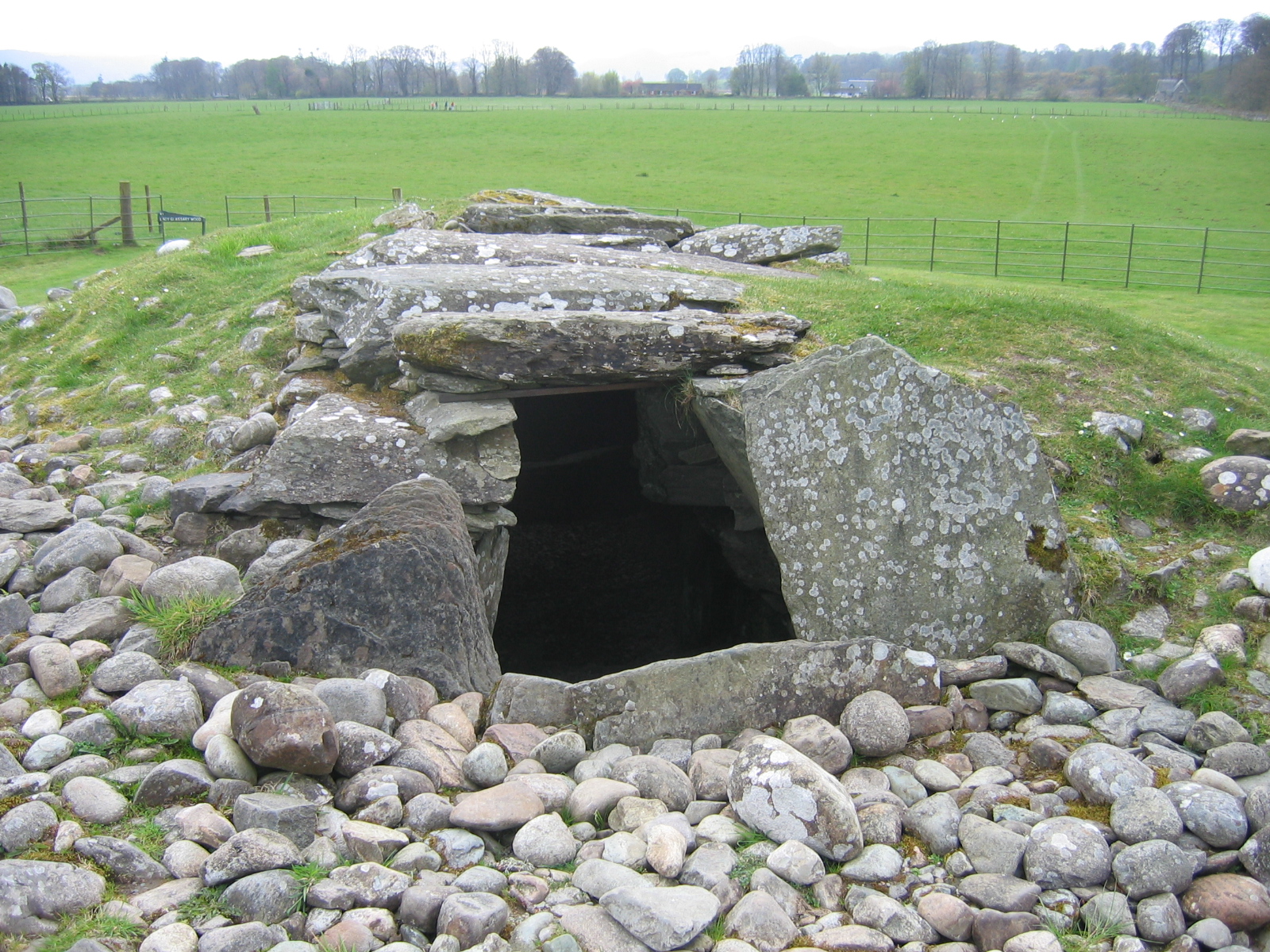
Nether Largie South, the oldest monument of the linear cemetery, is a Neolithic chambered cairn of the Clyde type probably dating from the fourth millennium BC. Ri Cruin Cairn, the most southerly in the linear cemetery, was built between 2200 BC and 1950 BC and was more recently used as a lime kiln, all traces of which were removed following a reconstruction of the site.
Glebe Cairn was excavated in 1864 by the antiquary Canon William Greenwell, who found two concentric stone circles beneath the stones and two central cist burials. Excavators reached Nether Largie Mid Cairn in 1929, after roadbuilding had taken much of its stone. In May 2021 archaeologists announced the discovery of prehistoric deer carvings inside Dunchraigaig Cairn, thought to date to the Neolithic or Early Bronze Age and the first of their kind found in Scotland.
People
-
Canon William Greenwell
Antiquary who excavated Glebe Cairn in 1864, recovering a jet necklace and a decorated bowl from its central cists.
-
V. Gordon Childe
Conducted one of the three excavations at Ri Cruin Cairn, in 1936.
-
Alexander Thom
Toured the Nether Largie standing stones with Magnus Magnusson in 1970 and argued the site was a lunar observatory for predicting eclipses.
-
Jon Patrick
Reassessed Thom's lunar-observatory hypothesis in 1979, doubting the stones were deliberately orientated on astronomical phenomena.
Cultural influences
-
Concentration of rock art
The glen holds a remarkable concentration of some of the most impressive cup and ring decorated rock surfaces in Scotland, found on natural rock at Achnabreck, Cairnbaan, Ballygowan and Baluachraig near Kilmichael Glassary.
-
The linear cemetery
Five surviving cairns run in a line over three miles south-by-southwest of the village; cropmarks and other traces suggest there may originally have been more, spanning Stone Age to Bronze Age construction.
Connections
-
Dunadd
The fortress of the Scots and a royal centre of Dál Riata, on the edge of the Moine Mhòr to the south of the glen.
-
Kilmartin Museum
Located in the village, it interprets and conserves the archaeological landscape and its artefacts.
-
Bruach An Druimein
A site two kilometres south of Kilmartin where medieval glass beads with chemical compositions similar to finds at Dunadd suggest an association with Dunadd.
Discovery & excavation
Excavations at the glen’s cairns began with Canon William Greenwell at Glebe Cairn in 1864 and continued at sites including Nether Largie Mid and Ri Cruin. In 2021, archaeologists announced prehistoric deer carvings at Dunchraigaig Cairn.
In culture
-
Chronicle: Cracking the Stone Age Code
Alexander Thom toured the Nether Largie standing stones with Magnus Magnusson in 1970 for a BBC television documentary in which he called the site one of the most important, if not the most important, in Britain.
-
Half Life
In 2007 Kilmartin Glen was the setting for Half Life, a piece of landscape art and performance created by the Scottish theatre company NVA in collaboration with the National Theatre of Scotland.
What to look for
-
Nether Largie South chamber
A Clyde-type chambered cairn whose internal chamber, subdivided into four by floor slabs, is over 6m long, around 1.7m high and up to 1.8m wide, now exposed though once encased within the cairn.
-
Axehead carving at Nether Largie Mid
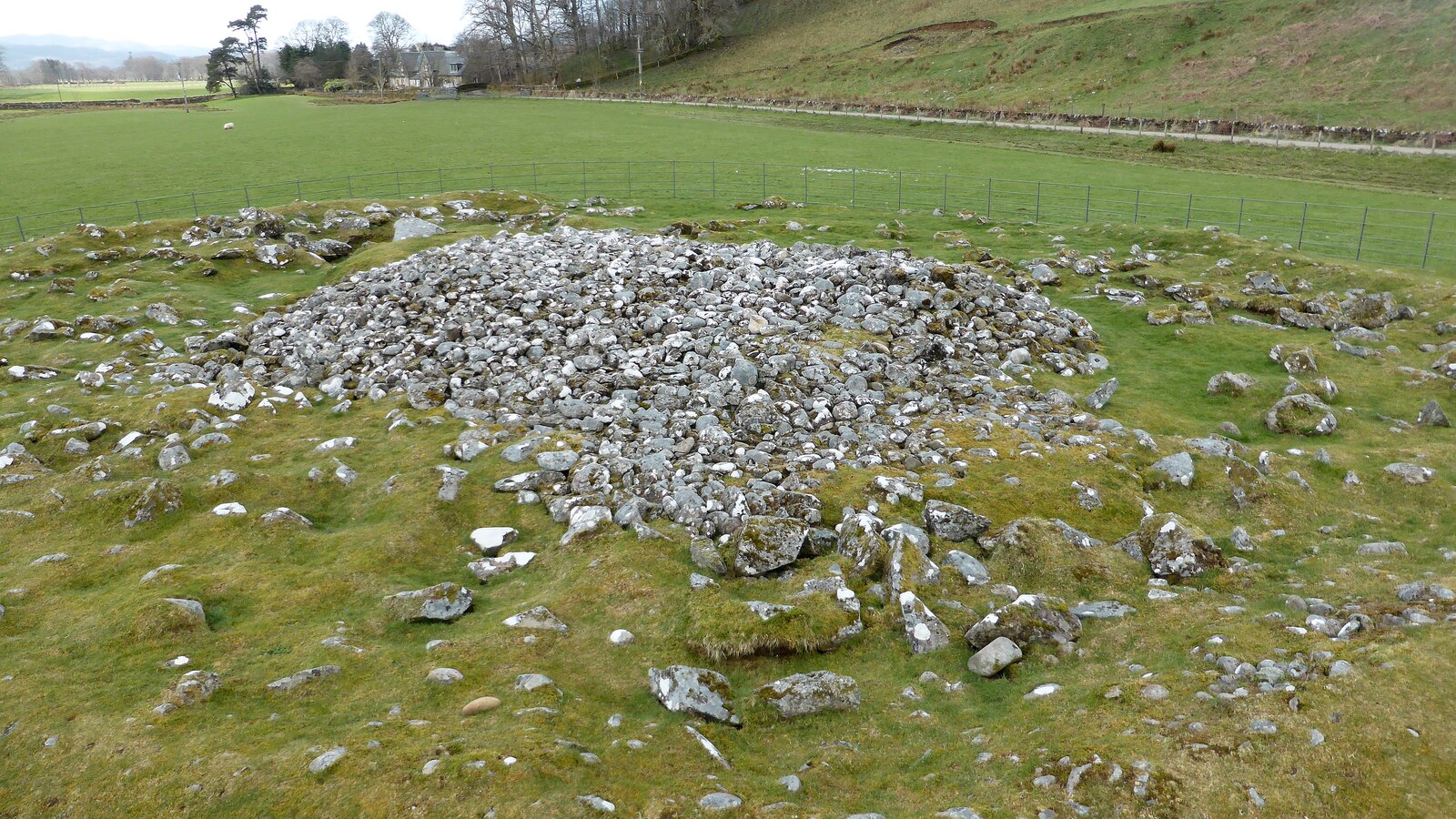
Cup marks and a carving of an axehead can be seen on the southern cist of Nether Largie Mid Cairn, whose kerbstones still mark its former boundary.
-
Nether Largie standing stones
Four menhirs arranged in pairs about 70 metres apart with a single central menhir, ringed by seven smaller stones and one fallen stone, with a further menhir a hundred metres to the northwest.
-
Dunchraigaig deer carvings
Prehistoric carvings inside Dunchraigaig Cairn depicting two male red deer with full-grown forked horns, the largest deer species in Scotland at the time.
What is said
Folklore and tradition, recorded as what is said — not as established fact.
-
The King's burial place
Ri Cruin Cairn is believed locally to be the possible burial place of a King. (legend)
Plan your visit
- Location
- 56.1336°N · 5.4869°W
- Access
- Open access
- Terrain
- Easy going
- Time needed
- About 180 minutes
- Best time
- During daylight hours, allowing time to travel between the monuments spread across the glen.
- What survives
- The monuments are outdoor sites in the landscape, spread across roughly a six-mile radius around Kilmartin village.
- Facilities
- Kilmartin Museum in the village offers interpretation of the wider archaeological landscape.
Opening & admission
The monuments are outdoor sites freely accessible in the landscape; check the Kilmartin Museum website for current visitor information.
- Sites are spread across a roughly six-mile radius around Kilmartin village and are best explored on foot between locations
- Kilmartin Museum in the village offers interpretation of the wider archaeological landscape
Nearby places
Tomb or burial place · Prehistoric
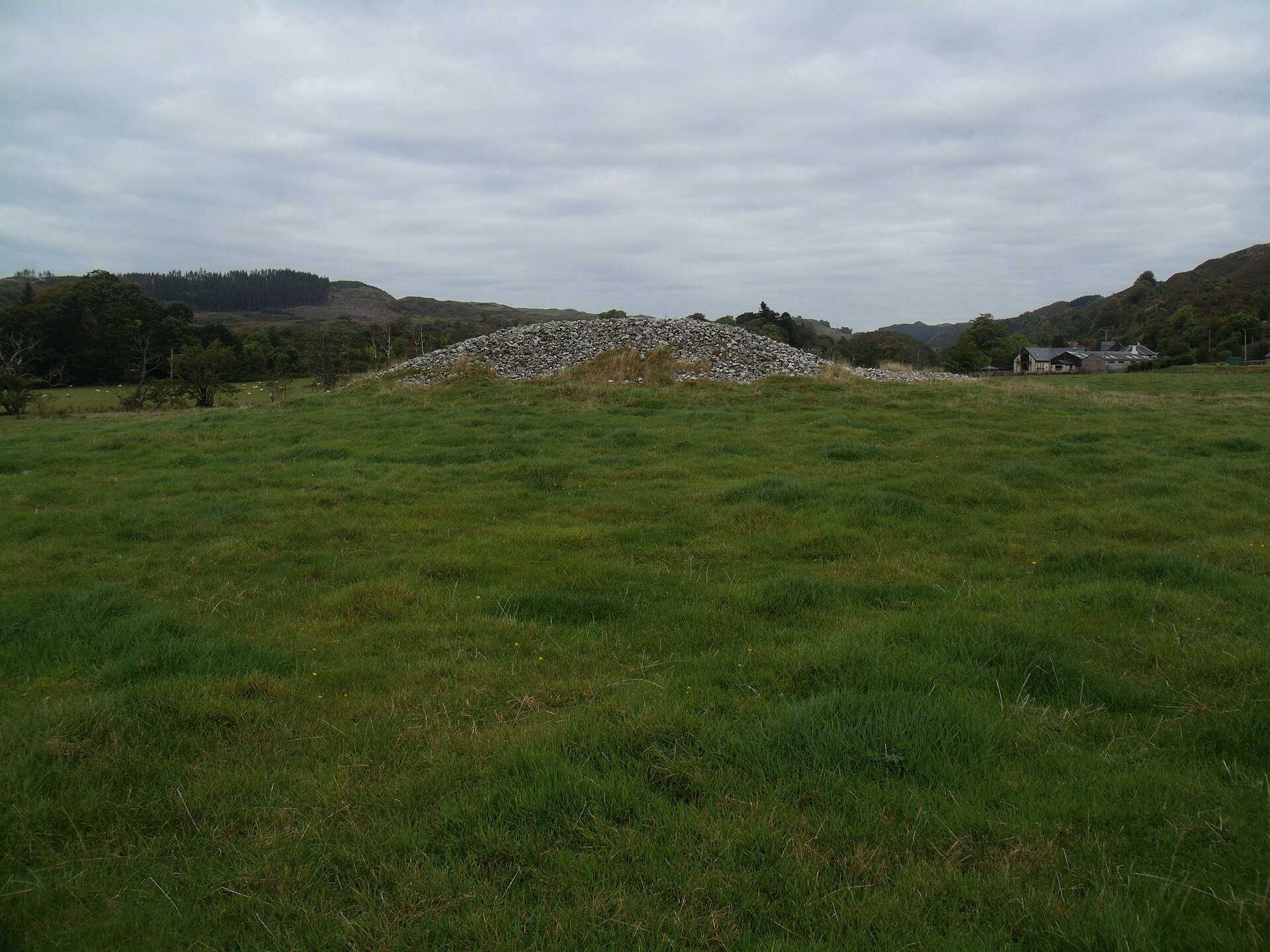
Glebe Cairn
Argyll and Bute
A jet necklace recovered from one of its two Bronze Age (roughly 2500–800 BC) stone cists is a rare surviving trace of the personal ornaments burie…
- Near Kilmartin
- Easy path
Tomb or burial place · Prehistoric
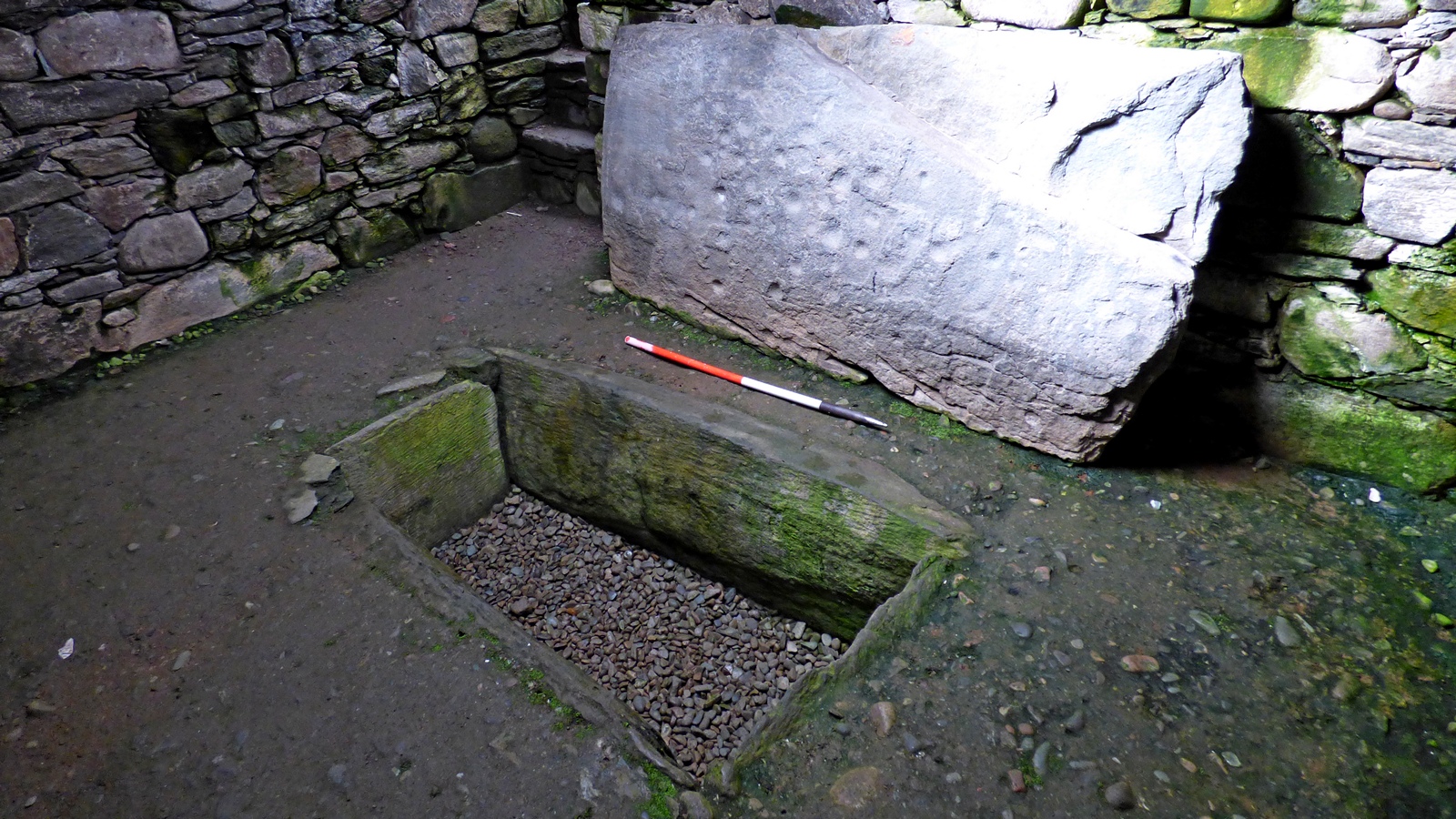
Nether Largie North Cairn
Argyll and Bute
The mound standing here today is not undisturbed ancient masonry: it is a 1930 reconstruction, a fact that changes what a visitor is actually looki…
- Near Kilmartin
- Easy path
Tomb or burial place · Prehistoric
Nether Largie Mid Cairn
Argyll and Bute
Two burial cists inside still carry carved cup marks and a rare axehead symbol, evidence that survived even after most of the cairn (a mound of pil…
- Near Kilmartin
- Easy path
Tomb or burial place · Prehistoric
Nether Largie South Chambered Cairn
Argyll and Bute
Nether Largie South is a Neolithic Clyde-type chambered cairn, a mound of piled stones often covering a burial, and the earliest monument in the Ki…
- Near Kilmartin
- 7 min walk from car park
- Easy path
Questions people ask
- How many ancient monuments are there at Kilmartin Glen?
- There are more than 800 ancient monuments within a six-mile radius of Kilmartin village, of which about 150 are prehistoric, including standing stones, a henge, numerous cists and five burial cairns.
- What is the linear cemetery?
- It is a linear arrangement of five surviving burial cairns running over three miles south-by-southwest of Kilmartin village. Most are of Bronze Age origin, the exception being Nether Largie South, a Stone Age chambered cairn rebuilt in the Bronze Age.
- What are the cup and ring marks?
- They are carvings found on natural rock surfaces at sites such as Achnabreck, Cairnbaan, Ballygowan and Baluachraig; their purpose and precise date remain uncertain.
- What was discovered at Dunchraigaig Cairn in 2021?
- In May 2021 archaeologists announced prehistoric deer carvings inside Dunchraigaig Cairn, dated to the Neolithic or Early Bronze Age and the first carvings of their kind found in Scotland, depicting two male red deer with forked horns.
- Where can visitors learn about the glen?
- Kilmartin Museum, in the village of Kilmartin itself, interprets, explains and conserves the archaeological landscape, its artefacts and natural heritage.
Sources
- Wikipedia: Kilmartin Glen (accessed 2026-07-18)
- Kilmartin Museum (accessed 2026-07-18)
- BBC Archive – Chronicle: Cracking the Stone Age Code (accessed 2026-07-18)
- Wikidata
Explore more: Sacred places · Medieval · Argyll and Bute
The Ancient Codex, in your pocket
Get the Pocket Codex app
Carry the directory with you — Kilmartin Glen and thousands of ancient places across Britain and Ireland, offline, wherever you roam.