
The mound standing here today is not undisturbed ancient masonry — it is a 1930 reconstruction, a fact that changes what a visitor is actually looking at.
The rebuilt stones of Nether Largie North form a twentieth-century reassembly rather than untouched ancient fabric. Workmen dismantled the cairn — a mound of piled stones, often covering a burial — in 1930, recorded its contents and reconstructed the mound in Kilmartin Glen.
The cairn belongs to a tradition of stone-built burial monuments, known as chambered cairns, in which a stone chamber holding the dead was covered over by a mound of piled stones. Early examples across Scotland served as shared graveyards for whole communities, but by the Bronze Age the pattern was shifting toward burials of prominent individuals rather than entire settlements, and the monuments in this part of Argyll reflect that later, more individualised phase.
It does not stand alone. Kilmartin Glen holds one of the densest concentrations of prehistoric monuments in Scotland, and Nether Largie North cairn is counted among the numerous cairns, cists and standing stones recorded in the immediate vicinity, including the nearby Glebe cairn.
What follows is drawn from published sources, with each claim labelled by how firmly it is established.
History
By the Bronze Age, chambered cairns across Scotland had increasingly become the burial places of prominent individuals rather than whole communities, a shift already under way in the late Neolithic when single burials began to replace collective interments. Nether Largie North cairn belongs to this later tradition, standing among a dense cluster of prehistoric monuments in Kilmartin Glen, Argyll.
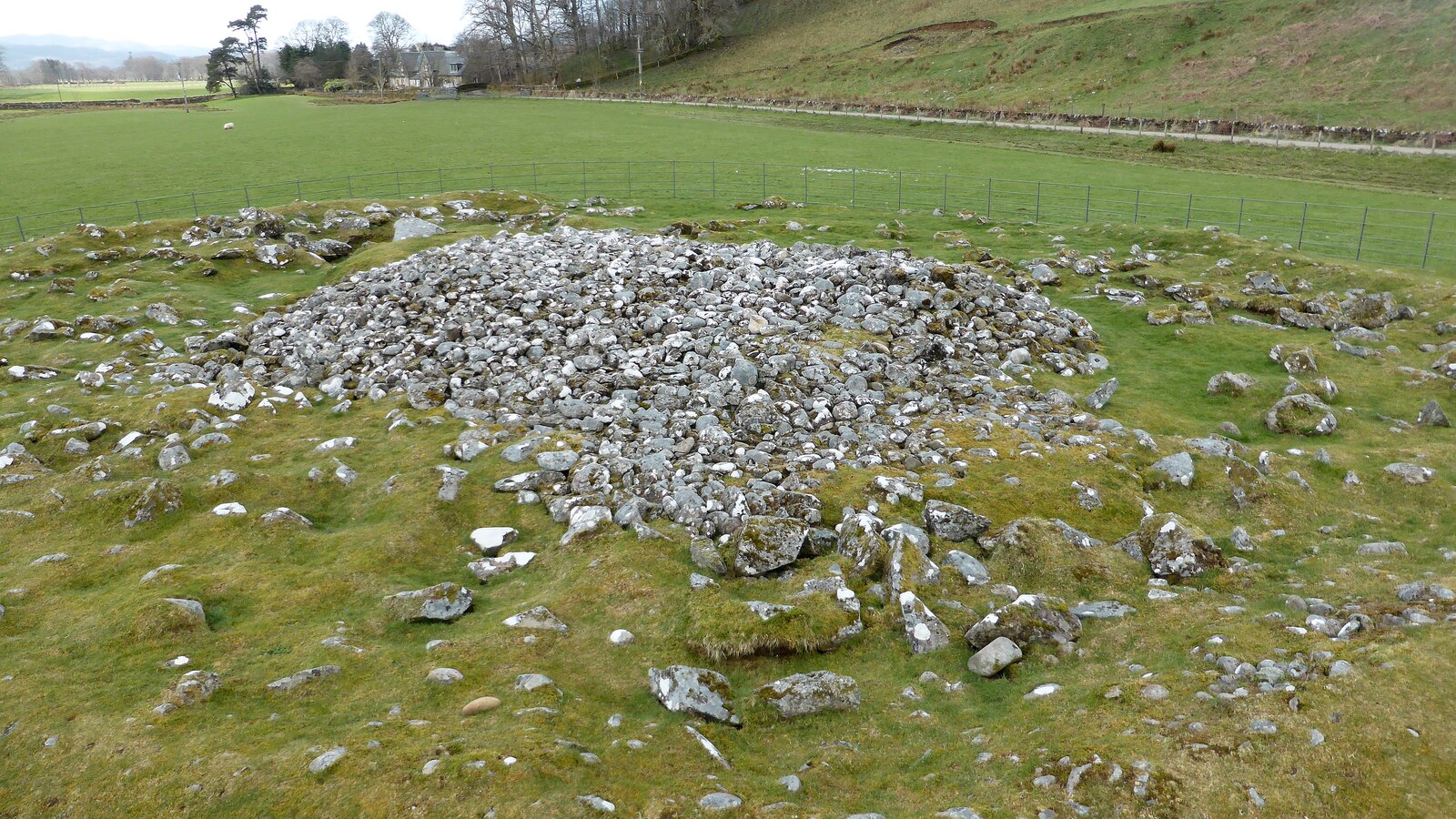
Nearby, Glebe cairn, dated to around 1700 BC, held two stone cists, one of which contained a jet necklace recovered during nineteenth-century excavations — physical evidence of the personal ornaments buried with individuals during this later, more individualised phase of cairn-building in the glen. In 1930, archaeologists excavated Nether Largie North cairn and, in the course of that work, dismantled it entirely before rebuilding it. The intervention means that the monument encountered today is a twentieth-century reconstruction of the original structure rather than an untouched ancient fabric.
Chambered cairns of this kind typically served as the shared burial ground of a nearby settlement, holding the remains of many individuals over long periods rather than a single burial event. That communal pattern makes the numerous prehistoric monuments surrounding Nether Largie North — cairns, cists and standing stones across Kilmartin Glen — part of a wider funerary landscape rather than an isolated structure.
Cultural influences
-
Kilmartin Glen funerary landscape
The cairn’s meaning is shaped by its place within the closely grouped prehistoric monuments of Kilmartin Glen.
Connections
-
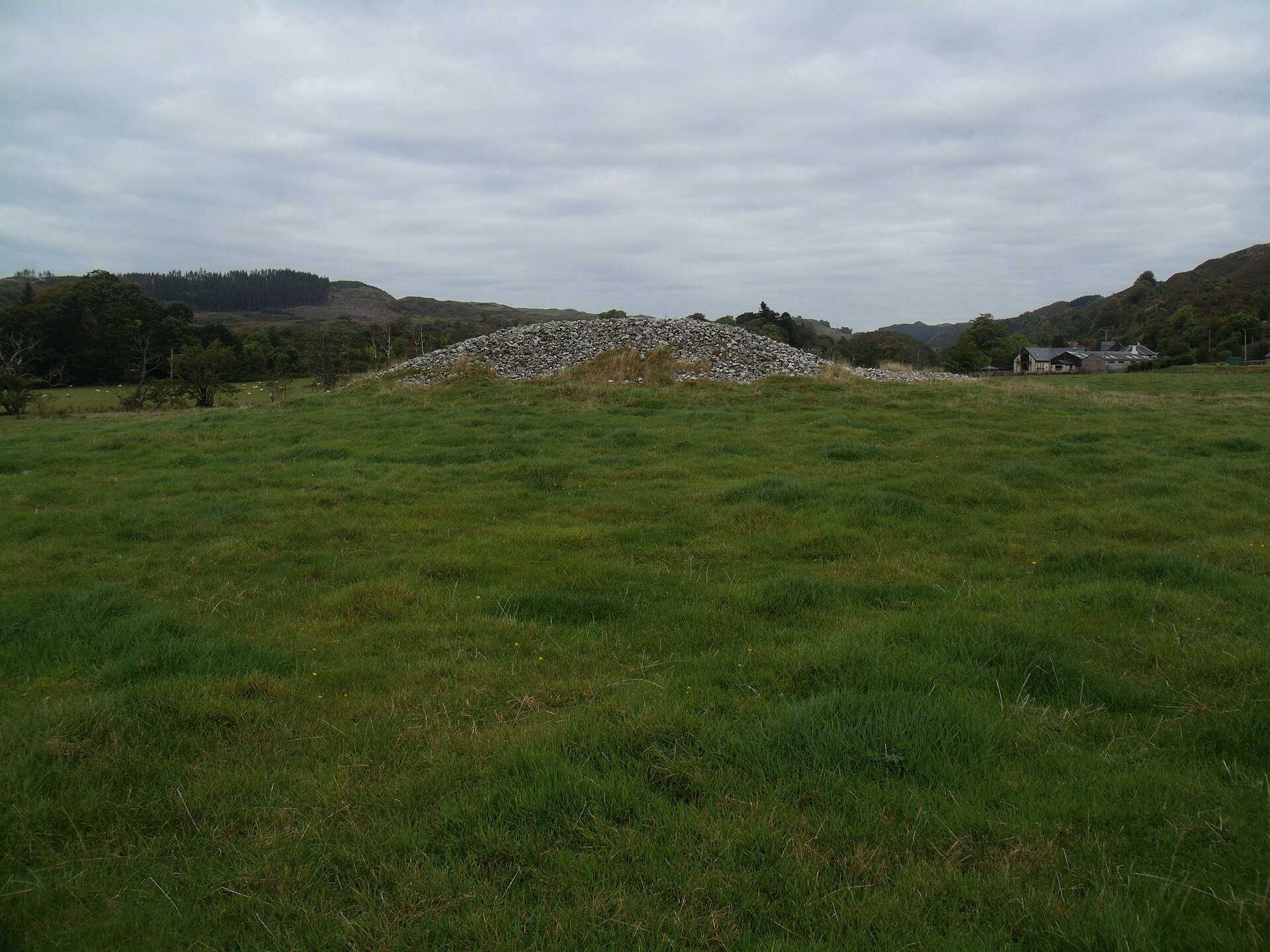
Photo: Euan Nelson / Wikimedia Commons / CC BY-SA 2.0 A nearby Bronze Age cairn in the same Kilmartin Glen group, dated to about 1700 BC, which contained two stone cists, one holding a jet necklace found in nineteenth-century excavations.
-
Kilmartin Glen prehistoric landscape
Nether Largie North cairn is one of the numerous prehistoric monuments recorded in this immediate vicinity, situating it within a wider funerary and ceremonial landscape.
Discovery & excavation
The cairn was excavated in 1930, at which point it was entirely removed and rebuilt — a level of intervention recorded in the archaeological literature on Scotland's chambered cairns.
What to look for
-
A twentieth-century reconstruction
The mound and stonework visible today were rebuilt following the 1930 excavation, when the cairn was taken down completely and then reassembled rather than left as originally found.
Plan your visit
- Location
- 56.1295°N · 5.4918°W
- Nearest settlement
- Kilmartin
- Access
- Open access
- Terrain
- Easy going
- Time needed
- About 30 minutes
- Best time
- Daylight, when the cairn can be understood alongside the other monuments in Kilmartin Glen.
- What survives
- A prehistoric cairn within the surviving monument group of Kilmartin Glen.
- Facilities
- Facilities are available in Kilmartin; none are recorded at the cairn itself.
Opening & admission
No current admission details are recorded — check the managing body's site before travelling.
Nearby places
Tomb or burial place · Prehistoric
Nether Largie Mid Cairn
Argyll and Bute
Two burial cists inside still carry carved cup marks and a rare axehead symbol, evidence that survived even after most of the cairn (a mound of pil…
- Near Kilmartin
- Easy path
Tomb or burial place · Prehistoric
Glebe Cairn
Argyll and Bute
A jet necklace recovered from one of its two Bronze Age (roughly 2500–800 BC) stone cists is a rare surviving trace of the personal ornaments burie…
- Near Kilmartin
- Easy path
Sacred place · Medieval
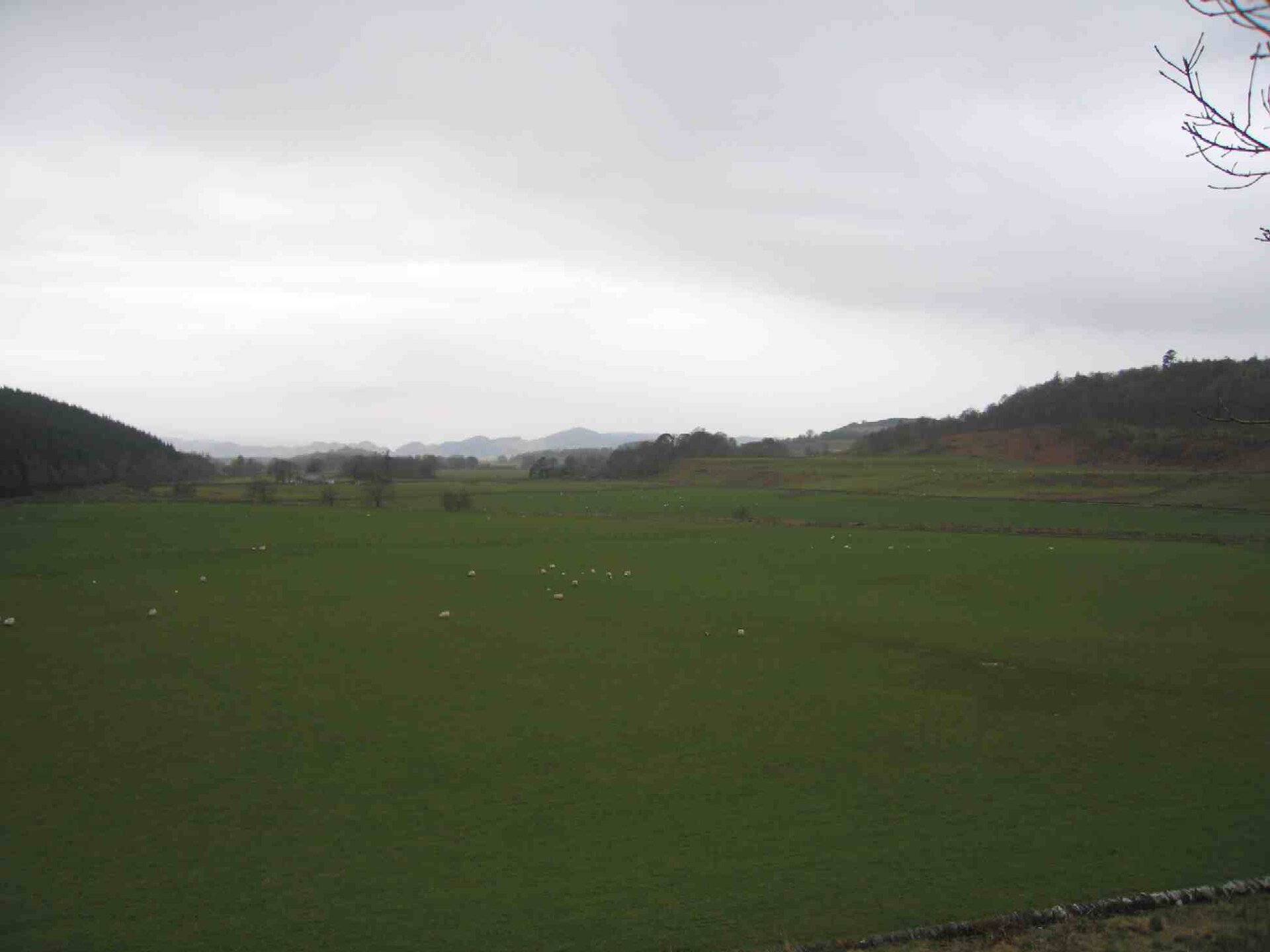
Kilmartin Glen
Argyll and Bute
Within a six-mile radius of the village of Kilmartin, in Argyll north of Knapdale, stand more than 800 ancient monuments, of which some 150 date fr…
- Easy path
Tomb or burial place · Prehistoric
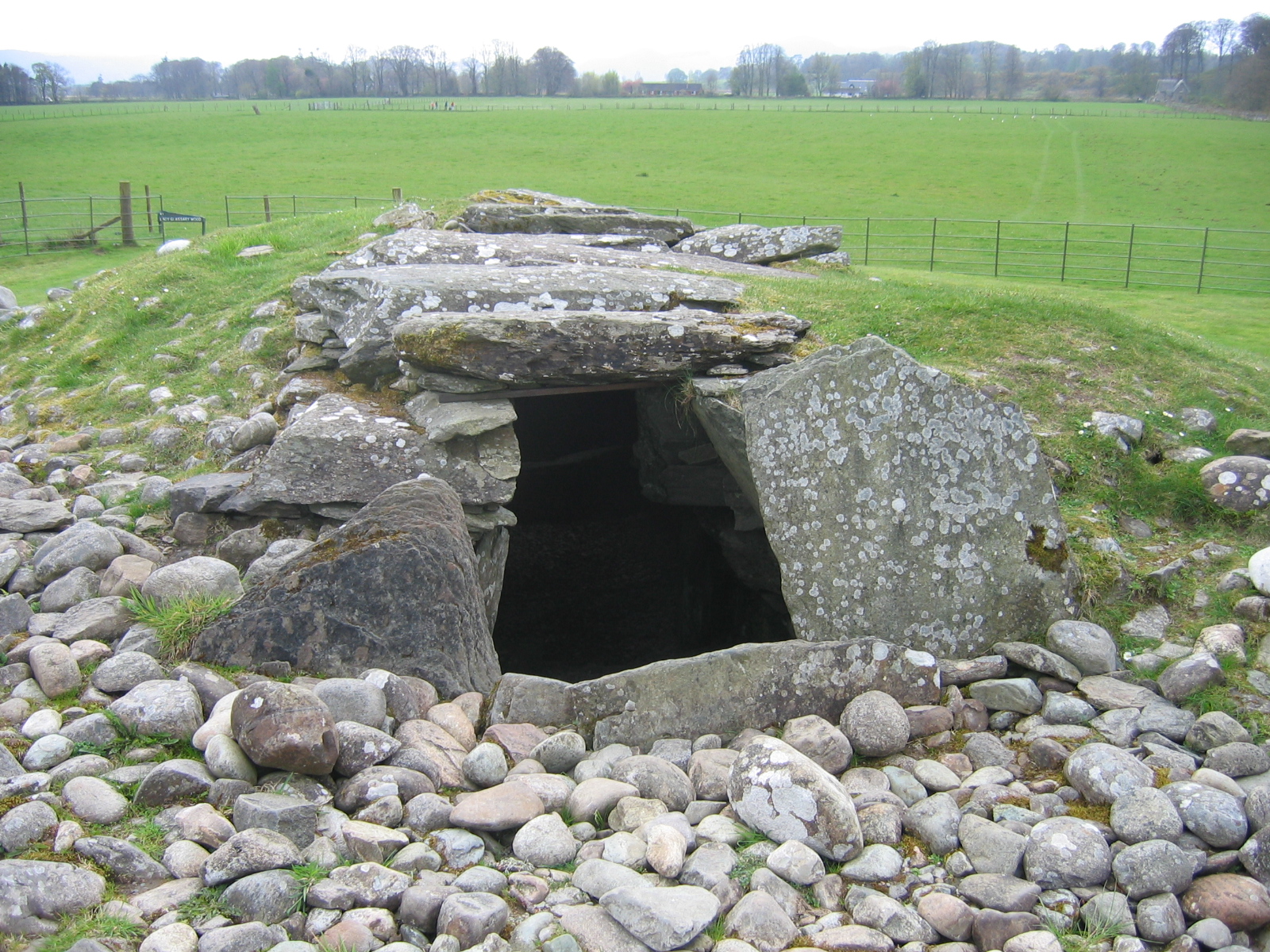
Nether Largie South Chambered Cairn
Argyll and Bute
Nether Largie South is a Neolithic Clyde-type chambered cairn, a mound of piled stones often covering a burial, and the earliest monument in the Ki…
- Near Kilmartin
- 7 min walk from car park
- Easy path
Questions people ask
- What is Nether Largie North Cairn?
- A prehistoric burial cairn in Kilmartin Glen, Argyll, one of numerous Bronze Age monuments in the area alongside the nearby Glebe cairn.
- Is the cairn seen today original?
- No. Excavations in 1930 removed the cairn entirely and rebuilt it, so the monument on site is a reconstruction rather than untouched ancient fabric.
- What is a chambered cairn?
- A prehistoric burial monument with a stone chamber covered by a mound of stones, typically used for repeated burials by a community.
- What else is nearby?
- Glebe cairn, dated to about 1700 BC, lies nearby in Kilmartin Glen and yielded a jet necklace from one of its two stone cists.
- When was the cairn excavated?
- In 1930, when it was dismantled entirely and then rebuilt, an intervention documented in the archaeological record for Scottish chambered cairns.
Sources
- Wikipedia: Chambered cairn
- Barclay, Gordon — Farmers, Temples and Tombs: Scotland in the Neolithic and Early Bronze Age (Birlinn/Historic Scotland, 2005)
Explore more: Tomb or burial places · Prehistoric · Argyll and Bute
The Ancient Codex, in your pocket
Get the Pocket Codex app
Carry the directory with you — Nether Largie North Cairn and thousands of ancient places across Britain and Ireland, offline, wherever you roam.