Nether Largie South is a Neolithic Clyde-type chambered cairn, a mound of piled stones often covering a burial, and the earliest monument in the Kilmartin Glen linear cemetery — the line of cairns running for nearly three miles down the glen. Its…
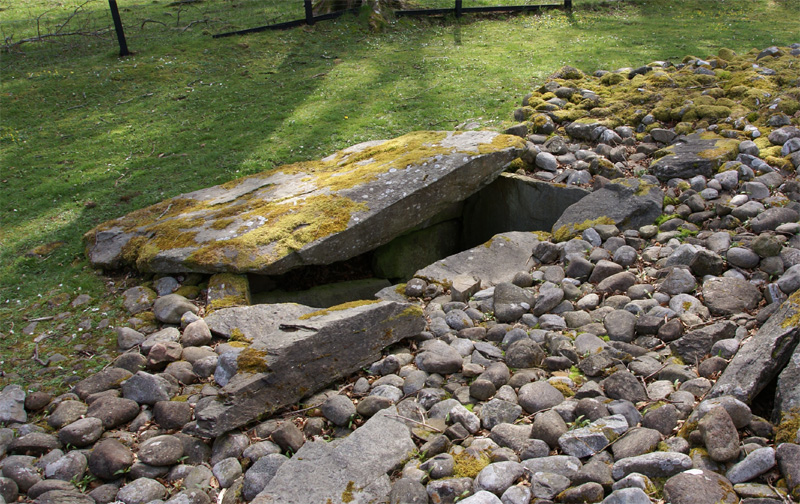
Two tall portal stones frame Nether Largie South’s entrance, with upright slabs dividing the roughly six-metre burial chamber into four compartments. The Neolithic Clyde-type cairn — a mound of piled stones often covering a burial — is the earliest monument in Kilmartin Glen’s linear cemetery.
What follows is drawn from published sources, with each claim labelled by how firmly it is established.
The name
'Nether Largie' pairs the English 'Nether' ('lower' — distinguishing it from Nether Largie Mid and North cairns) with 'Largie', from the Gaelic 'learg / leargaidh' meaning a sloping place or hillside. The name broadly denotes 'the lower hillside'.
History
Nether Largie South is a Neolithic Clyde-type chambered cairn and the earliest monument in the Kilmartin Glen linear cemetery — the line of cairns running for nearly three miles down the glen. Its rectangular burial chamber, entered between two tall portal stones at the north-east, is divided by upright slabs into four compartments and measures about 6.1 m long.
The chamber was excavated by William Greenwell in 1864, who recorded the cairn as already severely robbed (its stone taken for walls and drains) but originally perhaps 40 m across and over 4 m high. His careful record of the deposits — pebble pavements, layers of cremated bone, and a sequence of pottery — remains the principal evidence for how the tomb was used.
The finds span the Neolithic into the Bronze Age: a round-based Neolithic bowl and earlier deposits in the chamber, followed by Beaker sherds, a Food Vessel, cinerary-urn sherds and barbed-and-tanged arrowheads — evidence the tomb was reused and the cairn later enlarged to take secondary cist burials. This long sequence makes it a key site for the transition from communal Neolithic burial to individual Bronze Age burial.
People
-
William Greenwell
Excavated the chamber in 1864 and published the detailed account of its compartments, pavements and grave deposits
-
A. S. Henshall
Authority on Scottish chambered tombs (The Chambered Tombs of Scotland, 1972, ARG 23) whose analysis of the chamber's unusual end-slab bracing is still cited
-
J. H. Craw
Investigated sites on the Poltalloch Estates around Kilmartin (published 1930), part of the early-20th-century study of the glen
-
Royal Commission on the Ancient and Historical Monuments of Scotland (RCAHMS)
Re-surveyed and re-described the cairn (field visit 1981; Argyll inventory vol.6, 1988)
Cultural influences
-
As a Clyde-type (Clyde-Carlingford) chambered cairn — a form of gallery grave with a segmented rectangular chamber and no significant passage — Nether Largie South belongs to the earliest class of chambered cairns in Scotland, concentrated in the south-west.
-
Its layered deposits, where round-based Neolithic pottery is overlain by Beaker and Food Vessel material, exemplify the reuse of Neolithic communal tombs by later Bronze Age communities — a theme central to studies of memory and 'enduring images' in Bronze Age Scotland (Jones 2001).
Connections
-
Kilmartin Glen linear cairn cemetery
Nether Largie South sits at the centre of the line of cairns and is identified as its earliest monument
-
Nether Largie Mid and North Cairns
Its immediate neighbours in the cairn line; the three share the 'Nether Largie' name
-
Temple Wood Stone Circle and the Nether Largie standing stones
Adjacent components of the dense Kilmartin Glen ritual landscape
-
British Museum, London
Holds the surviving finds from Greenwell's 1864 excavation (Neolithic, Beaker and Food Vessel pottery, arrowheads and flints)
Discovery & excavation
The chamber was excavated by William Greenwell in 1864. Within its four compartments he recorded pebble 'pavements', dark earthy layers of cremated bone, a rifled internal cist with scattered Beaker sherds and unburnt bone, barbed-and-tanged arrowheads, broken quartz pebbles and a bovine tooth, a round-based Neolithic vessel and sherds of several Beakers and a plain dark urn. Two secondary cists in the cairn material — one yielding Food Vessel fragments, the other empty beneath a massive capstone (still visible) — show the monument was reused and probably enlarged for later burials. The site was re-surveyed by RCAHMS in 1981. The surviving finds are in the British Museum.
Finds now held at: British Museum, London (Greenwell excavation finds).
In culture
-
Now in State care (Property in Care) and one of the few Kilmartin chambered cairns whose chamber can be entered, it is a standard stop on visits to the glen and features in guides to prehistoric Scotland (e.g. Feachem 1977).
What to look for
-
The four-compartment chamber
The enterable four-compartment Clyde-type chamber, aligned NE–SW and entered between two tall portal stones (the taller, on the NW, about 1.85 m high).
-
The septal slabs and walling
The upright septal slabs dividing the chamber into compartments, and the mix of massive orthostats with neat drystone walling supporting the capstones.
-
The secondary Bronze Age cist
The surviving secondary cist about 8.5 m SSW of the chamber, beneath its substantial capstone — a Bronze Age addition to a Neolithic tomb.
-
Its place in the cairn line
The cairn's central position in the line of Kilmartin cairns, with Temple Wood and the standing stones close by.
Plan your visit
- Location
- 56.1246°N · 5.4951°W
- Nearest settlement
- Kilmartin
- Access
- Open access
- Terrain
- Easy going
- Parking
- Parking available nearby — see the official getting-here page.
- Start point
- Nether Largie South Cairn · About 1km south of Kilmartin, on a road off the A816. · Parking available at Lady Glassary Wood. · National grid reference - NR 828 979
- Time needed
- About 45 minutes
- Best time
- Open year-round.
- What survives
- The chambered cairn survives as a visible prehistoric burial monument in Kilmartin Glen.
- Facilities
- Check the official visitor page for current facilities and access arrangements.
- Start point
- Lady Glassary Wood car park (Kilmartin Glen, off A816) — HES directs visitors to park at Lady Glassary Wood, on a minor road off the A816 about 1km south of Kilmartin. The cairn is one of the Kilmartin Glen linear cemetery monuments; Kilmartin Museum on the A816 is the wider visitor hub for the glen.
Opening & admission
Free entry
- Open year-round.
Nearby places
Sacred place · Prehistoric
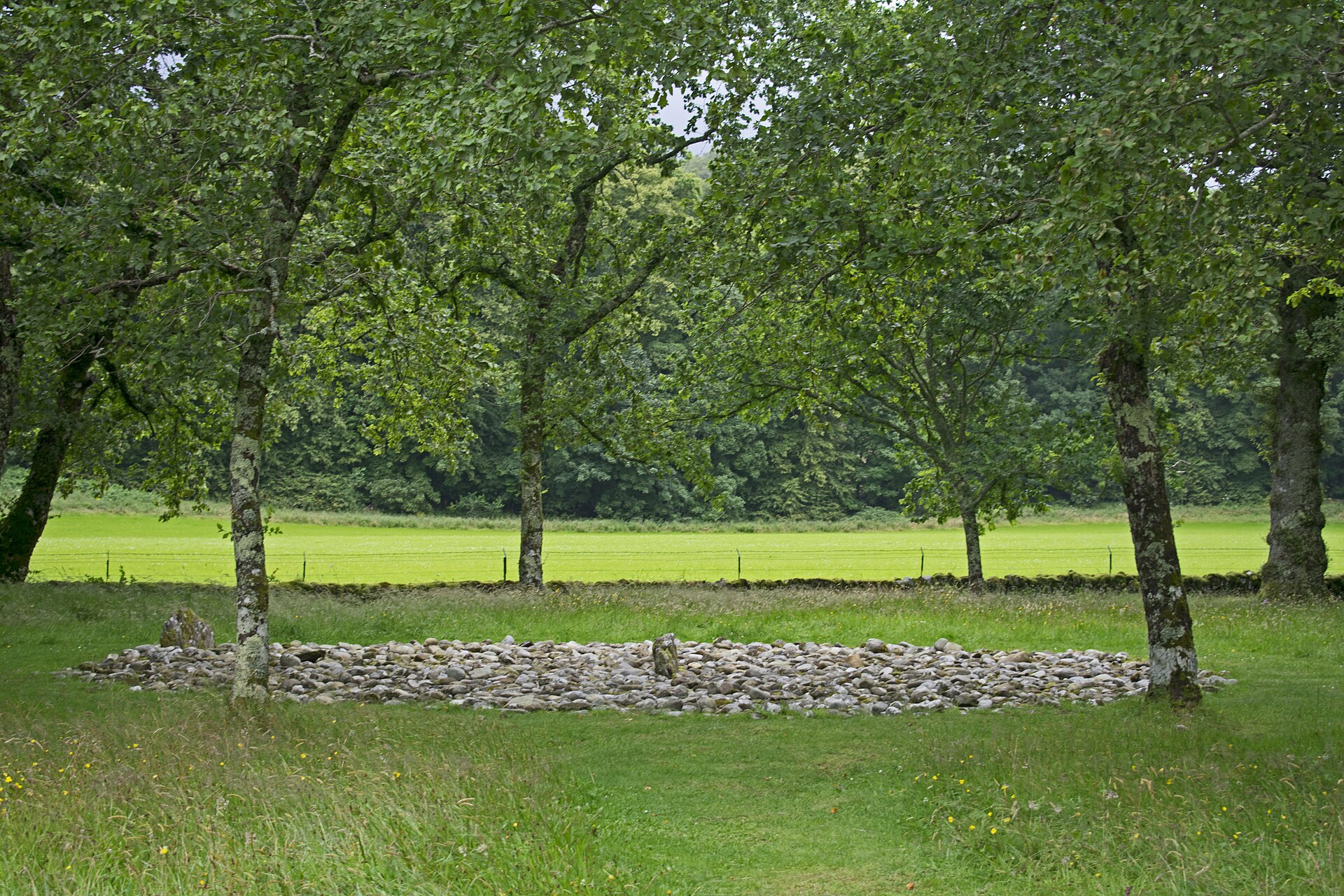
Temple Wood Stone Circles
Argyll and Bute
At the centre of the southern circle at Temple Wood lies a burial cist (a grave lined and capped with stone slabs), ringed by a smaller circle of s…
- Near Kilmartin
- 8 min walk from car park
- Easy path
Tomb or burial place · Prehistoric
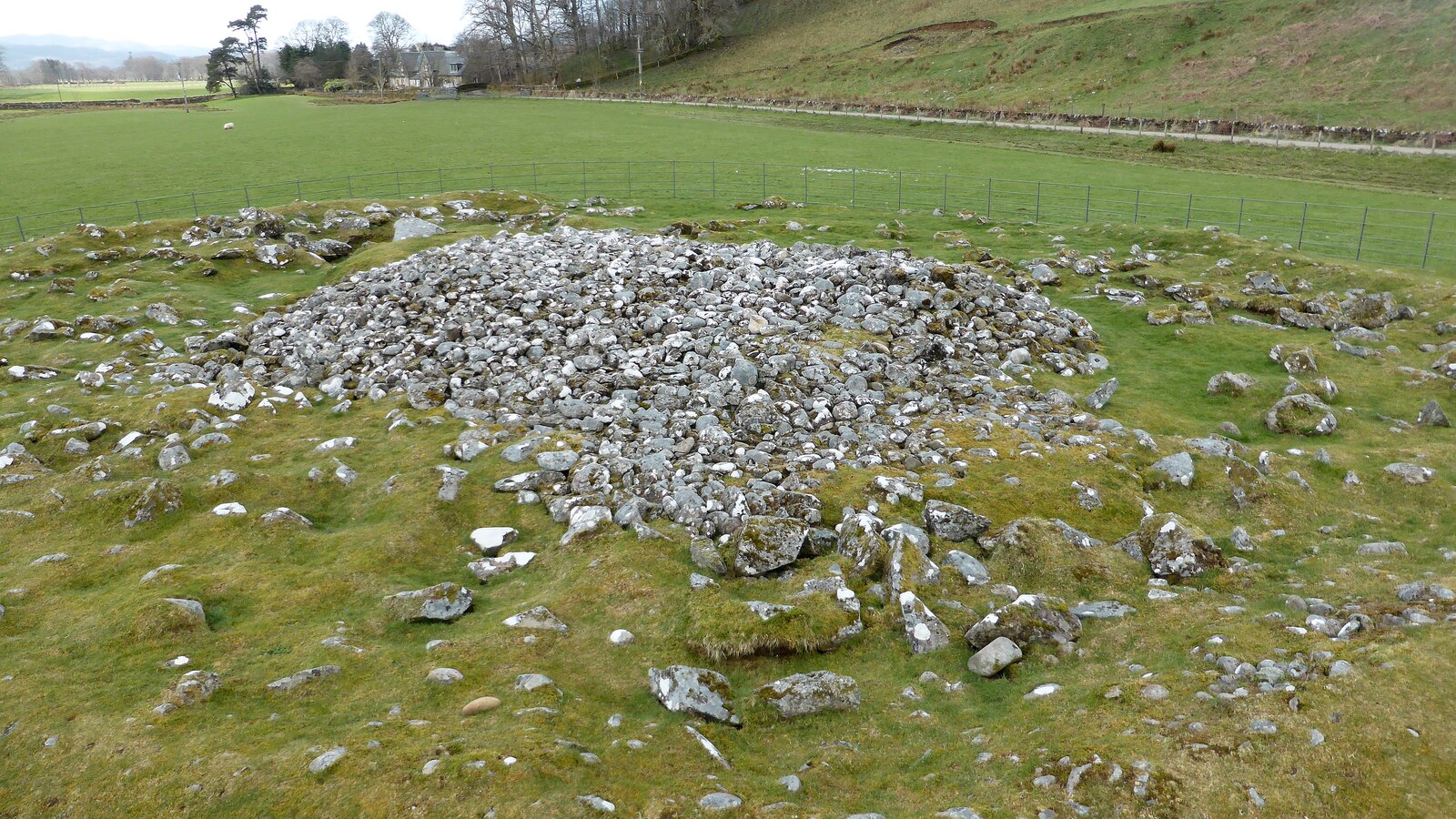
Nether Largie Mid Cairn
Argyll and Bute
Two burial cists inside still carry carved cup marks and a rare axehead symbol, evidence that survived even after most of the cairn (a mound of pil…
- Near Kilmartin
- Easy path
Tomb or burial place · Prehistoric
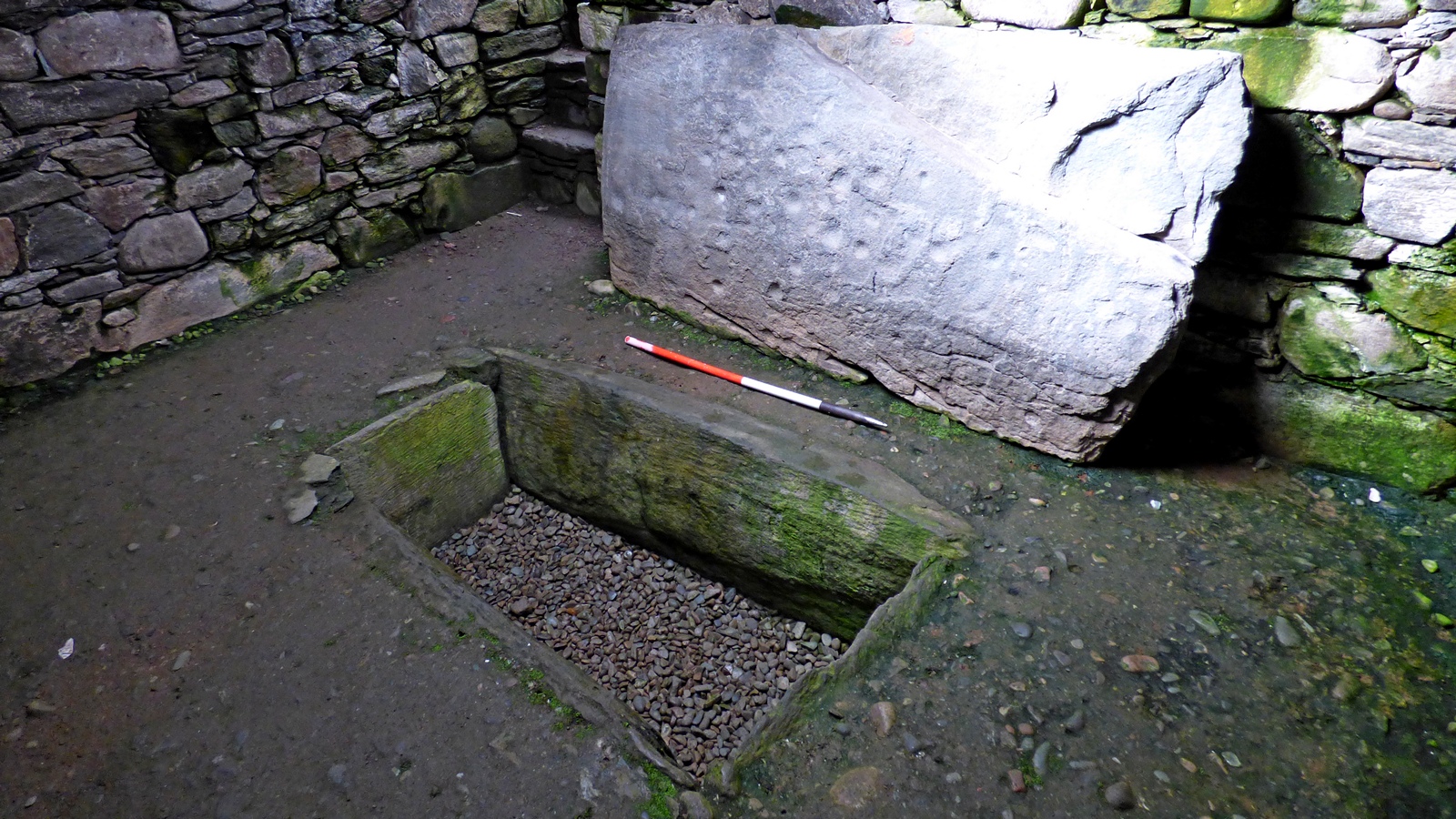
Nether Largie North Cairn
Argyll and Bute
The mound standing here today is not undisturbed ancient masonry: it is a 1930 reconstruction, a fact that changes what a visitor is actually looki…
- Near Kilmartin
- Easy path
Tomb or burial place · Prehistoric
Ri Cruin Cairn
Argyll and Bute
The southernmost cairn (a mound of piled stones, often covering a burial) in Kilmartin Glen's five-mile chain of Bronze Age (roughly 2500–800 BC) b…
- Near Kilmartin
- 8 min walk from car park
- Easy path
Sources
- Canmore site record 39460 (accessed 2026-06-13)
- Trove (HES) record (accessed 2026-06-13)
- Wikipedia: Chambered cairn (accessed 2026-06-13)
- Wikidata Q1267317 (accessed 2026-06-13)
Explore more: Tomb or burial places · Prehistoric · Argyll and Bute
The Ancient Codex, in your pocket
Get the Pocket Codex app
Carry the directory with you — Nether Largie South Chambered Cairn and thousands of ancient places across Britain and Ireland, offline, wherever you roam.