
Besieged by Norwegian invaders in the 1260s and by Mary, Queen of Scots' own army in 1562, after a family plot to imprison and displace its own laird for the castle's lands.
A jagged fragment of masonry clings to a nearly sheer rock face rising some fifty feet above the sea, quartz veins streaking pale through the cliff beneath it where the Moray Firth meets the Aberdeenshire coast. Little enough of the fabric survives to hint at the scale of what once stood there, yet the position alone explains why generation after generation of lairds fought to hold it: a headland accessible from the landward side by only a narrow approach, with open water and sightlines in every other direction.
That position drew the attention of kings as well as local families. Alexander III had the castle strengthened in the 1260s against an expected Norwegian invasion, only to see Norwegian forces capture and hold it regardless, and the stronghold was rebuilt again in the 14th century along lines said to echo Roslyn Castle near Edinburgh. For two centuries afterwards it belonged to the Ogilvy family, whose tenure produced one of the more startling episodes in the castle’s history: an attempt by one laird to drive his own father mad by imprisonment, and the loss of Findlater itself to a rival who then imprisoned the widowed lady of the house in turn.
That family collapse drew in the crown. Mary, Queen of Scots sent an armed force with artillery to besiege Findlater in 1562 and eject the man who had seized it, and within a century the Ogilvys who regained it had moved their attentions inland, building Cullen House and leaving the old sea-cliff fortress to fall quietly into ruin.
What follows is drawn from published sources, with each claim labelled by how firmly it is established.
The name
The name "Findlater" derives from the Scots Gaelic words fionn ("white") and leitir ("cliff or steep slope"), a description of the pale, quartz-veined rock face on which the castle stands.
History
The first documented mention of Findlater dates from 1246, though the headland may have been fortified earlier still. In the 1260s King Alexander III ordered repairs to the castle in preparation for an expected invasion by King Haakon IV of Norway, whose fleet had been active off the western seaboard. Despite these preparations, Norwegian forces seized Findlater and held it for a period before it returned to Scottish hands.
The masonry that survives today dates largely from a 14th-century rebuilding, when the castle was redesigned along lines associated with Roslyn Castle near Edinburgh, giving it an unusually sophisticated plan for a coastal stronghold. In February 1445 Walter Ogilvy secured a licence from James II of Scotland to repair and rebuild the castle further, confirming the Ogilvy family's hold on the site and setting the pattern for the fortress they would keep for two centuries.
James V of Scotland visited Findlater in November 1535, breaking his journey there after completing a pilgrimage to Tain in the north of Scotland. James Ogilvy, Laird of Findlater, went on to serve as Master of Household to both Mary of Guise and her daughter Mary, Queen of Scots, placing the family close to the centre of national politics rather than merely regional affairs.
That closeness to power did not protect the Ogilvy inheritance. James Ogilvy devised a plan to imprison his own father in a cellar, depriving him of sleep in an attempt to drive him insane and seize his lands, but the scheme instead cost the family Findlater itself: John Gordon, a son of the Earl of Huntly, took possession after the father's death, when the widow married Gordon and was then imprisoned by him in the castle she had brought to the marriage.
The dispute turned violent in July 1562, when John Gordon fought James Ogilvy and Lord Ogilvy and injured Lord Ogilvie's arm; custom held Gordon in prison at Edinburgh until his victim had healed. In September 1562 Mary, Queen of Scots sent an armed force with artillery from Dunbar Castle to besiege Findlater and eject Gordon, and when she came near the castle on 20 September her trumpeter's demand for surrender was refused outright.
In October 1562 the Earl of Huntly sent Mary the keys to Findlater and Auchindoun castles, but she distrusted the low standing of the messenger who delivered them. The stand-off was resolved by force of arms: Huntly was defeated at the Battle of Corrichie later that month, and John Gordon, whose seizure of Findlater had triggered the episode, was executed.
James Ogilvy was created 1st Earl of Findlater in 1638, the title crowning the family's long possession of the castle, but by then their attention had already moved elsewhere: he built Cullen House inland as the new family seat, and by his death in 1653 Findlater Castle had fallen out of everyday use and begun its decline into ruin.
People
-
Walter Ogilvy
Obtained a licence from James II of Scotland in February 1445 to repair and rebuild Findlater Castle, cementing Ogilvy control of the site.
-
James Ogilvy, Laird of Findlater
Served as Master of Household to Mary of Guise and Mary, Queen of Scots, before losing the family's inheritance to John Gordon after a failed plot against his own father.
-
John Gordon
Son of the Earl of Huntly who seized Findlater Castle and imprisoned the widowed Lady Findlater, before being executed after the Battle of Corrichie in 1562.
-
James Ogilvy, 1st Earl of Findlater
Given the earldom in 1638 and built Cullen House as the family's new seat, after which Findlater Castle fell into decline.
Cultural influences
-
Roslin-style rebuilding
The surviving fourteenth-century masonry is described as following the model of Roslin Castle, an architectural connection that gives Findlater an unusually sophisticated plan for a coastal stronghold.
Connections
-
Roslyn Castle
Findlater's surviving 14th-century masonry was rebuilt along lines associated with Roslyn Castle near Edinburgh.
-
Cullen House
Built by James Ogilvy, 1st Earl of Findlater, as the new family seat that replaced Findlater Castle after 1638.
-
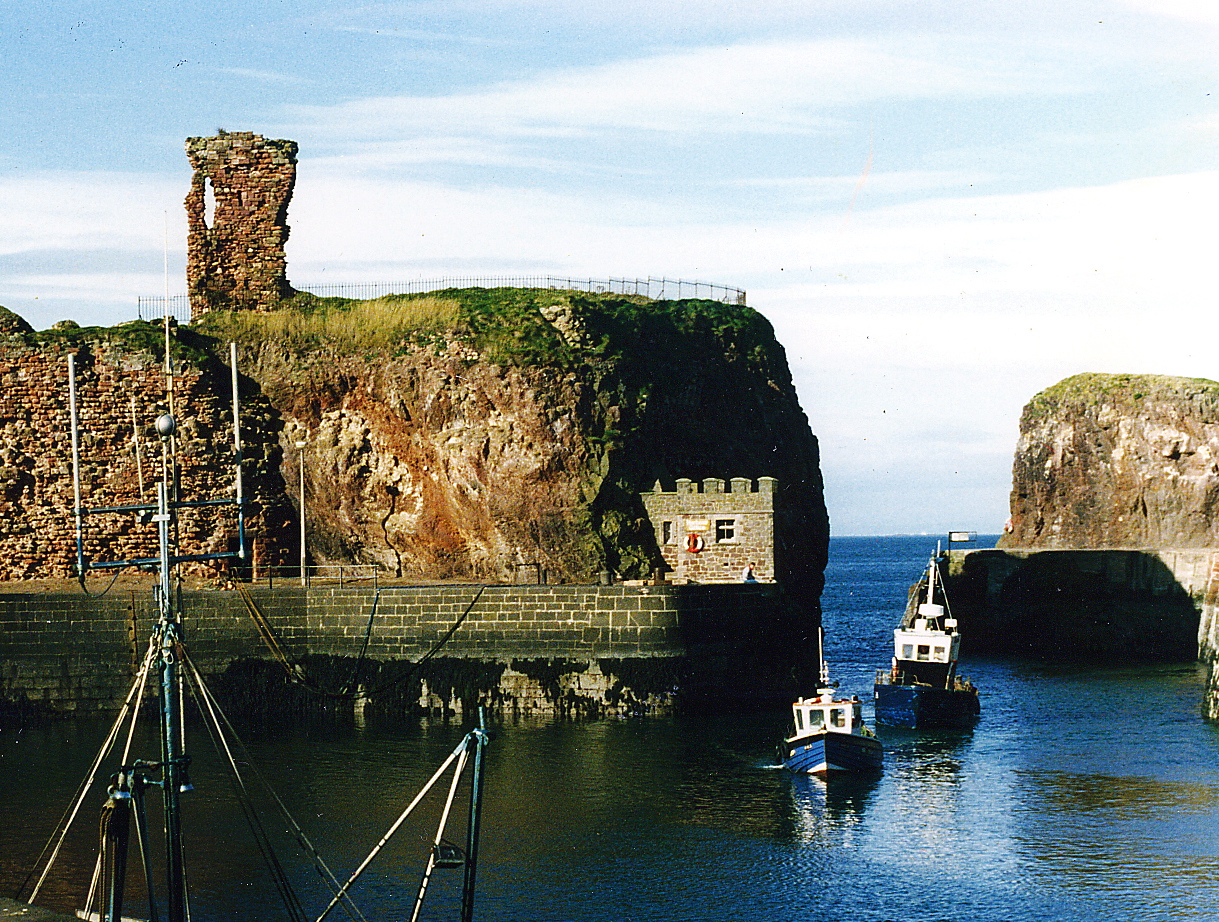
Photo: Phillip Capper from Wellington, New Zealand / Wikimedia Commons / CC BY 2.0 Mary, Queen of Scots dispatched the artillery force that besieged Findlater in 1562 from Dunbar Castle.
-
Auchindoun Castle
The Earl of Huntly surrendered the keys of Findlater together with those of Auchindoun Castle in October 1562.
What to look for
-
The clifftop position
The ruins stand on a rock face roughly fifty feet (15 m) above the Moray Firth, occupying a naturally defended headland between the villages of Cullen and Portsoy.
-
Quartz-veined cliffs
The cliffs beneath the castle contain quartz, giving the pale rock face that lent the site its Gaelic name.
-
14th-century masonry
The surviving stonework dates mainly from a 14th-century rebuilding said to follow the model of Roslyn Castle, rather than from the castle's 13th-century origins.
Plan your visit
- Location
- 57.6924°N · 2.7704°W
- Nearest settlement
- Cullen
- Access
- Open access
- Terrain
- Rough ground — reasonable boots advised
- Time needed
- About 45 minutes
- Best time
- Dry, calm daylight, when the exposed cliff setting can be approached safely.
- What survives
- A roofless coastal castle ruin, with mainly fourteenth-century masonry surviving on a rocky headland.
- Facilities
- No visitor facilities are recorded at the ruin.
Opening & admission
No admission fee is charged; check the managing body's site for any current visitor information before travelling.
- Perched on a 50-foot cliff above the Moray Firth, near Sandend between Cullen and Portsoy — a coastal clifftop setting likely to involve steep or uneven ground
- The castle is a ruin and no formal access route or facilities are recorded
Nearby places
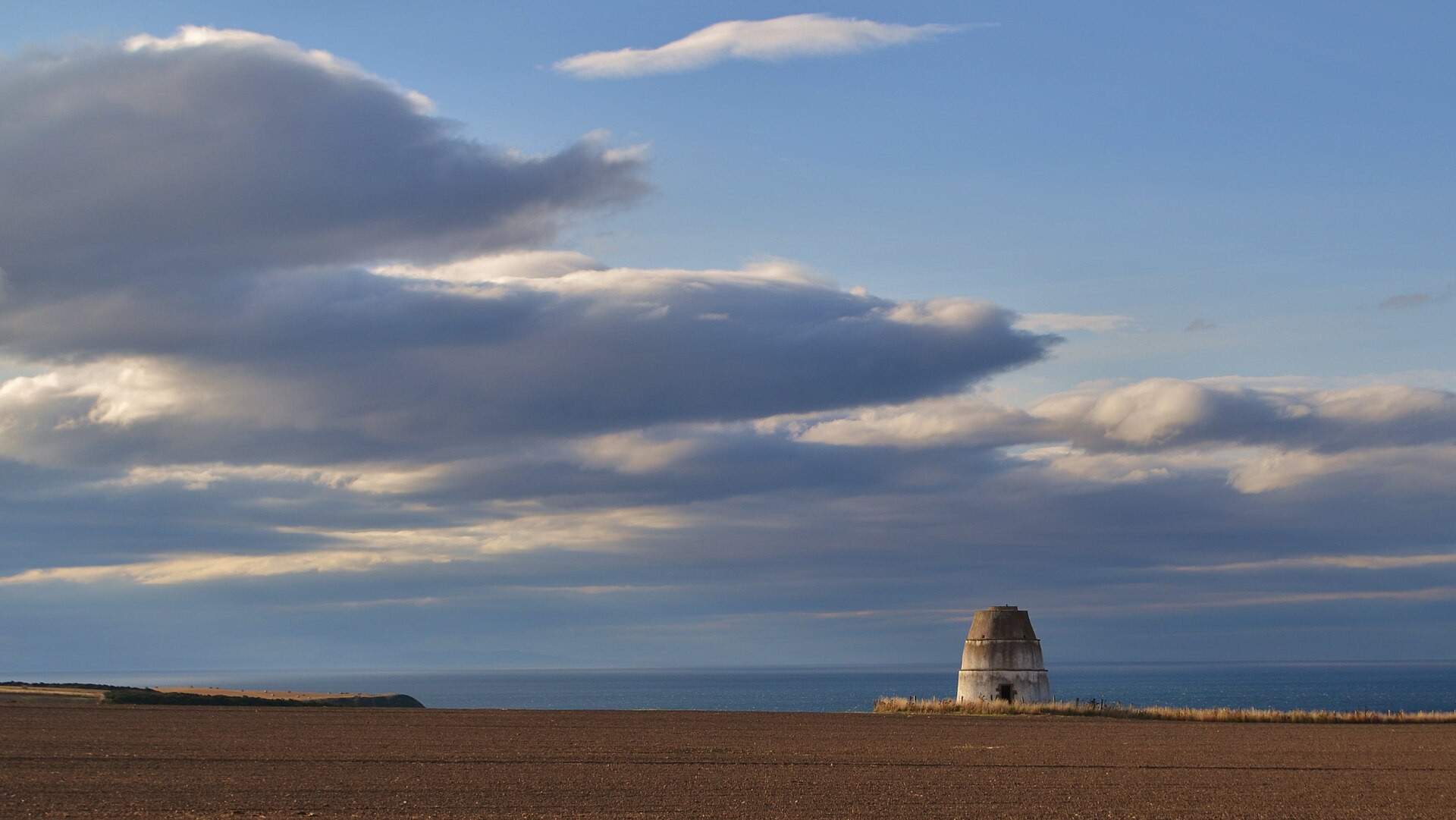
Minor monument · Medieval
Dovecot, Barnyards Of Findlater
Aberdeenshire
Findlater’s beehive pigeon house retains about 700 nesting boxes, making an otherwise modest estate building an unusually legible record of how the…
- Near Sandend
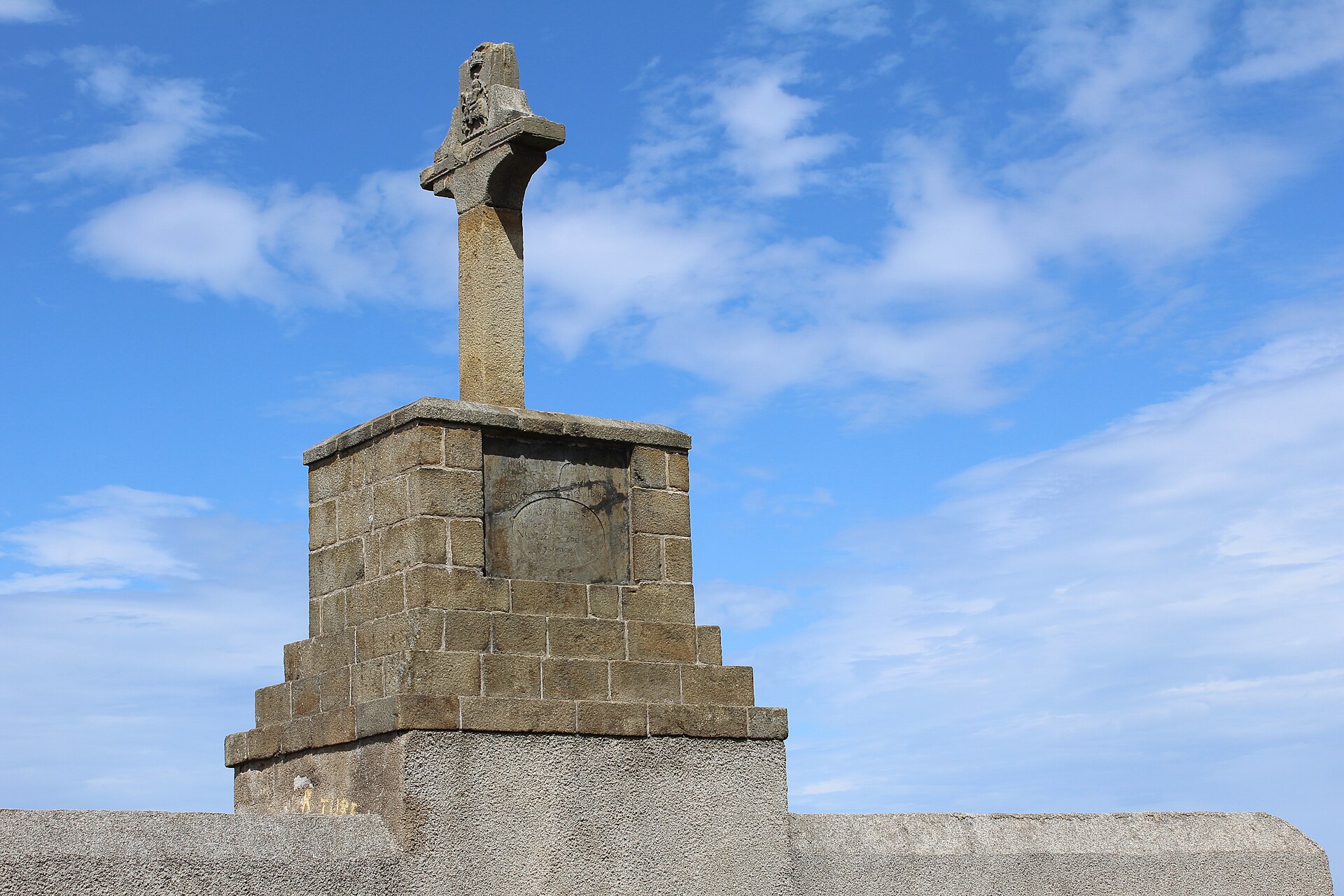
Minor monument · Medieval
Market Cross, Church Street, Macduff
Aberdeenshire
Macduff’s 1783 cross reassembled older fragments into a royal-burgh statement, its rider and inscriptions preserving the Earl of Fife’s civic ambit…
- Easy path
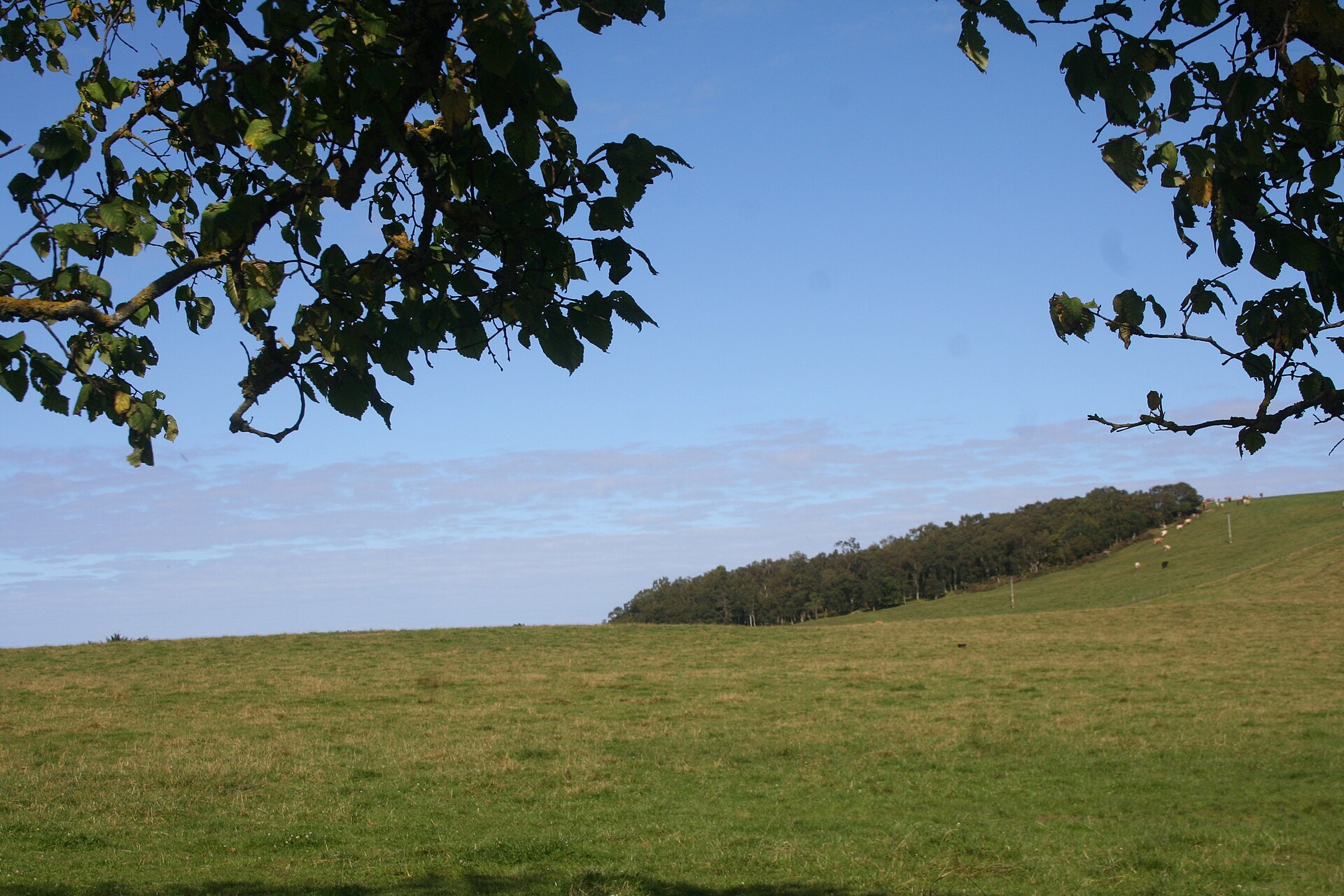
Fortified place · Roman
Muiryfold
Moray
A Roman marching camp of over 41 hectares, hidden until aerial photography found its ditches from the air in 1959: physical proof that Severus's le…
- Near Keith
- Some walking
Fortified place · Roman
Auchinhove
Moray
Auchinhove is a large Roman marching camp east of Keith, discovered from the air in 1949 and preserving evidence of Roman military movement in Moray.
- Near Keith
- Some walking
Questions people ask
- What does the name "Findlater" mean?
- It combines the Scots Gaelic words fionn ("white") and leitir ("cliff or steep slope"), describing the pale, quartz-veined cliff the castle stands on.
- When was Findlater Castle first recorded?
- The earliest historical reference to the castle dates from 1246, though the headland may have been fortified earlier.
- Why did Alexander III repair the castle in the 1260s?
- He strengthened Findlater ahead of an expected invasion by King Haakon IV of Norway, though Norwegian forces went on to capture and hold it regardless.
- Why did Mary, Queen of Scots besiege Findlater in 1562?
- She sent an armed force to eject John Gordon, who had seized the castle and imprisoned the widowed Lady Findlater after marrying her.
- Why was the castle abandoned?
- After James Ogilvy became 1st Earl of Findlater in 1638 he built Cullen House as the family's new seat, and Findlater fell into decline within his lifetime.
Sources
- Wikipedia: Findlater Castle
- Findlater family site
Explore more: Fortified places · Medieval · Aberdeenshire
The Ancient Codex, in your pocket
Get the Pocket Codex app
Carry the directory with you — Findlater Castle and thousands of ancient places across Britain and Ireland, offline, wherever you roam.