
Findlater’s beehive pigeon house retains about 700 nesting boxes, making an otherwise modest estate building an unusually legible record of how the medieval castle household was supplied.
About 700 stone nesting boxes run from floor to apex inside the round rubble pigeon house at Barnyards of Findlater. Its three diminishing tiers form a stepped, beehive profile, with a central flight hole in the shallow domed roof and a south-facing doorway.
The building probably dates from the sixteenth century and contains about 700 closely fitted stone nesting boxes running from floor to apex. Its purpose was practical: it supported the household of Findlater Castle, whose ruins occupy the promontory below.
The pigeon house’s commanding position near the cliff edge above Sunnyside Bay makes the relationship between estate building, castle and coast unusually legible. The small structure preserves a direct piece of the castle’s working infrastructure.
What follows is drawn from published sources, with each claim labelled by how firmly it is established.
History
Probably in the sixteenth century, a round rubble dovecot was built near the cliff edge above Sunnyside Bay. Its three diminishing tiers and shallow domed roof created a beehive-like exterior, while the position placed the building close to the estate it served. The builders arranged the structure around a central apex flight hole and fitted the south doorway with simple ashlar jambs beneath a relieving arch. Small flight holes above the second rat-course allowed pigeons to move through the upper part of the building.
Inside, about 700 closely fitted stone nesting boxes line the walls from the floor almost to the apex. Their survival makes the practical capacity of the dovecot unusually clear, turning an apparently plain rural building into a record of organised estate food production. The pigeon house served medieval Findlater Castle, whose ruins stand on the promontory below. Its elevated position above the castle and Sunnyside Bay preserves the functional relationship between the castle household and the building that supplied it. The position shows how the building supplied the castle household from a working place above the bay.
The Findlater Doocot was restored in 1992 by Banff and Buchan District Council with Historic Scotland support. The work preserved the beehive form and its remarkable interior rather than turning the building into a generic farm ruin: the nesting boxes rise from about 45cm above the floor and narrow towards the apex, where the birds entered. That repair is part of why the practical layout can still be read today, as well as the building’s original relationship with the castle estate.
Connections
-
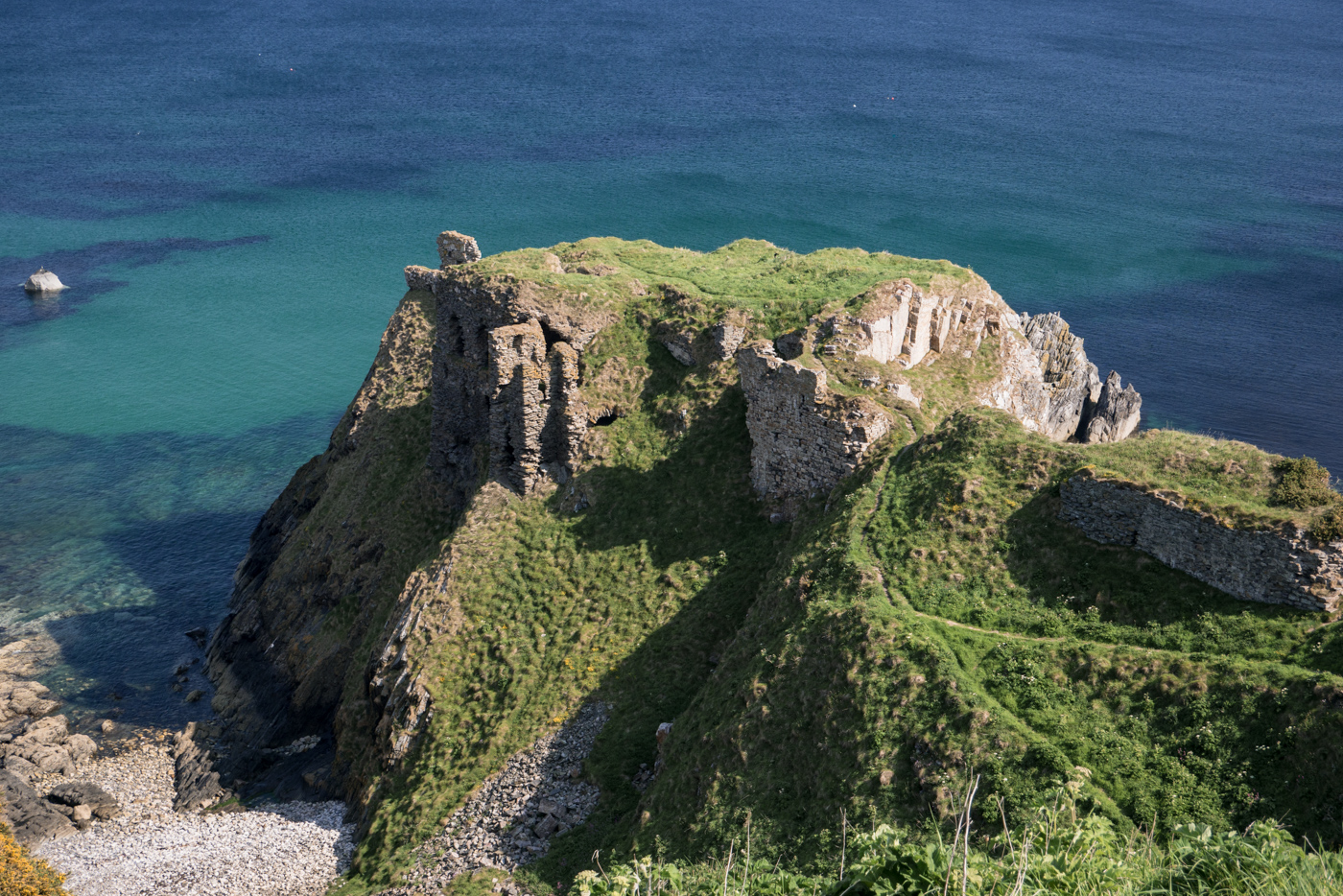
Photo: Bob Marshall / Wikimedia Commons / CC BY-SA 4.0 The dovecot was built to serve the medieval castle, whose ruins occupy the promontory below.
-
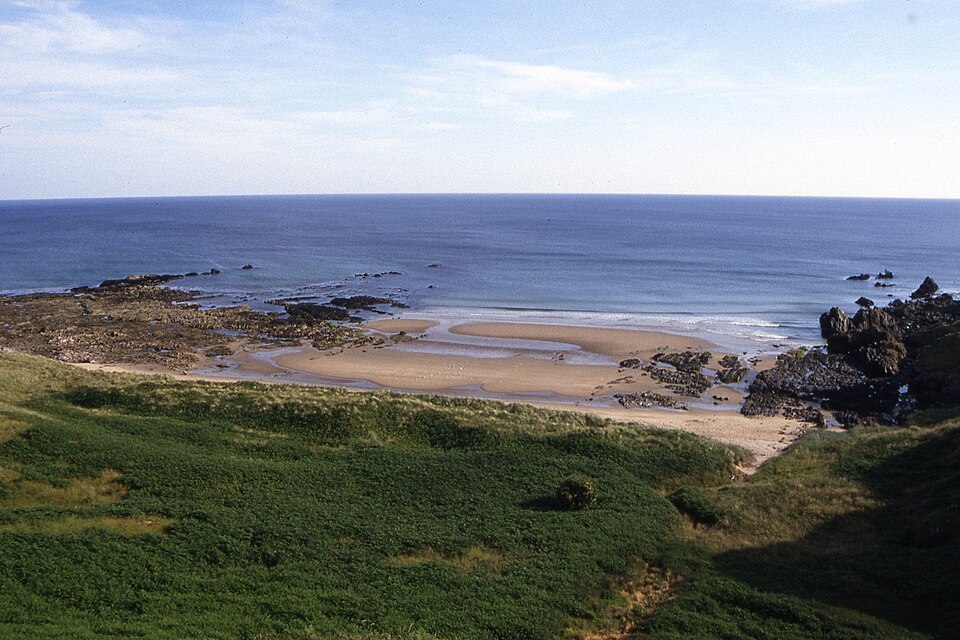
Photo: Colin Park / Wikimedia Commons / CC BY-SA 2.0 Sunnyside Bay
The dovecot occupies a commanding position near the cliff edge above the bay.
Discovery & excavation
The Ordnance Survey recorded the dovecot in 1938; A. N. Robertson described it in 1957 and an Ordnance Survey visit in 1961 found it in good condition. Historic Environment Scotland’s register also records a 1992 survey, when the privately owned building had been restored by Banff and Buchan District Council.
What to look for
-
Nesting boxes
About 700 closely fitted stone boxes run from floor to apex, a rare surviving record of the dovecot’s working capacity.
Plan your visit
- Location
- 57.6881°N · 2.7733°W
- Nearest settlement
- Sandend
- Access
- Visible from a public way
- Time needed
- About 10 minutes
- Best time
- For an exterior view, choose clear daylight; the nearby Findlater Castle visitor information describes the coastal setting as exposed and largely unmaintained.
- What survives
- A round, beehive-like rubble dovecot with three diminishing tiers, a shallow domed roof and about 700 stone nesting boxes.
- Facilities
- The nearby Findlater Castle visitor information lists a basic car park, a designated viewing area and an information board, and says there is no dedicated visitor centre.
Opening & admission
The nearby Findlater Castle visitor information says there is no dedicated visitor centre. The dovecot is a separate historic structure in a field near the castle ruins.
Nearby places
Fortified place · Medieval
Findlater Castle
Aberdeenshire
Besieged by Norwegian invaders in the 1260s and by Mary, Queen of Scots' own army in 1562, after a family plot to imprison and displace its own lai…
- Near Cullen
- Rough ground
Fortified place · Roman
Muiryfold
Moray
A Roman marching camp of over 41 hectares, hidden until aerial photography found its ditches from the air in 1959: physical proof that Severus's le…
- Near Keith
- Some walking
Minor monument · Medieval
Market Cross, Church Street, Macduff
Aberdeenshire
Macduff’s 1783 cross reassembled older fragments into a royal-burgh statement, its rider and inscriptions preserving the Earl of Fife’s civic ambit…
- Easy path
Fortified place · Roman
Auchinhove
Moray
Auchinhove is a large Roman marching camp east of Keith, discovered from the air in 1949 and preserving evidence of Roman military movement in Moray.
- Near Keith
- Some walking
Questions people ask
- How many nesting boxes survive?
- About 700 closely fitted stone nesting boxes line the interior.
- When was it built?
- The dovecot probably dates from the sixteenth century.
- What did it serve?
- It served medieval Findlater Castle, whose ruins lie on the promontory below.
Sources
- Historic Environment Scotland — Findlater Castle, Dovecote
- G A G Peterkin, Scottish Dovecots
- Findlater Castle — The Doocot
Explore more: Minor monuments · Medieval · Aberdeenshire
The Ancient Codex, in your pocket
Get the Pocket Codex app
Carry the directory with you — Dovecot, Barnyards Of Findlater and thousands of ancient places across Britain and Ireland, offline, wherever you roam.