A Pictish symbol stone — the Picts held northern and eastern Scotland from about AD 300 to 900 — carved with the enigmatic 'beast' and crescent-and-V-rod. It was moved to the centre of a henge: a circular space enclosed by a bank with its ditch dug inside, shaped from earth long before anyone here left written records.
Near Port Elphinstone, the Broomend of Crichie symbol stone stands inside a great circular bank and ditch. Its face carries the elongated Pictish beast beside a crescent crossed by a broken rod; neither figure has a convincing explanation, and the Picts left no written key to the carved signs used across north-east Scotland.
The stone did not start out where it now stands. It originally stood around 65 metres to the north-east, close to but separate from the henge, a roughly circular ceremonial earthwork that long predates the Picts and their carvings. In the 19th century the stone was lifted from that spot and set down inside the henge itself, placing a Pictish monument at the heart of a much older Neolithic or Bronze Age enclosure and changing how the two relate to one another on the ground.
The henge does not stand alone either. An avenue leads into it, and a scatter of further standing stones surrounds the site, and the whole group, earthwork, avenue, standing stones and symbol stone together, is protected as a single scheduled monument at Broomend of Crichie.
What follows is drawn from published sources, with each claim labelled by how firmly it is established.
History
Broomend of Crichie stone belongs to Class I, the earliest tradition of Pictish symbol carving, in which incised figures were cut directly into undressed stone with no accompanying cross or other Christian ornament. Whoever carved it chose two symbols for the slab: the Pictish beast, a stylised creature unlike any real animal, and the crescent and V-rod, one of the most frequently paired symbol combinations found on stones across north-east Scotland.
Long before the Picts carved their symbols, the henge at Broomend of Crichie already stood in the landscape as a ceremonial earthwork, accompanied by an avenue and a scatter of further standing stones. The symbol stone was originally raised close to, but separate from, this older monument, standing some 65 metres to the north-east of the henge's centre, where it remained for many centuries before being disturbed.
In the 19th century the stone was lifted from its original position and moved into the centre of the henge, where it stands today. The move brought a Pictish carving into direct physical union with a far older prehistoric earthwork, altering the historic relationship between the two monuments and creating the arrangement now seen at the site. The henge, its avenue, the surrounding standing stones and the symbol stone were together designated a scheduled monument, giving legal protection to the whole ensemble as a single archaeological site at Broomend of Crichie, Port Elphinstone, near Inverurie.
Connections
-
Kintore
The henge is connected with Kintore by a stone avenue extending for about a mile, forming part of the wider prehistoric monument landscape.
-
Broomend of Crichie henge
The Class I symbol stone was originally raised about 65 metres north-east of the henge’s centre, rather than inside it. Its nineteenth-century move into the earthwork created the striking association between a Pictish carving and a much older ceremonial enclosure.
Discovery & excavation
Charles Elphinstone Dalrymple excavated the henge’s central shaft grave in 1855, recovering a decorated sandstone battle axe, a cist and a cordoned urn. Richard Bradley’s Northern Scottish Henges Project returned in 2005–07, sectioning the bank and ditch and examining the northern entrance; its work also recorded Dalrymple’s backfill, including a broken cist slab and a Food Vessel sherd.
What to look for
-
The Pictish beast
An incised, stylised creature unlike any known animal, one of the most common and least understood symbols in the Pictish repertoire.
-
Crescent and V-rod
A crescent shape crossed by a broken, arrow-like rod, carved alongside the beast on the same flat slab.
-
The henge earthwork
A roughly circular prehistoric enclosure at whose centre the symbol stone now stands, having been moved there from a separate original position about 65 metres to the north-east in the 19th century - a visible reminder that the present layout is not the original one.
-
The avenue and standing stones
An approach avenue and further standing stones around the henge, extending the monument beyond its central ring; the whole prehistoric and Pictish ensemble is protected together as one scheduled monument.
Plan your visit
- Location
- 57.2672°N · 2.3677°W
- Nearest settlement
- Port Elphinstone
- Access
- Open access
- Terrain
- Easy going
- Time needed
- About 30 minutes
- What survives
- The Pictish symbol stone stands at the centre of the prehistoric henge, with its earthwork, avenue and other standing stones around it.
Opening & admission
Free to view as an outdoor scheduled monument; check Historic Environment Scotland's website for any current guidance before visiting.
- Stands within a henge monument in open ground near Port Elphinstone, Inverurie.
Nearby places
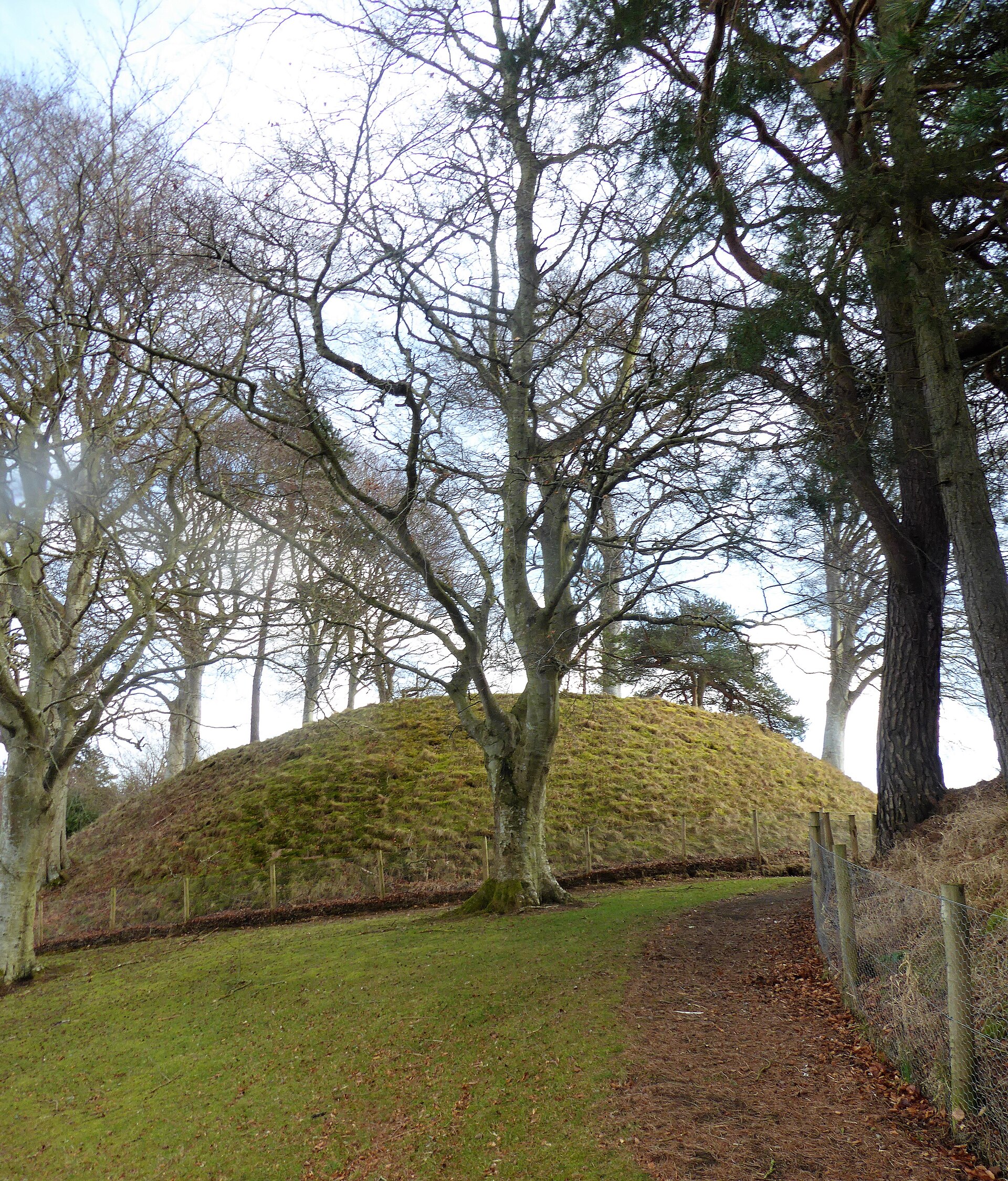
Fortified place · Medieval
Bass of Inverurie
Aberdeenshire
A wooden castle mound that once governed the whole lordship of the Garioch, its earthworks still holding an oak gangway and a 14th-century face-jug…
- Easy path
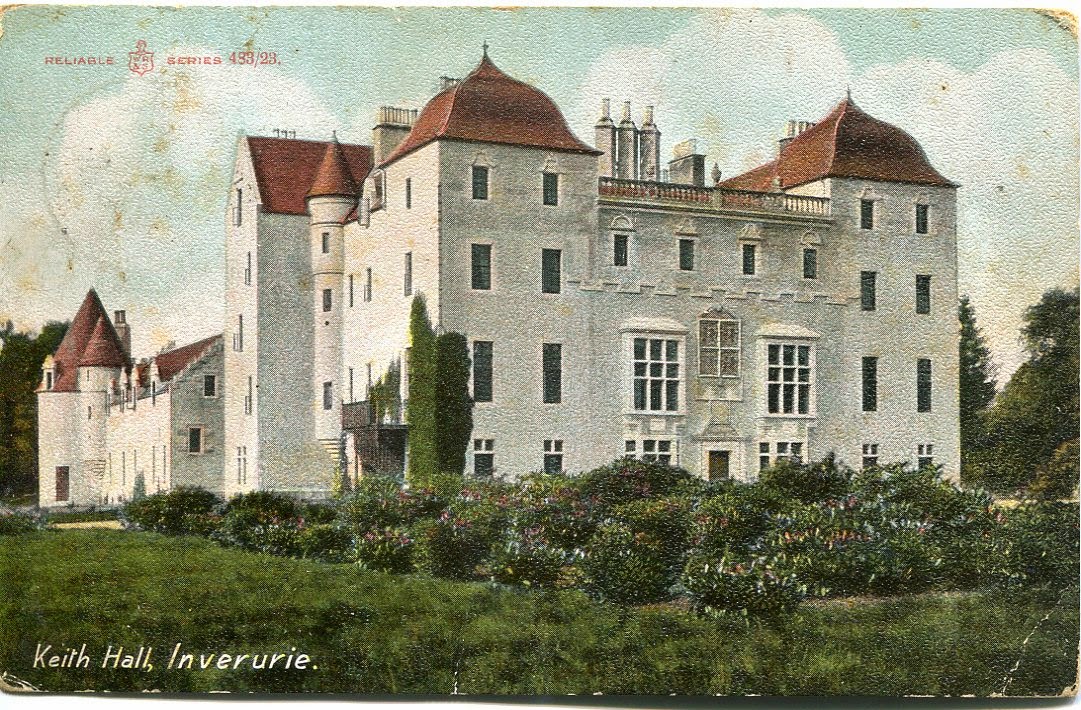
Fortified place · Medieval
Caskieben
Aberdeenshire
A timber tower's mound and moat still trace the outline beneath Keith Hall, a mansion that grew from Z-plan castle to Georgian seat over seven cent…
- Easy path
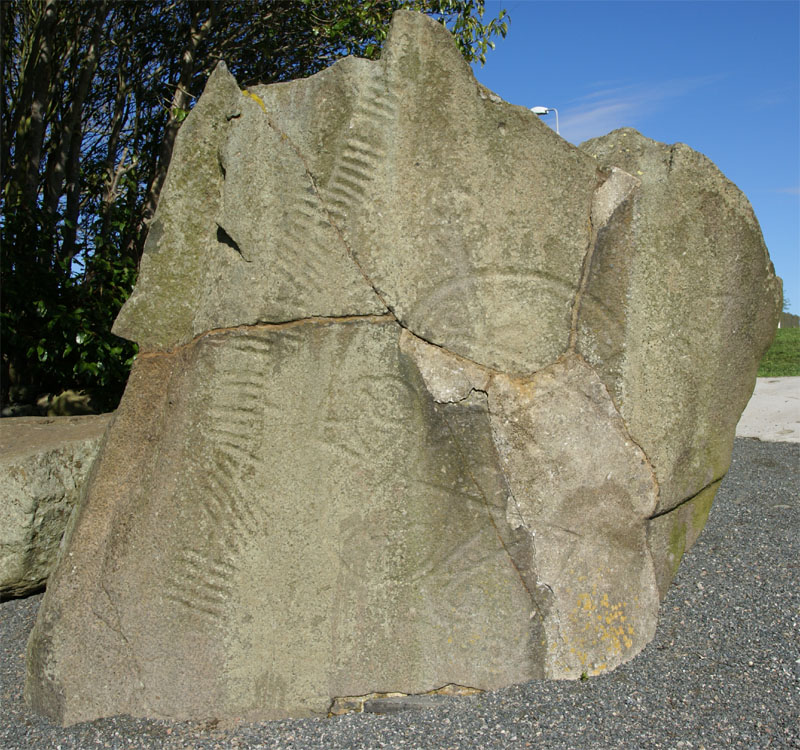
Carved stone · Pictish & early medieval
Brandsbutt Stone
Aberdeenshire
Brandsbutt preserves the symbols of the Picts, people of northern and eastern Scotland from about AD 300 to 900, beside an Ogham inscription still…
- Near Inverurie
- 1 min walk from car park
- Easy path

Sacred place · Prehistoric
Easter Aquhorthies stone circle
Aberdeenshire
One of Scotland's best-preserved recumbent stone circles, and the only one where every stone still stands exactly where its Bronze Age (roughly 250…
- Easy path
Questions people ask
- What is the Broomend of Crichie stone?
- A Class I Pictish symbol stone, a flat slab incised with the Pictish beast and the crescent and V-rod, standing within a henge at Broomend of Crichie, Aberdeenshire.
- What symbols are carved on the stone?
- It bears two incised Pictish symbols: the Pictish beast, an unidentified stylised creature, and the crescent and V-rod.
- Has the stone always stood in its current spot?
- No. It was moved into the centre of the henge in the 19th century from its original position about 65 metres to the north-east.
- What is a henge?
- A henge is a circular prehistoric earthwork enclosure; the one at Broomend of Crichie predates the Pictish stone now standing at its centre.
- Is the site protected?
- Yes. The henge, its avenue, the standing stones and the symbol stone are together designated a scheduled monument.
Sources
The Ancient Codex, in your pocket
Get the Pocket Codex app
Carry the directory with you — Broomend of Crichie stone and thousands of ancient places across Britain and Ireland, offline, wherever you roam.