Its 21.5-tonne recumbent stone ranks among the heaviest in Aberdeenshire, yet a 2001 dig returned a puzzling late radiocarbon date that unsettles the usual story of when these circles were raised.
Five surviving stones mark a broken ring on Parkhouse Hill above Old Deer. One is a 21.5-tonne slab lying on its side; paired with two tall flankers, it records the defining arrangement of a recumbent stone circle, whose largest stone is set horizontally instead of standing with the rest.
The circle belongs to a distinctive early Bronze Age tradition found almost nowhere else in the world outside lowland Aberdeenshire, where more than seventy such rings were raised. Two tall flanker stones stand either side of the recumbent, framing it like a doorway, while the remaining orthostats step down in height around the rest of the ring, a formula repeated, with local variation, across the whole Buchan district.
Half the stones at Aikey Brae have fallen over the centuries, and the low bank that once enclosed the structure survives only in part, hidden for long stretches beneath grass and heather. Excavation in 2001 found that this ring bank had been built with evident care, its kerbstones laid in an alternating pattern of red and white, a decision made by people whose reasons for it have not survived them.
What follows is drawn from published sources, with each claim labelled by how firmly it is established.
History
Aikey Brae was raised during the early Bronze Age as one of more than seventy recumbent stone circles built across lowland Aberdeenshire, each arranged around a single massive stone laid on its side and flanked by the tallest uprights in the ring, with the smallest stone set toward the northeast of the circle. In 1925 the circle was placed under legal protection as a scheduled monument, formally recognising the summit of Parkhouse Hill as a site of national archaeological importance and affording the five standing stones, and their five fallen companions, protection from further disturbance.
During the 1980s the researchers Clive Ruggles and Aubrey Burl separately assessed Aikey Brae as part of wider surveys into whether recumbent stone circles were deliberately aligned on the sun, moon or particular horizon features, adding the site to the broader archaeo-astronomical record compiled for northeast Scotland's Bronze Age monuments.
In 2001 the archaeologists Chris Ball and Richard Bradley excavated the site and found that the kerbstones lining its surrounding ring bank had been deliberately set in an alternating pattern of red and white stone. Radiocarbon dating produced an anomalous result placing the circle in the Late Bronze Age, later than the early date usually assigned to this type of monument, while the dig also recovered 43 pieces of worked stone along with quartz flakes and flint scrapers.
Ball and Bradley concluded that Aikey Brae's construction resembled other recumbent circles built across the Buchan area, having been erected in a single episode rather than accumulated gradually over centuries, in contrast to the building history documented at Tomnaverie stone circle further to the west. In October and November 2019 the trees standing next to the circle were felled, clearing the ground immediately around the stones and the ring bank that encloses them and opening up the hilltop setting that recumbent stone circle builders had originally sought out for its views across the surrounding landscape.
People
-
Chris Ball
Co-led the 2001 excavation of Aikey Brae with Richard Bradley, uncovering the alternating red-and-white kerbstones and worked-stone artefacts.
-
Richard Bradley
Co-led the 2001 excavation of Aikey Brae with Chris Ball and concluded the circle was built in a single episode rather than gradually over time.
-
Clive Ruggles
Assessed Aikey Brae in the 1980s as part of archaeo-astronomical surveys of recumbent stone circles.
-
Aubrey Burl
Assessed Aikey Brae in the 1980s alongside Clive Ruggles as part of wider archaeo-astronomical study of stone circles.
Cultural influences
-
Buchan recumbent stone-circle tradition
Excavation found that Aikey Brae resembles other recumbent stone circles in Buchan, a regional form built around a recumbent stone and flanking uprights.
Connections
-

Photo: Silkie / Wikimedia Commons / CC BY-SA 3.0 Excavation found that Aikey Brae was built in a single episode, unlike Tomnaverie, which was constructed gradually over a longer period.
-

Photo: Elliott Simpson / Wikimedia Commons / CC BY-SA 2.0 Recumbent stone circles such as Aikey Brae may represent a development from the Clava cairns of Inverness-shire.
-

OpenStreetMap contributors / Wikimedia Commons / CC BY-SA 2.0 Axial stone circles of southwest Ireland
Aberdeenshire's recumbent stone circles, including Aikey Brae, are considered the closest parallel to the axial stone circles built in southwest Ireland.
-
Other Buchan recumbent stone circles
Excavators found that Aikey Brae's construction resembled other recumbent circles raised across the Buchan district of Aberdeenshire.
Discovery & excavation
The 2001 excavation by Chris Ball and Richard Bradley recovered 43 pieces of worked stone together with quartz flakes and flint scrapers, and revealed that the kerbstones of the surrounding ring bank had been deliberately laid in an alternating red-and-white pattern.
What to look for
-
The recumbent stone
A single slab weighing about 21.5 tonnes, laid horizontally rather than standing upright, one of the largest recumbent stones known in Aberdeenshire.
-
The flanker stones
Two of the tallest stones in the circle stand immediately either side of the recumbent, marking it out from the rest of the ring.
-
Standing and fallen stones
Five stones remain upright, including the recumbent, while five others have fallen, leaving the original ring only partly intact.
-
The ring bank and kerbstones
A low bank once enclosed the circle; excavation showed its kerbstones were set in an alternating pattern of red and white stone.
-
The hilltop setting
The circle occupies the summit of Parkhouse Hill, a position typical of recumbent stone circle builders, who favoured level hill spurs with wide views to other landmarks.
Plan your visit
- Location
- 57.5140°N · 2.0704°W
- Nearest settlement
- Old Deer
- Access
- Open access
- Terrain
- Moderate walking
- Time needed
- About 45 minutes
- Best time
- Daylight is the most useful time to see the monument and assess the approach.
- What survives
- Five stones, including the recumbent, remain upright and five lie fallen around the partly intact ring bank and its kerbs.
- Facilities
- No visitor facilities are provided at the circle itself; plan for rural or roadside conditions.
Opening & admission
Free to visit — check the managing body's site for current access details.
- Sits on the summit of Parkhouse Hill, so reaching it involves a climb.
- Surrounding trees were felled in late 2019, which may affect the approach.
Nearby places
Building or ruin · Medieval
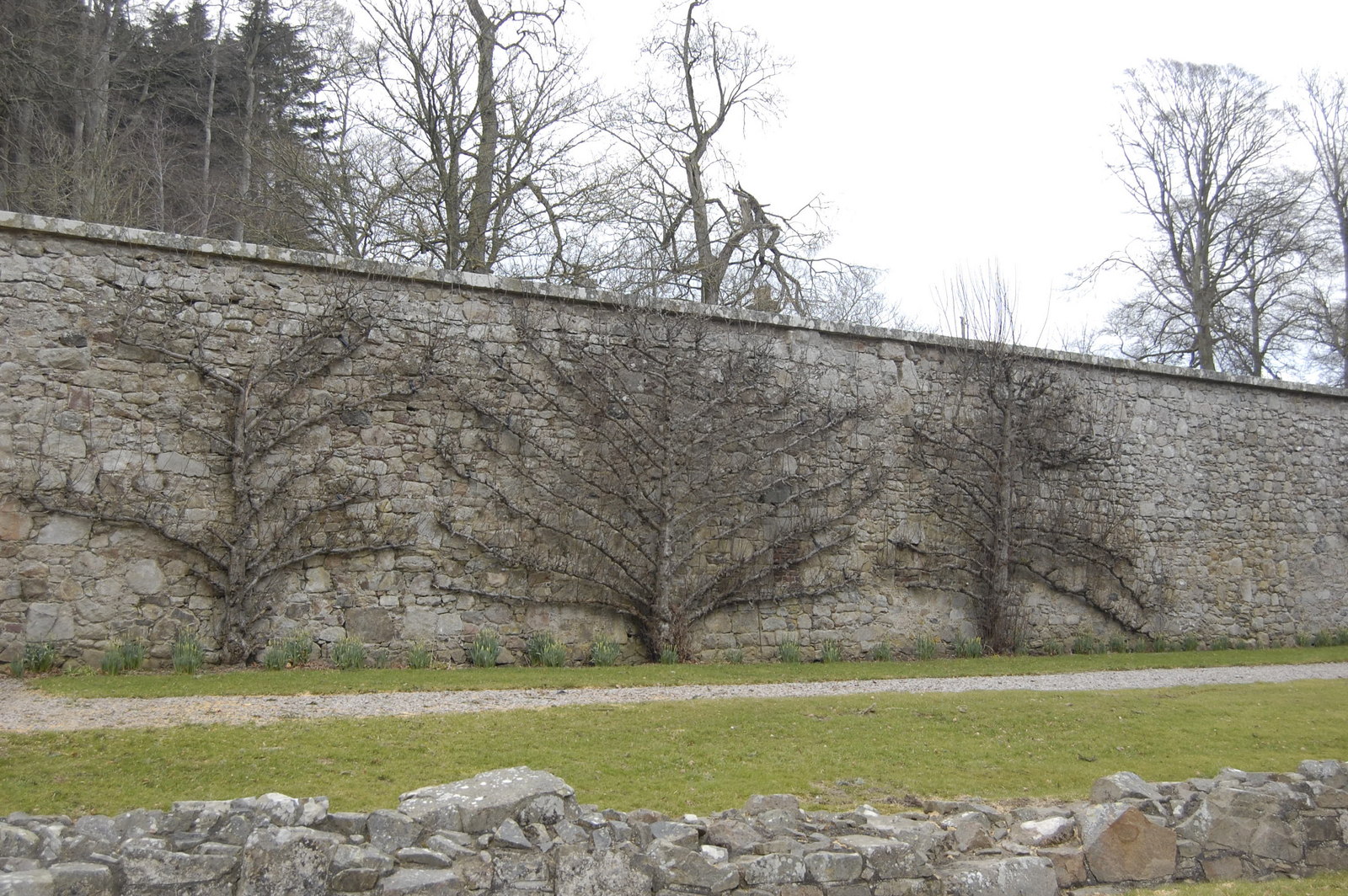
Deer Abbey
Aberdeenshire
Its earlier community is the one recorded in the margins of the Book of Deer, one of Scotland's oldest surviving manuscripts, making this ruin a ra…
- Easy path
Sacred place · Prehistoric
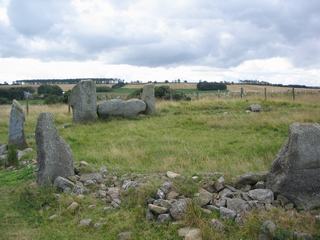
Strichen stone circle
Aberdeenshire
Destroyed twice and rebuilt twice, Strichen is less a fixed ancient monument than a 250-year argument about where its stones truly belong.
- Some walking
Tomb or burial place · Prehistoric
Cairn Catto
Aberdeenshire
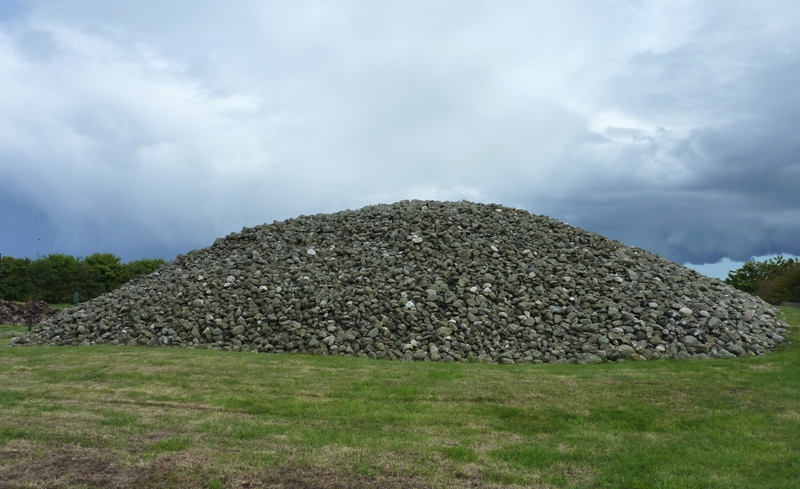
A near-48-metre wedge of pink granite boulders on a Buchan ridge, one of north-east Scotland's longer Neolithic (the first farming age, roughly 400…
- Near Longside
- Some walking
Tomb or burial place · Prehistoric
Memsie Cairn
Aberdeenshire
The sole survivor of a cemetery of three great Bronze Age (roughly 2500–800 BC, when metal tools first spread) cairns, its lost neighbours quarried…
- Easy path
Questions people ask
- What is a recumbent stone circle?
- A regional Bronze Age design centred on one horizontal slab, set between two tall uprights and followed by smaller stones around the ring.
- How big is the recumbent stone at Aikey Brae?
- It weighs about 21.5 tonnes, making it one of the largest recumbent stones known in Aberdeenshire.
- How many stones survive at Aikey Brae?
- Five stones remain standing, including the recumbent, and five others have fallen from the original ring.
- When was Aikey Brae excavated?
- It was excavated in 2001 by Chris Ball and Richard Bradley, who found alternating red-and-white kerbstones and worked-stone artefacts.
- Is Aikey Brae a protected site?
- Yes. Scheduled-monument status has protected the five uprights, their fallen companions and the ring bank from disturbance since 1925.
Sources
The Ancient Codex, in your pocket
Get the Pocket Codex app
Carry the directory with you — Aikey Brae stone circle and thousands of ancient places across Britain and Ireland, offline, wherever you roam.