Its earlier community is the one recorded in the margins of the Book of Deer, one of Scotland's oldest surviving manuscripts, making this ruin a rare physical anchor for that text.
At Deer Abbey, pink-granite walls trace the cross-shaped church and the covered walkway round the monastery’s central courtyard that once stood beside it above the River Ugie. A carved basin for rinsing communion vessels survives in the part of the church around the altar, while low grassy banks mark the range where the Cistercian community ate, slept and worked.
The monastery here was Cistercian, an order that prized remote, self-sufficient settlements, and it was never large: no more than about fifteen monks lived here at any one time. It replaced an older community of Scottish monks or priests whose existence is known almost entirely through grants written into the margins of an early illuminated gospel book, one of the few written links to Scotland’s early medieval church anywhere in the country.
What remains today is the result of centuries of reuse as much as of ruin. A country estate absorbed the abbey lands, quarried its stone for later buildings, and buried its own dead among the monks’ graves, before the site passed into public care and became a place for visitors to read the layers rather than live among them.
What follows is drawn from published sources, with each claim labelled by how firmly it is established.
History
Before the Cistercians arrived, a smaller community of Scottish monks or priests already occupied the site, never numbering more than fifteen. Grants made to this earlier community during the 12th century were recorded in notes written into the margins of the Book of Deer, along with a claim that the foundation itself went back to Saint Columba and Saint Drostan, though no independent record confirms that origin.
By 1219 William Comyn, Earl of Buchan through his marriage, founded a new Cistercian abbey about two miles west of the old religious house, granting it a share of the lands of Old Deer while the remainder supported a parish church. He brought monks from Kinloss Abbey near Elgin to establish the community, which was dedicated to the Blessed Virgin, and the older foundation was likely absorbed into the new one rather than continuing separately.
For roughly three centuries after its founding the abbey's history is largely undocumented, a gap common to many small religious houses that left few surviving records. By the 16th century the community was being secularised, and in 1587 the abbey's lands and title were converted into a secular lordship for the Commendator Robert Keith II, who became Lord Altrie, ending its life as a working monastery.
In 1766 the ruined abbey lands were acquired by James Ferguson, Lord Pitfour, and absorbed into the wider Pitfour estate. His son, the third laird, enclosed the site with a stone wall some 5 metres high in 1809 and turned the grounds into an orchard, adding a four-columned Doric portico taken from an earlier mausoleum; excavation during this period uncovered some burials, which were left undisturbed.
The fifth laird of Pitfour had the ruins cleared and used stone taken from the abbey buildings to construct a family mausoleum, built to hold the body of his daughter after she died in 1851 at the age of twenty-one. Only one other person was later buried there, Ferguson's mother-in-law, Lady Langford, making the mausoleum a small, private postscript to the medieval site.
The Pitfour estate went bankrupt in the early 1900s, and around 1926 the abbey property passed to the Roman Catholic Diocese of Aberdeen, which soon handed its care to the Ministry of Works. The estate house, by then in poor repair, was demolished, with much of its stone reportedly reused in council house construction in Aberdeen, while the 19th-century mausoleum was removed in the 1930s and part of it rebuilt as an entrance, again without disturbing the graves it held.
People
-
William Comyn, Earl of Buchan
Founded the Cistercian abbey by 1219 and is buried at the site.
-
Robert Keith II, Lord Altrie
Commendator who oversaw the abbey's conversion into a secular lordship in 1587.
-
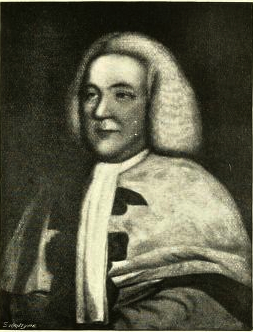
Portrait: Ferguson and Fergusson, James & Robert Menzies / Wikimedia Commons / Public domain James Ferguson, Lord Pitfour
Acquired the abbey ruins into the Pitfour estate in 1766.
Cultural influences
-
Cistercian monastic practice
Deer Abbey was founded for the Cistercian order, whose monasteries favoured disciplined communal life and self-sufficient rural estates. Its remote setting beside the Ugie reflects that monastic ideal, while the earlier religious community at Old Deer remained important to the abbey’s local identity.
Connections
-
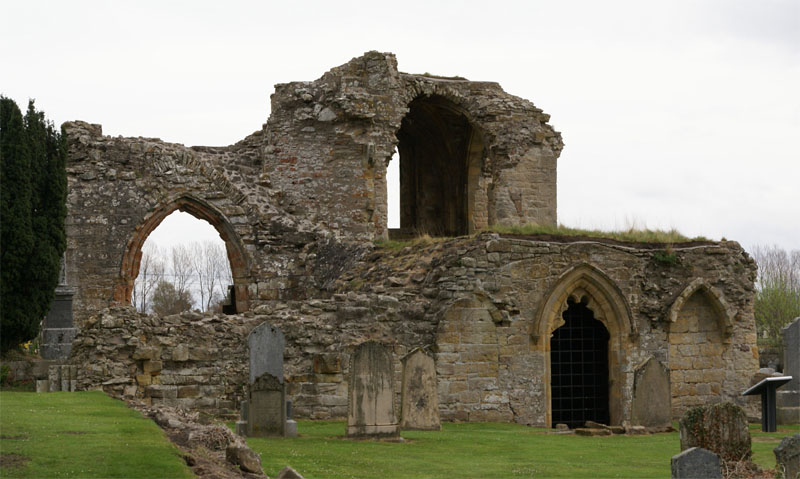
Photo: Otter / Wikimedia Commons / CC BY-SA 3.0 Kinloss Abbey
Supplied the Cistercian monks who established the new community at Deer in 1219.
-
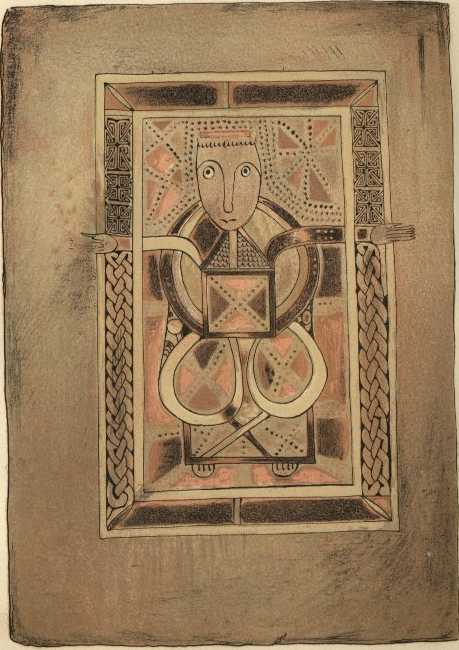
Photo: Unknown / Wikimedia Commons / Public domain Book of Deer
Its marginal notitiae record 12th-century grants to the earlier religious community on this site, the main surviving evidence for that community's existence.
-
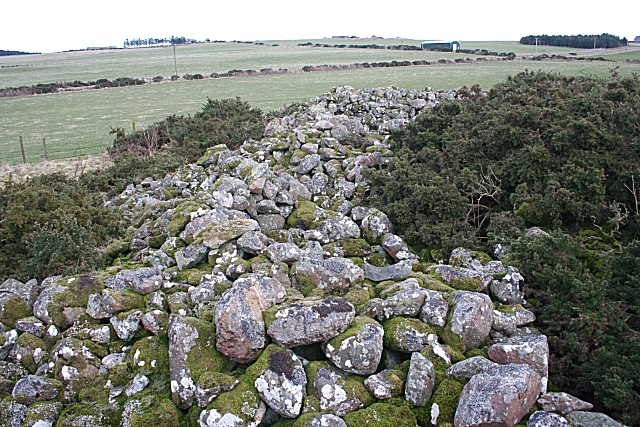
Photo: Anne Burgess / Wikimedia Commons / CC BY-SA 2.0 Catto Long Barrow
A prehistoric long barrow in the surrounding area, part of the wider evidence of earlier occupation near the abbey.
-
Photo: Huangdan2060 / Wikimedia Commons / CC BY 3.0 Abbot of Deer
The list of abbots and commendators who headed the monastery documents its leadership from foundation to secularisation.
Discovery & excavation
Graves were uncovered during work on the site in the early 19th century, when the third laird of Pitfour enclosed the grounds and discovered burials without disturbing them. Later clearance by the fifth laird removed much of the standing ruin to provide building stone, altering the site further before it came into state care.
In culture
-
The Book of Deer
The Book of Deer, an early medieval manuscript associated with the older community at Old Deer, preserves Gaelic notes about local land grants and the foundation tradition of Columba and Drostan. It is kept at Cambridge University Library, but remains the most important surviving written witness to the religious landscape that preceded the Cistercian abbey.
What to look for
-
The cruciform church wall
Surviving fragments trace the outline of a cross-shaped church some 48 metres (157 feet) long, with a north aisle to the nave.
-
The piscina
A carved stone basin, used for washing communion vessels, survives among the ruined masonry of the church.
-
The south cloister range
Considerable portions of the cloister's south range remain, measuring roughly 21 by 27 metres (70 by 90 feet).
-
The Pitfour enclosing wall and portico
A 19th-century wall around 5 metres (16 feet) high encloses part of the site, alongside a four-columned Doric portico taken from an earlier mausoleum.
What is said
Folklore and tradition, recorded as what is said — not as established fact.
-
Foundation by Columba and Drostan
A tradition recorded in the margins of the Book of Deer holds that the earlier religious community on this site was founded by Saint Columba and Saint Drostan, though this claim has no independent confirmation.
Plan your visit
- Location
- 57.5231°N · 2.0542°W
- Access
- Open access
- Terrain
- Easy going
- Time needed
- About 45 minutes
Opening & admission
Check the managing body's site for current admission details.
- Ruined abbey remains set within an enclosed walled site
- No public access route or restrictions are recorded
Nearby places
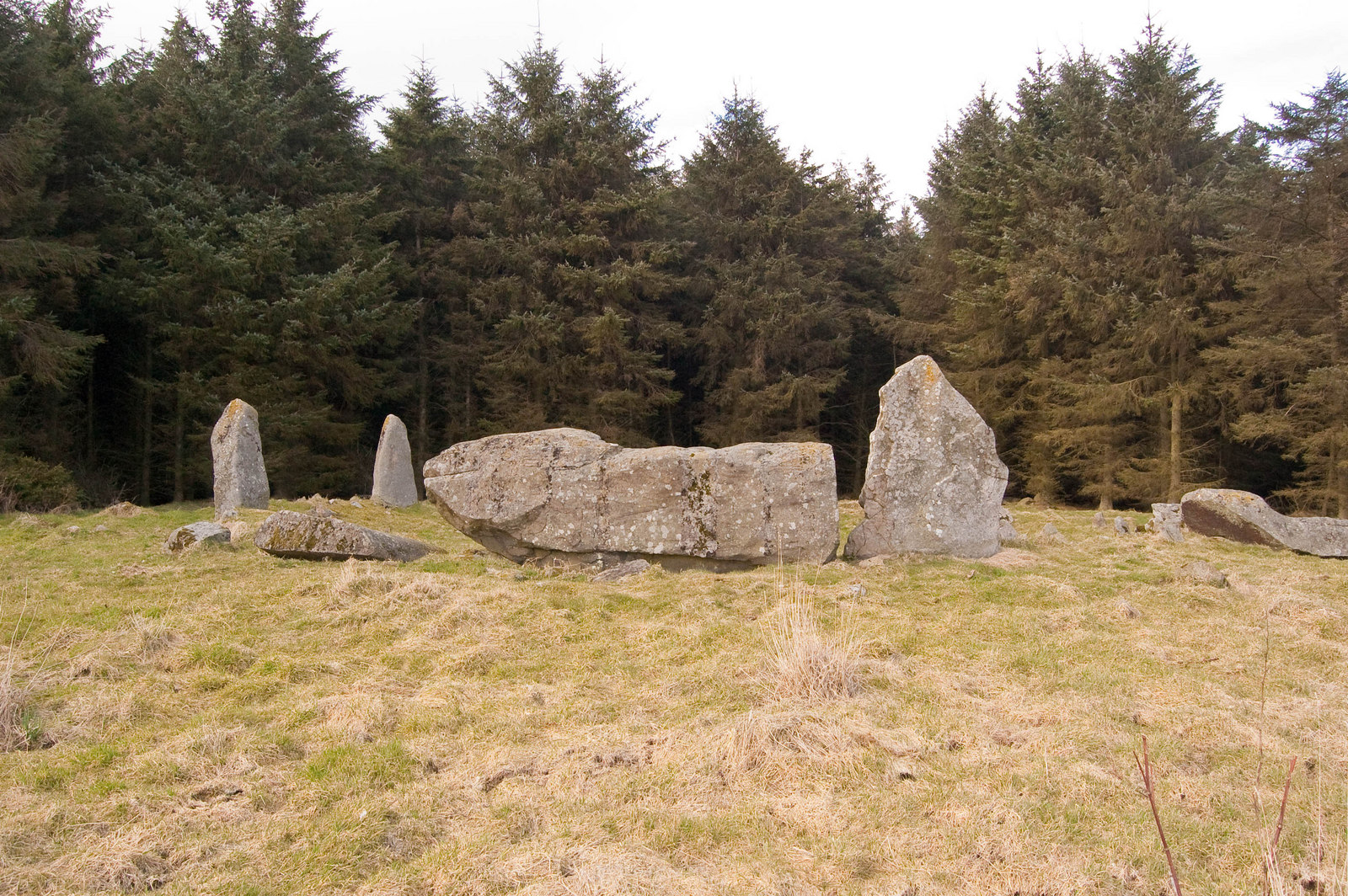
Sacred place · Prehistoric
Aikey Brae stone circle
Aberdeenshire
Its 21.5-tonne recumbent stone ranks among the heaviest in Aberdeenshire, yet a 2001 dig returned a puzzling late radiocarbon date that unsettles t…
- Near Old Deer
- Some walking
Sacred place · Prehistoric
Strichen stone circle
Aberdeenshire
Destroyed twice and rebuilt twice, Strichen is less a fixed ancient monument than a 250-year argument about where its stones truly belong.
- Some walking
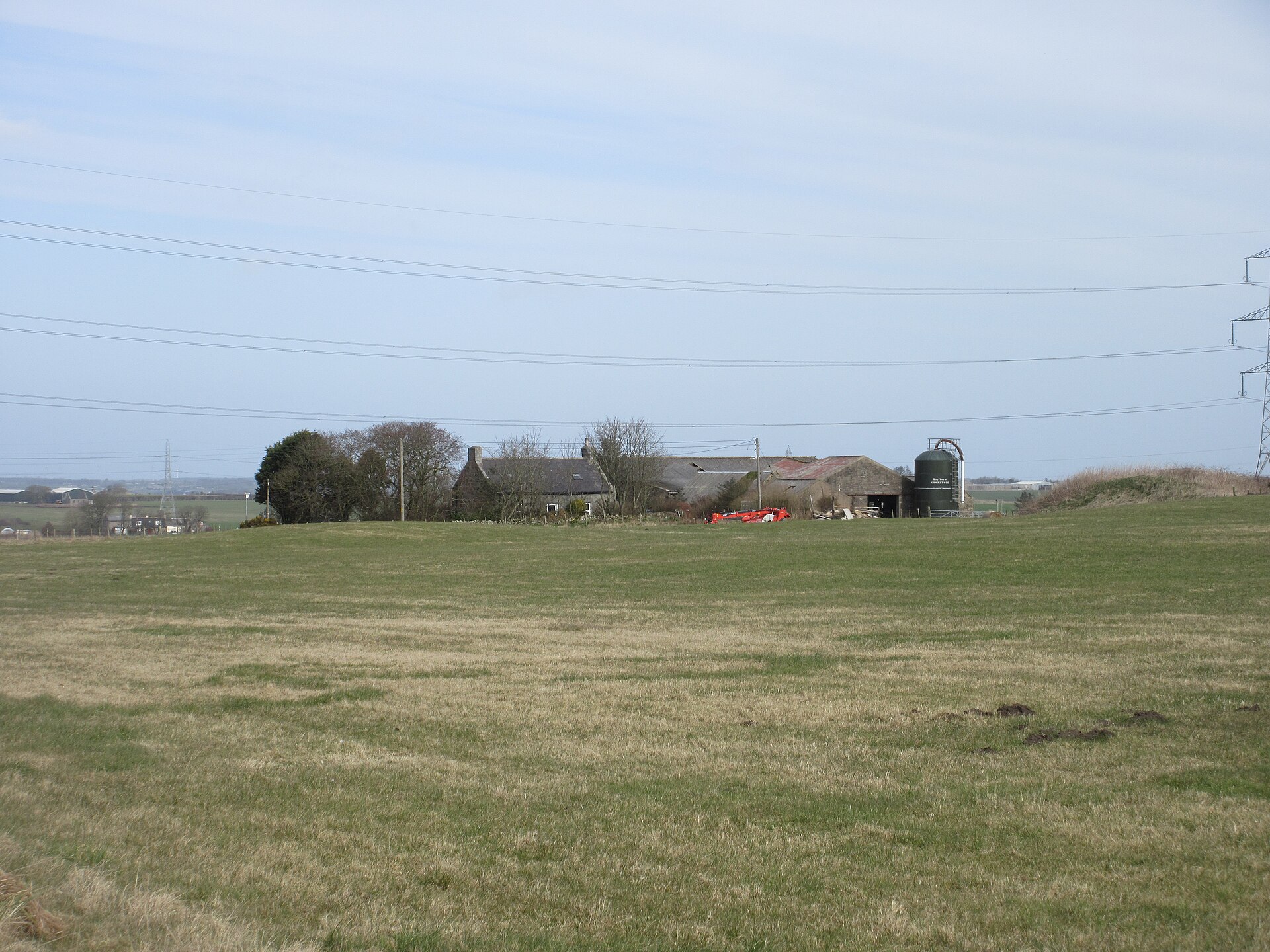
Tomb or burial place · Prehistoric
Cairn Catto
Aberdeenshire
A near-48-metre wedge of pink granite boulders on a Buchan ridge, one of north-east Scotland's longer Neolithic (the first farming age, roughly 400…
- Near Longside
- Some walking
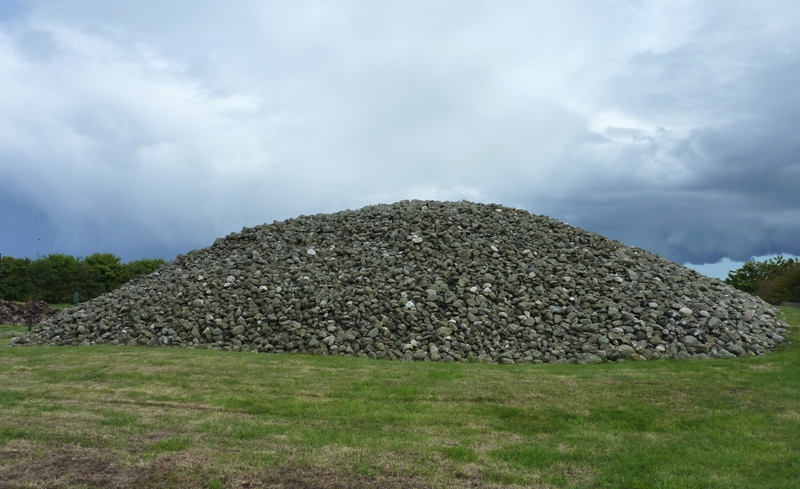
Tomb or burial place · Prehistoric
Memsie Cairn
Aberdeenshire
The sole survivor of a cemetery of three great Bronze Age (roughly 2500–800 BC, when metal tools first spread) cairns, its lost neighbours quarried…
- Easy path
Questions people ask
- Who founded Deer Abbey?
- William Comyn, Earl of Buchan through marriage, founded the Cistercian abbey by 1219 and was buried there.
- What religious order lived at Deer Abbey?
- Cistercian monks, brought from Kinloss Abbey near Elgin to establish the new community.
- What survives of the abbey today?
- Fragments of the cruciform church, including a piscina, and considerable remains of the cloister's south range.
- Why is Deer Abbey linked to the Book of Deer?
- The Book of Deer's margin notes record 12th-century land grants to the earlier religious community that occupied this site before 1219.
- What happened to the abbey after the Reformation?
- It was secularised, becoming a lordship for Commendator Robert Keith II, who took the title Lord Altrie in 1587.
Sources
- Wikipedia: Deer Abbey
- Catholic Encyclopedia (1913), 'Abbey of Deer'
- Cowan and Easson, Medieval Religious Houses: Scotland (1976)
- Historic Environment Scotland
Explore more: Building or ruins · Medieval · Aberdeenshire
The Ancient Codex, in your pocket
Get the Pocket Codex app
Carry the directory with you — Deer Abbey and thousands of ancient places across Britain and Ireland, offline, wherever you roam.