Taken back from the English by a hay merchant in 1313, birthplace of Mary Queen of Scots, and burned by accident in 1746.
In September 1313 a man called William Bynnie, who was in the habit of selling hay to the English garrison at Linlithgow, drove his wagon up to the gate as usual. When it was opened he halted the wagon in the gateway so it could not be shut, and he and his seven sons came out from under the hay. The Peel fell to Robert the Bruce, who sent reinforcements and then had the place dismantled so that nobody could take it back.
The Peel was Edward I’s work, thrown up around an existing royal manor in 1301–02 to secure the supply route between Edinburgh and Stirling — a timber palisade and an outer ditch, begun in March 1302 under two priests and to designs by Master James of St George. In September that year sixty men and 140 women dug the ditches, the men paid twopence a day and the women a penny.
What replaced it was not a castle. After fire damaged the town in 1424, James I set out to build a palace, possibly with Sheen in mind, and his successors kept at it: Matthew the Painter decorating the royal apartments in 1433, James III and James IV turning it into a formal courtyard. James IV tipped his masons in drinksilver — eighteen shillings in April 1489, two gold angel coins that September.
Mary, Queen of Scots was born here in December 1542. The English ambassador Ralph Sadler came in March and was shown the infant out of her swaddling; he wrote that she was as goodly a child as he had seen, and like to live. Around the same time the blacksmith William Hill was fitting iron grilles, called yetts, to the windows.
After 1603 the court went south and the building began to fail. The north range, described as very poor in 1583 and ruinous in 1599, came down at four in the morning on 6 September 1607, and the Earl of Linlithgow wrote to James VI that it was fallen, roof and all, within the walls to the ground, and that the inner wall looked every moment as though it would fall and break the king’s fountain. James had it rebuilt between 1618 and 1622 — 3,000 stones’ weight of lead from Leadhills for the roof, at £3,600 Scots — and planned to come and see it in 1622. He never returned to Scotland.
The palace was ruinous again by 1668. Bonnie Prince Charlie passed through in September 1745 without staying the night, and the fountain is said to have run with wine for him. Four months later the Duke of Cumberland’s army burned most of the buildings down, by accident, having left lamps on straw bedding on the night of 31 January.
What follows is drawn from published sources, with each claim labelled by how firmly it is established.
History
The ruins of Linlithgow Palace stand in the town of Linlithgow in West Lothian, fifteen miles west of Edinburgh. The palace was one of the principal residences of the monarchs of Scotland in the fifteenth and sixteenth centuries. A royal manor stood on the site from the twelfth century. English forces under Edward I enclosed it with a timber palisade and outer ditch in 1301–02 to create a fortification known as the Peel, which secured the supply route between Edinburgh Castle and Stirling Castle. Work began in March 1302 under two priests, Richard de Wynepol and Henry de Graundeston, to designs by Master James of St George.
In September 1302 sixty men and 140 women helped dig the ditches, the men paid twopence and the women a penny a day. A hundred foot-soldiers were still labouring on the castle that November, and work continued through the summer of 1303. The Peel was retaken for Scotland in September 1313 by an ordinary Scot named William Bynnie or Bunnock, who sold hay to the garrison. When the gate was opened for him he halted his wagon in it so that it could not be shut, and he and his seven sons came out from under the hay and took the place for Robert the Bruce. The king sent reinforcements and had the Peel dismantled so that it could not be taken back.
Fire partly destroyed the town in 1424, and James I began rebuilding the palace as a grand royal residence — a palace rather than a heavily fortified castle, perhaps with Sheen Palace in England in mind. Matthew the Painter decorated the royal apartments in 1433, and over the following century the building grew into a formal courtyard with substantial additions by James III and James IV.
James IV kept up the work and tipped the masons for it, a payment known as drinksilver — eighteen shillings in April 1489 and two gold angel coins that September. In November 1497 he sent the master mason of Linlithgow to Stirling to draw up plans for his new lodgings there.
Mary, Queen of Scots was born at Linlithgow in December 1542. In March 1543 the English ambassador Ralph Sadler came to see her, and Mary of Guise had the infant shown to him out of her swaddling; Sadler wrote that she was as goodly a child as he had seen, and like to live. The blacksmith William Hill was employed about then to fit iron window grilles, called yetts, to make the palace more secure.
After the Union of the Crowns in 1603 the court moved largely to England and the palace was little used. The north range, called very poor in 1583 and ruinous in 1599, fell at four in the morning on 6 September 1607; the Earl of Linlithgow wrote to the king that the north quarter was fallen, roof and all, within the walls to the ground, and that the inner wall looked every moment as though it would fall and break the king's fountain.
James VI had the north range rebuilt between 1618 and 1622, with carving designed by the mason William Wallace. In July 1620 the architect James Murray of Kilbaberton estimated 3,000 stones' weight of lead for the roof at £3,600 Scots, and the lead came from Leadhills in Lanarkshire. The king planned to visit in 1622 and never returned to Scotland. The palace was described as ruinous again in 1668. Its last royal moment came in September 1745, when Bonnie Prince Charlie passed through on his march south without staying the night — the fountain, it is said, was made to run with wine in his honour.
The Duke of Cumberland's army destroyed most of the buildings on the night of 31 January to 1 February 1746, by accident, when lamps were left on straw bedding. Long neglected, the palace passed to the Commissioners of Woods and Forests with its grounds in 1832 and to the Office of Works in 1874, with major consolidation in the 1930s and 1940s. Historic Environment Scotland maintains it now; 103,312 people visited in 2019, and for more than forty years tours for children have been led by Junior Guides, pupils of Linlithgow Primary School.
People
-
William Bynnie
Captured Linlithgow Peel in 1313 by hiding with his seven sons beneath a hay wagon at the gate.
-
Robert the Bruce
Sent reinforcements after the capture of the Peel and had it dismantled to deny it to the English.
-

Photo: Unidentified painter / Wikimedia Commons / Public domain Mary, Queen of Scots
Was born at Linlithgow Palace in December 1542.
Cultural influences
-
The 1301–02 Peel was built to designs by Master James of St George, linking the site’s early defences to a leading royal castle builder.
Connections
-

Photo: Lairich Rig / Wikimedia Commons / CC BY-SA 2.0 A local landmark associated with the historic landscape around Linlithgow.
-
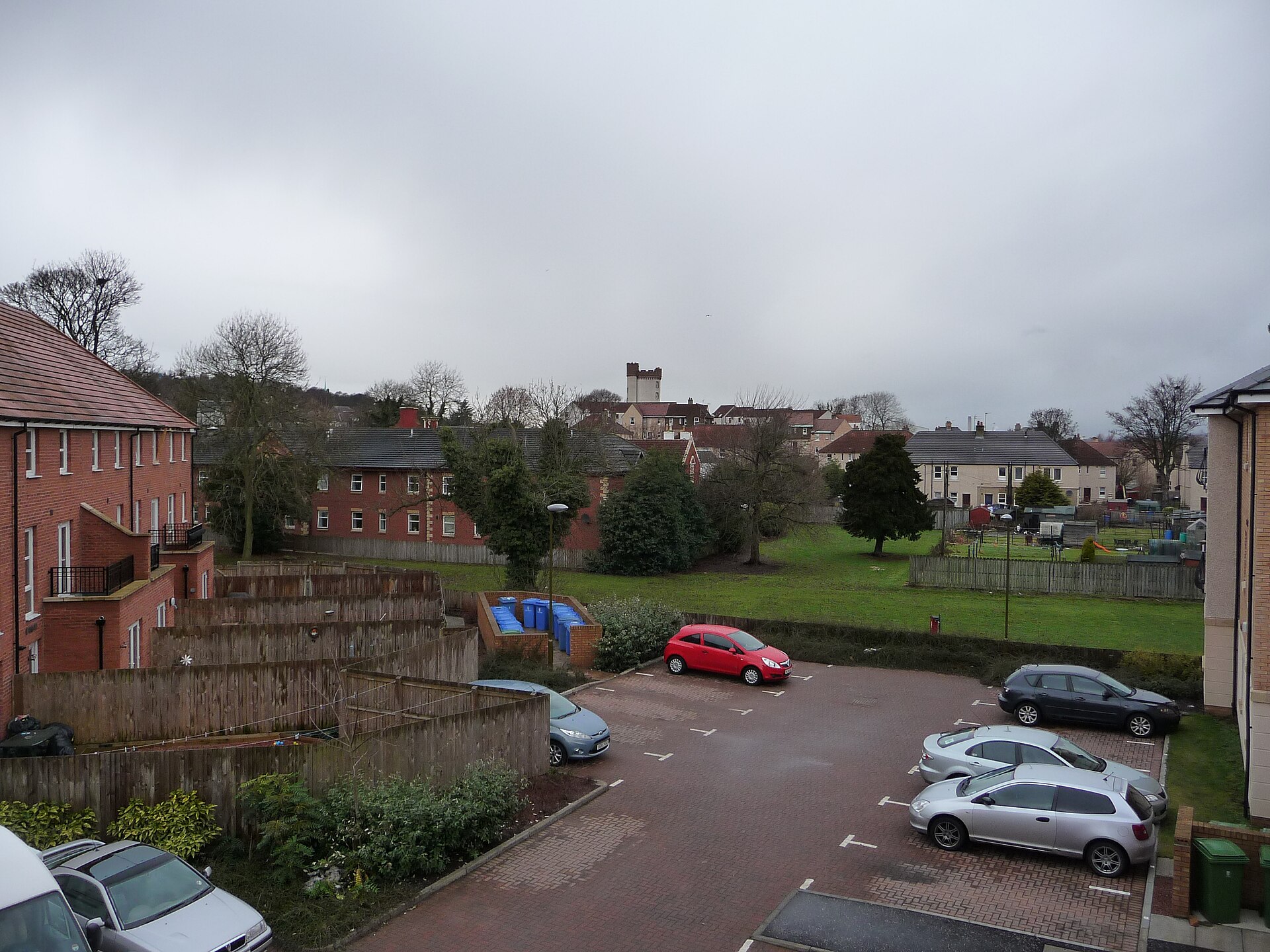
Photo: Bob Simpson / Wikimedia Commons / CC BY-SA 2.0 A Roman-period inscribed monument in the wider Central Scotland landscape.
-
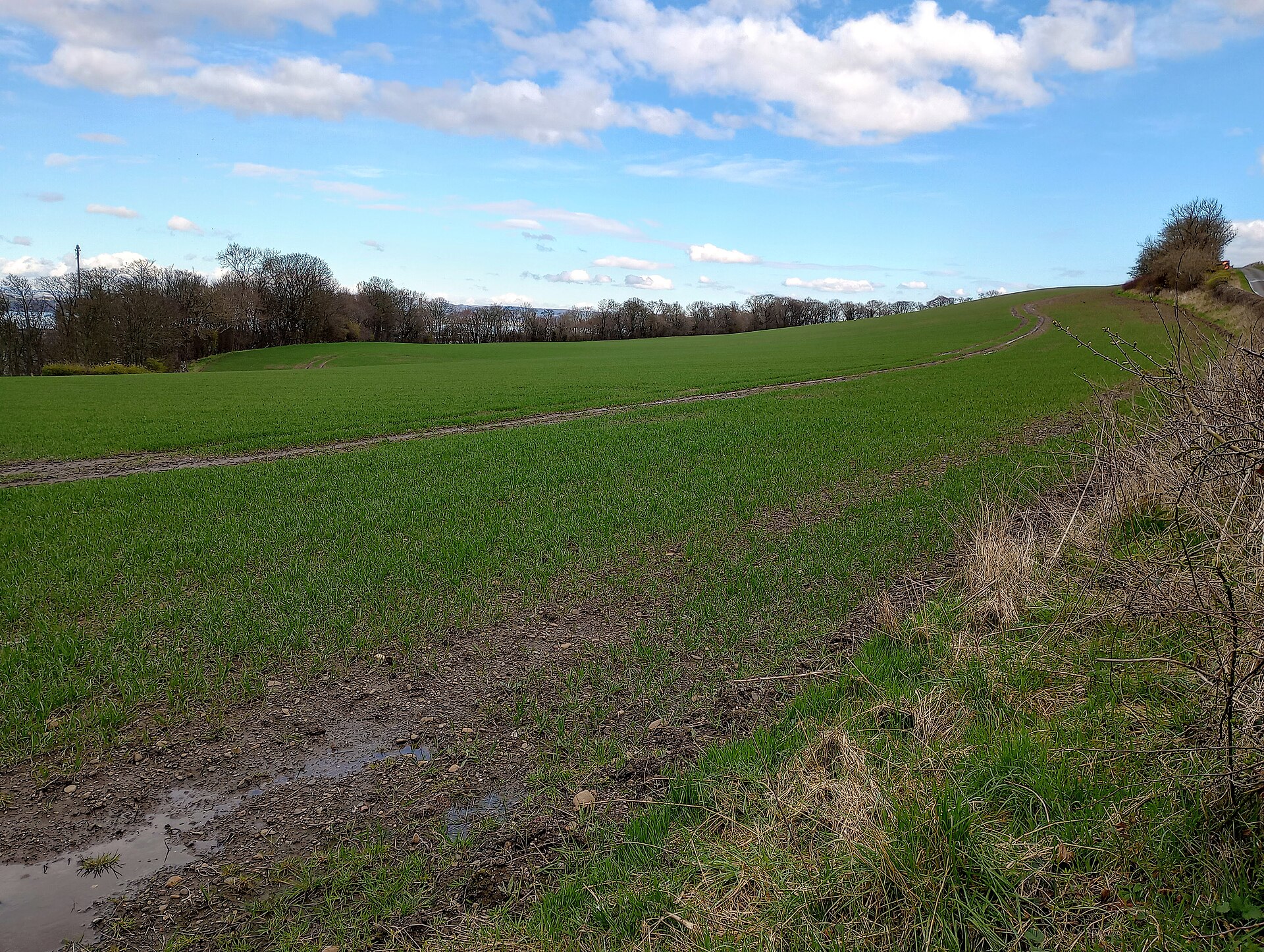
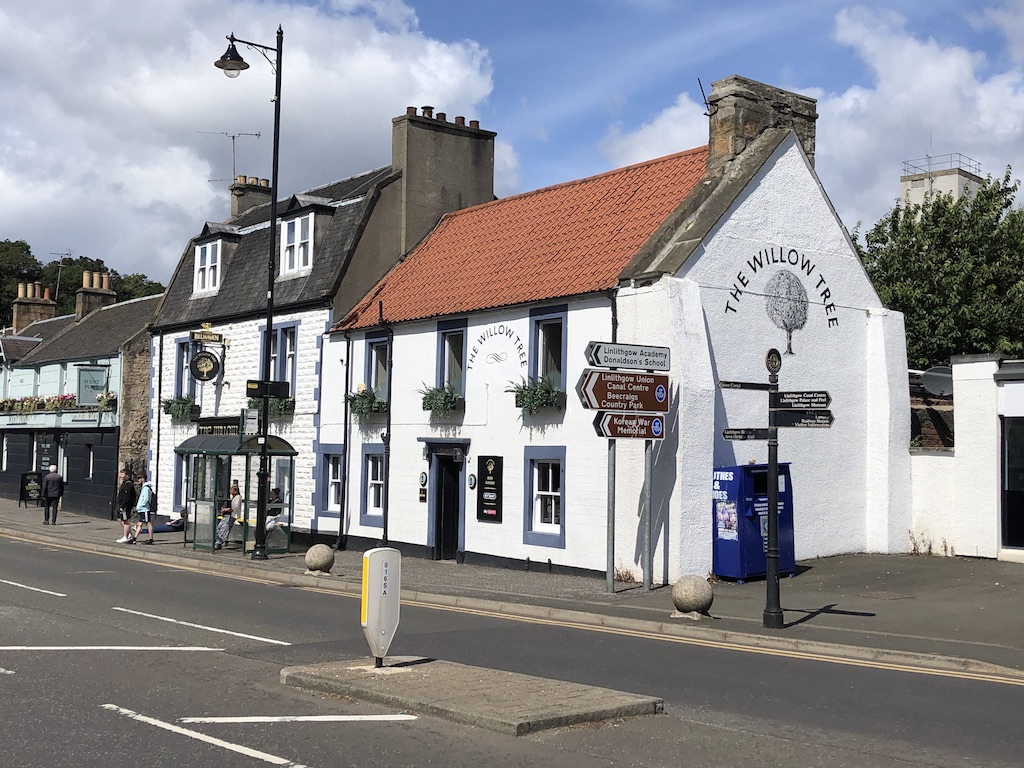
Photo: Jim Smillie / Wikimedia Commons / CC BY-SA 2.0 A Roman fort site in the wider Central Scotland landscape.
What to look for
-
The fountain
The one the Earl of Linlithgow feared the collapsing inner wall would break in 1607 — and which is said to have run with wine for Bonnie Prince Charlie in 1745.
-
The north range
Fallen at four in the morning on 6 September 1607 and rebuilt by James VI between 1618 and 1622, with carving designed by the mason William Wallace.
-
St Michael's Church
The fifteenth-century parish church immediately south of the palace, open in summer, so the two can be visited together.
-
The courtyard façade
Where the carving at the window-heads and the Royal Arms of Scotland belong to the rebuilding of 1618–22 rather than to the medieval palace.
What is said
Folklore and tradition, recorded as what is said — not as established fact.
-
The wine fountain
The palace fountain is said to have run with wine when Bonnie Prince Charlie passed through Linlithgow in 1745.
Plan your visit
- Location
- 55.9785°N · 3.6010°W
- Nearest settlement
- Linlithgow
- Time needed
- About 90 minutes
- What survives
- The ruined royal palace retains its great courtyard ranges, fountains and towered walls, despite the extensive fire damage of 1746.
Opening & admission
- Historic Environment Scotland manages the palace; opening arrangements vary seasonally.
Nearby places
Ancient tree · Medieval
Katie Wearie's Tree
Perth and Kinross
Katie Wearie’s Tree was a named Linlithgow memorial to a drover girl, preserved in an early twentieth-century postcard even though little else is k…
- Near Perth and Kinross
Building or ruin · Medieval
Bridgeness Slab
Falkirk
The Bridgeness Slab is the most detailed surviving Antonine Wall distance slab, combining a precise construction record with vivid Roman imagery of…
- Easy path
Fortified place · Roman
Inveravon
Falkirk
Inveravon is one of the Antonine Wall’s most uncertain fort sites, where limited excavation, geophysics and aerial photography reveal faint foundat…
- Some walking
Sacred place · Prehistoric
Cairnpapple Hill
West Lothian
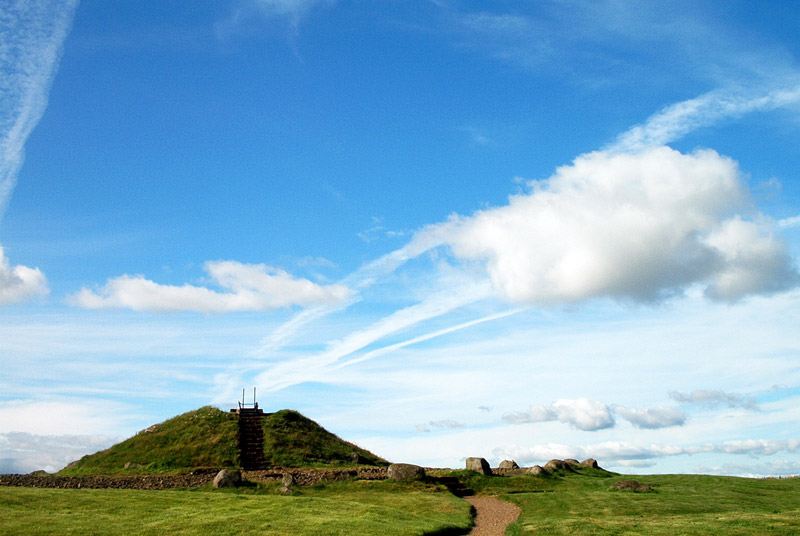
Cairnpapple Hill, on a dominating summit 312 metres above sea level with views from coast to coast in central lowland Scotland, was used and re-use…
- Near Bathgate
- 264 metres from car park
- Easy path
Questions people ask
- Who was born here?
- Mary, Queen of Scots, in December 1542. The English ambassador Ralph Sadler saw her out of her swaddling in March 1543 and wrote that she was as goodly a child as he had seen, and like to live.
- How was the English fort taken?
- By a hay merchant. In September 1313 William Bynnie stopped his wagon in the open gateway so it could not be closed, and he and his seven sons came out from under the hay and took the Peel for Robert the Bruce.
- How was it destroyed?
- By accident. The Duke of Cumberland's army burned most of the palace on the night of 31 January to 1 February 1746, from lamps left on straw bedding.
- Who looks after it now?
- Historic Environment Scotland. The palace came to the Commissioners of Woods and Forests in 1832 and the Office of Works in 1874, with major consolidation in the 1930s and 1940s.
Sources
The Ancient Codex, in your pocket
Get the Pocket Codex app
Carry the directory with you — Linlithgow Palace and thousands of ancient places across Britain and Ireland, offline, wherever you roam.