The Bridgeness Slab is the most detailed surviving Antonine Wall distance slab, combining a precise construction record with vivid Roman imagery of military victory, ritual and imperial propaganda.
A long sandstone tablet found at Bridgeness records the work of Rome’s Second Legion on the Antonine Wall around AD 142. Its Latin inscription measures a completed stretch of 4,652 paces, while relief panels turn the administrative record into a display of imperial power.
The original is kept in the National Museum of Scotland, with replicas near the discovery site at Bo’ness and in the Hunterian Museum. Found during 1868 excavations, it remains the best-preserved and most elaborate of Scotland’s Roman distance slabs.
The sculpture presents contrasting messages: a cavalryman and defeated Britons on one side, and a formal sacrifice on the other. Faint red pigment traces also show that the monument was once coloured, giving a very different visual impact from its present sandstone surface.
What follows is drawn from published sources, with each claim labelled by how firmly it is established.
History
The Bridgeness Slab was erected around AD 142 to mark completion of a section of the Antonine Wall by the Second Augustan Legion. Its central inscription credits the legion with building 4,652 paces for Emperor Antoninus Pius, turning a precise engineering record into a public statement of imperial achievement. The slab was discovered in 1868 during excavation at Bridgeness on land owned by Henry Mowbray Cadell. Dr Henry Cadell witnessed the find, and the family offered the stone to the Society of Antiquaries of Scotland for the National Museum of Scotland in return for a local copy.
A first on-site replica showed only the centre panel. In 2012 Bo’ness Community Council and Falkirk Council unveiled a more complete replica in Kinningars Park, made with digital laser scanning because physical moulding materials such as silicone could risk damage to the original stone. Cleaning has revealed faint pigment traces, mainly red, on the original slab. These remains indicate that the sculpture was once highly coloured, an important reminder that Roman distance monuments were designed to be conspicuous and visually persuasive rather than simply read as bare inscriptions.
People
-
Antoninus Pius
Roman emperor named in the inscription as the ruler for whom the Wall section was completed.
-
Henry Mowbray Cadell
Owner of the land where the slab was found in 1868.
-
Aulus Claudius Charax
Possible commander of the Second Legion represented pouring a libation in the ritual relief.
Cultural influences
-
The inscription and reliefs combine engineering commemoration with a visual claim of Roman military and religious authority.
Connections
-
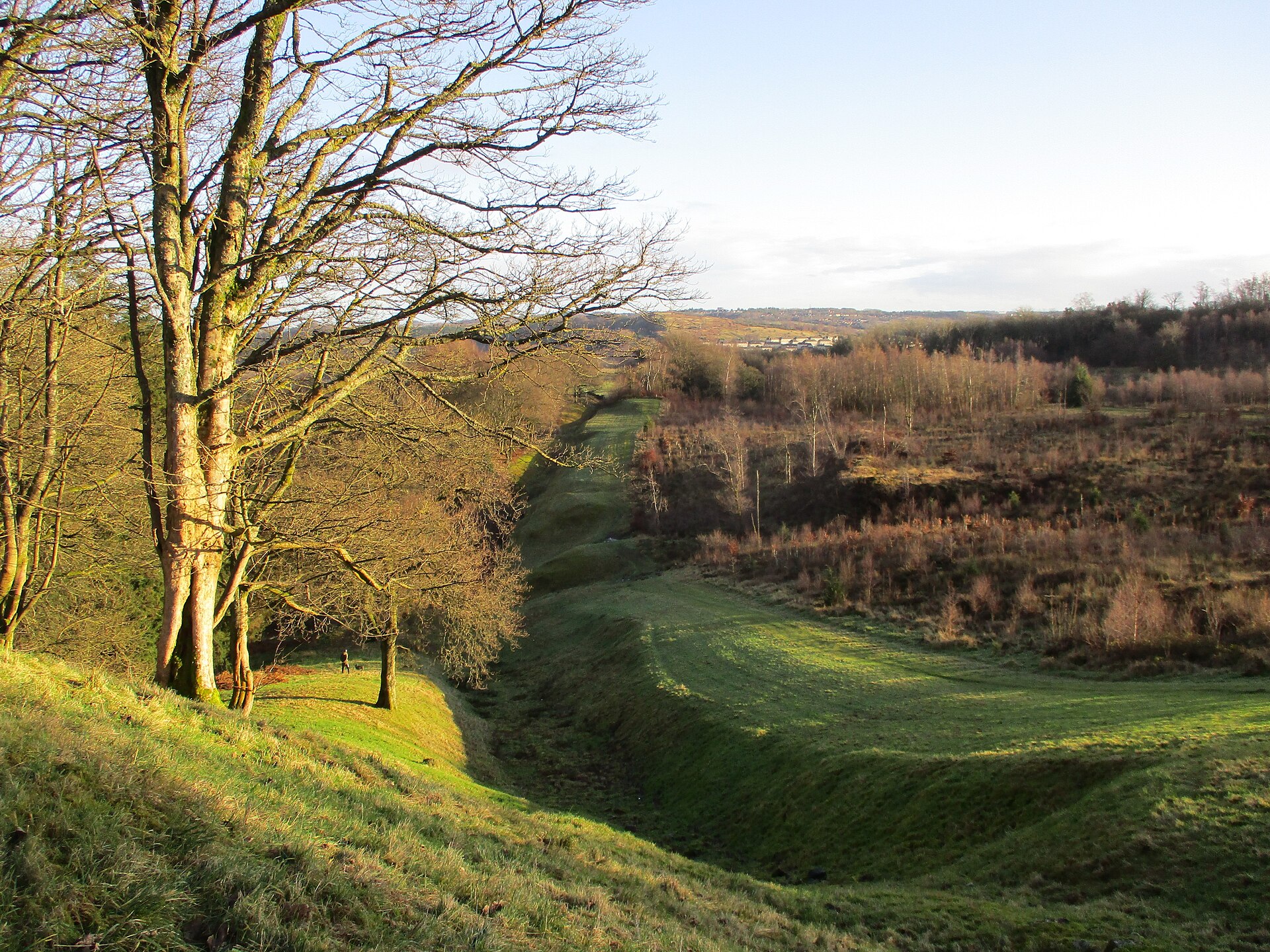
Photo: Alan O'Dowd / Wikimedia Commons / CC BY-SA 2.0 Frontier monument whose construction section the slab records.
-
Hunterian Museum
Glasgow museum holding related Second Legion distance slabs and an older copy of the stone.
Discovery & excavation
The slab was found during excavations at Bridgeness in 1868 on land owned by Henry Mowbray Cadell. Dr Henry Cadell witnessed the discovery, after which the family offered the original to the Society of Antiquaries of Scotland for the National Museum of Scotland in exchange for a local copy.
In culture
-
Bo’ness Community Council and Falkirk Council film explaining the monument.
What to look for
-
Central inscription
The Latin text names Antoninus Pius, the Second Legion and the 4,652 paces completed.
-
Victory panel
A Roman cavalryman and defeated Britons present a striking image of conquest.
-
Sacrifice panel
The suovetaurilia scene shows a bull, pig and sheep sacrifice before the Wall’s construction.
Plan your visit
- Location
- 56.0162°N · 3.5837°W
- Access
- Open access
- Terrain
- Easy going
- Time needed
- About 45 minutes
Opening & admission
No local admission charge is confirmed; check current access information before travelling.
- The original slab is in the National Museum of Scotland in Edinburgh.
- A replica stands in Kinningars Park near the discovery site.
Nearby places
Building or ruin · Medieval
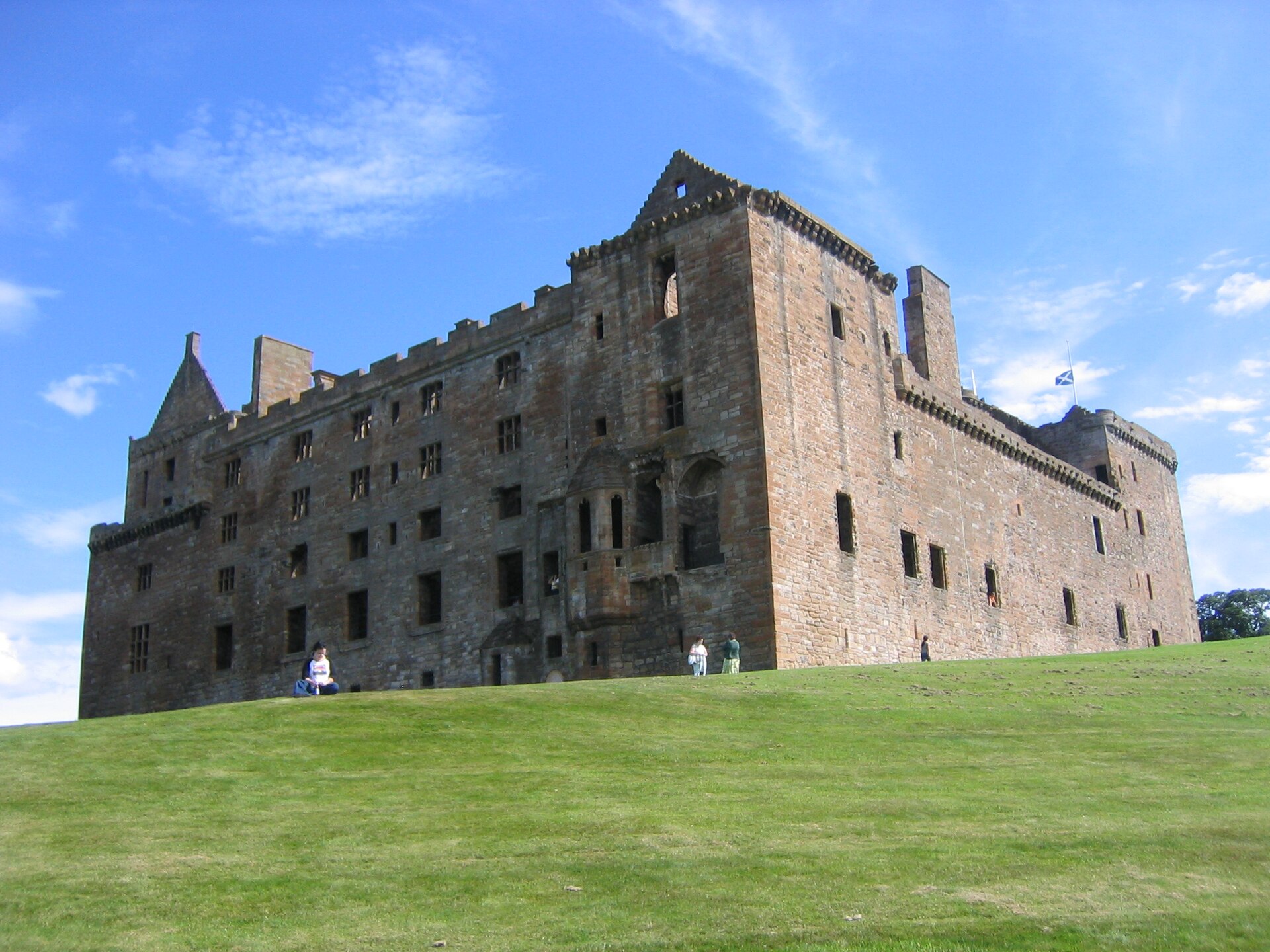
Linlithgow Palace
West Lothian
Taken back from the English by a hay merchant in 1313, birthplace of Mary Queen of Scots, and burned by accident in 1746.
- Near Linlithgow

Fortified place · Medieval
Blackness Castle
Falkirk
Blackness Castle is a Firth of Forth fortress transformed from Crichton residence and state prison into an advanced artillery work, prison and ammu…
Ancient tree · Medieval
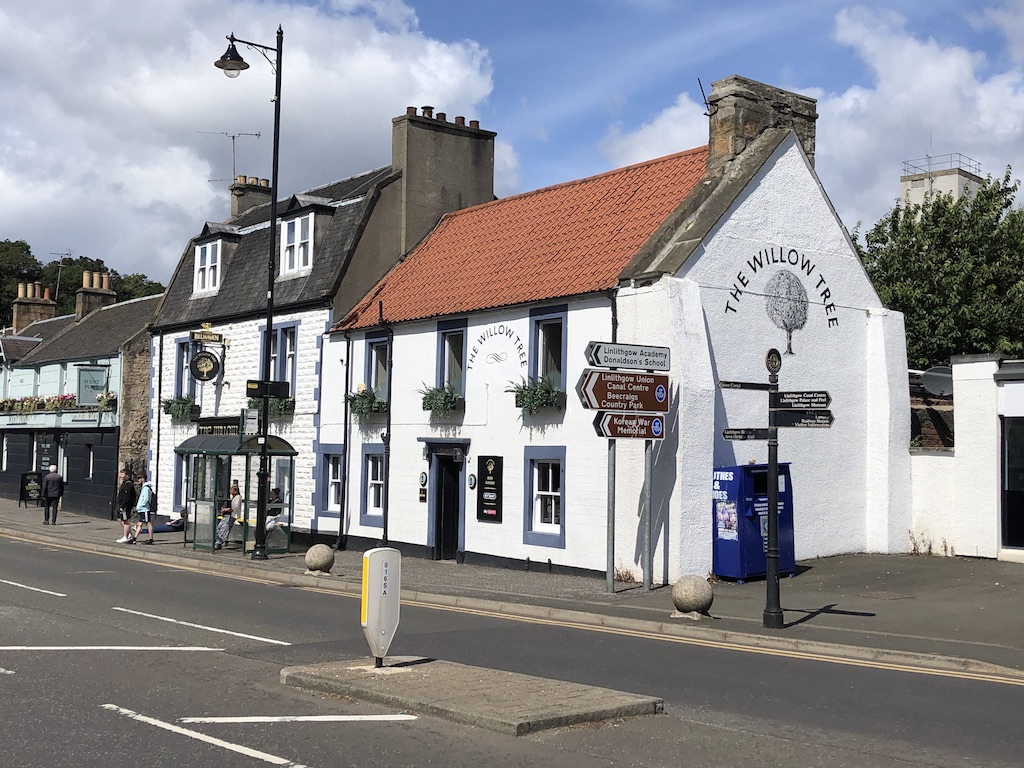
Katie Wearie's Tree
Perth and Kinross
Katie Wearie’s Tree was a named Linlithgow memorial to a drover girl, preserved in an early twentieth-century postcard even though little else is k…
- Near Perth and Kinross
_Cross_03.jpg?width=800)
Minor monument · Medieval
Market Cross, The Cross, Culross
Fife
Culross’s market cross visibly joins a 1588 trading privilege to Edwardian civic revival, its original stepped base supporting a 1902 shaft, arms a…
- Easy path
Questions people ask
- What does the Bridgeness Slab record?
- It says the Second Augustan Legion completed 4,652 paces of the Antonine Wall for Emperor Antoninus Pius around AD 142.
- Where is the original Bridgeness Slab?
- The original is in the National Museum of Scotland in Edinburgh. A replica stands near its discovery site at Bridgeness in Bo’ness.
- What do the carved side panels show?
- One depicts Roman cavalry victory over Britons; the other shows a suovetaurilia sacrifice, a Roman ritual involving a bull, pig and sheep.
Sources
Explore more: Building or ruins · Medieval · Falkirk
The Ancient Codex, in your pocket
Get the Pocket Codex app
Carry the directory with you — Bridgeness Slab and thousands of ancient places across Britain and Ireland, offline, wherever you roam.