The hilltop on the northeast slope of Cockburn Law was first fortified in the pre-Roman Iron Age, when double ramparts and ditches enclosed an oval settlement roughly 135 by 75 m, with the entrance…
Edin’s Hall Broch (an Iron Age drystone round tower), Fort and Settlement is a fortified place near Duns, Scottish Borders, Scotland.
What follows is drawn from published sources, with each claim labelled by how firmly it is established.
The name
In the late 18th century the site was called 'Woden's Hall' or 'Woden's Castle', after the chief god of Anglo-Saxon mythology. The later name 'Edin's Hall' is said to recall the legend of the three-headed giant The Red Ettin known from tales and ballads.
History
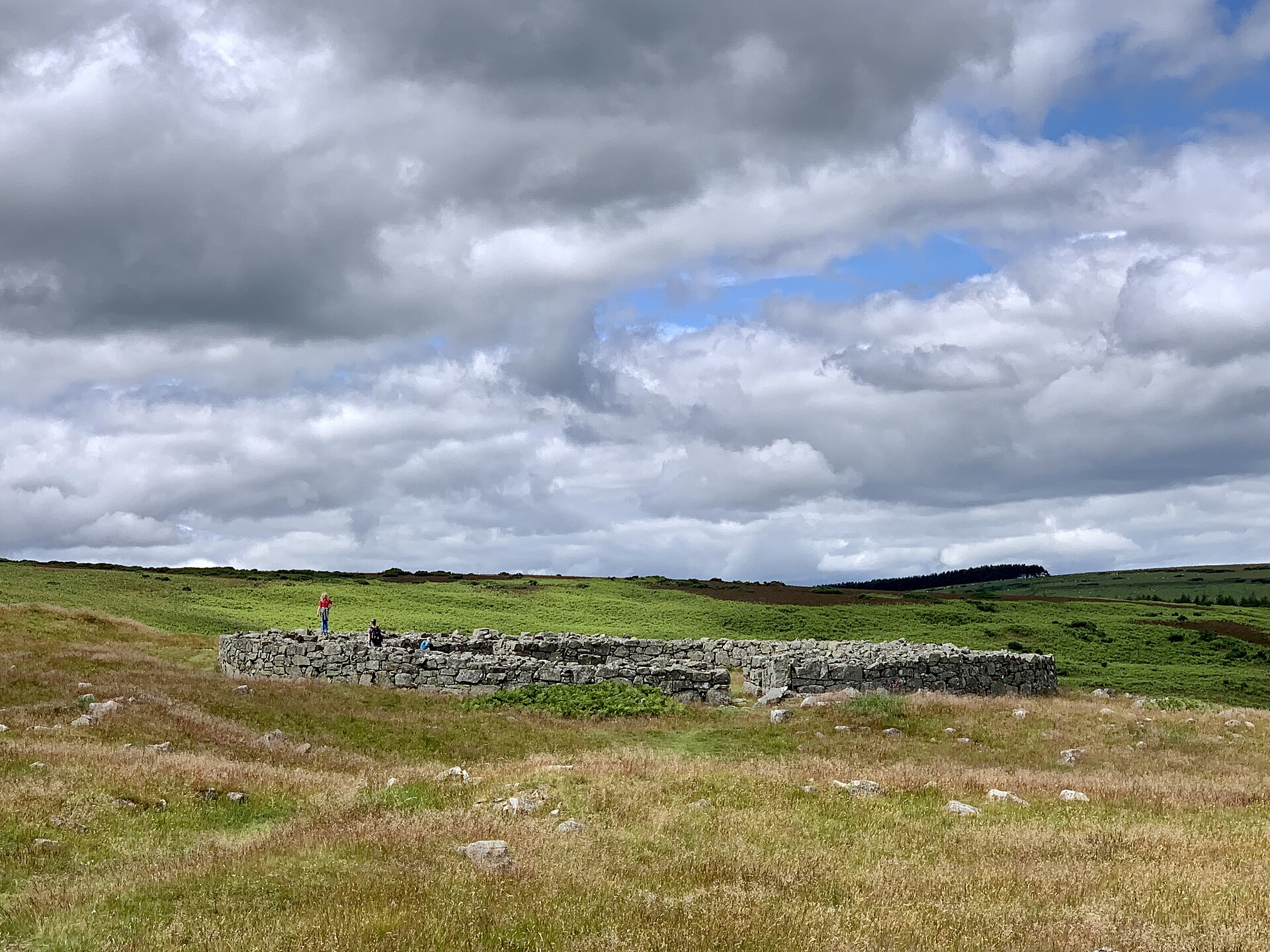
Long before any tower stood on this hillside, the summit of Cockburn Law was already a defended settlement. During the pre-Roman Iron Age, builders raised double ramparts and ditches around an oval hilltop enclosure measuring roughly 135 by 75 metres, with its entrance on the west side, and a large circular roundhouse near the centre may have served as the site's principal building before anything else replaced it.
At some later point, the character of the hilltop changed dramatically. Builders cut through the northwest stretch of the existing ramparts to raise a massive circular stone tower in their place, transforming rather than abandoning the older fort. The result, at some 28 metres in external diameter, ranks among the largest brochs known anywhere in southern Scotland.
Dating the tower precisely has proved difficult, because 19th-century antiquarians cleared the site of rubble and artefacts without recording the soil layers that would normally let archaeologists reconstruct its history, destroying much of the evidence in the process. Archaeologists instead date it by comparison: excavations at Torwoodlee Broch elsewhere in the Borders showed that tower was built and destroyed during the 2nd century AD, in the unsettled years between two periods of Roman occupation, and Edin's Hall, standing in the same frontier landscape with similar architectural features, is generally placed in that same phase of construction.
Life on the hill continued to change after the broch itself was built. Across the enclosure, low stone footings of smaller houses can still be traced in the grass, and some of these were built directly over the earlier ramparts, showing that the settlement kept evolving long after the hillfort's original construction and possibly after the broch had fallen out of use.
By the late 18th century the site had passed into local memory as "Woden's Hall" or "Woden's Castle", named for the Anglo-Saxon god Woden rather than any recollection of its Iron Age builders. A later renaming, to Edin's Hall, appears to draw instead on the legend of the Red Ettin, a three-headed giant recorded in Scottish tales and ballads.
In the 19th century antiquarians "cleared" the broch, removing rubble and recovering a stone spindle whorl, a fragment of a jet ring, an amber bead, animal bones, an oyster shell and a piece of glass bracelet, all of which were donated to the National Museum of Scotland. In 1976 a metal detector survey inside the broch turned up two copper ingots derived from local copper mines, one of which also entered the National Museum's collection, pointing to a possible source of wealth for the people who lived there.
In 1996 an archaeological survey with a sample excavation returned to the site, recovering a further scatter of finds including coarse pottery and another stone spindle whorl, adding modestly to a record that 19th-century clearance had already left badly incomplete.
People
-
J. Turnbull
Recorded nineteenth-century excavations at Edin’s Hall, in which the broch and several smaller structures were cleared before 1879.
-
E. W. MacKie
Archaeologist whose 1975 interpretation placed the broch in the interval between Roman occupations of southern Scotland.
Cultural influences
-
Broch-building tradition — the drystone tower is a form far more typical of northern Scotland; Edin's Hall is one of very few brochs found in southern Scotland and among the largest of its kind in the south.
-
Roman frontier context — the southern Scottish brochs are tied to the Roman Iron Age and the turbulent frontier landscape between phases of Roman occupation, the setting in which the comparable Torwoodlee tower rose and fell.
Connections
-
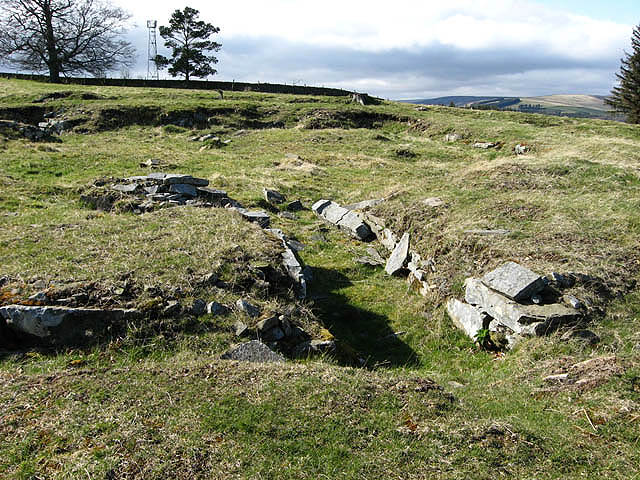
Photo: Walter Baxter / Wikimedia Commons / CC BY-SA 2.0 Comparable southern-Scottish broch in the Borders, built and destroyed in the 2nd century AD; used to date Edin's Hall by analogy
-
Cockburn Law
Hill whose northeast slope, above the Whiteadder Water, the fort and broch stand on
Discovery & excavation
Edin's Hall was 'cleared' by antiquarians in the 19th century, who removed rubble and collected artefacts but did not record the soil layers archaeologists use to date a site — losing much of the dating evidence. The relics recovered, donated to the National Museum of Scotland, included a stone spindle whorl, part of a jet ring, an amber bead, bones, an oyster shell and a fragment of a glass bracelet. Two copper ingots, derived from local copper mines and perhaps a source of the inhabitants' wealth, were found with a metal detector inside the broch in 1976 (one now in the National Museum). An archaeological survey and sample excavation in 1996 recovered further material including coarse pottery and a stone spindle whorl.
Finds now held at: National Museum of Scotland (19th-century relics; one of the 1976 copper ingots).
What to look for
-
The great broch
The broch itself: an unusually large drystone tower, about 28 m external and 17 m internal diameter, with walls now surviving between roughly 1.0 and 1.8 m high — its great width suggesting it never rose as tall as the northern brochs.
-
The guard chambers
The entrance passage on the east side, flanked by two guard chambers either side of the doorway.
-
The intramural cells
Three intramural cells within the wall thickness, all roughly dumb-bell shaped; the south cell preserves the remains of a stone stairway at its north end that once rose to the wallhead.
-
The earlier hillfort
The surrounding earlier hillfort — double ramparts and ditches enclosing an oval area about 135 by 75 m — and a large central roundhouse near the broch that may have been the principal building before the tower was raised.
-
The later footings
Low stone footings of smaller buildings across the interior, some lying over the earlier ramparts, traces of the settlement's long later life. The broch sits within a rectangular enclosure roughly 58 by 54 m.
What is said
Folklore and tradition, recorded as what is said — not as established fact.
-
The name 'Edin's Hall' is said to recall the legend of The Red Ettin, a three-headed giant known from Scottish tales and ballads.
Plan your visit
- Location
- 55.8356°N · 2.3656°W
- Nearest settlement
- Duns
- Access
- Open access
- Terrain
- Moderate walking
- Parking
- Parking available nearby — see the official getting-here page.
- Start point
- Edin’s Hall Broch · On the north east slope of Cockburn Law, about 4.5m from Grantshouse, 1m walk from the A6112 Duns road, then a footpath for 2m. · Access is over agricultural land and may be wet and muddy at times. There may also be livestock in the vicinity.
- Time needed
- About 90 minutes
- Best time
- Open year-round.
- What survives
- The outer ramparts remain substantial, reaching about 4.5 metres above the adjacent ditch in places. The restored broch stands to roughly two metres, while rabbit erosion has required survey and sample excavation across the earthworks.
- Start point
- Abbey St Bathans (Riverside car park) — Park at Abbey St Bathans and follow the signed riverside path to the broch on the slope of Cockburn Law. HES note the final approach is a footpath over farmland.
Opening & admission
Free entry
- Open year-round.
Nearby places

Minor monument · Medieval
Dovecot, Kirkgate, Chirnside
Scottish Borders
Three hundred and eighty-two nesting boxes in sixteen circular rows, inside a dovecot: a purpose-built pigeon house: that once served the home of D…
Fortified place · Iron Age
Blackcastle Hill, East Lothian
East Lothian
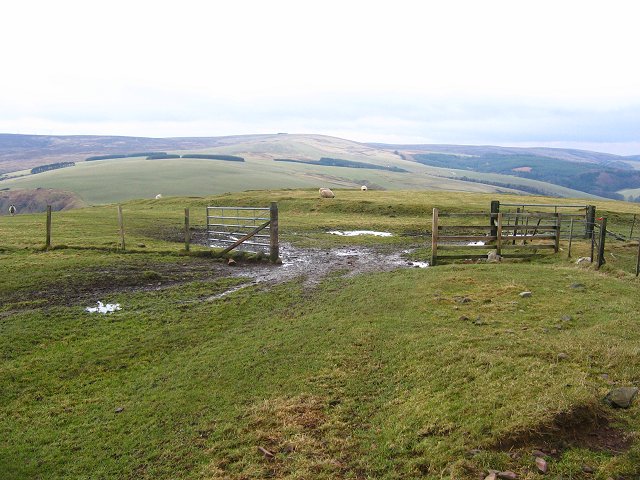
A single earthen bank, not the layered ramparts of its grander neighbours, rings this Lammermuir summit: a modest, univallate answer to the same Ir…
- Some walking

Fortified place · Medieval
Fast Castle
Scottish Borders
Once known as Fause (False) Castle for the lights its defenders hung to lure ships onto the rocks below, this stronghold made deception part of its…

Tomb or burial place · Prehistoric
Mutiny Stones
Scottish Borders
A Neolithic long cairn named after a devil's mittenful of stones: and reduced to less than half its remembered height by shepherds building walls.
- Rough ground
Questions people ask
- What is Edin’s Hall?
- It is a complex Iron Age site combining an earlier hillfort, a large broch and a later open settlement of circular houses.
- How large is the broch?
- The broch is about 27 metres across overall, with walls roughly 5.2 metres thick around a central court 16.8 metres wide.
- What survives to see?
- Visitors can see the restored broch, its entrance and guard cells, three mural cells, the double ramparts and ditches of the earlier fort, and later hut foundations.
- When was the site investigated?
- The broch and smaller buildings were excavated before 1879. A later survey and sample excavation in 1996 assessed extensive rabbit damage and the survival of the earthworks.
Sources
- Canmore site record 58777 (accessed 2026-06-13)
- Trove (HES) record (accessed 2026-06-13)
- Wikipedia: Edin's Hall Broch (accessed 2026-06-13)
- Wikidata Q1284794 (accessed 2026-06-13)
- Historic Environment Scotland — Canmore
Explore more: Fortified places · Iron Age · Scottish Borders
The Ancient Codex, in your pocket
Get the Pocket Codex app
Carry the directory with you — Edin's Hall Broch and thousands of ancient places across Britain and Ireland, offline, wherever you roam.