
Once known as Fause (False) Castle for the lights its defenders hung to lure ships onto the rocks below, this stronghold made deception part of its defence.
A narrow, sloping shelf of rock juts out into the North Sea, flanked on both sides by cliffs nearly 45 metres high. The only way across was a drawbridge spanning a deep ravine, itself guarded by a barbican (the fortified outwork guarding a gate), so that anyone approaching had to cross empty air before reaching the gate. What survives today is little more than foundations and one length of wall, but the shape of the place still explains why a fortress was ever built here at all.
The promontory’s small size forced an unusual solution: rather than a single tower, the site held a full courtyard and keep squeezed onto a plateau barely 27 metres wide, with access to the sea managed by a pulley and basket rather than a harbour. A cave at the foot of the cliffs may once have offered the inhabitants a hidden route in and out. The layout echoes Dunnottar Castle in Aberdeenshire, though on a far smaller scale, and the isolation that made it nearly impregnable also made it a useful base for garrisons, smugglers, and at least one nobleman convinced there was buried treasure beneath its floors.
For more than two centuries the castle changed hands between Scots and English forces, hosted a future queen consort and a queen of Scots, and ended its working life in ruin, passed between families who could do little with a fortress too small and too remote to hold for long.
What follows is drawn from published sources, with each claim labelled by how firmly it is established.
The name
The name is thought to derive from Fause Castle, using the older sense of "fause" meaning false: shipmasters navigating the coast in darkness would see lights hung from the castle and mistake them for a safe haven, only to find themselves steered onto the rocks, where wrecking parties waited to plunder the wreck.
History
The exact date of the earliest structure on this cliff-top site is unknown, but its defensible position must have appealed to the area's first settlers: evidence points to Iron Age habitation here, in territory later central to the British kingdom of Bryneich and its Anglo-Saxon successor, Bernicia.
Fast Castle first appears in written record in 1333, and by 1346 an English garrison had occupied the site, using it as a base from which to raid the surrounding countryside. In 1410 Patrick Dunbar, second son of the Earl of Dunbar and March, led a force that seized the castle and imprisoned its governor, Thomas Holden; the new Scots governor, William Haliburton, went on to capture Wark Castle in Northumberland in 1419.
The castle passed to the Home family, who in 1503 hosted Margaret Tudor, daughter of Henry VII of England, as she travelled north to marry James IV. After James IV's death at Flodden in 1513, where many Homes were killed, a power struggle broke out between the Regent Albany and rival nobles; Fast Castle was destroyed amid the chaos in 1515, and Alexander Home, 3rd Lord Home, was executed in 1516 with his lands forfeited.
Rebuilt by 1522 once the Home estates were restored to Alexander's brother George Home, 4th Lord Home, the castle was captured again by the English during the Rough Wooing in 1547 before returning to Scottish hands in time for a stay by Mary, Queen of Scots in 1566. Its recapture from the English is said to have been instigated by Madge Gordon, a widow from Coldingham, and in 1567 the English ambassador Nicholas Throckmorton lodged there with the 5th Lord Home.
During the Rising of the North, Anne Percy, Countess of Northumberland, was lodged at Fast Castle in March 1570, and the following month an English force under William Drury briefly held it while the Earl of Sussex besieged Hume Castle against the rebels and their Scottish supporters. Some of the castle's guns, including two brass merlins and four falcons, were carried off to Berwick-upon-Tweed.
Ownership passed through Robert Logan of Restalrig's mother, once a widow of a Lord Home, and in 1584 the keepers of Fast Castle, Innerwick, and Tantallon were ordered to surrender their strongholds to the crown. Logan, a dissolute figure later implicated in the Gowrie conspiracy against James VI, contracted the mathematician John Napier in 1594 to search the castle for hidden treasure, though no record survives of any find; Logan died in 1606, his estate forfeited soon after.
By then ruinous, the castle passed briefly to the Douglas family, then to the Earls of Dunbar, the Arnots, the Homes again, and finally the Halls. Between 1971 and 1986 the Edinburgh Archaeological Field Society carried out excavations at the site, which is now reached from Dowlaw farm by a steep trail, with a concrete footway replacing the old drawbridge.
People
-
Patrick Dunbar
Second son of the 10th Earl of Dunbar and March, he led the force that seized Fast Castle and imprisoned its governor Thomas Holden in 1410.
-
Thomas Holden
Governor of Fast Castle who was imprisoned when Patrick Dunbar's force seized the castle in 1410.
-
William Haliburton
Scots governor of Fast Castle who went on to capture Wark Castle in Northumberland in 1419.
-
Alexander Home, 3rd Lord Home
Chamberlain of Scotland whose struggle for power after Flodden ended in Fast Castle's destruction in 1515 and his own execution in 1516.
-
George Home, 4th Lord Home
Brother of Alexander Home to whom the Home estates, including Fast Castle, were restored, allowing the castle to be rebuilt by 1522.
-
Madge Gordon
A widow of Coldingham said to have instigated the recapture of Fast Castle from English forces before Mary, Queen of Scots stayed there in 1566.
-
Nicholas Throckmorton
English ambassador who lodged at Fast Castle with the 5th Lord Home in July 1567 and described it as fitter to hold prisoners than free folk.
-
Anne Percy, Countess of Northumberland
Lodged at Fast Castle in March 1570 following the Rising of the North.
-
Robert Logan of Restalrig
Owner of Fast Castle implicated in the Gowrie conspiracy, who in 1594 hired John Napier to search the castle for treasure; his estate was forfeited after his death in 1606.
-
John Napier
Mathematician contracted by Robert Logan in 1594 to search Fast Castle for hidden treasure by any means available, with no recorded result.
Cultural influences
-
A smaller counterpart to Dunnottar
Fast Castle uses the same basic logic as Dunnottar — a defended sea promontory with a narrow approach — but compresses a courtyard and keep onto a much smaller rocky shelf.
Connections
-
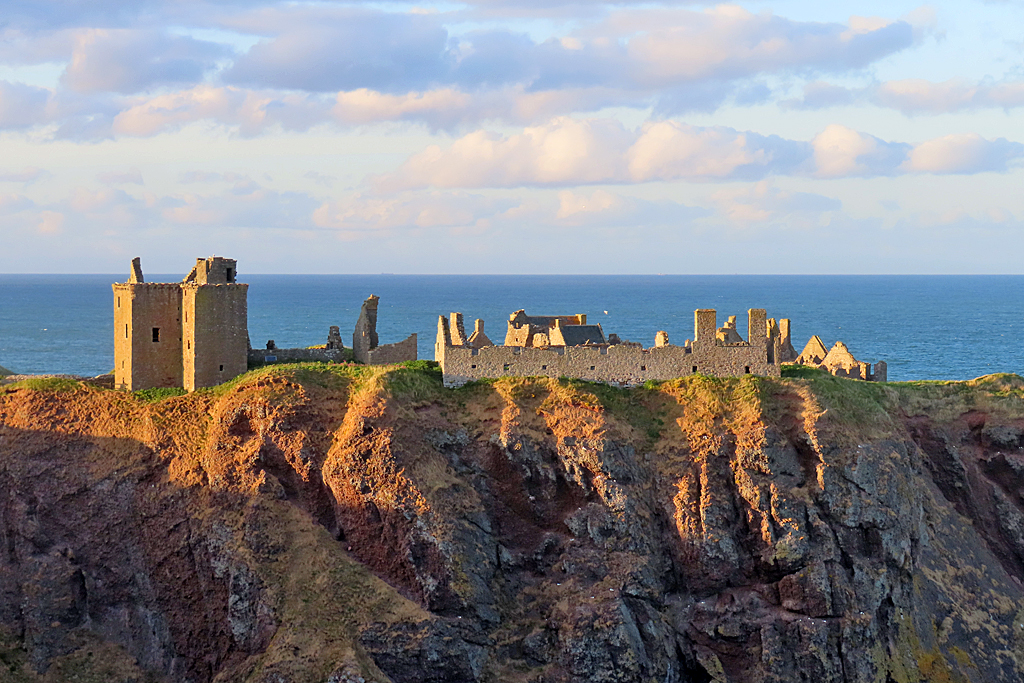
Photo: Anne Burgess / Wikimedia Commons / CC BY-SA 2.0 Fast Castle's layout of courtyard, curtain wall, and keep on a defended promontory closely resembles Dunnottar Castle in Aberdeenshire, though built on a smaller scale.
-
Wark Castle, Northumberland
Fast Castle's Scots governor William Haliburton went on to seize Wark Castle in 1419 after taking Fast Castle in 1410.
-
Hume Castle
In 1570 the Earl of Sussex besieged Hume Castle against rebel supporters while an English force under William Drury briefly held Fast Castle.
-
Innerwick and Tantallon castles
In April 1584 the crown ordered the keepers of Fast Castle, Innerwick, and Tantallon together to surrender their strongholds.
Discovery & excavation
Between 1971 and 1986 the Edinburgh Archaeological Field Society carried out excavations at Fast Castle, investigating the remains of the keep and courtyard on the promontory.
In culture
-
The Bride of Lammermoor
Fast Castle is thought to have inspired Sir Walter Scott's description of the fictional stronghold Wolf's Crag in his 1819 novel The Bride of Lammermoor.
-
The Master of Gray trilogy and Mail Royal
Fast Castle and its owner Robert Logan of Restalrig both appear in Nigel Tranter's historical novel trilogy The Master of Gray, and the castle features heavily in Tranter's sequel novel Mail Royal.
-
The Gold of Fast Castle
Kathleen Fidler's 1970 children's novel The Gold of Fast Castle is set at the castle, drawing on its reputation as a site of hidden treasure.
What to look for
-
The cliff-edge promontory
The castle occupied a narrow plateau roughly 27 by 82 metres, bounded by cliffs up to 45 metres high on either side, which made the site naturally difficult to attack.
-
Surviving foundations and north-east wall
Little remains of the keep or courtyard walls beyond their foundations, though a section of the north-east curtain wall is still visible on the ground.
-
The ravine crossing
The castle was originally reached only by a drawbridge over a narrow ravine, protected by a barbican; a concrete footway now replaces the drawbridge for those approaching on foot.
-
The sea cave below the cliffs
A cave at the base of the cliffs, reachable from the shore, has been proposed as a possible former access point into the castle from the sea.
What is said
Folklore and tradition, recorded as what is said — not as established fact.
-
The false lights of Fause Castle
Local tradition holds that the castle took its original name, Fause (False) Castle, because lights were hung from it to trick ships navigating the coast in darkness into believing they had found safe harbour, only for the vessels to run aground on the rocks where wreckers waited.
-
Napier's buried treasure
It was believed enough treasure lay hidden within Fast Castle that in 1594 Robert Logan contracted the mathematician John Napier to search for it "by all craft and ingine", though no record survives of any find.
-
A hidden sea cave passage
It has been suggested that the cave at the foot of the cliffs below the castle once gave the inhabitants a secret means of reaching the interior of the fortress from the shore.
Plan your visit
- Location
- 55.9324°N · 2.2239°W
- Time needed
- About 60 minutes
Nearby places
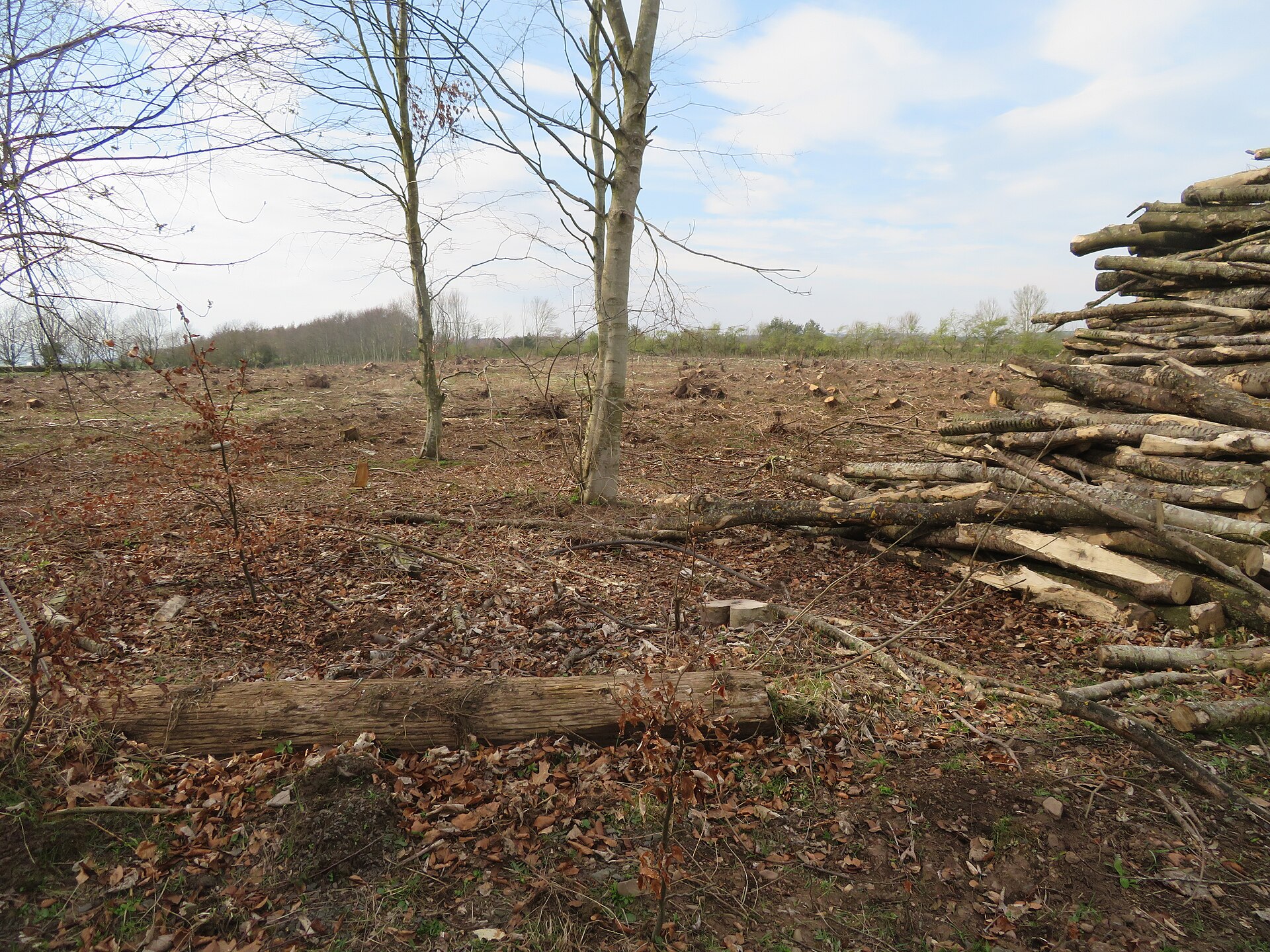
Minor monument · Medieval
Dovecot, Ayton Castle
Scottish Borders
A dated panel above the door reads 1745, or possibly 1743: inserted, it seems, to mark the completion of repairs to the 653 nesting boxes inside.
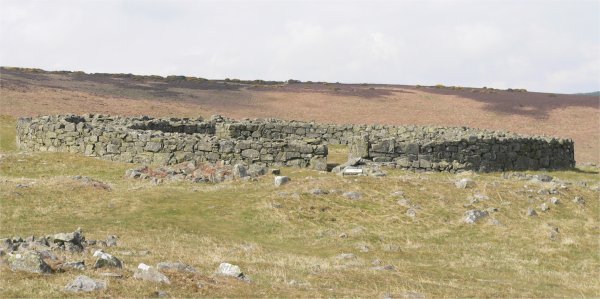
Fortified place · Iron Age
Edin's Hall Broch
Scottish Borders
The hilltop on the northeast slope of Cockburn Law was first fortified in the pre-Roman Iron Age, when double ramparts and ditches enclosed an oval…
- Near Duns
- 1.8 km from car park
- Some walking
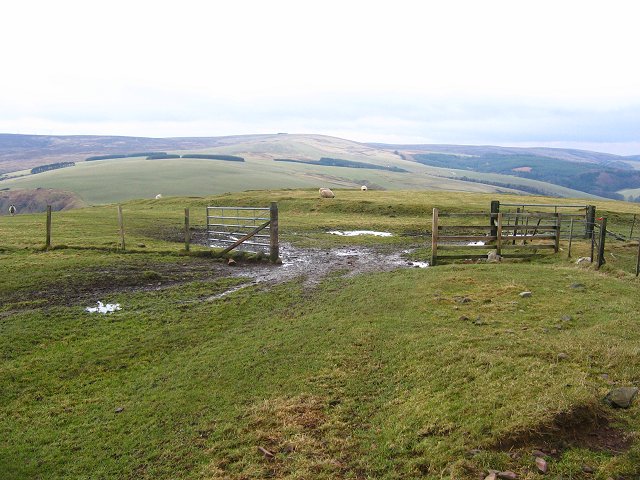
Fortified place · Iron Age
Blackcastle Hill, East Lothian
East Lothian
A single earthen bank, not the layered ramparts of its grander neighbours, rings this Lammermuir summit: a modest, univallate answer to the same Ir…
- Some walking

Minor monument · Medieval
Dovecot, Kirkgate, Chirnside
Scottish Borders
Three hundred and eighty-two nesting boxes in sixteen circular rows, inside a dovecot: a purpose-built pigeon house: that once served the home of D…
The setting
Near Fast Castle, about 14 metres away.
Photo: Anne Burgess / Wikimedia Commons / CC BY-SA 2.0
Near Fast Castle, about 37 metres away.
Photo: Anne Burgess / Wikimedia Commons / CC BY-SA 2.0
Near Fast Castle, about 38 metres away.
Photo: Anne Burgess / Wikimedia Commons / CC BY-SA 2.0
Near Fast Castle, about 40 metres away.
Photo: Walter Baxter / Wikimedia Commons / CC BY-SA 2.0
Questions people ask
- Why was Fast Castle originally called Fause Castle?
- Tradition holds it was named for lights hung from the castle to trick ships sailing in darkness into thinking they had reached safe harbour, luring them onto the rocks.
- What treasure was John Napier hired to find at Fast Castle?
- In 1594 owner Robert Logan contracted mathematician John Napier to search the castle for hidden treasure, though no record survives of any discovery being made.
- Who stayed at Fast Castle before her marriage to James IV?
- Margaret Tudor, daughter of Henry VII of England, was hosted at Fast Castle by the Home family in 1503 while travelling to marry James IV.
- What excavations have taken place at Fast Castle?
- The Edinburgh Archaeological Field Society excavated the site between 1971 and 1986, investigating the remains of the keep and courtyard.
- Which novel is said to have been inspired by Fast Castle?
- Fast Castle is thought to have inspired Sir Walter Scott's fictional Wolf's Crag in his 1819 novel The Bride of Lammermoor.
Sources
- Wikipedia: Fast Castle
- Douglas, William, "Fast Castle and its owners: some notes on their history", Proceedings of the Society of Antiquaries of Scotland, 55 (1921)
- SCRAN — sepia postcard of Fast Castle
- Rampant Scotland — Scottish Castles Photo Library, Fast Castle
Explore more: Fortified places · Medieval · Scottish Borders
The Ancient Codex, in your pocket
Get the Pocket Codex app
Carry the directory with you — Fast Castle and thousands of ancient places across Britain and Ireland, offline, wherever you roam.