Three hundred and eighty-two nesting boxes in sixteen circular rows, inside a dovecot — a purpose-built pigeon house — that once served the home of David Hume.
Three hundred and eighty-two nesting boxes line the inside of this dovecot, squared out of sandstone and set in sixteen circular rows from near the floor to the springing of the dome. Each is about seven inches square at the mouth and a foot or more deep. The building exists to hold them.
It stands in a private garden north of Chirnside parish church — a dovecot, or purpose-built pigeon house — a two-stage circular structure of the beehive type, tapering as it rises. The walls are around four feet thick and the external circumference about sixty feet — heavily pointed rubble sandstone, with rubble dressings and no ornament anywhere. That plainness is the point of it. The listing describes the dovecot as primitive in appearance and treats it as a good example of the early form — built at some point between 1500 and 1600 — precisely because nothing decorative has been added.
The functional details are worth reading closely. A continuous course runs round the outside about ten feet above the ground, projecting from the wall. It served as an alighting ledge for the birds and, at the same time, as a barrier that rats could not climb past. The doorway on the north side is square-headed and set below ground level, approached past a low rubble-coped wall, with a boarded timber door beneath a sandstone lintel. The roof is stone-slabbed and shallow-domed with a circular opening at its centre for the birds to fly through.
Two things are missing. The timber poles that carried a rotating ladder, by which the keeper reached the upper rows of nests, are gone. So is the iron finial that guarded the roof aperture — a ring of spikes forked at their upper ends, which has been taken down and set up in the garden of Auburn Cottage, whose grounds now contain the dovecot.
The house it was built to serve has gone too. The dovecot was originally attached to Ninewells House, once the home of David Hume. That house was replaced by a design by William Burn, built between 1839 and 1841, and the replacement was itself demolished in 1964. The dovecot appears on the Ordnance Survey map of 1862 and was recorded as overgrown and in disrepair in 1998, which leaves it as the oldest surviving structure of the group and the only one still standing.
What follows is drawn from published sources, with each claim labelled by how firmly it is established.
History
The dovecot dates from the 1500s and takes the beehive form — circular in plan, tapering upward in two stages. Its walls are roughly four feet thick, with an external circumference of about sixty feet, built of heavily pointed rubble sandstone with rubble dressings. A continuous rat course runs around the outside about ten feet above the ground. The projecting band served two purposes at once, giving the birds a ledge to alight on and denying rats a route up the wall, which is why the same feature appears on dovecots across Scotland.
The interior walls are fully lined with 382 squared sandstone nesting boxes, set out in sixteen circular rows. Each nest is roughly seven inches high and seven inches wide, and between twelve and fourteen inches deep. The timber poles that once carried a rotating ladder are gone. The doorway on the north side is square-headed and set below ground level, with a boarded timber door under a sandstone lintel and a low rubble-coped wall in front of it. The roof is stone-slabbed and shallow-domed, with a circular flight opening at the centre.
That central aperture was originally guarded by a finial made of iron spikes forked at their upper ends. It has been removed from the roof and now stands in the garden of Auburn Cottage, within whose grounds the dovecot itself sits. The building was originally associated with Ninewells House, which was once the home of the philosopher David Hume. That house was replaced by a design by William Burn, built between 1839 and 1841, and the replacement was demolished in 1964.
The dovecot appears on the Ordnance Survey map of 1862. It was recorded as overgrown and in a state of disrepair in 1998. Devoid of ornament of any kind, it is valued precisely for that plainness as a good example of the early type, which in Berwickshire means the middle of the 1500s.
People
-
David Hume
The philosopher, whose family home at Ninewells House was the dovecot's original associated house.
-
William Burn
Architect of the replacement Ninewells House, built 1839 to 1841 and demolished in 1964.
Cultural influences
-
A sixteenth-century dovecot serving Ninewells
The plain beehive dovecot served Ninewells House, later associated with David Hume, with a rat-proof ledge and 382 nesting boxes.
Connections
-
Ninewells House
The dovecot was built to serve this house, once home to David Hume; its Victorian replacement was demolished in 1964.
-
Whitehall lectern dovecot
A later mono-pitched dovecot of the lectern type, listed separately, offering a direct contrast with this earlier beehive form.
-
Ayton Castle dovecot
Another sixteenth-century Berwickshire beehive dovecot, whose dating rests partly on comparison with this one.
What to look for
-
The 382 nesting boxes
Squared sandstone recesses in sixteen circular rows, lining the interior wall from near the floor to the springing of the dome.
-
The rat course
A continuous projecting ledge about ten feet up, serving as an alighting perch for the birds and a barrier to rats.
-
The sunken doorway
The square-headed door on the north side sits below ground level, reached past a low rubble-coped wall.
-
The missing finial
The ring of forked iron spikes that guarded the roof aperture has been taken down and set up in the garden of Auburn Cottage.
Plan your visit
- Location
- 55.7986°N · 2.2090°W
- Access
- Visible from a public way
- Time needed
- About 20 minutes
- What survives
- The beehive structure, 382 nesting boxes, rat course and stone-slabbed roof survive, though the rotating ladder and roof finial have been removed.
Nearby places
Minor monument · Medieval
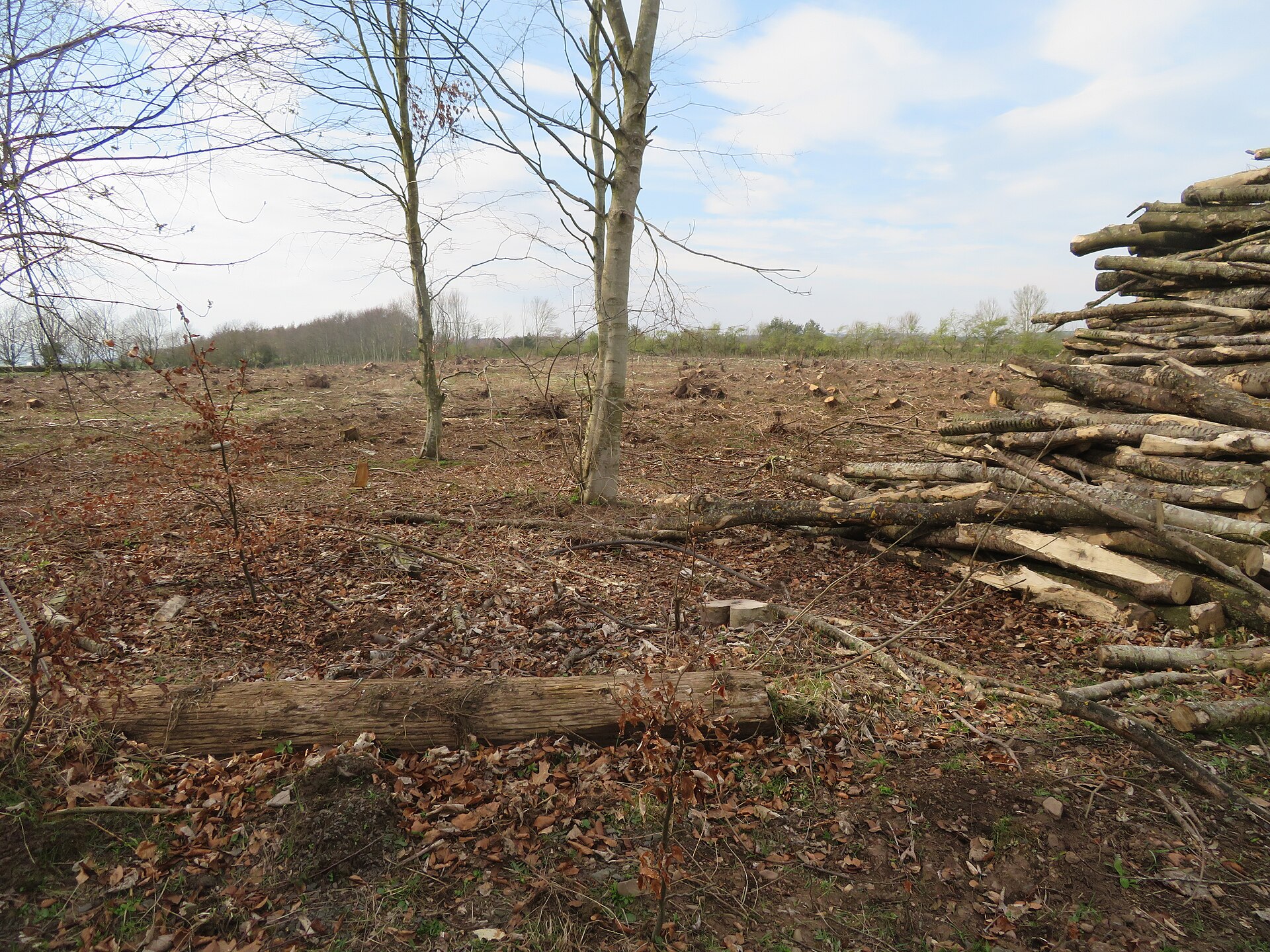
Dovecot, Ayton Castle
Scottish Borders
A dated panel above the door reads 1745, or possibly 1743: inserted, it seems, to mark the completion of repairs to the 653 nesting boxes inside.
Crossing or structure · Medieval
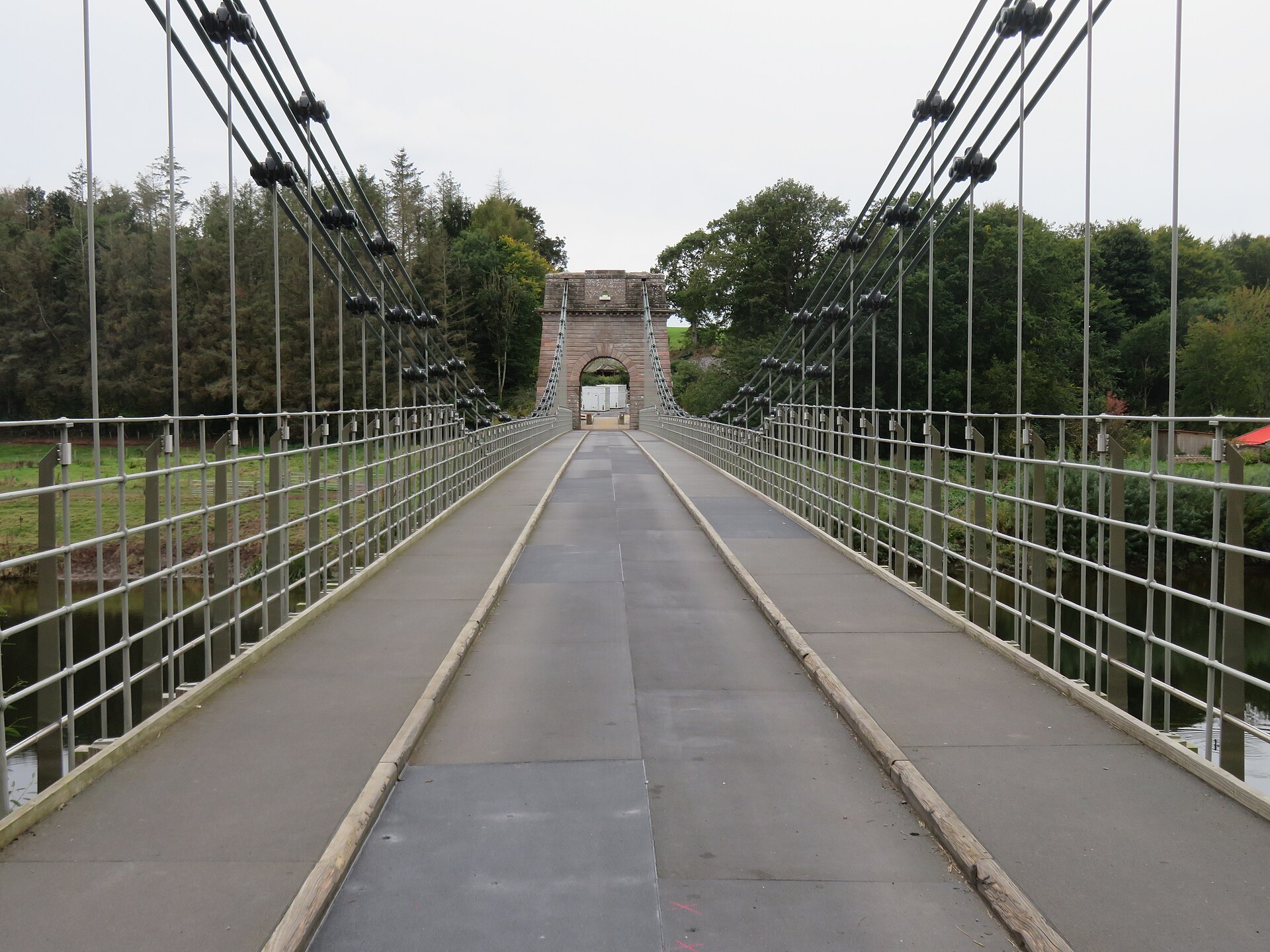
Union Chain Bridge
Northumberland
The Union Chain Bridge’s 1820 span is the world’s oldest road-carrying suspension bridge, making an Anglo-Scottish crossing a landmark of engineeri…
- Easy path
Fortified place · Medieval
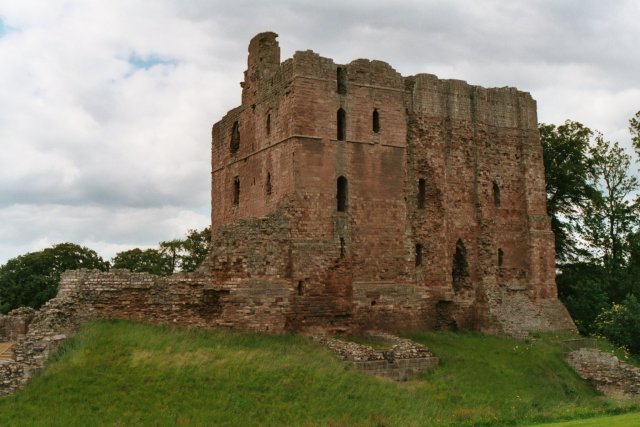
Norham Castle
Northumberland
Norham’s keep stands where the Tweed itself became a border, a bishops’ fortress repeatedly taken, rebuilt and later immortalised by Turner.
- Some walking
Fortified place · Iron Age
Edin's Hall Broch
Scottish Borders
The hilltop on the northeast slope of Cockburn Law was first fortified in the pre-Roman Iron Age, when double ramparts and ditches enclosed an oval…
- Near Duns
- 1.8 km from car park
- Some walking
The setting
Near Dovecot, Kirkgate, Chirnside, about 67 metres away.
Photo: Gordon Brown / Wikimedia Commons / CC BY-SA 2.0
Near Dovecot, Kirkgate, Chirnside, about 95 metres away.
Photo: Gordon Brown / Wikimedia Commons / CC BY-SA 2.0
Near Dovecot, Kirkgate, Chirnside, about 95 metres away.
Photo: Jim Barton / Wikimedia Commons / CC BY-SA 2.0
Questions people ask
- How many nesting boxes does it contain?
- 382, arranged in sixteen circular rows lining the interior walls.
- How old is the dovecot?
- It dates from the 1500s. It appears on the Ordnance Survey map of 1862 and is regarded as a good example of the early beehive type.
- What is a rat course?
- A continuous projecting ledge running round the outside wall, here about ten feet above ground. It gives the birds somewhere to land and stops rats climbing further.
- What is the connection to David Hume?
- The dovecot was originally associated with Ninewells House, which was once the philosopher's home. That house was later replaced by a William Burn design, demolished in 1964.
- What condition is it in?
- It was recorded as overgrown and in a state of disrepair in 1998. The roof finial has been removed and the internal timber poles are missing.
Sources
- Historic Environment Scotland — Dovecot, Kirkgate, Chirnside, LB4124
- G A G Peterkin, Scottish Dovecots
Explore more: Minor monuments · Medieval · Scottish Borders
The Ancient Codex, in your pocket
Get the Pocket Codex app
Carry the directory with you — Dovecot, Kirkgate, Chirnside and thousands of ancient places across Britain and Ireland, offline, wherever you roam.