One of only three brochs surviving in the Scottish Borders, and the only one to have yielded a Roman cockerel-shaped brooch alongside 2nd-century amphora fragments.
A low ring of turf-covered stonework sits on a shelf of open ground above a steep drop toward the Gala Water, the circular footprint of a tower wall still traceable across the farmland near Stow of Wedale. No reconstruction has ever been attempted here; what survives is simply what the centuries left standing, a wall once 4.1 metres thick enclosing a chamber under ten metres across.
The tower belongs to the broch tradition, a distinctive style of dry-stone roundhouse built across Iron Age Scotland, and its presence this far south is itself notable. Only two other broch sites are known in the Borders, and Bow Castle’s position close to the Roman frontier zone has made it a small but telling clue to how a northern building tradition reached communities living in the shadow of Roman Britain.
Digging in the nineteenth and early twentieth centuries turned up pottery and metalwork that point toward exactly that period of contact, though no modern excavation has ever tested the site in detail. What is known rests on those older finds, on comparison with a better-studied neighbour a short distance away, and on the wall itself, still readable in outline on open ground with no paths, signage, or visitor facilities to mark it out.
What follows is drawn from published sources, with each claim labelled by how firmly it is established.
History
During the Iron Age a broch was raised on level ground above the Gala Water valley, its wall built some 4.1 metres thick to enclose a circular chamber only 9.7 metres across. The scale of the masonry reflects a building tradition more commonly associated with northern and island Scotland, making its presence this far south, close to what would become the Roman frontier, unusual among the region's prehistoric monuments.
Two miles to the north, Torwoodlee Broch was built and later destroyed during the Roman occupations of southern Scotland, and the pattern of finds at Bow Castle suggests it shared a similar history of construction and eventual abandonment around that period. Without modern excavation the detail of that sequence at Bow Castle itself remains uncertain, but the parallel with its near neighbour is the clearest guide available to its likely story.
In 1890 excavation at the site recovered pottery, including fragments of a 2nd-century Roman amphora, providing direct physical evidence that the broch was in use, or at least visited, during the period of Roman activity in southern Scotland. The find helped tie Bow Castle into the same historical horizon as Torwoodlee, strengthening the case that the two sites' histories ran in parallel.
In 1922 a 2nd-century Roman enamelled bronze brooch, cast in the form of a cockerel, was recovered among the ruins of the broch wall. As a piece of decorated Roman metalwork found within a native Iron Age structure, it stands as one of the more distinctive small finds from any Borders broch and further underlines the site's contact with Roman material culture.
On 28 February 1924 Bow Castle was formally scheduled as a monument under heritage protection law, in recognition of its rarity as one of only a handful of surviving brochs in the Scottish Borders. The designation, now sitting under the Ancient Monuments and Archaeological Areas Act 1979, protects both the visible stonework and any buried archaeological deposits still surviving beneath it, and means any excavation or disturbance requires official consent.
Today the site is monitored by Historic Environment Scotland and survives without visitor facilities, its wall reduced to low turf-covered stonework reachable only on foot across surrounding farmland. Preservation here rests on legal protection and ordinary land management rather than any presentation for visitors, leaving the circular outline as the main evidence of the tower that once stood on the spot.
People
-
James Curle
Antiquarian who published a comparative account of the Bow and Torwoodlee brochs in 1892, shortly after Bow Castle's excavation.
Cultural influences
-
A southern expression of broch building
Bow Castle is one of only three known brochs in the Scottish Borders. Its native Iron Age round tower, and the Roman amphora and brooch found there, make it evidence for contact at the edge of the Roman frontier.
Connections
-
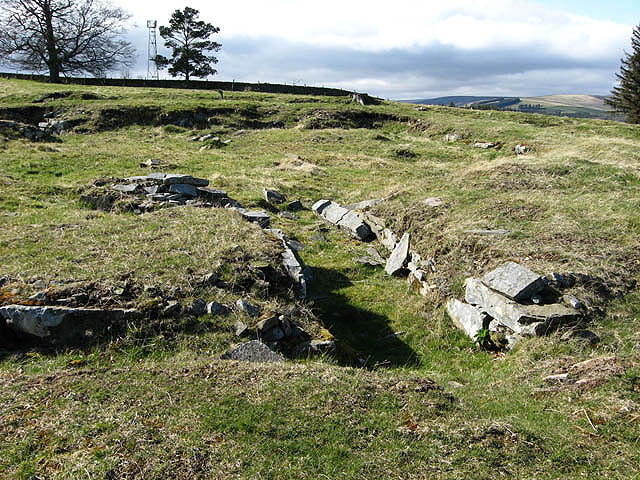
Photo: Walter Baxter / Wikimedia Commons / CC BY-SA 2.0 Lies two miles north and was built and destroyed during the Roman occupations of southern Scotland, a history Bow Castle is thought to have shared; the two sites were also written up together by James Curle in 1892.
-
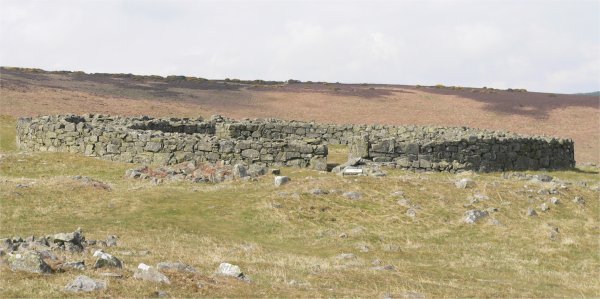
Photo: Oehoe at Dutch Wikipedia (Original text: Van de Beek) / Wikimedia Commons / CC BY-SA 3.0 Together with Bow Castle and Torwoodlee, forms the small group of only three brochs known to survive in the Scottish Borders.
Discovery & excavation
Excavation in 1890 recovered pottery, including 2nd-century Roman amphora fragments, and a further find in 1922 turned up a 2nd-century Roman enamelled bronze brooch shaped like a cockerel among the wall's ruins. No modern excavation has since taken place, so much about the broch's construction date and full history of use remains unresolved.
What to look for
-
The turf-covered wall
The broch's circular wall, originally 4.1 metres thick, survives as a low, turf-covered ring of stonework that still traces the full outline of the tower on the ground.
-
The enclosed chamber
Within the wall the enclosed floor area is 9.7 metres in diameter, a scale that gives a sense of the interior space the tower once contained.
-
The open, unmarked setting
The site has no paths, signage, or visitor facilities, and is reached on foot across farmland near Stow of Wedale, overlooking the valley of the Gala Water.
Plan your visit
- Location
- 55.6659°N · 2.8578°W
- Access
- Permission required
- Terrain
- Rough ground — reasonable boots advised
- Time needed
- About 60 minutes
Opening & admission
- Rural farmland setting with no visitor facilities; confirm local access before visiting.
Nearby places
Fortified place · Iron Age
Torwoodlee Broch
Scottish Borders
Roman pottery, glass and a coin found packed inside its walls turn this collapsed tower into rare physical evidence of contact: hostile or looted:…
- Rough ground

Fortified place · Medieval
Elibank Castle
Scottish Borders
A 1511 royal charter tied one family's right to farmland to a promise to build in stone, and the Italianate terraced gardens later raised here rank…
Building or ruin · Medieval
Melrose Abbey
Scottish Borders
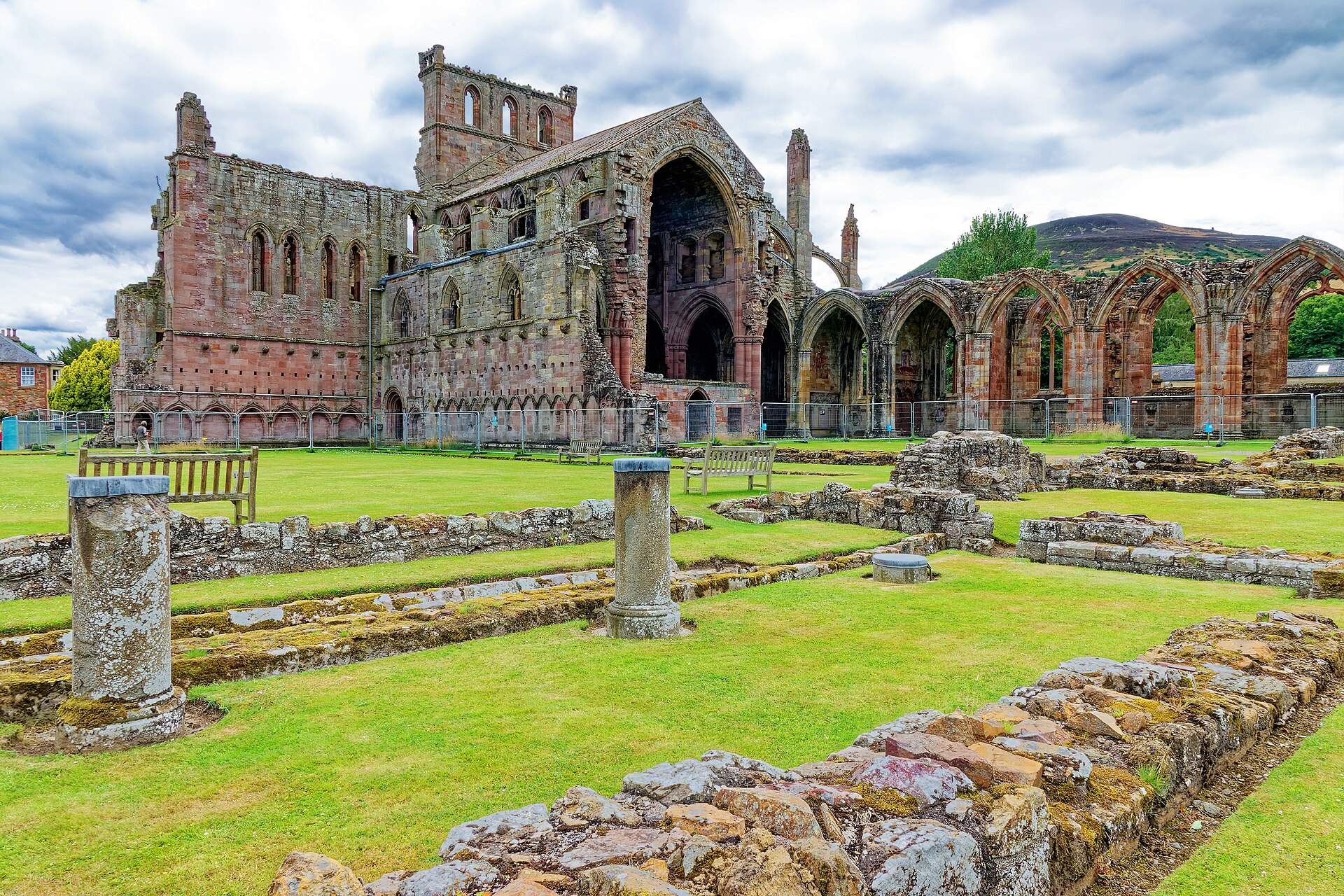
St Mary's Abbey, Melrose was founded in 1136 by Cistercian monks at the request of King David I of Scotland: the first Cistercian abbey in Scotland…
- Near Melrose
- 2 min walk from car park

Minor monument · Medieval
Market Cross, Market Square, Melrose
Scottish Borders
Melrose’s 1645 market cross combines a restored seventeenth-century shaft with a nineteenth-century base and a weathered unicorn finial carrying th…
- Easy path
The setting
Near Bow Castle Broch, about 7 metres away.
Photo: Iain Lees / Wikimedia Commons / CC BY-SA 2.0
Near Bow Castle Broch, about 7 metres away.
Photo: Jim Barton / Wikimedia Commons / CC BY-SA 2.0
Near Bow Castle Broch, about 17 metres away.
Photo: Iain Lees / Wikimedia Commons / CC BY-SA 2.0
The setting near Bow Castle Broch.
Photo: Walter Baxter / Wikimedia Commons / CC BY-SA 2.0
The setting near Bow Castle Broch.
Photo: Oehoe at Dutch Wikipedia (Original text: Van de Beek) / Wikimedia Commons / CC BY-SA 3.0
Questions people ask
- What is Bow Castle Broch?
- It is the remains of an Iron Age broch, a dry-stone tower, near the Gala Water in the Scottish Borders, one of only three surviving brochs in the region.
- What have excavations found at the site?
- An 1890 dig found pottery including 2nd-century Roman amphora fragments; a 1922 find added a Roman enamelled bronze brooch shaped like a cockerel.
- Is Bow Castle Broch protected?
- Yes. It has been a scheduled monument since 28 February 1924, now protected under the Ancient Monuments and Archaeological Areas Act 1979.
- How big is the broch?
- Its wall was 4.1 metres thick, enclosing a circular chamber 9.7 metres in diameter.
- Can visitors go inside the broch?
- There are no visitor facilities. The site sits on farmland and can only be reached on foot, with the wall's circular outline visible on open ground.
Sources
- Wikipedia: Bow Castle Broch
- Historic Environment Scotland — scheduled monument record
- Curle, J. (1892) 'Notes on two brochs recently discovered at Bow, Midlothian, and Torwoodlee, Selkirkshire', Proceedings of the Society of Antiquaries of Scotland, vol. 26
Explore more: Fortified places · Iron Age · Scottish Borders
The Ancient Codex, in your pocket
Get the Pocket Codex app
Carry the directory with you — Bow Castle Broch and thousands of ancient places across Britain and Ireland, offline, wherever you roam.