
Parish records of the 1700s already call it 'this ancient tree'. Arson in 1978 and storms in 2005 let in a fungus that is now killing it; twelve cuttings have been taken to make a clone.
Parish records from the 1700s already call it this ancient tree. That phrase, written by someone with no particular interest in making a claim, is the firmest piece of evidence about the Wallace Yew’s age — firmer than the tradition that Wallace planted it himself, which would make it about 700 years old and which the sources treat with open doubt.
The tree stands on a patch of grassland in Elderslie, Renfrewshire, said to lie near the site of William Wallace’s home and birthplace. The legend attached to it is the same one told of the Wallace Oak that grew nearby: that its branches hid Wallace from a patrol of English soldiers sent to find him. Two trees, one story, on the same ground.
There was a period when the yew carried the association by itself. The oak fell in a storm in 1856; a book of the following year describes the yew as bearing the mark of great age but still in good health, supporting a progeny of spreading branches. A work of 1912 put it at more than 600 years old and credited it with keeping Wallace’s name attached to the village during the interval between the loss of the oak and the raising of a granite monument. For those decades it was the only living thing in Elderslie doing that work.
Its own decline came from damage rather than age. An arson attack in 1978 and storms in 2005 left wounds that the Ganoderma fungus entered. The infection took hold by 2008. It is untreatable, and it will kill the tree. In 2002, between those two injuries, the botanist David Bellamy chose this tree as the place to launch the Conservation Foundation’s campaign to save Scotland’s yews — an emblem selected shortly before it became a casualty.
The response has been to make a copy. Renfrewshire Council took twelve cuttings, all of which would be clones of the original; six had propagated successfully and reached about 45 centimetres by 2008. One will be selected and planted near the site of the parent tree. It will need around thirty years to reach maturity. The yew, which measured about eleven metres tall at one point, was still standing in 2019.
What follows is drawn from published sources, with each claim labelled by how firmly it is established.
History
The tree is said to date from the time of William Wallace and even to have been planted by him, which would make it some 700 years old. Doubts have been raised about that figure. What is documented is that parish records from the 1700s note the presence of the yew and describe it as this ancient tree, so it was already old by then. The yew stands on a patch of grassland said to be near the site of Wallace's home and birthplace. In legend the tree sheltered him from a patrol of English soldiers searching for him — the same story told of the Wallace Oak that grew nearby.
A book of 1857 describes the tree as bearing the mark of great age, while noting that it was still in good health and supporting a progeny of spreading branches. The observation comes the year after the neighbouring Wallace Oak fell. A work of 1912 described the yew as more than 600 years old and credited it with keeping Wallace's name attached to the village during the gap between the felling of the Wallace Oak and the erection of a granite monument to him. For that stretch the yew was the only living marker of the association.
In 2002 the botanist David Bellamy launched a Conservation Foundation campaign to save Scotland's yew trees at this tree, using it as the emblem of the wider effort. An arson attack in 1978 damaged the tree, and storms in 2005 damaged it again. The wounds left it open to infection by the untreatable Ganoderma fungus, which took hold by 2008 and will eventually kill it.
The tree measured 35 feet, about 11 metres, in height at one point and was still standing in 2018 and in 2019. Renfrewshire Council has taken twelve cuttings from it to raise a replacement; all will be clones of the original, and six had successfully propagated to around 45 centimetres by 2008. One of the replacement trees will be selected and planted near the site of the Wallace Yew to take its place. It will take about 30 years to reach maturity, so the succession is planned on a timescale considerably longer than the campaign that began it.
People
-

Portrait: Unknown author / Wikimedia Commons / Public domain William Wallace
Leader of Scottish independence, said to have planted the tree and to have hidden in it from an English patrol.
-

Portrait: Jarrett Gaza / Wikimedia Commons / CC BY-SA 3.0 David Bellamy
Botanist who launched the Conservation Foundation's campaign to save Scotland's yew trees at this tree in 2002.
Cultural influences
-
A local emblem for yew conservation
David Bellamy launched the Conservation Foundation’s campaign to save Scotland’s yews at the Wallace Yew in 2002, using the tree to focus attention on the wider conservation cause.
Connections
-

Photo: Jane Nasmyth / Wikimedia Commons / Public domain Grew beside the yew until it fell in 1856; the yew then carried the Wallace association alone until a granite monument was raised.
-
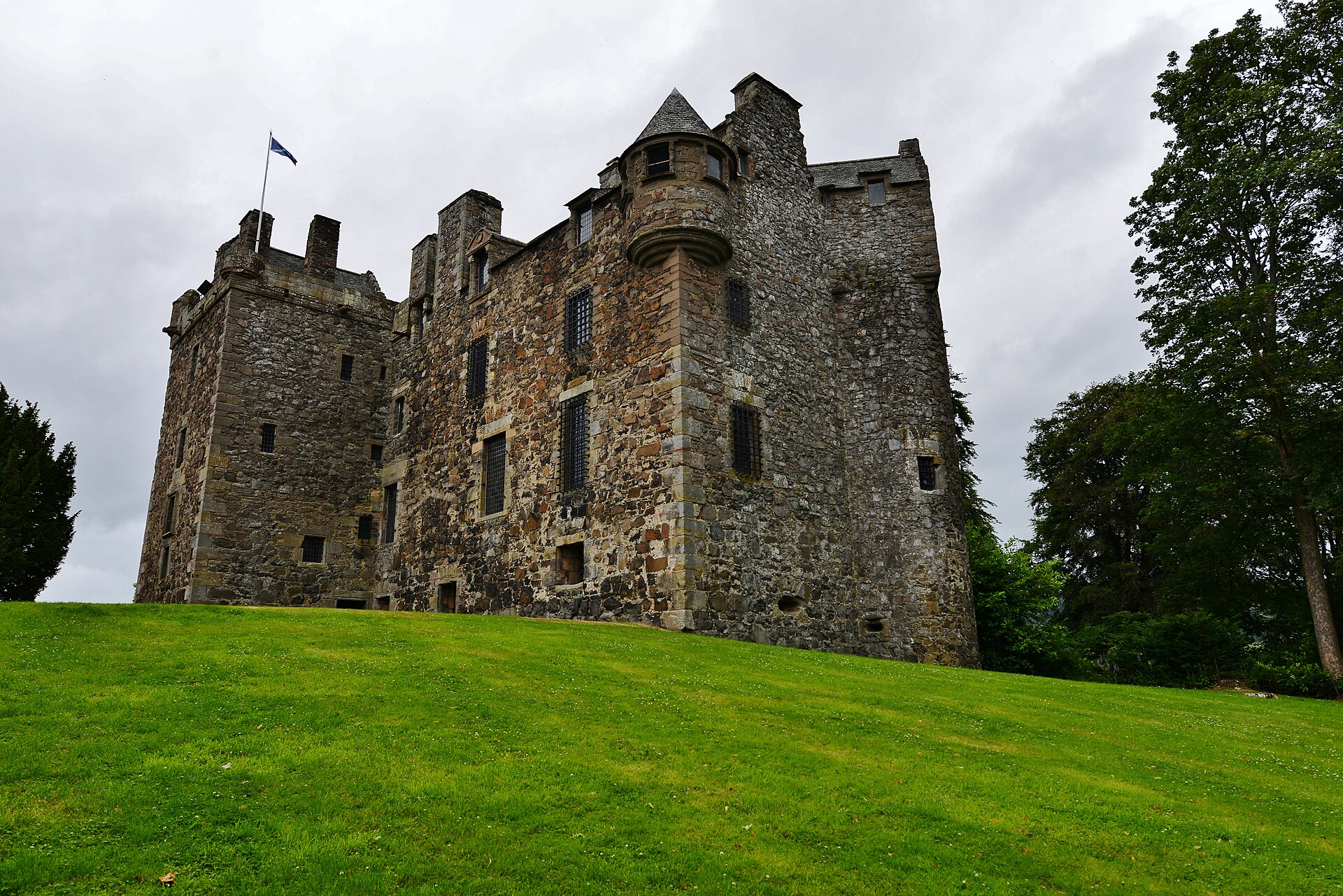
Photo: HARTLEPOOLMARINA2014 / Wikimedia Commons / CC BY-SA 3.0 Another tree of the same name, the Wallace Yew, stood near the castle.
What to look for
-
The grassland setting
The yew stands on open grass said to lie near the site of Wallace's home and birthplace in Elderslie.
-
Signs of the fungus
Ganoderma took hold by 2008 after fire and storm damage opened the tree to infection. The decay is untreatable and progressive.
-
The replacement cuttings
Twelve cuttings were taken by Renfrewshire Council; six propagated successfully, and one will eventually be planted near the parent tree's site.
What is said
Folklore and tradition, recorded as what is said — not as established fact.
-
Sheltered from the patrol
The tree is said to have hidden William Wallace from a patrol of English soldiers searching for him, and to have been planted by him in the first place.
Plan your visit
- Location
- General area near Renfrewshire, Renfrewshire
- Nearest settlement
- Renfrewshire
- Access
- Reached on a public path
- What survives
- Living-tree condition and access should be checked against current local guidance before any visit copy is expanded.
This is a sensitive or fragile site, so we show only its general area. Please check official heritage sources for access before visiting, and take care not to disturb it.
Nearby places

Ancient tree · Medieval
Wallace Oak (Elderslie)
Renfrewshire
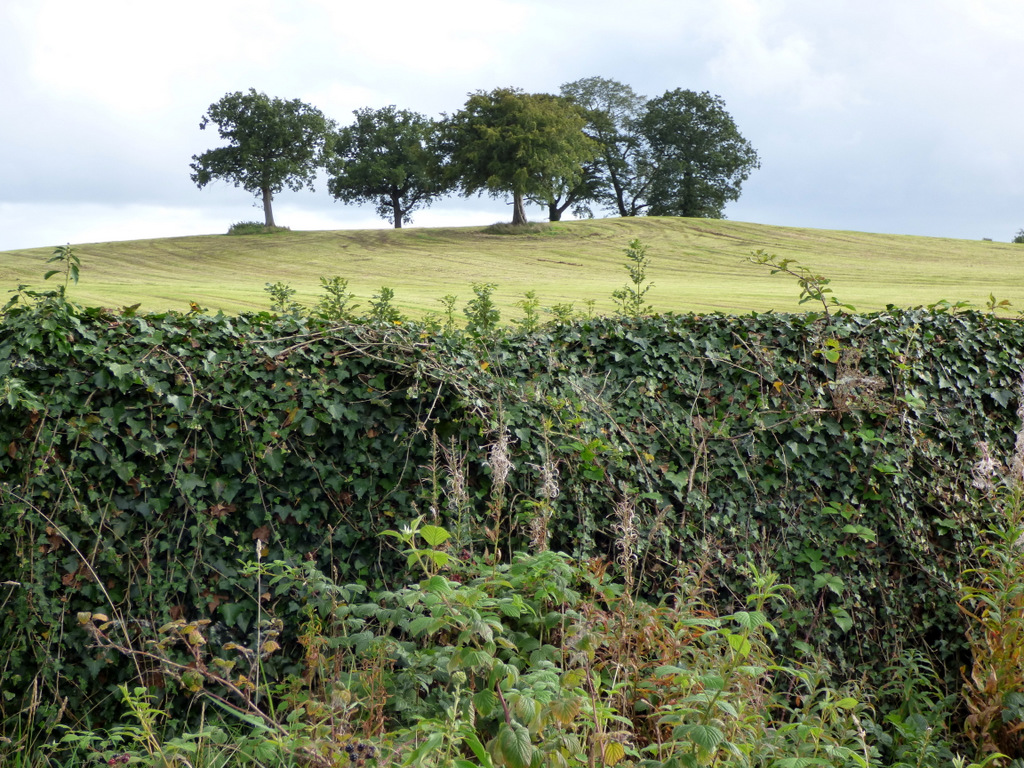
By the mid-nineteenth century a Scotsman's snuff box was expected to contain a fragment of this oak. The relic trade is what killed it.
- Near Renfrewshire
Ancient tree · Medieval
The Craigends Yew
Renfrewshire
A yew that has cloned itself into a grove: branches bending to the ground, rooting, and sending up new stems, until the crown reached a hundred met…
- Near Renfrewshire

Sacred place · Medieval
Paisley Abbey
Renfrewshire
Robert II was born here by caesarean section in 1316, after his mother fell from her horse nearby. A stone marker stands where she came off.

Sacred place · Medieval
Castle Semple Collegiate Church
Renfrewshire
A church served by a college of priests, near the eastern end of Castle Semple Loch.
Questions people ask
- How old is the Wallace Yew?
- It is said to be around 700 years old and to have been planted by Wallace himself, though doubts have been raised. Parish records of the 1700s already describe it as an ancient tree.
- Is the tree dying?
- Yes. Arson in 1978 and storms in 2005 opened it to the untreatable Ganoderma fungus, which took hold by 2008 and will eventually kill it.
- What is being done about it?
- Renfrewshire Council took twelve cuttings to raise a clone. Six propagated successfully, and one will be planted near the original's site; it will take about 30 years to mature.
- What is its connection to William Wallace?
- It stands on grassland said to be near his home and birthplace, and legend has him sheltering in its branches from an English patrol.
- Is there another Wallace Yew?
- Yes. Another tree of the same name stood near Elcho Castle, close to Perth.
Sources
The Ancient Codex, in your pocket
Get the Pocket Codex app
Carry the directory with you — Wallace Yew (Elderslie) and thousands of ancient places across Britain and Ireland, offline, wherever you roam.