
By the mid-nineteenth century a Scotsman's snuff box was expected to contain a fragment of this oak. The relic trade is what killed it.
By the middle of the nineteenth century it had become normal for a Scottish man to carry a snuff box containing a fragment of this tree. Not only this tree: the standard composite box held a piece of the Wallace Oak alongside wood from a tree said to have been planted by Mary, Queen of Scots at Holyrood, from another under which she is said to have watched the Battle of Langside, and from the rafters of Alloway Auld Kirk. Four relics of Scottish memory, carried in a pocket. The demand for the first of them is what destroyed the tree it came from.
The oak stood at the west end of Elderslie in Renfrewshire, north of the turnpike road. A book of 1838 describes it as at least 700 years old, which puts its seeding at around 1100 AD, and by the late thirteenth century it grew on ground belonging to the father of William Wallace. Wallace himself is said to have been born on the estate. The tree was well known by the fourteenth century, and a yew later grew up beside it that would carry the same name.
The legend attached to it is one of concealment: Wallace hiding among the branches from an English patrol. The story swelled with retelling until it was claimed the tree hid 300 of his men, and its canopy was described as covering anything from 413 square metres to a Scottish acre. A measurement taken in 1825 is more sober — a trunk 21 feet round at ground level, narrowing to 12 feet 2 inches at head height, a tree 67 feet tall, with branches reaching 45 feet out.
That measurement marks roughly the point at which the decline set in. Age accounted for part of it; the rest was cut away by hand. When Jacob George Strutt drew the oak for his Sylva Britannica by 1851, most of the branches had gone, and he wrote of a melancholy torso, bald and frail, its limbs hacked off by relic hunters as Wallace’s had been by the hangman. The comparison is unkind and exact. A storm in 1856 brought down what remained.
Even then the wood kept circulating. Two regency-style tables were reputedly made from it, and in 1867 John McAdam commissioned an elaborate frame from the timber, meant to hold letters about Wallace at the National Wallace Monument. More usefully, acorns from the tree were raised to saplings by Daniel Johnston Baron Officer at the Elderslie Estate, and one of those saplings was planted at Fountain Gardens in Paisley, where it is still growing.
What follows is drawn from published sources, with each claim labelled by how firmly it is established.
History
A book of 1838 describes the oak as at least 700 years old, which gives an approximate seeding date of 1100 AD. The tree stood at the west end of the village of Elderslie in Renfrewshire, north of the turnpike road, and by the late thirteenth century the ground it grew on belonged to the father of William Wallace. William Wallace is said to have been born on the estate associated with the oak. The tree was already well known by the fourteenth century, and the Wallace Yew later grew beside it, so the two trees came to share the same patch of ground and the same association.
In legend Wallace used the branches to hide from an English patrol. The story grew in the telling until it was claimed that the tree concealed 300 of his men, and its canopy was described variously as covering 413 square metres or a Scottish acre, about 1.3 English acres. A measurement of 1825 gives the trunk as 21 feet in circumference at ground level, narrowing to 12 feet 2 inches at a height of 5 feet. The tree stood 67 feet high, with branches reaching out as far as 45 feet, giving a canopy over 19 English square poles of ground, about 480 square metres.
After that measurement the tree declined, partly through age and partly because pieces of it were being cut away as souvenirs. By the middle of the nineteenth century it had become common for Scottish men to carry a snuff box incorporating a fragment of the Wallace Oak, together with wood from a tree said to have been planted by Mary, Queen of Scots at Holyrood Palace, from another under which she is said to have watched the Battle of Langside, and from the rafters of Alloway Auld Kirk, made famous by Robert Burns.
When Jacob George Strutt drew the oak for his Sylva Britannica by 1851 many of its branches were already gone. He described it as a melancholy torso, bald and frail, with its limbs hacked off by relic hunters, like Wallace's by the hangman. The tree fell during a storm in 1856. Its timber was reputedly used to make two regency-style tables, and in 1867 John McAdam commissioned an elaborate frame from the oak, intended to hold letters about Wallace at the National Wallace Monument.
Acorns from the tree were raised to saplings by Daniel Johnston Baron Officer at the Elderslie Estate. One of those saplings was planted at Fountain Gardens in Paisley, where it still stands.
People
-

Portrait: Unknown author / Wikimedia Commons / Public domain William Wallace
Leader of Scottish independence, said to have been born on the estate associated with the oak and to have hidden in its branches.
-
Jacob George Strutt
Drew the tree for his Sylva Britannica by 1851 and described it as a melancholy torso stripped by relic hunters.
-
John McAdam
Commissioned an elaborate frame made from the fallen oak in 1867, intended for letters about Wallace at the National Wallace Monument.
-
Daniel Johnston Baron Officer
Raised saplings from the tree's acorns at the Elderslie Estate.
Cultural influences
-
Relic collecting and the making of Wallace memory
Demand for fragments of the oak turned it into a portable national relic: its wood was put into snuff boxes, furniture and a frame for Wallace letters, but souvenir cutting also accelerated the tree’s destruction.
Connections
-
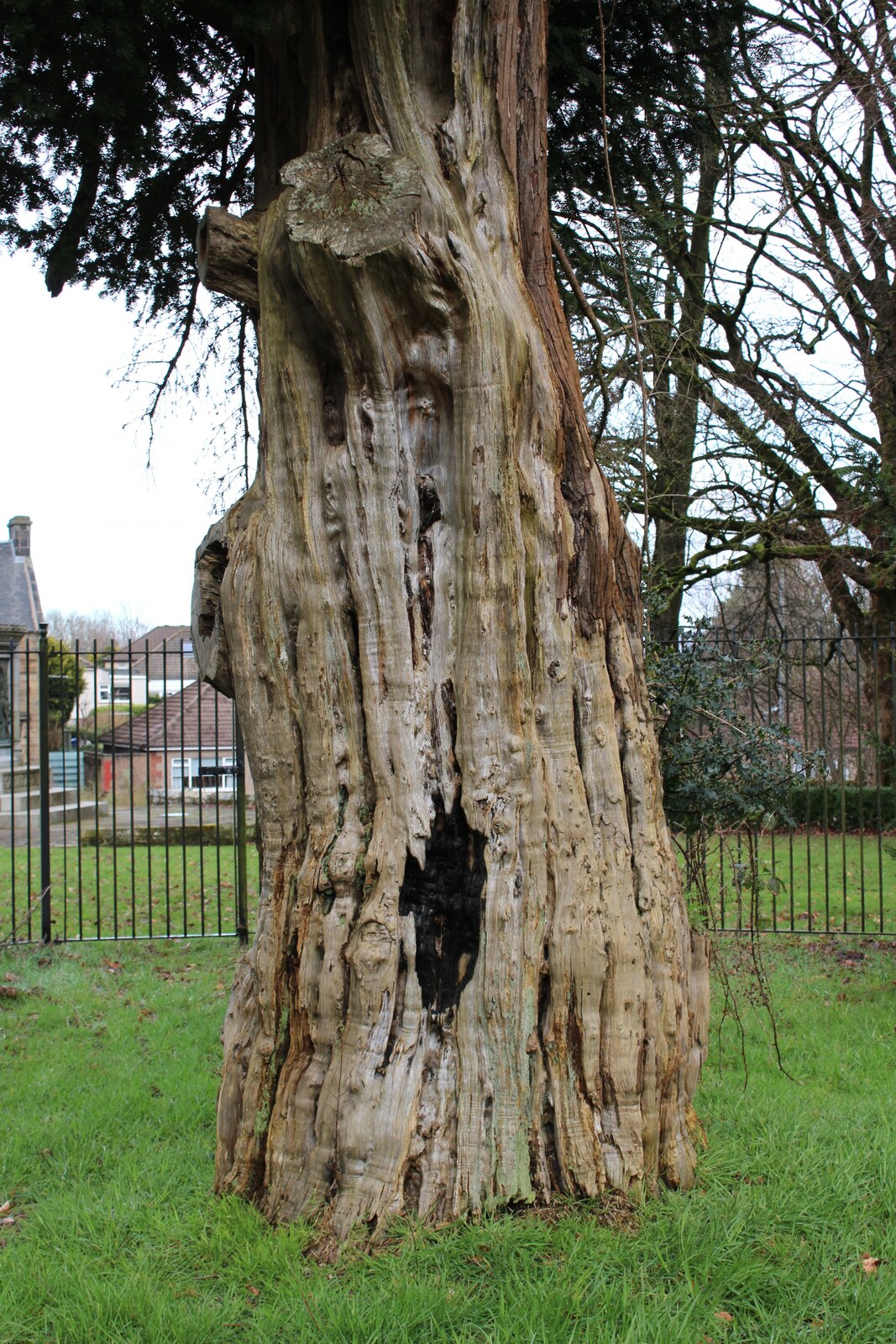
Photo: Richard Sutcliffe / Wikimedia Commons / CC BY-SA 2.0 Grew alongside the oak on the same ground, and carried the association with Wallace forward after the oak fell in 1856.
-

Photo: Finlay McWalter / Wikimedia Commons / CC BY-SA 3.0 National Wallace Monument
An elaborate frame made from the fallen oak was commissioned in 1867 to hold letters about Wallace there.
-

Photo: Discolover18 / Wikimedia Commons / CC BY-SA 3.0 Fountain Gardens, Paisley
A sapling raised from the oak's acorns was planted there and still stands.
-

Photo: Mary and Angus Hogg / Wikimedia Commons / CC BY-SA 2.0 Alloway Auld Kirk
Wood from its rafters was combined with fragments of this oak in the composite snuff boxes popular in mid-nineteenth-century Scotland.
In culture
-
Sylva Britannica
Jacob George Strutt drew the oak for this work by 1851, recording it after relic hunters had already stripped most of its branches.
What to look for
-
The site at the west end of Elderslie
The oak is gone. It stood at the west end of the village, north of the turnpike road, on ground associated with Wallace's family.
-
The Paisley sapling
A tree raised from the oak's own acorns stands in Fountain Gardens in Paisley.
What is said
Folklore and tradition, recorded as what is said — not as established fact.
-
The tree that hid three hundred men
Wallace is said to have hidden in the branches to escape an English patrol; later versions of the story claim the tree concealed 300 of his men.
Plan your visit
- Location
- General area near Renfrewshire, Renfrewshire
- Nearest settlement
- Renfrewshire
- Access
- Reached on a public path
- What survives
- Living-tree condition and access should be checked against current local guidance before any visit copy is expanded.
This is a sensitive or fragile site, so we show only its general area. Please check official heritage sources for access before visiting, and take care not to disturb it.
Nearby places
Ancient tree · Medieval
Wallace Yew (Elderslie)
Renfrewshire
Parish records of the 1700s already call it 'this ancient tree'. Arson in 1978 and storms in 2005 let in a fungus that is now killing it; twelve cu…
- Near Renfrewshire
Ancient tree · Medieval
The Craigends Yew
Renfrewshire
A yew that has cloned itself into a grove: branches bending to the ground, rooting, and sending up new stems, until the crown reached a hundred met…
- Near Renfrewshire

Sacred place · Medieval
Paisley Abbey
Renfrewshire
Robert II was born here by caesarean section in 1316, after his mother fell from her horse nearby. A stone marker stands where she came off.

Sacred place · Medieval
Castle Semple Collegiate Church
Renfrewshire
A church served by a college of priests, near the eastern end of Castle Semple Loch.
The setting
Near Wallace Oak (Elderslie), about 43 metres away.
Photo: Gordon Dowie / Wikimedia Commons / CC BY-SA 2.0
Near Wallace Oak (Elderslie), about 136 metres away.
Photo: wfmillar / Wikimedia Commons / CC BY-SA 2.0
Near Wallace Oak (Elderslie), about 144 metres away.
Photo: wfmillar / Wikimedia Commons / CC BY-SA 2.0
Near Wallace Oak (Elderslie), about 151 metres away.
Photo: Richard Sutcliffe / Wikimedia Commons / CC BY-SA 2.0
Questions people ask
- Is the Wallace Oak still standing?
- No. It fell during a storm in 1856, by which time relic hunters had already removed most of its branches.
- How old was it?
- A book of 1838 gives it as at least 700 years old, which implies a seeding date of around 1100 AD.
- What was its connection to William Wallace?
- By the late thirteenth century the tree stood on the estate of Wallace's father, and Wallace is said to have been born there. Legend has him hiding in its branches from an English patrol.
- Why did the tree decline?
- Partly age, and partly the removal of parts of it as souvenirs. Fragments of the oak were a standard component of Scottish snuff boxes by the mid-nineteenth century.
- Does anything survive of it?
- Its timber reputedly went into two regency-style tables and a frame commissioned in 1867 for the National Wallace Monument. A sapling raised from its acorns stands in Fountain Gardens, Paisley.
Sources
The Ancient Codex, in your pocket
Get the Pocket Codex app
Carry the directory with you — Wallace Oak (Elderslie) and thousands of ancient places across Britain and Ireland, offline, wherever you roam.