A church served by a college of priests, near the eastern end of Castle Semple Loch.
A roofless late Gothic church stands near the eastern end of Castle Semple Loch in Renfrewshire, within Clyde Muirshiel Regional Park, two miles west of Howwood by the B787 and then the B776.
It is a collegiate church — one staffed by a body of clergy living in common, rather than by a single parish priest — and John Sempill, 1st Lord Sempill, founded it in about 1504. Its establishment was a provost, six chaplains or prebendaries, two boys and a sacristan.
James IV of Scotland visited John Sempill’s house at Eliotston and the church on 26 July 1505, and made an offering of fourteen shillings in what he called the New College. A stone in the outer wall carries the letters R. L. S. together with the arms of Sempill and Montgomerie.
The building measures 71.5 feet long, 24.25 feet wide and 15.5 feet high. Its roof was removed in the 1800s and its walls are covered with ivy, which has since penetrated the interior — an ordinary sequence for an unroofed building, and the reason the fabric continues to deteriorate.
There appears to have been a village here in ancient times, with a chapel dedicated to St Bride somewhere nearby.
The church is protected by Historic Environment Scotland as a scheduled monument, which designates it under law as an archaeological site of national importance.
What follows is drawn from published sources, with each claim labelled by how firmly it is established.
History
John Sempill, 1st Lord Sempill, founded the collegiate church near Castle Semple in about 1504. Its establishment was a provost, six chaplains or prebendaries, two boys and a sacristan — a body of clergy living in common rather than a single parish priest, which is what makes a church collegiate. James IV of Scotland visited John Sempill's house at Eliotston and the church on 26 July 1505, and made an offering of fourteen shillings in what he called the New College. A stone in the outer wall carries the letters R. L. S. together with the arms of Sempill and Montgomerie.
The building measures 71.5 feet long, 24.25 feet wide and 15.5 feet high. Its roof was removed in the 1800s and its walls are covered with ivy, which has since penetrated the interior — an ordinary sequence for an unroofed building, and the reason the fabric continues to deteriorate. The church stands near the eastern end of Castle Semple Loch in Renfrewshire, within Clyde Muirshiel Regional Park, two miles west of Howwood. There appears to have been a village here in ancient times, with a chapel dedicated to St Bride somewhere nearby. The late Gothic building is protected by Historic Environment Scotland as a scheduled monument.
People
-
John Sempill, 1st Lord Sempill
Founded the collegiate church around 1504, endowing a provost, six chaplains, two boys and a sacristan for communal worship.
Cultural influences
-
Late-medieval collegiate worship
The foundation supported a provost, six chaplains or prebendaries, two boys and a sacristan, preserving a collegiate form of worship rather than a single parish ministry.
Connections
-
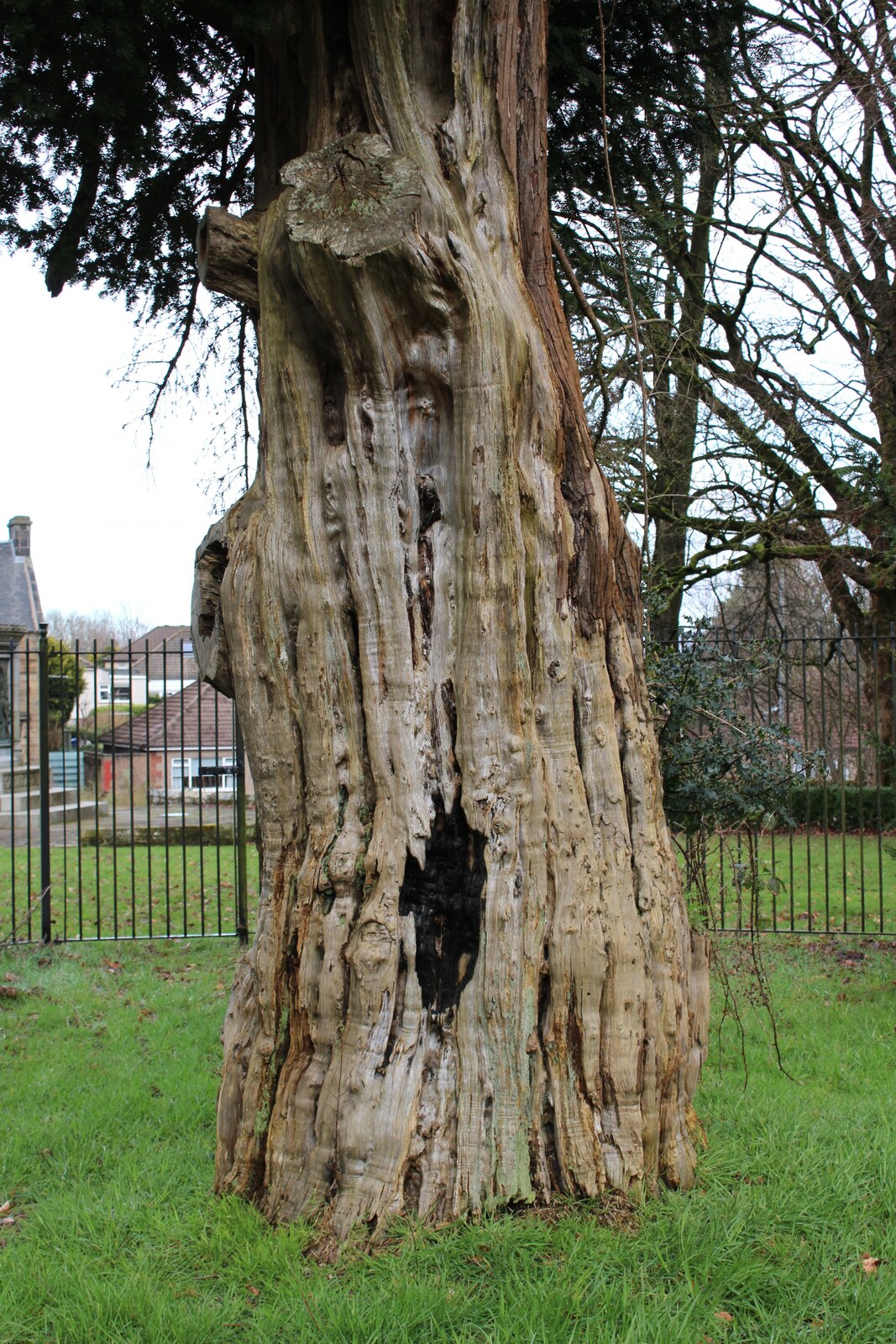
Photo: Richard Sutcliffe / Wikimedia Commons / CC BY-SA 2.0 The collegiate church and yew are historic landmarks associated with Renfrewshire’s medieval and later local traditions.
-

Photo: Jane Nasmyth / Wikimedia Commons / Public domain Both are heritage landmarks in the wider Renfrewshire landscape, linking ecclesiastical architecture with natural monuments and local memory.
-
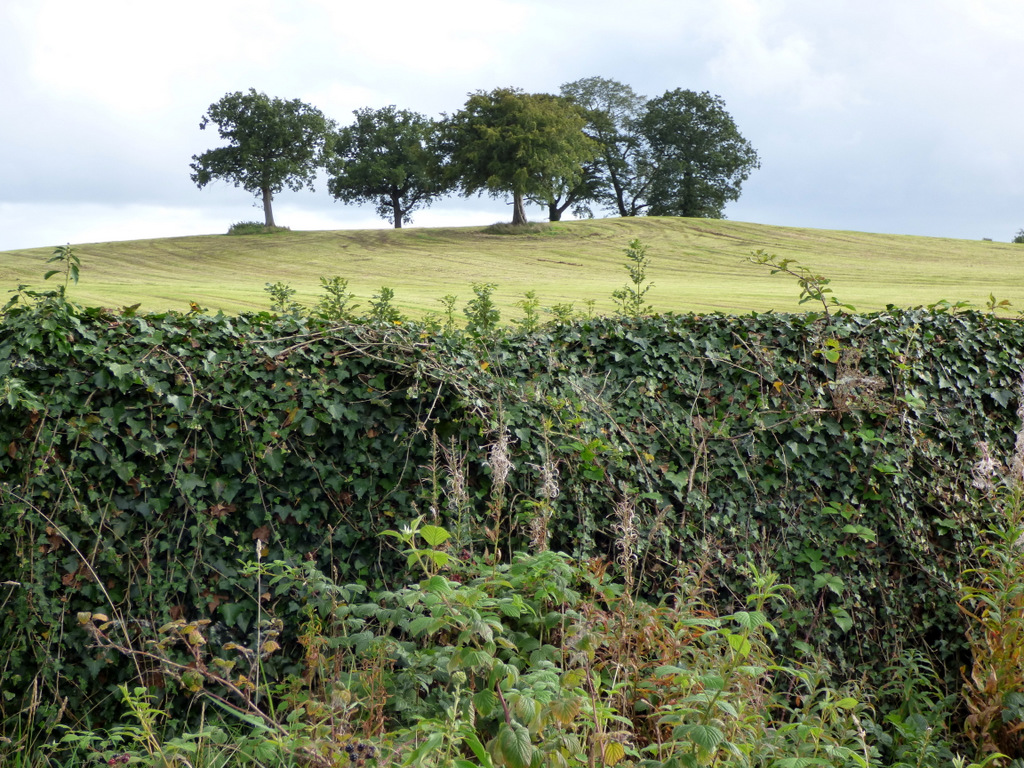
Photo: Thomas Nugent / Wikimedia Commons / CC BY-SA 2.0 The church and ancient yew belong to the same historic Renfrewshire landscape, preserving different forms of cultural heritage.
What to look for
-
The roofless Gothic shell
The late-Gothic church stands roofless beside Castle Semple Loch, with walls now covered in ivy.
-
The Sempill and Montgomerie arms
A stone in the outer wall bears the letters R. L. S. and the arms of Sempill and Montgomerie.
Plan your visit
- Location
- 55.8069°N · 4.5935°W
- Time needed
- About 45 minutes
Nearby places
Ancient tree · Medieval
Wallace Yew (Elderslie)
Renfrewshire
Parish records of the 1700s already call it 'this ancient tree'. Arson in 1978 and storms in 2005 let in a fungus that is now killing it; twelve cu…
- Near Renfrewshire

Ancient tree · Medieval
Wallace Oak (Elderslie)
Renfrewshire
By the mid-nineteenth century a Scotsman's snuff box was expected to contain a fragment of this oak. The relic trade is what killed it.
- Near Renfrewshire
Ancient tree · Medieval
The Craigends Yew
Renfrewshire
A yew that has cloned itself into a grove: branches bending to the ground, rooting, and sending up new stems, until the crown reached a hundred met…
- Near Renfrewshire

Sacred place · Medieval
Paisley Abbey
Renfrewshire
Robert II was born here by caesarean section in 1316, after his mother fell from her horse nearby. A stone marker stands where she came off.
Questions people ask
- What makes a church collegiate?
- A body of clergy living in common rather than a single parish priest. John Sempill, 1st Lord Sempill, founded this one in about 1504 with a provost, six chaplains or prebendaries, two boys and a sacristan.
- Did anyone notable visit it?
- James IV of Scotland, on 26 July 1505. He visited John Sempill's house at Eliotston and the church, and made an offering of fourteen shillings in what he called the New College. A stone in the outer wall carries the letters R. L. S. with the arms of Sempill and Montgomerie.
- What condition is the building in?
- Poor and worsening. It measures 71.5 feet long, 24.25 feet wide and 15.5 feet high. The roof was removed in the 1800s and the walls are covered with ivy that has since penetrated the interior, which is the ordinary sequence for an unroofed building.
- Where is it and is it protected?
- Near the eastern end of Castle Semple Loch in Renfrewshire, within Clyde Muirshiel Regional Park, two miles west of Howwood. The late Gothic building is protected by Historic Environment Scotland as a scheduled monument.
Sources
The Ancient Codex, in your pocket
Get the Pocket Codex app
Carry the directory with you — Castle Semple Collegiate Church and thousands of ancient places across Britain and Ireland, offline, wherever you roam.