
Fortified place · Prehistoric · Perth and Kinross
Castle Law, Abernethy
A contour fort above Abernethy, scheduled since 1964 — older than the medieval lordship in the village below, and with no recorded connection to it.
The fort on Castle Law is older than everything Abernethy is remembered for, and there is no record connecting the two.
What sits on the summit is an early hillfort commanding a wide sweep of country. Archaeologists class it as a contour fort: its ramparts follow the natural line of the hilltop rather than being driven across it, which is both an efficient way to enclose a summit and a sign that the builders were working with the ground rather than against it. It was designated a scheduled monument in March 1964, and it appears in the two principal records of Scotland’s early fortifications — the Atlas of Hillforts and the national Canmore database.
The village below is a different story with a different date. Abernethy grew into a seat of the Earls of Fife, a line bound to Clan MacDuff, and a branch of that family held the abbey there as hereditary abbots. Nearby stood the Cross of MacDuff, a recognised place of sanctuary: a kinsman of the earl who had committed a killing could claim protection there and find remission by paying compensation to the victim’s family. Sanctuary attaching to a family rather than to a church is unusual, and it says a good deal about how much weight the earls carried in this part of Perthshire.
None of that has any documented bearing on the fort. Whether the hillfort was still in use when the earls held the village, whether they made anything of it, or whether it was already an ancient earthwork to them, is simply not recorded. The two things share a hill and nothing else that can be shown.
That distinction is worth holding onto, because hillforts overlooking places of later importance attract stories about the later importance. What the earthworks on Castle Law actually establish is that a community fortified this summit long before the earldom existed, and that they knew how to lay out a defence on sloping ground. The rest of Abernethy’s history happened underneath them.
What follows is drawn from published sources, with each claim labelled by how firmly it is established.
History
Castle Law rises above the village of Abernethy in Perth and Kinross, an early hillfort holding a commanding position over the country around it. Archaeologists classify it as a contour fort, meaning its ramparts follow the natural line of the summit rather than cutting straight across it. The site was designated a scheduled monument in March 1964 and appears in the principal records of Scotland's early fortifications, including the Atlas of Hillforts and the national Canmore database.
The hill looks down on a settlement that carried real weight in medieval Scotland. Abernethy became a seat of the Earls of Fife, whose line was bound to Clan MacDuff, and a branch of that family held the abbey there as hereditary abbots. The Cross of MacDuff stood nearby, a recognised place of sanctuary where a kinsman of the Earl of Fife guilty of a killing could seek remission by paying compensation to the victim's family. Sanctuary of that kind was a legal privilege attached to a family, not to a place of worship.
Whether the fort itself served those later lords is not recorded. Its earthworks mark it out as one of the older strongholds crowning this corner of Perthshire, and the medieval importance of Abernethy below is a separate history that happens to share the same hill.
People
-
D. Christison and J. Anderson
Antiquaries whose 1898 excavation report recorded the timber-laced walls and cistern at Castle Law.
Cultural influences
-
A contour fort shaped by its summit
Castle Law’s ramparts follow the natural contour of the hilltop. That layout preserves a clear example of a defended prehistoric summit, distinct from the later medieval importance of Abernethy below.
Connections
-
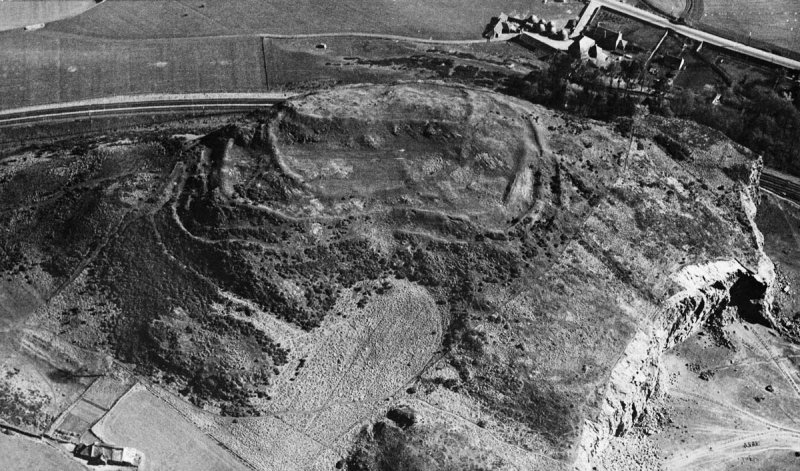
Photo: Royal Air Force / Wikimedia Commons / Public domain Both are major Iron Age hillforts in eastern Scotland, preserving evidence of defended settlement and regional power.
-
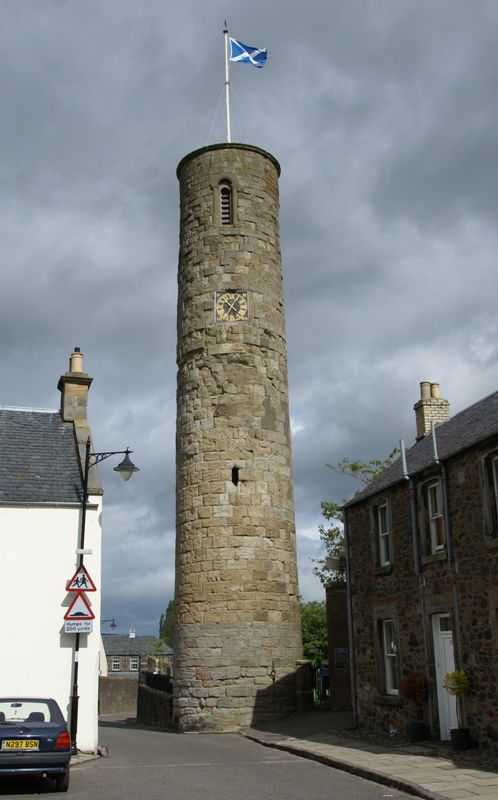
Photo: Otter / Wikimedia Commons / CC BY-SA 3.0 The hillfort and round tower represent successive phases of settlement and religious importance at Abernethy.
-
The hillfort and Roman fort span different military systems in the Tay valley, from Iron Age enclosure to imperial frontier infrastructure.
Discovery & excavation
Excavations between 1896 and 1898 exposed the fort’s thick timber-laced walls and a rock-cut cistern, but found no entrance; RCAHMS surveyed the site with local volunteers in 2013.
What to look for
-
Ramparts on the contour
The defences follow the natural line of the summit rather than a plan imposed on it. Tracing them is the clearest way to see how the builders read the hill.
-
The command of the ground
The fort holds a commanding position over the surrounding country. That view, rather than any surviving structure, is what the site was built for.
-
Abernethy below
The village the hill overlooks became a seat of the Earls of Fife and held an abbey under hereditary abbots. The fort is older, and the relationship between the two is not documented.
Plan your visit
- Location
- 56.3233°N · 3.3226°W
- Time needed
- About 45 minutes
Nearby places
Fortified place · Medieval
Abernethy Round Tower
Perth and Kinross
One of only two Irish-style round towers in Scotland, the other at Brechin Cathedral.
- Near Abernethy
Building or ruin · Roman
Carpow Roman Fort
Perth and Kinross
A thirty-acre Roman fort at the meeting of the Tay and the Earn, held from the late second century into the early third.
- Near Carpow
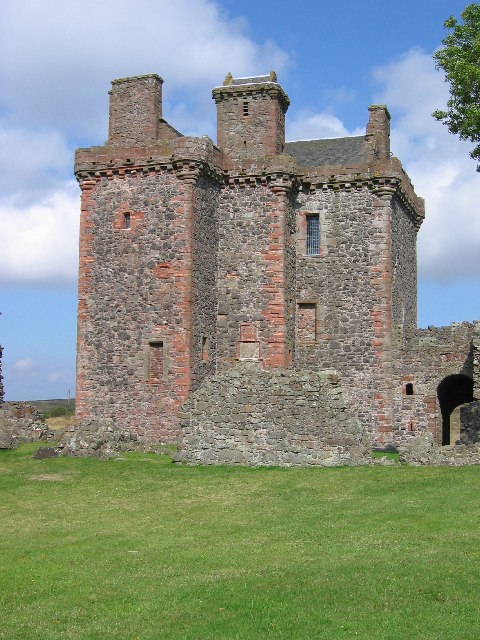
Fortified place · Medieval
Balvaird Castle
Perth and Kinross
Carved heads support the roundels on the wall-walk, and the cap-house over the stair is a miniature tower house of its own: detail that may have be…
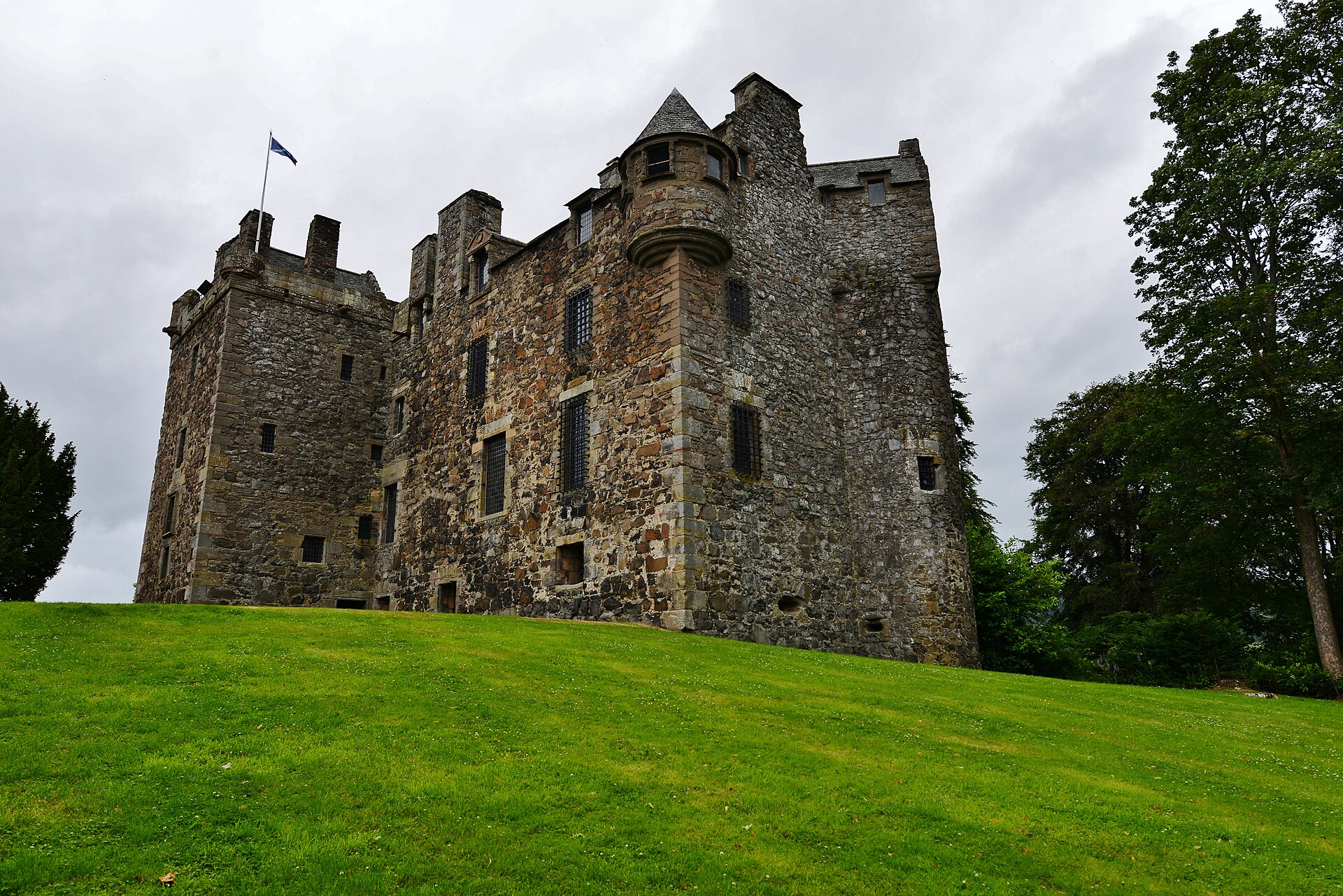
Fortified place · Medieval
Elcho Castle
Perth and Kinross
Nearly burned in 1773 by a crowd who found it full of grain being held back for export during a famine.
- Near Rhynd
The setting
Castle Law in snow, seen from Abernethy Glen; the hillfort earthworks are not visible.
Photo: Jackie Proven / Wikimedia Commons / CC BY-SA 2.0
View from Castle Law over Abernethy and the Tay valley.
Photo: Gordon Brown / Wikimedia Commons / CC BY-SA 2.0
Snow-covered fields near Abernethy, viewed from Castle Law.
Photo: Jackie Proven / Wikimedia Commons / CC BY-SA 2.0
Lane through Abernethy Glen below Castle Law.
Photo: James Allan / Wikimedia Commons / CC BY-SA 2.0
Questions people ask
- What kind of fort is it?
- A contour fort — its defensive ramparts are laid out to follow the natural line of the summit rather than cutting straight across it.
- Is the fort connected to the Earls of Fife?
- Not on any record. Abernethy below became a seat of the Earls of Fife, whose line was bound to Clan MacDuff, but whether the hillfort served those later lords is not documented. The earthworks are considerably older.
- What was the Cross of MacDuff?
- A recognised place of sanctuary near Abernethy, where a kinsman of the Earl of Fife guilty of a killing could seek remission by paying compensation to the victim's family.
- Is the site protected?
- Yes. It was designated a scheduled monument in March 1964 and appears in both the Atlas of Hillforts and Canmore.
Sources
The Ancient Codex, in your pocket
Get the Pocket Codex app
Carry the directory with you — Castle Law, Abernethy and thousands of ancient places across Britain and Ireland, offline, wherever you roam.