Carved heads support the roundels on the wall-walk, and the cap-house over the stair is a miniature tower house of its own — detail that may have been salvaged from a church.
Carved heads hold up the roundels on the wall-walk here, the aumbry in the first-floor hall is unusually elaborate, and the cap-house over the stair is built as a miniature tower house in its own right. All of it is red sandstone, and all of it is finer than a Scottish tower house of this date generally runs to. One suggestion is that the carving was not made for this building at all, but brought here for re-use from a church.
The castle went up around 1495 for Sir Andrew Murray, a younger son of the Murrays of Tullibardine, on lands he had acquired by marrying the heiress Margaret Barclay of Kippo. It probably replaced an earlier Barclay castle on the same spot, and substantial earthwork remains around it may belong to those older defences. The name first appears in writing three years later, as ‘the place of Balward’ in the Register of the Great Seal of Scotland.
Additions followed over the next century. A gatehouse was built in 1567, with an outer courtyard at the main gate that may have held stabling and certainly deepened the defences. To the south a second courtyard was a garden; a larger walled enclosure to the north-east was an orchard, or pleasance. Two details date the original work independently of any charter — the inverted keyhole gun-holes are late fifteenth century, and the kitchen sits on the ground floor, which is unusual for the period.
The Murrays left in 1658, on being raised to the Viscountcy of Stormont, and moved to Scone Palace near Perth, which was a great deal more comfortable. The castle stayed occupied, but by other people; in its last working phase it probably housed farmworkers. In 1887 MacGibbon and Ross recorded a recumbent statue lying inside — possibly Lady Margaret Barclay, the heiress whose marriage had brought the place into the family four hundred years before.
Historic Scotland has restored and partially excavated the castle and maintains it. It is a particularly complete example of the late medieval Scottish tower house, and the site is open at all hours — but the building itself has been shut for several years on safety grounds, its structure having deteriorated. The Murrays held it until 2017; it now belongs to the American entrepreneur Brady Brim-DeForest.
What follows is drawn from published sources, with each claim labelled by how firmly it is established.
History
Balvaird was built around 1495 for Sir Andrew Murray, a younger son of the Murrays of Tullibardine. He acquired the lands through marriage to the heiress Margaret Barclay, daughter of James Barclay of Kippo, so the castle stands on ground that came to him with a wife rather than by inheritance. It is likely that Balvaird was raised on the site of an earlier Barclay family castle, and substantial remnants of earthwork fortifications around it may survive from those earlier defences. The place first appears in the written record in 1498, as 'the place of Balward' in the Register of the Great Seal of Scotland.
A gatehouse was added in 1567, with an outer courtyard attached to the main gate that possibly held stabling and certainly added a further layer of defence. A second courtyard to the south was laid out as a garden, and a much larger walled area to the north-east served as an orchard or pleasance. The family lived here until they were elevated to the Viscountcy of Stormont, ancestors of the Earldom of Mansfield, and in 1658 moved to the considerably more comfortable Scone Palace near Perth. The castle went on being inhabited afterwards, though not by the family, and in its later days probably housed farmworkers.
In 1887 MacGibbon and Ross noted a recumbent statue lying in the castle, which may have been that of Lady Margaret Barclay, the heiress who married the first Sir Andrew Murray in 1495. If so, the effigy of the woman who brought the estate into the family was still lying in the shell of the house four centuries later.
The castle is notable among Scottish buildings of its date for refined architectural detail — corbels carved as heads supporting the corner roundels of the wall-walk, an unusually elaborate aumbry or wall-cupboard in the first-floor hall, and a cap-house above the stair built as a miniature tower house. The ornament and dressings throughout are red sandstone. It has been suggested that some or all of these carved features were brought to Balvaird for re-use from an ecclesiastical building. A kitchen on the ground floor is unusual for a building of this period, and the inverted keyhole gun-holes date the construction firmly to the late 1400s.
Restored and partially excavated in recent years by Historic Scotland, by whom it is maintained, Balvaird is a particularly fine and complete example of a traditional late medieval Scottish tower house. The site is open at all times, but the castle itself has been closed to the public for several years on safety grounds because of structural deterioration. Balvaird is the caput of the baronial Lordship of Balvaird. It was owned by the Murray family until 2017 and is now owned by the American entrepreneur Brady Brim-DeForest.
People
-
Sir Andrew Murray
A younger son of the Murrays of Tullibardine, who built the castle about 1495 on lands acquired by marriage.
-
Margaret Barclay
Heiress daughter of James Barclay of Kippo, whose marriage to Sir Andrew Murray in 1495 brought Balvaird to the Murrays; possibly the subject of the recumbent statue noted in 1887.
-
Brady Brim-DeForest
American entrepreneur who has owned the castle since 2017, ending Murray ownership.
Cultural influences
-
A refined late-medieval tower house
Balvaird combines a tower house with courtyards, a garden and orchard, built for the Murrays on Barclay land and later left for Scone Palace.
Connections
-
Scone Palace
The family moved there in 1658 on being elevated to the Viscountcy of Stormont, leaving Balvaird to other occupants.
Discovery & excavation
Historic Scotland restored and partly excavated the castle. Earthwork fortifications around it may preserve an earlier Barclay family stronghold.
What to look for
-
The carved head corbels
Heads cut in red sandstone support the corner roundels of the wall-walk; it has been suggested they were salvaged from a church.
-
The cap-house
The structure over the stair head is built as a miniature tower house in its own right.
-
The aumbry
An unusually elaborate wall-cupboard in the first-floor hall, again in red sandstone.
-
The inverted keyhole gun-holes
Their form dates the building to the late 1400s, independently of any document.
-
The ground-floor kitchen
Unusual for a tower house of this date, where kitchens generally sat higher in the building.
Plan your visit
- Location
- 56.2889°N · 3.3428°W
- Time needed
- About 30 minutes
- What survives
- The complete tower house retains red-sandstone carved detail, courtyards and surrounding earthworks, but the castle itself is closed on structural-safety grounds.
Nearby places
Fortified place · Prehistoric
Castle Law, Abernethy
Perth and Kinross
A contour fort above Abernethy, scheduled since 1964: older than the medieval lordship in the village below, and with no recorded connection to it.
Fortified place · Medieval
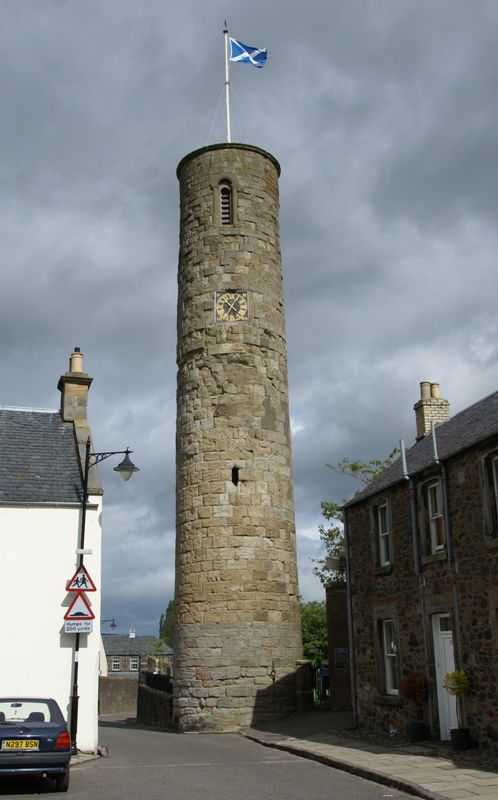
Abernethy Round Tower
Perth and Kinross
One of only two Irish-style round towers in Scotland, the other at Brechin Cathedral.
- Near Abernethy
Building or ruin · Roman
Carpow Roman Fort
Perth and Kinross
A thirty-acre Roman fort at the meeting of the Tay and the Earn, held from the late second century into the early third.
- Near Carpow
Fortified place · Prehistoric
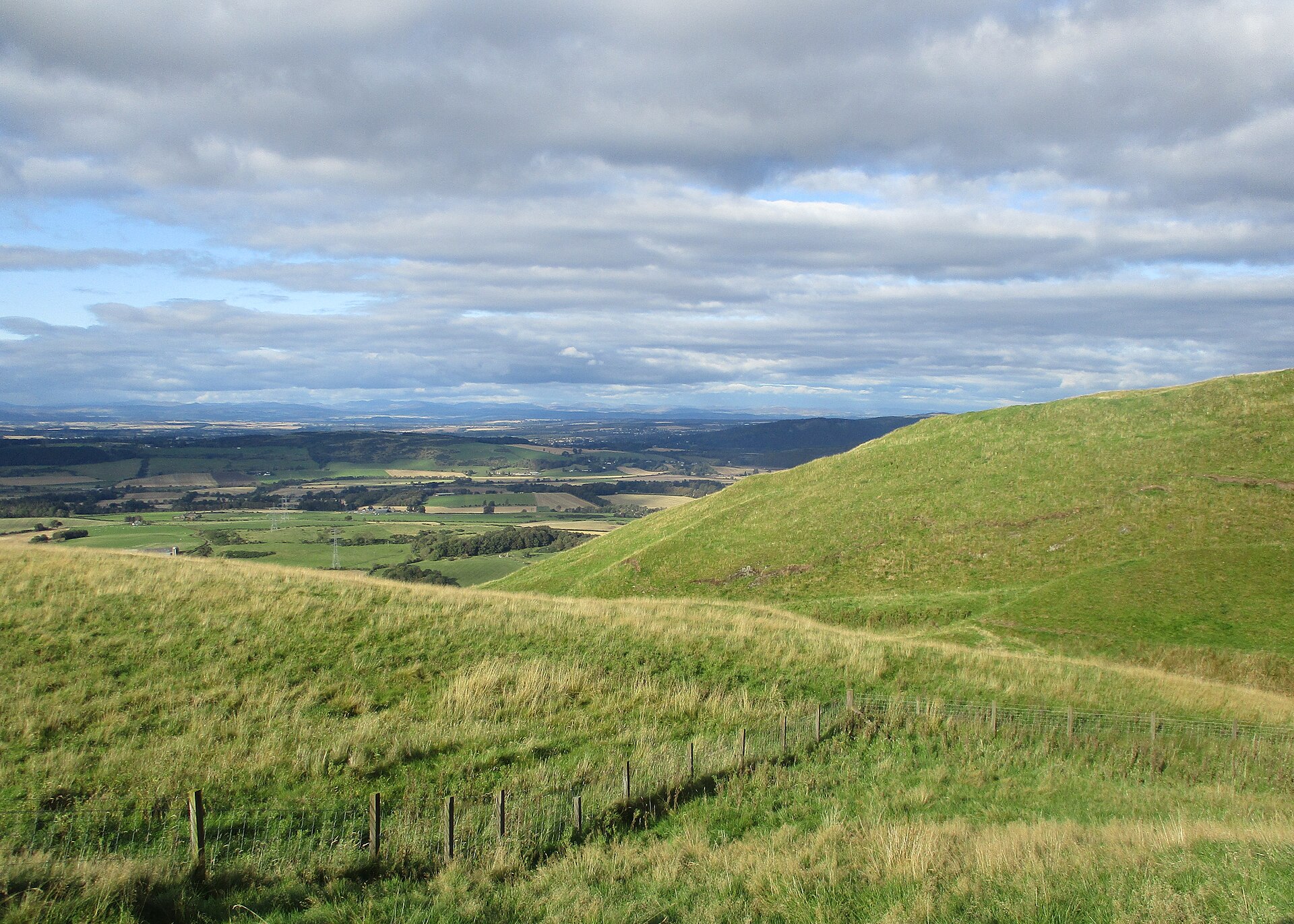
Castle Law, Forgandenny
Perth and Kinross
A multiple-enclosure hillfort above Forgandenny whose banks and ditches are effectively its entire history: the written record has almost nothing t…
Questions people ask
- When was Balvaird Castle built?
- Around 1495, for Sir Andrew Murray. It first appears in writing in 1498, as 'the place of Balward' in the Register of the Great Seal of Scotland.
- Can the castle be entered?
- No. The site is open at all times, but the castle itself has been closed to the public for several years because of structural deterioration.
- Why is the carving unusual?
- The detail is refined for a Scottish tower house of this date, and it has been suggested that some or all of the carved red sandstone features were brought here for re-use from an ecclesiastical building.
- Who owns it?
- The Murray family owned it until 2017; it is now owned by the American entrepreneur Brady Brim-DeForest and maintained by Historic Scotland.
Sources
The Ancient Codex, in your pocket
Get the Pocket Codex app
Carry the directory with you — Balvaird Castle and thousands of ancient places across Britain and Ireland, offline, wherever you roam.