
One of only two Irish-style round towers in Scotland, the other at Brechin Cathedral.
There are only two round towers in Scotland, and this is one of them. The form belongs to Ireland, where they stand in numbers; Abernethy and Brechin are the exceptions, and they are usually read as evidence that the Irish church and the church of the Picts — the people who held eastern and northern Scotland before the Scots — were in closer contact than the map suggests.
The tower stands in School Wynd, rising about 22 metres, with its doorway set well above the ground as these towers always have it. Look at the masonry and the building history shows itself: the lower courses are visibly different from those above, so the tower went up in two campaigns rather than one.
At the base is a Pictish symbol stone, carved with a tuning fork and with a hammer and anvil. It belongs to the church that stood here before the tower did, and it is the clearest sign that Abernethy was an ecclesiastical centre of consequence well before anyone thought of building upwards.
What follows is drawn from published sources, with each claim labelled by how firmly it is established.
History
The tower is a stone-built round tower of Irish type, standing in School Wynd in Abernethy. Round towers are overwhelmingly an Irish form, and only two survive in Scotland — this and the one at Brechin — which makes it evidence of contact between the Irish and Pictish churches rather than of a native building tradition. A Pictish symbol stone stands at the base of the tower, carved with a tuning fork and a hammer and anvil. Its presence connects the site to the earlier Pictish church at Abernethy, and it is one of the reasons the place is read as an ecclesiastical centre of some standing before the tower was built.
The tower's fabric changes partway up, the lower courses differing from those above, which indicates two campaigns of building rather than one. It stands about 22 metres high with a doorway raised above ground level, the standard arrangement in towers of this kind.
Cultural influences
-
An Irish form in a Pictish church centre
One of only two surviving Scottish round towers, Abernethy shows contact between Irish and Pictish churches rather than a native building tradition.
Connections
-
The round tower and hillfort are the principal historic monuments of Abernethy, linking early Christian architecture with the settlement’s earlier defended summit.
-
The tower and Roman fort represent successive phases of occupation and power in the Tay valley landscape.
-
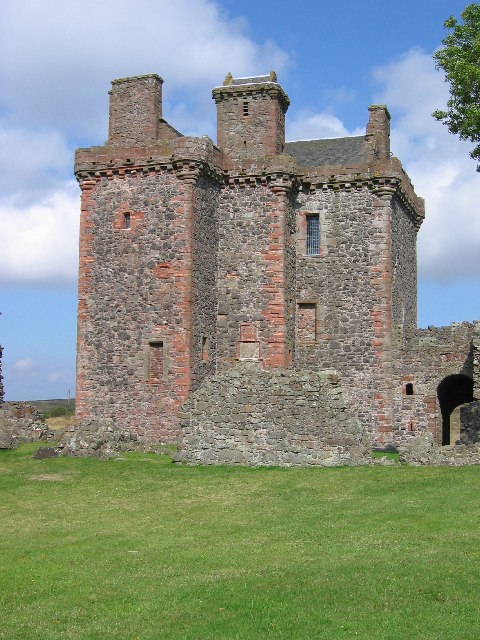
Photo: Brian D Osborne / Wikimedia Commons / CC BY-SA 2.0 Both are historic Perthshire monuments, contrasting Abernethy’s early medieval ecclesiastical tower with a later fortified residence.
Discovery & excavation
Changes in the masonry partway up the tower show that it was built in two distinct campaigns, evidence visible in the standing structure.
What to look for
-
Raised doorway
The 22-metre tower has its doorway above ground level, as is typical of Irish-style round towers.
-
Pictish symbol stone
A stone carved with a tuning fork and hammer-and-anvil stands at the tower’s base.
Plan your visit
- Location
- 56.3330°N · 3.3118°W
- Nearest settlement
- Abernethy
- Time needed
- About 30 minutes
- What survives
- The 22-metre stone tower stands in School Wynd, with visibly different lower and upper masonry and a Pictish symbol stone at its base.
Nearby places
Fortified place · Prehistoric
Castle Law, Abernethy
Perth and Kinross
A contour fort above Abernethy, scheduled since 1964: older than the medieval lordship in the village below, and with no recorded connection to it.
Building or ruin · Roman
Carpow Roman Fort
Perth and Kinross
A thirty-acre Roman fort at the meeting of the Tay and the Earn, held from the late second century into the early third.
- Near Carpow
Fortified place · Medieval
Balvaird Castle
Perth and Kinross
Carved heads support the roundels on the wall-walk, and the cap-house over the stair is a miniature tower house of its own: detail that may have be…
Fortified place · Medieval
Elcho Castle
Perth and Kinross
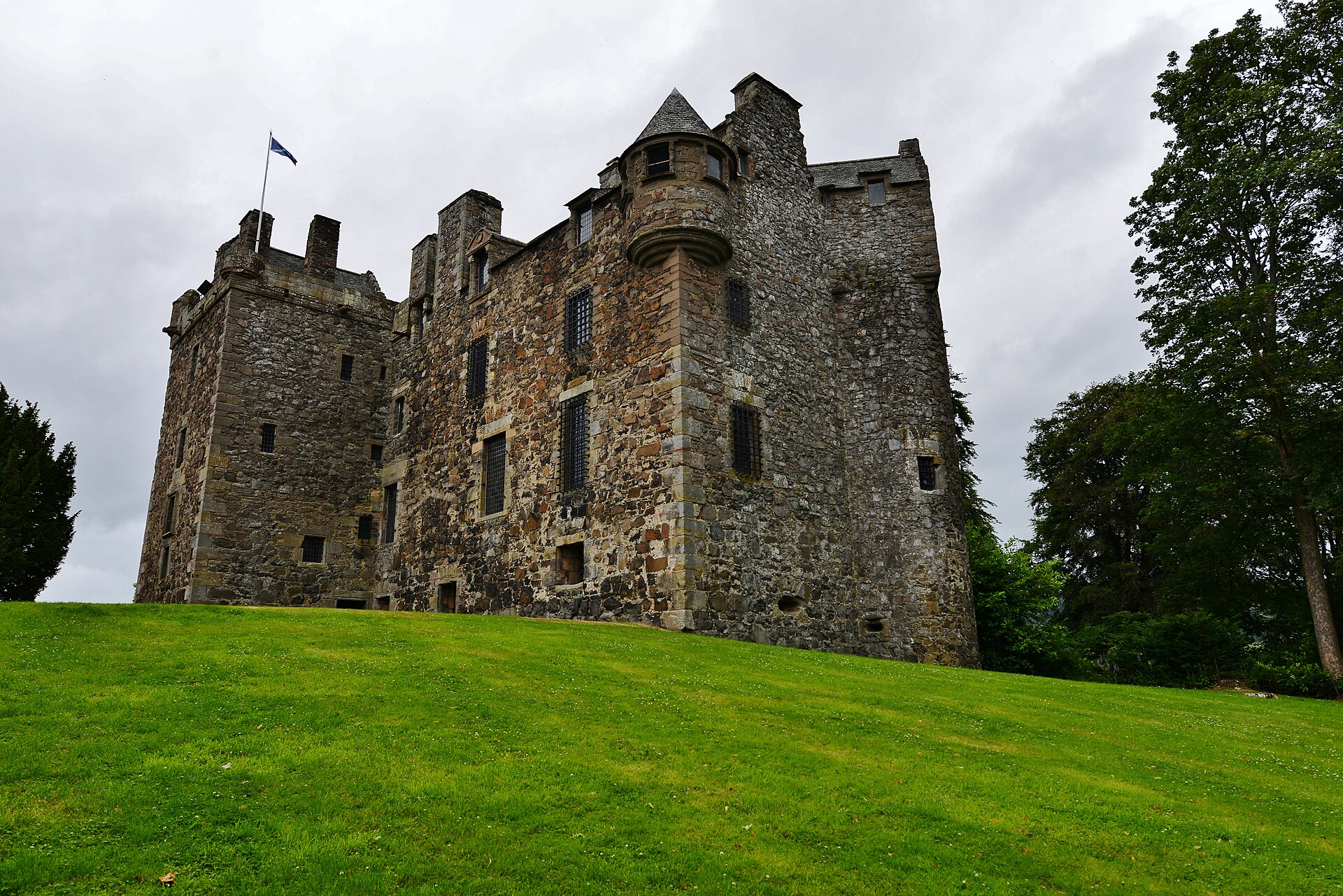
Nearly burned in 1773 by a crowd who found it full of grain being held back for export during a famine.
- Near Rhynd
Questions people ask
- Why does a round tower of Irish type stand in Perthshire?
- Round towers are overwhelmingly an Irish form, and only two survive in Scotland — this one and the tower at Brechin. The pair are read as evidence of contact between the Irish and Pictish churches rather than of any native Scottish building tradition.
- What does the Pictish symbol stone at the base show?
- It is carved with a tuning fork and with a hammer and anvil. Its presence ties the tower to the earlier Pictish church at Abernethy, and it is one of the reasons the place is understood as an ecclesiastical centre of some standing before the tower was raised.
- Was the tower built in a single campaign?
- No. The fabric changes partway up, the lower courses differing from those above, which indicates two campaigns of building rather than one. The tower stands about 22 metres high, with the raised doorway standard in towers of this kind.
Sources
The Ancient Codex, in your pocket
Get the Pocket Codex app
Carry the directory with you — Abernethy Round Tower and thousands of ancient places across Britain and Ireland, offline, wherever you roam.