
A burial mound on Rousay of about 4000–2500 BC, with a rare double-tiered chamber.
This tomb has two storeys, and nobody knows why. Taversöe Tuick on Rousay holds an upper chamber reached along a passage and a lower one dug into the ground beneath it, originally with no connection between them at all. Two-storey tombs are very rare in Britain, and the handful of comparable sites have not produced an explanation.
The lower chamber was found intact when excavation reached it in 1898 — unusual in Orkney, where most tombs had been opened centuries before any archaeologist arrived. It can now be entered by a modern ladder let down from the upper chamber, which is not how anyone got in five thousand years ago.
A third, miniature chamber lies slightly downhill of the lower one, joined to it by a small channel. That channel is sometimes called a drain, though it is not thought to have been one, and what it actually did is another open question.
Full excavation followed in 1937, when the upper chamber was given a domed roof. The finds were substantial: several skeletons, cremated bone, bowls, a mace-head, a flint arrowhead and scrapers, and beads of shale cut into discs. The monument is scheduled, in the care of Historic Environment Scotland, and both chambers are open to visitors.
What follows is drawn from published sources, with each claim labelled by how firmly it is established.
History
Taversöe Tuick is a Neolithic burial cairn on Rousay in Orkney, thought to date from between 4000 and 2500 BC. What distinguishes it is a rare double-tiered chamber — an upper chamber approached by a passageway and a lower subterranean one. Very few tombs anywhere in Britain are built on two levels. The two chambers were originally separate, with no connection between them. The lower one can now be reached by a modern ladder dropped from the upper chamber, which is a convenience for visitors and not the arrangement the builders intended. Ladders are a modern intrusion into a great many Orkney tombs, and always worth noticing as such.
Why the chambers were stacked in this way is unknown. Two-storey tombs are very rare in Britain, and no explanation for the design has been established from this site or from the handful of comparable ones. Not knowing is the honest position, and it is worth stating rather than filling. There is a third chamber, in miniature, slightly downhill of the lower one. A small channel links the two, sometimes called a drain, though that is not believed to be what it actually was. Small linking channels appear at other Orkney tombs and none of them is well explained.
Excavation in 1898 uncovered part of the upper chamber and gained access to the lower one, which was found intact. That is unusual — most Orkney tombs had been opened long before any archaeologist reached them. An unopened chamber is the archaeologist's best possible starting point. The site was fully excavated in 1937, and the upper chamber was covered with a domed roof at that time. The finds included several skeletons, cremated bone, bowls, a mace-head, a flint arrowhead and scrapers, and shale disc beads.
Taversöe Tuick is a scheduled monument in the care of Historic Environment Scotland, and both the monument and its chambers are open to the public. Public access to both levels is unusual for a monument this fragile.
Cultural influences
-
The two-tiered chambers are a rare arrangement among British chambered tombs and show a distinctive Orkney approach to burial space.
Connections
-
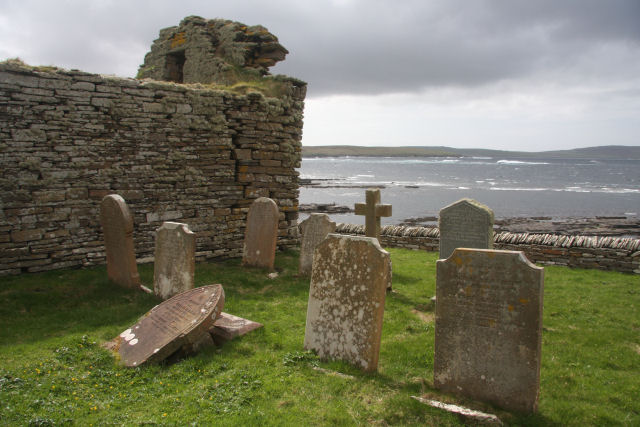
Photo: Bob Jones / Wikimedia Commons / CC BY-SA 2.0 Taversöe Tuick is one of Rousay’s Neolithic chambered cairns, a rare two-level tomb within the island’s preserved prehistoric landscape.
Discovery & excavation
Excavation in 1898 exposed part of the upper chamber and found the lower chamber intact; the cairn was fully excavated in 1937.
What to look for
-
A tomb in two storeys
The cairn has a rare double-tiered chamber — an upper chamber reached by a passage and a lower subterranean one, originally separate. Why they were stacked is unknown.
-
The modern ladder
The lower chamber, once entirely separate, is now reached by a ladder down from the upper one.
-
The third, miniature chamber
A small third chamber lies slightly downhill of the lower one, linked to it by a channel sometimes called a drain, though that is not thought to be its purpose.
-
What the 1937 dig produced
Full excavation in 1937 recovered several skeletons, cremated bone, bowls, a mace-head, a flint arrowhead and scrapers, and shale disc beads.
Plan your visit
- Location
- 59.1314°N · 3.0049°W
- Nearest settlement
- Rousay
- Access
- Open access
- Terrain
- Moderate walking
- Time needed
- About 30 minutes
- Best time
- Daylight hours
- What survives
- The tomb retains its upper and lower chambers, with a modern ladder providing access between levels and a domed roof covering the upper chamber.
Opening & admission
Free to visit and open year-round.
- Visitors can enter the upper chamber; the lower chamber is reached by a ladder. Check Historic Environment Scotland for temporary restrictions.
Nearby places
Tomb or burial place · Prehistoric
Blackhammer Chambered Cairn
Orkney Islands
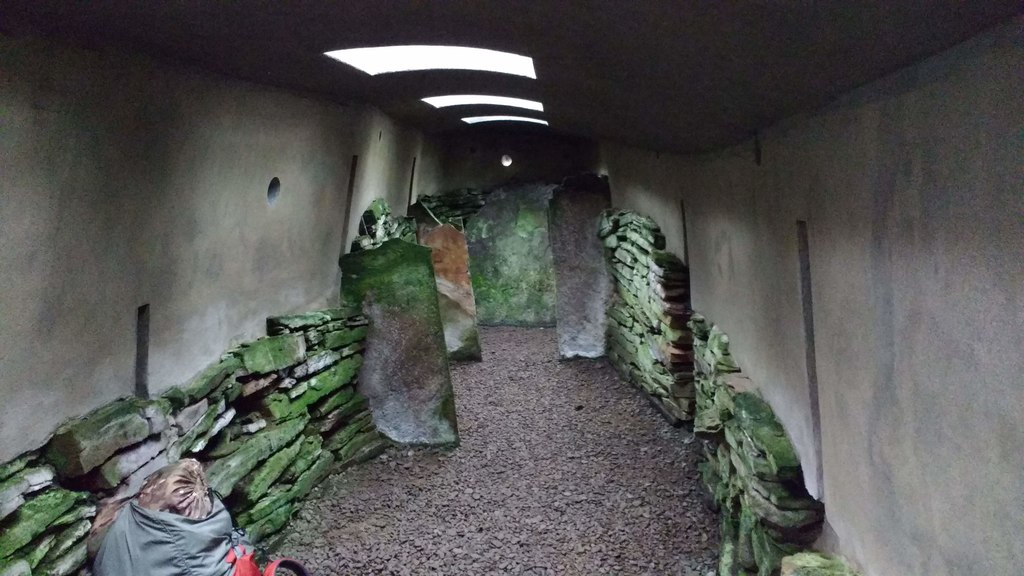
Blackhammer Chambered Cairn preserves a Neolithic, the late Stone Age, burial monument dating from roughly 4000–2500 BC, on Rousay in Orkney.
- Some walking

Tomb or burial place · Prehistoric
Knowe of Yarso chambered cairn
Orkney Islands
Knowe of Yarso preserves a burial mound built around a stone chamber, bringing together material remains and documented history that illuminate Ork…
- Rough ground
Ancient place · Prehistoric
Rousay
Orkney Islands
A small hilly island north of Mainland, whose density of remains has earned it a reputation of its own.
- Some walking
Settlement · Prehistoric
Broch of Gurness
Orkney Islands
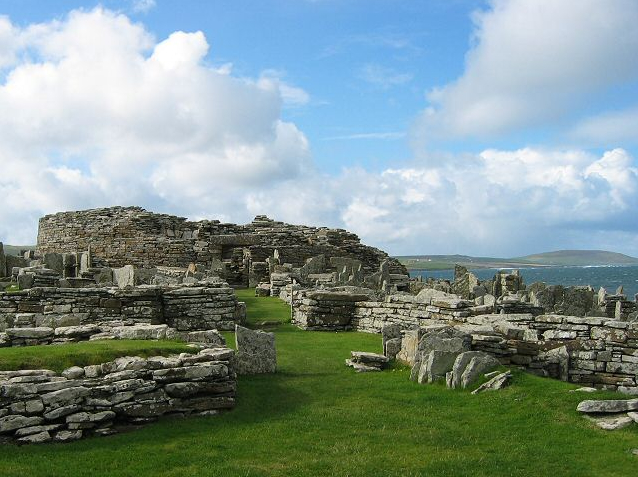
The Broch of Gurness is a stone tower and settlement on the north-east coast of Mainland Orkney, overlooking Eynhallow Sound.
- Near Evie
- 141 metres from car park
- Some walking
Questions people ask
- What makes Taversöe Tuick unusual?
- It has a rare double-tiered chamber — an upper chamber reached by a passageway and a lower subterranean one, originally separate from each other. Why they were stacked is unknown.
- How is the lower chamber reached?
- By a modern ladder from the upper chamber. The two were not connected when the tomb was built.
- What is the third chamber?
- A miniature chamber slightly downhill of the lower one, linked to it by a small channel. The channel is sometimes called a drain, though that is not believed to be its purpose.
- What was found there?
- Several skeletons, cremated bone, bowls, a mace-head, a flint arrowhead and scrapers, and shale disc beads, recovered when the site was fully excavated in 1937.
Sources
The Ancient Codex, in your pocket
Get the Pocket Codex app
Carry the directory with you — Taversöe Tuick and thousands of ancient places across Britain and Ireland, offline, wherever you roam.