Knowe of Yarso preserves a burial mound built around a stone chamber, bringing together material remains and documented history that illuminate Orkney’s changing communities and island landscapes.
There were more deer in this tomb than people. The 1930s excavation of the Knowe of Yarso recovered the remains of at least twenty-nine human beings and thirty-six red deer, together with several sheep and a dog — a ratio that has kept the site in the literature ever since, and that nobody has explained to general satisfaction.
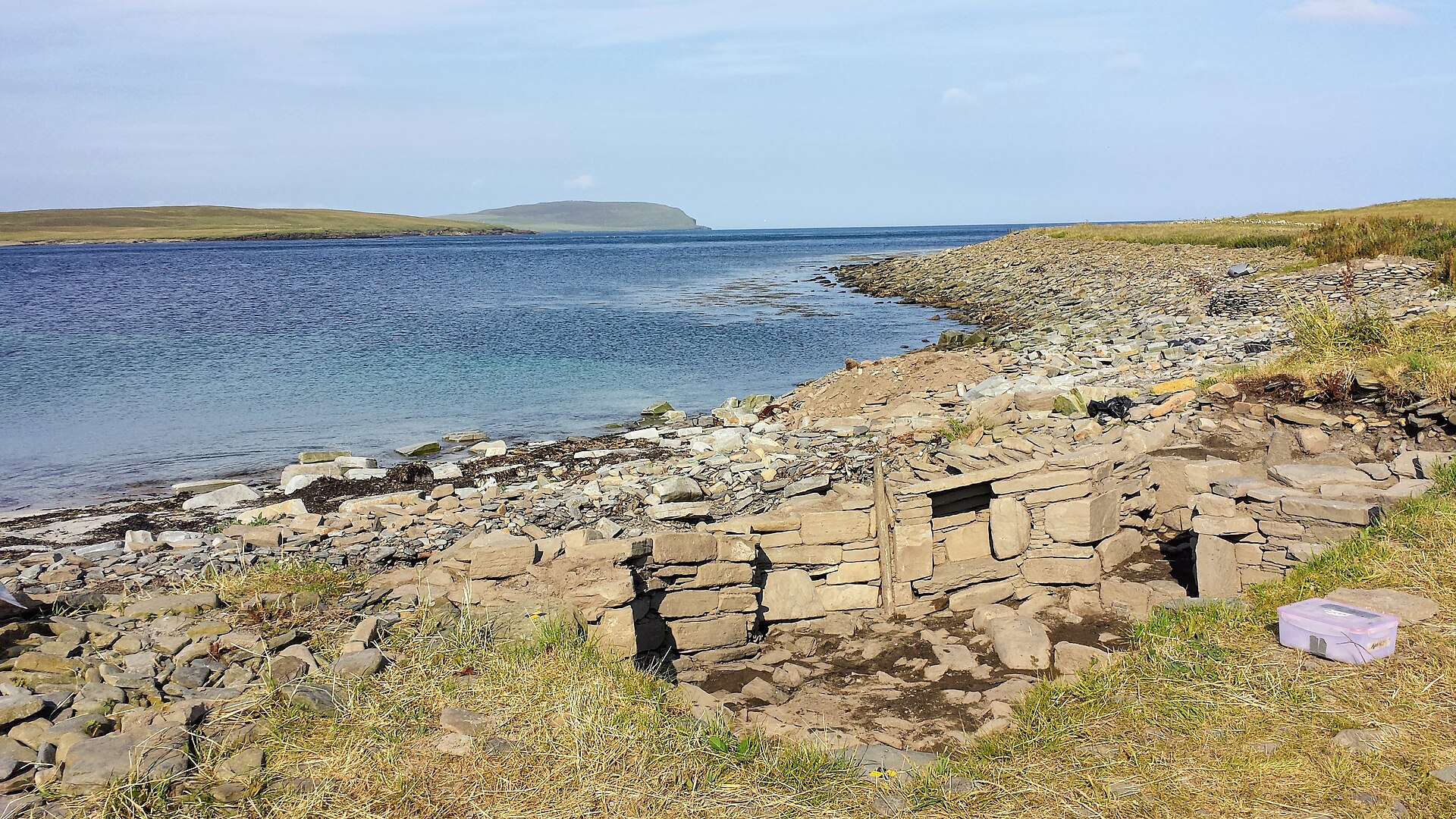
The cairn stands on a ledge near the top of a steep hill on Rousay, high above Eynhallow Sound, with the Blackhammer cairn near the foot of the same slope. Both are stalled cairns of the Orkney-Cromarty type, built between 3500 and 2500 BC, their chambers divided into compartments by pairs of standing slabs. Yarso had four such compartments in a chamber 8 metres long, inside a rectangular cairn of 15 metres by 8, entered by a passage four metres long from the south-east.
The roof was gone before archaeologists ever saw it, taken when the tomb was robbed. What survives on the outside is the decorative stonework near the entrance — the same treatment found at Blackhammer, and a mark of how consistently the builders of this one island worked.
With the bones came pottery, four arrowheads, five bone tools and pieces of flint. The site was scheduled in 1994 and now sits under a concrete roof beneath its grass mound.
What follows is drawn from published sources, with each claim labelled by how firmly it is established.
History
The cairn sits on a ledge near the top of a steep hill on Rousay, looking out over Eynhallow Sound, with the Blackhammer chambered cairn near the base of the same hill. It dates to between 3500 and 2500 BC and is a stalled chambered cairn of the Orkney-Cromarty type, like Midhowe and Blackhammer. Excavation in the 1930s recorded a rectangular cairn measuring 15 metres by 8 externally, lying north-west to south-east, enclosing a chamber 8 metres by 2 and surviving to 2 metres high. The original chamber had four compartments divided by pairs of upright slabs, entered through a passage 4 metres long on the south-east side.
The roof had already gone when the excavators arrived — removed at some point when the tomb was robbed. Decorative stonework survives on the exterior walls near the entrance, the same Rousay convention seen at Blackhammer down the hill. What the 1930s dig recovered is remarkable for its proportions. The remains of at least 29 people were found, along with 36 deer, several sheep and a dog. More deer than people, in a burial monument, is not what a tomb is usually expected to contain.
Alongside the bones were pottery sherds, four arrowheads, five bone tools and several pieces of flint. Historic Environment Scotland scheduled the site in 1994, and the tomb is now covered by a concrete roof beneath its grass mound.
Cultural influences
-
Yarso is a stalled cairn with four stone-divided burial compartments, sharing a local decorative style with Blackhammer.
Connections
-
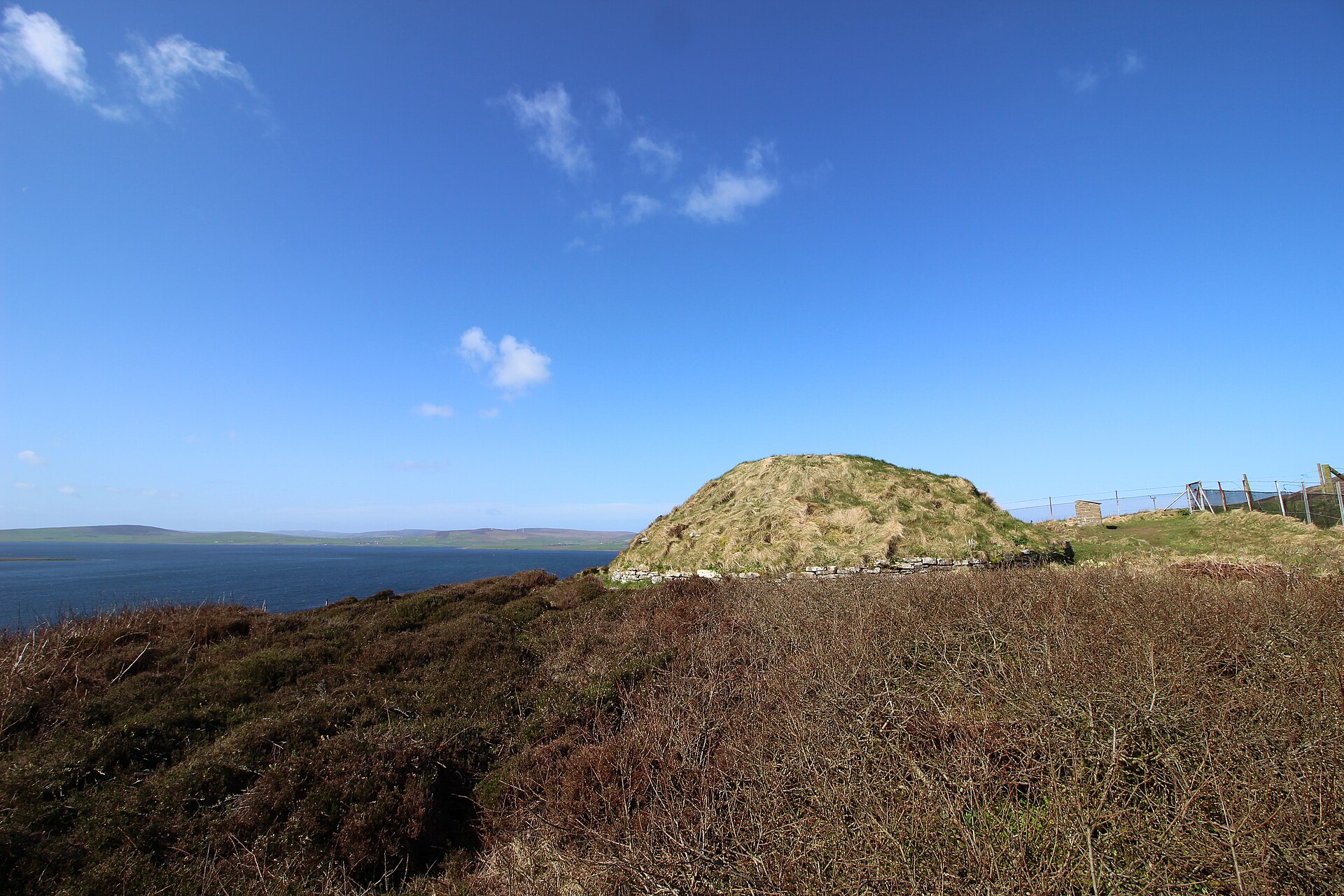
Photo: Beep boop beep / Wikimedia Commons / CC BY-SA 4.0 Historic Environment Scotland places Taversöe Tuick and Knowe of Yarso on the same Rousay prehistoric trail: both are Neolithic chambered tombs, but Taversöe preserves its unusual stacked burial chambers while Yarso is a stalled cairn.
-
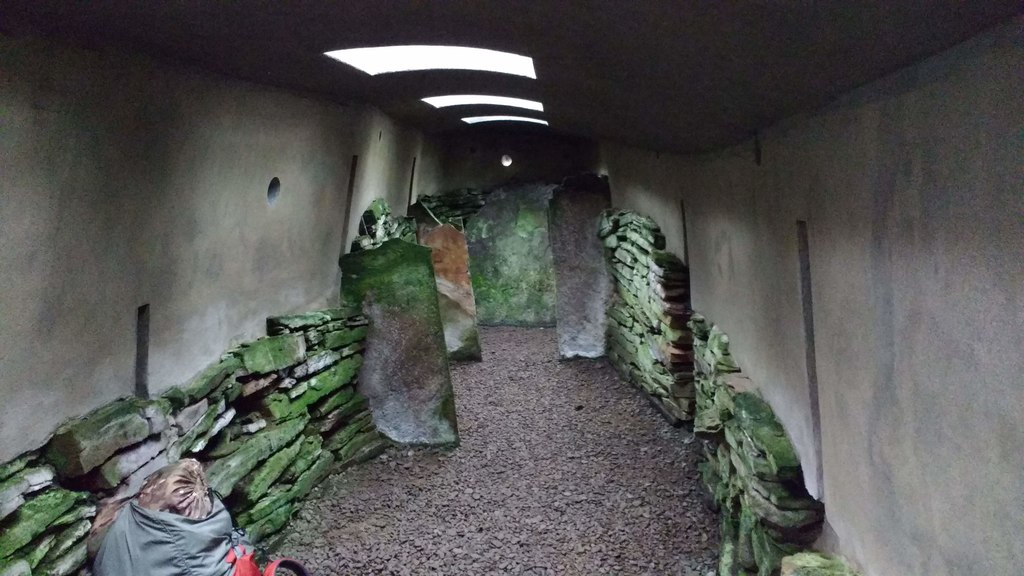
Photo: Aleks Scholz / Wikimedia Commons / CC BY-SA 2.0 Blackhammer and Knowe of Yarso are neighbouring Rousay chambered cairns in Historic Environment Scotland care. Their preserved entrance masonry and stalled-chamber plans make the pair a useful comparison for the island’s Neolithic burial architecture.
-
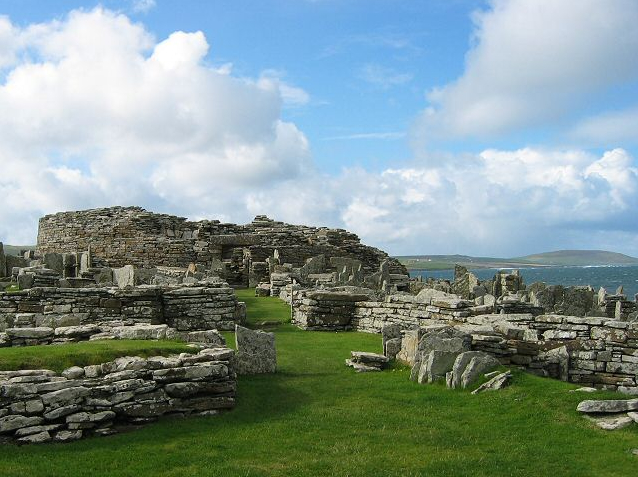
Photo: Rob Burke / Wikimedia Commons / CC BY-SA 2.0 Historic Environment Scotland includes Broch of Gurness among the nearby places for visitors to Knowe of Yarso, setting the Neolithic tomb beside a major Iron Age settlement in Orkney’s long-lived archaeological landscape.
Discovery & excavation
Excavation in the 1930s recovered remains of at least 29 people, 36 deer, several sheep and a dog, with pottery, arrowheads, bone tools and flint.
What to look for
-
Four-compartment chamber
Pairs of upright slabs divided the eight-metre chamber into four burial compartments, defining Yarso as an Orkney-Cromarty stalled cairn.
-
Entrance decoration
Decorative exterior stonework survives beside the south-east entrance, sharing a Rousay decorative convention with nearby Blackhammer Cairn.
-
Concrete roof
The robbed tomb’s lost roof is now replaced by concrete beneath the grass mound, protecting the chamber visitors enter today.
Plan your visit
- Location
- 59.1342°N · 3.0418°W
- Access
- Open access
- Terrain
- Rough ground — reasonable boots advised
- Time needed
- About 30 minutes
- Best time
- Daylight hours
- What survives
- The rectangular cairn retains its chamber, entrance decoration and grass-covered concrete roof, but the original roof was removed by tomb robbers.
- Facilities
- No dedicated visitor facilities are documented at the cairn; plan to use facilities in nearby settlements.
Opening & admission
No reliable current admission details are recorded; verify before travelling.
- The cairn sits near the top of a steep hill overlooking Eynhallow Sound.
Nearby places
Tomb or burial place · Prehistoric
Blackhammer Chambered Cairn
Orkney Islands
Blackhammer Chambered Cairn preserves a Neolithic, the late Stone Age, burial monument dating from roughly 4000–2500 BC, on Rousay in Orkney.
- Some walking
Tomb or burial place · Prehistoric
Taversöe Tuick
Orkney Islands
A burial mound on Rousay of about 4000–2500 BC, with a rare double-tiered chamber.
- Near Rousay
- Some walking
Settlement · Prehistoric
Broch of Gurness
Orkney Islands
The Broch of Gurness is a stone tower and settlement on the north-east coast of Mainland Orkney, overlooking Eynhallow Sound.
- Near Evie
- 141 metres from car park
- Some walking
Ancient place · Prehistoric
Knowe of Swandro
Orkney Islands
Knowe of Swandro is a coastal archaeological site on Rousay, where a burial tomb, settlement remains and Viking-age buildings are being eroded by t…
- Rough ground
The setting
Near Knowe of Yarso chambered cairn, about 8 metres away.
Photo: N Chadwick / Wikimedia Commons / CC BY-SA 2.0
Near Knowe of Yarso chambered cairn, about 10 metres away.
Photo: David Medcalf / Wikimedia Commons / CC BY-SA 2.0
Near Knowe of Yarso chambered cairn, about 11 metres away.
Photo: N Chadwick / Wikimedia Commons / CC BY-SA 2.0
Questions people ask
- What kind of cairn is it?
- A stalled chambered cairn of the Orkney-Cromarty type, like Midhowe and Blackhammer, dating to between 3500 and 2500 BC. It sits on a ledge near the top of a steep hill on Rousay looking over Eynhallow Sound, with Blackhammer near the base of the same hill.
- What did the excavation record?
- A rectangular cairn 15 metres by 8 externally, lying north-west to south-east, enclosing a chamber 8 metres by 2 and surviving to 2 metres high, with four compartments divided by pairs of upright slabs and a passage 4 metres long. The roof had already gone, removed when the tomb was robbed.
- What was found inside?
- The remains of at least 29 people, along with 36 deer, several sheep and a dog — more deer than people, which is not what a burial monument is usually expected to contain. Pottery sherds, four arrowheads, five bone tools and several pieces of flint were recovered with them.
Sources
The Ancient Codex, in your pocket
Get the Pocket Codex app
Carry the directory with you — Knowe of Yarso chambered cairn and thousands of ancient places across Britain and Ireland, offline, wherever you roam.