An excavated cooking complex where a huge watertight tank, heated stones and animal bones make an otherwise disputed type of Bronze Age site unusually understandable.
A farmer quarrying his own field for road stone hit a wall in 1972, and that is how this site was found. Ronald Simison alerted Colin Renfrew, who was digging at Quanterness at the time, and John Hedges came over and identified a stone building buried at the centre of the mound.
What he found was an oval structure with thick outer walls and internal walls projecting inward to make compartments, one holding a hearth. In the middle of it sits a recessed stone tank, flagstone-lined and sealed watertight with clay, holding close to a thousand litres. It was half full of stones that had been shattered and fired by intense heat.
Hedges initially read the building as a house and could not make the layout work. There is nowhere obvious to sleep. The tank, the hearth, the hammerstones and pot lids, and the burnt bones of goat and sheep all point somewhere else — to cooking — and the surrounding mound of shattered stone, charcoal and ash is the waste of doing it repeatedly over a long time. That mound still stands two metres high in places and originally held at least 200 cubic metres of material.
The reading has been tested rather than just argued. Somebody in Orkney cooked a leg of lamb in a stone tank heated with a peat fire, which settles the question of whether it works.
What follows is drawn from published sources, with each claim labelled by how firmly it is established.
History
Liddle Burnt Mound on South Ronaldsay is a Bronze Age site consisting of a stone building with a mound heaped around it on three sides. What burnt mounds were for is disputed, though most investigators read them as domestic and probably to do with cooking. It was found by accident. Ronald Simison, the farmer at Liddle, had been quarrying the mound for road metal until he struck stone structures in 1972, and he alerted Colin Renfrew, who was then excavating at Quanterness. Quarrying a prehistoric monument for road metal was ordinary agricultural practice, and it is how a good many Orkney sites were found and damaged in the same moment.
John Hedges, from Renfrew's team, investigated and recognised a stone building at the centre of the mound. It is oval, with thick external walls and interior walls projecting inward to divide the main room into compartments, one of which holds a hearth. At the centre is a large recessed stone tank, lined with flagstones and made watertight by the clay packed round it. Its capacity is close to a thousand litres, and it was found half full of stones shattered and fired by intense heat. A tank of that capacity, sealed and full of fire-shattered stone, is the strongest single piece of evidence the site offers.
Hedges first read the building as a house and was troubled by the layout. The distribution of features does not work for a dwelling — there is no obvious place to sleep in it — which is the observation that pushed the interpretation towards cooking instead. The mound around it still rises two metres in places, and its original volume has been calculated at at least 200 cubic metres. It is made up chiefly of shattered stone, charcoal and ash — the accumulated waste of heating stones over a very long period.
The finds support the cooking reading. Hammerstones, pot lids and pottery came out of the mound, and the burnt bones of goat and sheep were found with them, alongside the tank and hearth inside the building. Taken together they describe an activity rather than a dwelling. The interpretation has been tested rather than merely argued. An experiment carried out in Orkney cooked a leg of lamb in a stone tank heated by a peat fire, which is about as direct a demonstration as archaeology allows. It worked, which is the sort of confirmation this kind of site rarely gets.
People
-
Ronald Simison
Farmer who uncovered the stone structures while quarrying road metal in 1972.
-
Colin Renfrew
Archaeologist alerted to the discovery at Liddle.
-
John Hedges
Investigated the site and recognised the building at the centre of the burnt mound.
Cultural influences
-
The hearth, sealed stone tank, fired stones and animal bone indicate repeated large-scale cooking rather than domestic occupation.
Connections
-

Photo: Hayley Green / Wikimedia Commons / CC BY-SA 3.0 Liddle Burnt Mound and the Tomb of the Eagles were both owned and excavated by South Ronaldsay farmer Ronald Simison. Canmore records visitors being directed from the farm to the tomb, linking the Bronze Age burnt mound with its nearby Neolithic burial monument through the same discovery and stewardship.
-
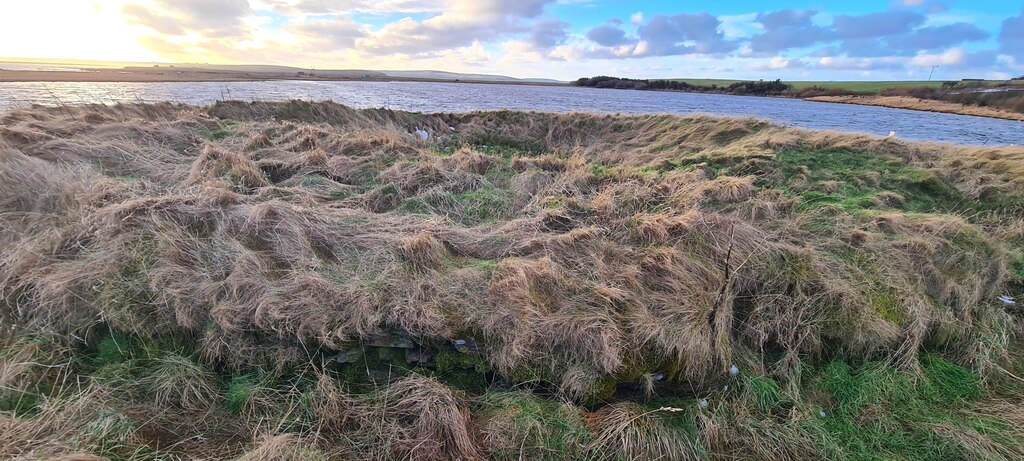
Photo: Derek Brown / Wikimedia Commons / CC BY-SA 2.0 Broch of Ayre is an Iron Age Orcadian monument that helps place Liddle’s earlier Bronze Age burnt-mound activity within the island group’s long sequence of domestic and ceremonial landscapes.
-

Photo: Orikrin1998 / Wikimedia Commons / CC BY-SA 3.0 Castle of Mey is a much later landmark on the Caithness coast across the Pentland Firth from South Ronaldsay. Its relationship to Liddle is geographical and chronological: it anchors the opposite shore of the seaway beyond this prehistoric farm landscape.
Discovery & excavation
Ronald Simison struck the stone building while quarrying road metal in 1972. John Hedges then excavated the oval structure, hearth and large watertight tank.
What to look for
-
Stone tank
The recessed flagstone-lined tank holds close to a thousand litres and was found half full of fire-shattered stones.
-
Central hearth
A hearth occupies one of the compartments inside the oval stone building.
-
Burnt mound
The surrounding mound of shattered stone, charcoal and ash still rises two metres in places.
Plan your visit
- Location
- 58.7457°N · 2.9174°W
- Access
- Open access
- Terrain
- Easy going
- Time needed
- About 30 minutes
- Best time
- Daylight hours
- What survives
- The oval building, hearth, sealed tank and surrounding burnt-stone mound remain visible at the Bronze Age site.
Opening & admission
No operator-published admission details are currently available; confirm access locally before travelling.
- The monument is on Liddle Farm beside the Tomb of the Eagles. No official opening hours are published, so arrangements should be checked before travel.
Nearby places

Tomb or burial place · Prehistoric
Tomb of the Eagles
Orkney Islands
Tomb of the Eagles is a late Stone Age burial chamber on South Ronaldsay, where human remains and eagle bones reveal changing funerary practices.
- Near South Ronaldsay
- Some walking
Building or ruin · Medieval
Italian Chapel
Orkney Islands
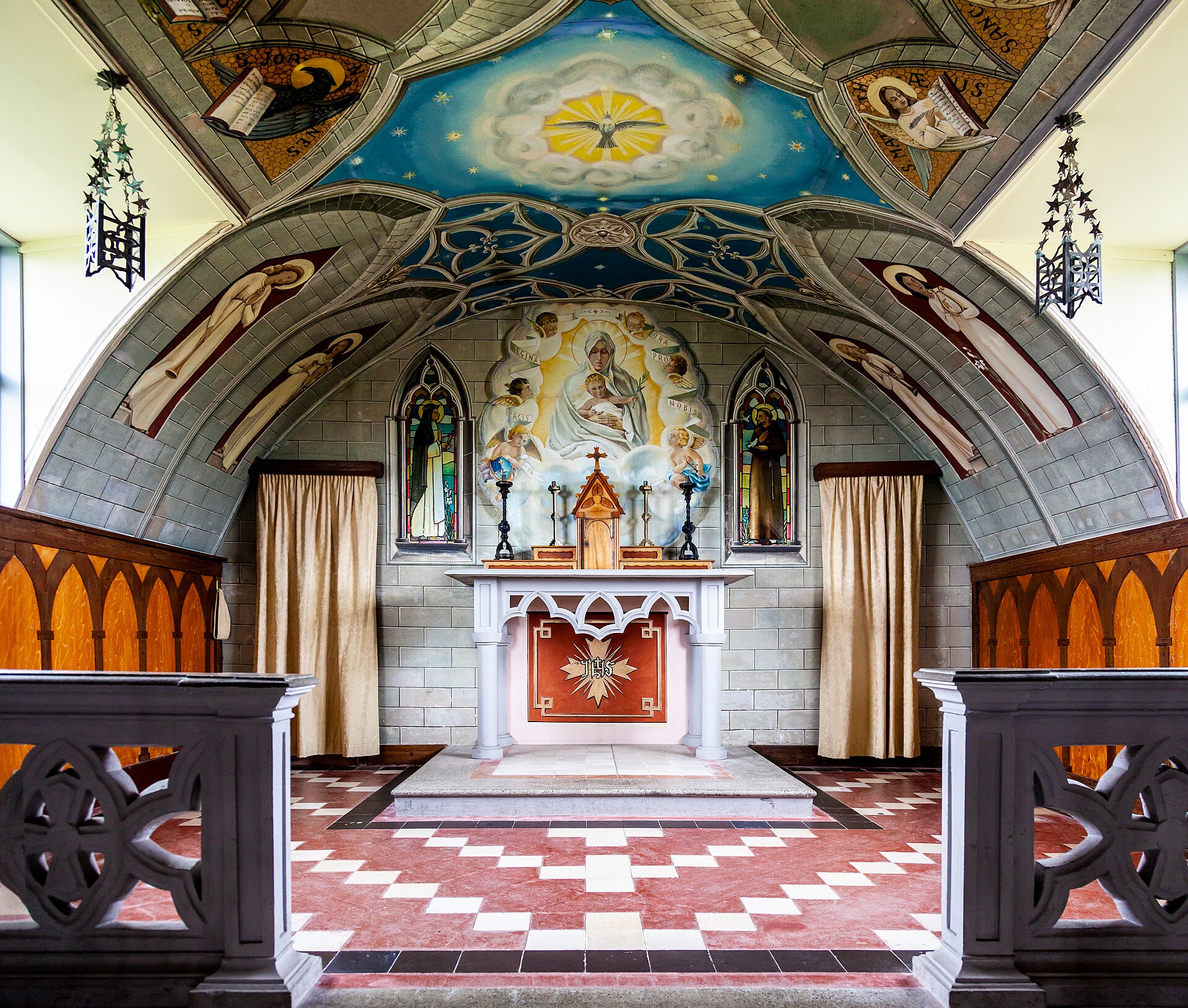
Two Nissen huts, joined end to end, decorated by a prisoner of war who stayed behind after his comrades were freed in order to finish the work.
Fortified place · Iron Age
Broch of Ayre
Orkney Islands
The Ayre site is a broch, a tall circular tower of unmortared stone found only in Scotland, on Orkney Mainland.
- Easy path
Questions people ask
- What is a burnt mound?
- A heap of shattered stone, charcoal and ash. Their purpose is disputed, but most investigators read them as domestic, and probably to do with cooking.
- How was the site found?
- The farmer, Ronald Simison, had been quarrying the mound for road metal until he struck stone structures in 1972. He alerted Colin Renfrew, and John Hedges from Renfrew's team identified a stone building at the centre of it.
- What is the tank?
- A large recessed stone tank in the centre of the building, lined with flagstones and made waterproof by the surrounding clay. It holds nearly a thousand litres and was found half full of stones shattered and fired by intense heat.
- Was it a house?
- Hedges first thought so but was troubled by the layout — there is no obvious place to sleep. The tank, the hearth, the hammerstones and pottery, and burnt goat and sheep bone all point to cooking instead.
- Has the interpretation been tested?
- Yes. An experiment in Orkney cooked a leg of lamb in a stone tank heated by a peat fire.
Sources
- Hedges, John W. (1985). A guide to Isbister Chambered Tomb and Liddle Burnt Mound. The Isbister and Liddle Trust. ISBN 0-9510554-0-2
- Ritchie, Anna (1995). Prehistoric Orkney. London. B. T. Batsford. ISBN 0-7134-7593-5
- Ovrevik, Sandra (1985). The Second Millennium and After, in Renfrew, Colin (ed.), The Prehistory of Orkney. Edinburgh University Press. ISBN 0-85224-456-8
- Wikipedia: Liddle Burnt Mound
- Wikidata: Q975646
- National Record of the Historic Environment — Liddle Burnt Mound (ND48SE 2)
- Proceedings of the Society of Antiquaries of Scotland — Liddle and Beaquoy burnt mounds
Explore more: Ancient places · Prehistoric · Orkney Islands
The Ancient Codex, in your pocket
Get the Pocket Codex app
Carry the directory with you — Liddle Burnt Mound and thousands of ancient places across Britain and Ireland, offline, wherever you roam.